Ancient Egyptian Mummies: History, Beliefs & Practices
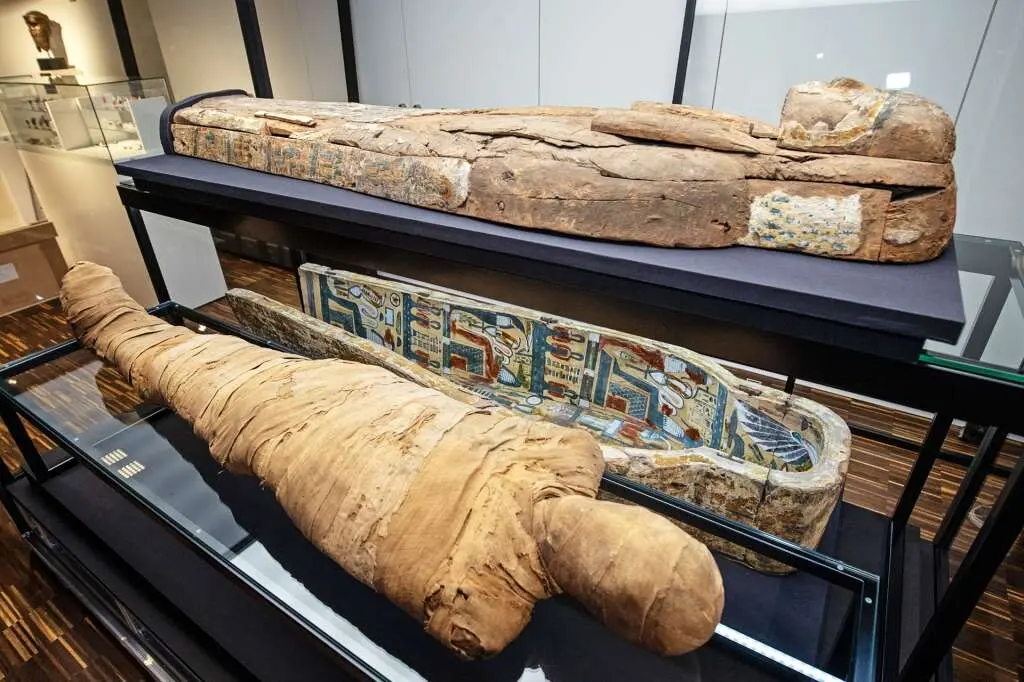
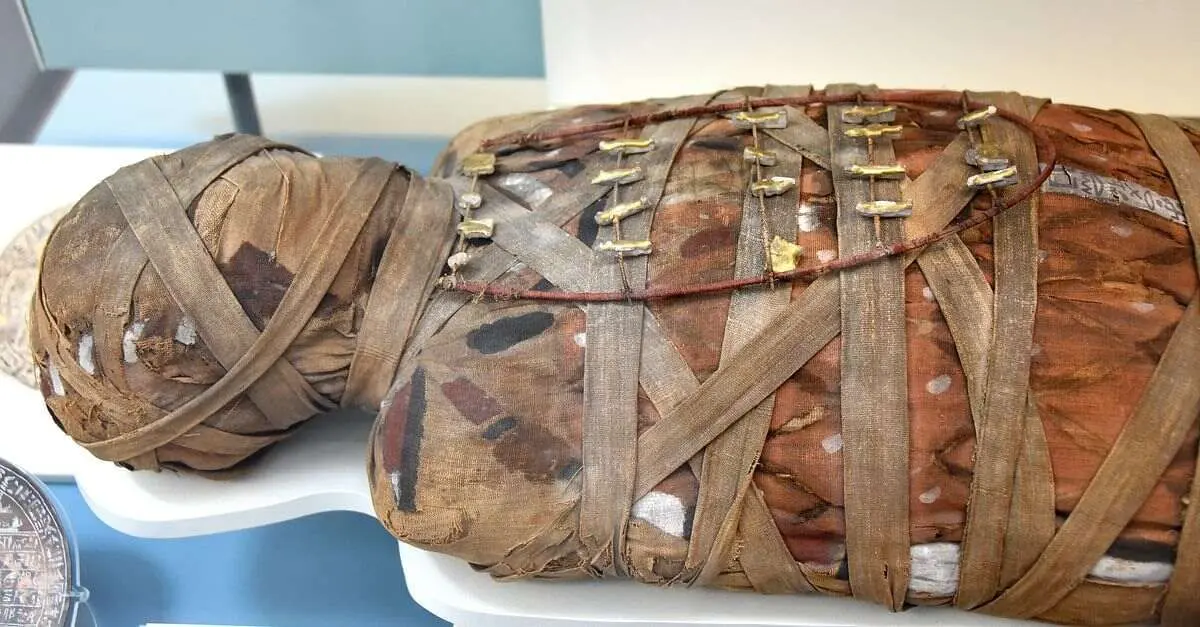
Ancient Egyptian mummies are the bodies of humans or animals that were preserved at death by a process of embalmment and wrapping, which was closely linked with their religious beliefs about the afterlife. This deliberate preservation was considered necessary for the soul to recognise and return to the body. The process involved removing internal organs, drying the body with salts like natron, and then wrapping it in linen strips.
Table of contents [Show]
The mummies of Ancient Egypt were prepared through a process called mummification, a method used to preserve the body so that a person's spirit could be identified in the afterlife. The major steps were to dry the body using natron salt, remove the organs and store them in canopic jars-with the heart being left inside-and finally to wrap the body in linen with amulets and resins. The first mummies were no doubt the result of natural preservation from the hot desert sand, but intentional mummification started around 2600 BCE.
The mummy was the preserved remains of a person or animal that resulted from a highly elaborate process called mummification. Culturally, the process of mummification was a religious and ritualistic practice meant for preserving the body so the soul would have a home in the afterlife and to ensure one's eternal life. This process was deeply steeped in their beliefs about death, rebirth, and preservation of the body as a physical means of successfully journeying to the next world.
The ancient Egyptians believed that the physical body was necessary for the soul during its journey and into the afterlife. Mummification was a necessary procedure to ensure that the body remained intact, as they believed the soul required a physical vessel to return to.
This practice was heavily influenced by the myth of Osiris, who had been murdered and dismembered, but his wife Isis reassembled his body and mummified it, which allowed him to be reborn as the god of the dead. That myth became a cornerstone in the belief of resurrection and eternal life through the preservation of the body.
The elaborate process of mummification was one way to maintain order against the chaos of death, mirroring the natural cycle of the sun, which set each night and rose again each morning.
All aspects—the physical body, the name, and the identity of the now-dead were all integral parts necessary to attain eternal life. Preserving the body ensured the continuity of the individual being.
The process of mummification itself was long and ritualistic; it was mainly performed by priests and often with protective spells and ceremonies such as the "Opening of the Mouth" ritual, which was meant to return the senses to the deceased.
Read about: Ancient Egyptian Race Controversy

Ancient Egyptians mummified the dead because they believed in the use of the physical body for the journey of the soul into the afterlife. Mummification was thus a religious practice to be performed to preserve the body for the spiritual parts of the deceased, such as the ka and ba, which had to recognize and reunite with their body after death for eternal life.
The soul needed a body: Egyptians believed the soul had to return to a recognizable physical form to survive and thrive in the afterlife. If the body was not preserved, then the soul was lost forever.
A vessel for the afterlife: the mummified body acted as an anchor or a home to the soul (ka and ba) in its journey to the afterlife, thus securing the further existence of the deceased.
Significance of the heart: Since the heart was regarded as the seat of the soul, in addition to being the organ of reasoning, it was either left in the body or replaced with an amulet for use in the afterlife judgment.
Immortality and eternity: Mummification was one means of attaining immortality. It shows how seriously the Egyptians regarded the afterlife and their ambition to live eternally.
The main steps of ancient Egyptian mummification involve purification through the extraction of organs and drying the body, followed by stuffing it to achieve a lifelike body shape, oiling and treating the skin, and finally wrapping it in linen bandages.
The procedure consists of the removal of all the internal organs, except the heart, drying the body in natron salt for about 40-70 days, and wrapping the body in hundreds of yards of linen strips.
The ancient embalmers used a set of instruments such as brain hooks, knives, and syringes, along with natron, various resins, oils, and linen for desiccation, preservation, and wrapping.

Mummification in ancient Egypt is based on the beliefs of the afterlife, wherein the soul needed a preserved body to inhabit and be recognised.
In Ancient Egyptian belief, Ka and Ba were the two essential elements of a person's complex soul, which worked together to permit survival and blessed life in the afterlife.
The Ka was a person's vital essence or life force, the spiritual "double" of an individual that was created at birth. It lived in the body during life and departed at death. In the afterlife, the Ka had to be sustained, absorbing the spiritual essence of the offerings placed in the tomb. The Ka was naturally bound to the physical body but needed an identifiable form to return to; thus, the primary reason for mummification. The hieroglyph showing two upraised arms often represents the Ka.
The Ba symbolised a person's individual personality and character. While the Ka was immobile, there was no such restriction on the Ba, which could leave the tomb and travel to and fro between the land of the living and the dead, Duat. By this means, the dead could communicate with the living and return to their mundane life. Still, every night the Ba had to return to the Khet, the mummified body, to be reunited with the Ka, since the preserved body acted as an important anchor for the soul. Normally, the Ba was shown as a bird with a human head because it could fly.
The afterlife, or "Field of Reeds," was an eternal continuation of life. The passage into the afterlife entailed the Ba's journey through Duat and the "Weighing of the Heart" ceremony. A positive judgment granted the Ka and Ba the right to unite in the preserved body and form the Akh, a transfigured spirit continuing into eternal existence in Aaru. Funerary practices aimed at assisting the Ka and Ba in achieving the state known as Akh.
Read about: Facts About Pharaohs

Mummification in ancient Egypt is based on the beliefs of the afterlife, wherein the soul needed a preserved body to inhabit and be recognised.
According to ancient Egyptian mythology, the main gods involved in the process of mummification are Anubis and Osiris, although Isis, Nephthys, and the Four Sons of Horus also have specific roles.
Anubis is the most prominent deity linked to mummification and funerary practices.
Role in Mummification: Anubis was considered the inventor and primary god of embalming. According to myth, he performed the first mummification on the body of Osiris after Osiris was killed by his brother Set. During the performance of the mummification rituals, priests wore masks of Anubis as a sign of respect and to take on his persona.
Other Roles: The guardian of the dead, the protector of tombs and cemeteries, and the guide of souls through the afterlife, he was also the presiding deity in the "Weighing of the Heart" ceremony in the Hall of Two Truths where a person's heart was weighed against the Feather of Ma'at (truth and justice) for worthiness to enter the afterlife.
Read about: King Seti I Facts
Anubis may have overseen the technical process, but Osiris was considered the ultimate Lord of the Underworld and judge of the dead.
Role in Mummification: His own mummification by Anubis established the precedent for the practice among all Egyptians.
Other Roles: Osiris personified the dead pharaoh and the cycle of death and rebirth, becoming the king of the afterlife after his resurrection.
Isis and Nephthys: The goddesses Isis, Osiris's wife, and Nephthys, his sister and mother to Anubis, aided Anubis in collecting and preparing Osiris's body parts for mummification, thereby helping perform the first acts of funerary rites.
The Four Sons of Horus: These four deities were specifically associated with the canopic jars that held the internal organs removed during mummification.
Kebechet: Daughter of Anubis, sometimes depicted as a serpent, was a purification goddess who refreshed the souls of the dead with cool water and contributed to the work of the mummification process by purifying the body.
Thoth: The god of wisdom and writing; hence, he was present to record the outcome of such a judgment in the "Weighing of the Heart" ceremony.
Let our local travel experts help you design the perfect itinerary. Whether you're seeking adventure, culture, or relaxation, we've got you covered!

The ancient Egyptian mummies are broadly classified based on the type of being they are, whether human or animal. Human mummies include royalty, nobility, and commoners, while animal mummies could be pets, cult animals, sacred offerings, or even food. Human mummies can also be differentiated by the sophistication of the mummification process used.
In Ancient Egypt, mummies were mainly differentiated based on the individual's status in society, which commanded the elaboration and cost of the mummification process and burial. The main types were royal mummies, mummies of the noble/elite class, and those of common people, with great variations in quality and accompanying funerary items.
Pharaohs and immediate royalty received the most meticulous and expensive mummification possible to ensure a successful transition to the afterlife.
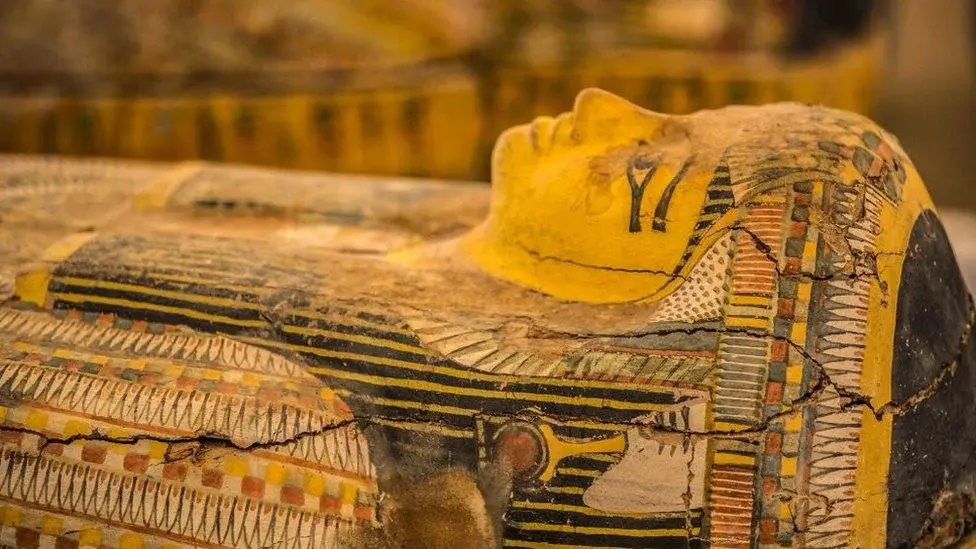
They were buried in well-provisioned tombs, such as those in the Valley of the Kings, and placed within nested coffins, including a final stone sarcophagus. These burials included a vast array of grave goods, including jewellery, furniture, and numerous ushabtis.
Deliberate mummification was likewise practised among the members of the nobility, high officials, and the wealthy, though the quality varied according to what they or their families could afford.
Mummies of animals, especially cats, crocodiles, and other holy creatures, had numerous purposes in Ancient Egypt, ranging from being offered to gods to being food in the afterlife to being pets for the dead.
Many animals were considered sacred to specific gods and were mummified as religious tributes.

Tutankhamun, better known as "King Tut," was a renowned ancient Egyptian pharaoh because, in 1922, his almost completely preserved tomb was discovered by Howard Carter. He became pharaoh as a young boy, ruled from 1332 to 1323 BCE, and died around age 19. His tomb, located in the Valley of the Kings, contained much treasure, such as the iconic golden mask that covered his face, which has made him perhaps the most well-known figure in ancient Egyptian history.
Read more: Achievements of King Tut
He died suddenly at a rather young age, about 19 years of age. The exact cause of his death is a matter of debate, but modern analysis suggests a combination of factors, possibly including malaria, a fractured leg, and a bone disease.
Discovery of his tomb:
His tomb, discovered by Howard Carter in 1922, was an archaeological find of monumental proportions since it was so remarkably well-preserved.
Read about : Facts About King Tut
The mummy of Ramesses II is famous because he was a powerful, long-reigning pharaoh, and his well-preserved body gives incredible insight into ancient Egyptian rulers. His mummy, often referred to as "Ramesses the Great," was discovered in 1881 in a royal cache at Deir el-Bahari to protect it from tomb robbers. Today, it is housed at the National Museum of Egyptian Civilisation in Cairo, and studies of it reveal details about his life: his advanced age upon death and his physical features, including his prominent nose and white hair.
Read about: Ramesses II
The following video describes the physical appearance of Ramesses II, as taken from his mummy:
https://www.youtube.com/watch?v=AGemflFMoZM&t=818
The Golden Mummies of Bahariya Oasis were a necropolis discovered in 1996, comprising more than 10,000 mummies from the Greco-Roman era, remarkably covered in gilded masks and cartonnage. The finding, led by the great archaeologist Zahi Hawass, exposed a burial practice that represented both the old Egyptian beliefs and Hellenistic ones in which some mummies were decorated with painted portraits.
Location: | Bahariya Oasis, Western Desert of Egypt. |
Discovery: | Discovered in 1996 by an Egyptian team led by Zahi Hawass, when a donkey fell into a small hole that was the entrance to the underground complex. |
Scale: | The necropolis is huge and is believed to house over 10,000 mummies. |
Time: | Greco-Roman period, between the 1st century BCE and the 4th century CE. |
Mummification: | Many mummies were covered with gilded masks and the elaborate cartonnage, a technique of linen and plaster that gave a very life-like effect to the representation of the face. |
Decorations: | The masks and wrappings are decorated both with Egyptian gods, such as Osiris and Anubis, and with Roman mythological motifs, a reflection of a mingling of cultures. |
Idealization: | As shown in this YouTube video, the painted portraits were idealized and generic with the purpose of affording the deceased a divine form. |
Social ranking: | Mummies were buried based on social status and economic importance, where the rich were placed in family tombs with their possessions. |
Burial goods: | Tombs included artifacts such as bracelets, necklaces, and pottery, some featuring the god Bess, who was particularly associated with the Bahariya Oasis. |
The finding considerably enriched the understanding of the Greco-Roman period in Egypt, a time for which less detailed information about mummification practices existed.

The NMEC is home to ancient mummies in Fustat, Old Cairo, with a display of 22 royal mummies in its Royal Mummy Hall, including the mummies of some pharaohs such as Hatshepsut and Thutmose III; these were moved from the Egyptian Museum to the NMEC in the Pharaohs' Golden Parade in 2021.
Place: | The NMEC is located in the historical city of Fustat and near the Ain Al-Sira Lake. |
Royal Mummy Hall: | This hall is designed to provide the impression of the Valley of the Kings and holds the mummies in a more modern and easily accessible environment.
|
Contents: | The hall contains 22 royal mummies, comprising 18 kings and 2 queens, and 17 royal sarcophagi of the 17th to 20th dynasties. |
Famous Mummies: | Some of the famous rulers on display include Hatshepsut, Thutmose III, and Seqenenre Taa II. |
Access: | The museum is reachable by taxi, car, or public transportation and is about 30 minutes from downtown Cairo. |
Visit Duration: | Generally, visiting the museum takes approximately 2 to 3 hours. |
Unfortunately, the Egyptian Museum in Tahrir Square cannot show you the ancient royal mummies today, as they have been relocated to the National Museum of Egyptian Civilization in 2021. Many other important artifacts remain in the Tahrir Square museum, but this museum now lacks the royal mummy collection, which has become one of the highlights of the new NMEC.
You may be interested in the Grand Egyptian Museum Ticket Price.
Scientific studies of the mummies of ancient Egypt have revealed a number of intriguing details concerning the methods of their preservation. They included the certain chemical recipe for mummification and the more unexpected revelation of a "woody" and "spicy" aroma. Research also uncovered new details about the process, including the use of organic rods to remove the brain, the non-uniformity of regional mummification techniques, and a higher prevalence of parasitic worms in ancient Egyptians than previously thought. The success of extracting DNA from bones and teeth in genetic studies unveiled the close relation between ancient Egyptians and ancient and modern Near Eastern populations.
CT scans and DNA analyses of ancient Egyptian mummies give insight into their health and way of life, as well as their embalming techniques, with evidence of disease such as cancer, heart disease, and infection. They also give clues to social status and can correct misidentifications, showing that many of the mummies had lives and ailments similar to present-day people, in contrast to popular belief. DNA analysis has also provided information about the ancestry of the ancient Egyptians.

Ancient Egyptians suffered from a wide range of diseases, from the universal parasitic infections such as malaria and tuberculosis to chronic cardiovascular disease, dental problems, and cancer. Evidence of high levels of atherosclerosis, dental abscesses, and parasitic worms in mummies, and child mummies have been identified as suffering from severe anemia. Ancient medical knowledge included treatment from plants, such as willow bark for pain and moldy bread for infections, though many ailments were life-threatening.
Unlike some other ancient societies, ancient Egyptians had an "enlightened attitude" toward disabilities and provided care and support for those who had deformities.
Let our local travel experts help you design the perfect itinerary. Whether you're seeking adventure, culture, or relaxation, we've got you covered!

The modern myth of the mummy's curse was created by popular culture, based on the 1922 discovery of King Tutankhamun's tomb and sensationalized reports in newspapers of the deaths that followed, many of which were exaggerated.
This triggered a wave of Hollywood movies, starting with the 1932 The Mummy, where an animated, vengeful mummy was the villain. Although real ancient Egyptian tombs did sometimes contain curses meant to frighten off thieves, those were warnings, not supernatural curses like in the movies.
The 1932 film The Mummy, starring Boris Karloff, played a major role in shaping the modern image of the mummy in cinema. It introduced audiences to the concept of a resurrected, wrapped corpse transformed into a powerful and deadly antagonist, setting the standard for how mummy characters would be portrayed in later films.
Evolution of the monster: Other films, such as The Mummy's Tomb and The Mummy's Curse, further honed the image of the lumbering, powerful, and hard-to-kill mummy into one of the classic horror tropes.
The "mummy's curse" is an enduring trope, hence finding its place in a number of films, mostly in a rather more fantastical manner, as was done in the 1999 and 2017 versions of The Mummy.
Origin: The myth came into prominence following the unearthing of King Tutankhamun's tomb in 1922 and the subsequent death of a few people associated with that excavation, which was sensationalised by the media.
Real life versus myth: The most prominent death of expedition financier Lord Carnarvon was due to blood poisoning from a mosquito bite that had become infected, not because of a supernatural curse. The storyline of the curse was an invention of journalism and Hollywood, and conveniently ignored the fact that the lead archaeologist, Howard Carter, lived for almost 20 more years.
Ancient curses: Some ancient Egyptian tombs did indeed have protective inscriptions against desecration, but these were practical warnings, not the supernatural curses of pop culture.
The image of the ancient Egyptian mummy in modern media and literature has little to do with its original cultural and religious context as a sacred means for the soul's transition to the afterlife, having become largely a fictionalised trope of horror and the supernatural. This modern perception comes from the 19th-century "Egyptomania" and then the so-called "mummy's curse" legends following upon the discovery of Tutankhamun's tomb.
Mummies have been a dominant feature in popular culture, especially horror cinema, since the early years of the 20th century.
First, literature and art developed the mummy's presence in Western consciousness, with a Victorian Era fascination with Egypt, further sensationalized by public events of "unrolling" mummies.
Reveal an overview of the Museum of Islamic Art in Cairo.
You can book a Grand Egyptian Museum Tour in Egypt through Egypt Online Tour. This tour is often guided by an Egyptologist and can include transportation in an air-conditioned vehicle. Booking in advance is recommended, as tours can be popular and may book up weeks ahead.