Farafra Oasis is a small oasis in Egypt's Western Desert, in the New Valley governorate, roughly midway between Bahariya and Dakhla and about 550 to 600 km by road south-west of Cairo. It is best known as the nearest town to the White Desert, whose chalk formations begin about 45 km to the north. With only a few thousand inhabitants, it is the least populated of the great western oases, with palm groves, hot springs and the mud-brick remains of the old fortress village, Qasr al-Farafra.
Most travellers see Farafra as part of a Western Desert loop or a White Desert camping trip from Cairo or Bahariya. Our desert team has run these trips for years; below is what to see, when to go, how to get there and how to combine Farafra with the other oases.
Farafra at a glance
| Item | Detail |
|---|---|
| Location | Western Desert, New Valley governorate; a depression of about 980 square km |
| From Cairo | About 550 to 600 km via Bahariya; 7 to 9 hours by car with stops |
| From Bahariya (Bawiti) | About 180 km; 2.5 to 3 hours |
| From Dakhla | About 300 km; 4 hours |
| Population | About 5,000 at the 2002 estimate; the smallest of the western oases |
| Known for | The White Desert, hot springs, Qasr al-Farafra, Badr's Museum, dates and olives |
| Best time | October to April |
Where is Farafra Oasis?
Farafra lies in a broad depression in the limestone plateau of the Western Desert. The paved Western Desert road links it north to Bahariya and Cairo and south-east to Dakhla, Kharga and eventually Luxor, so it sits in the middle of the classic oasis loop. Siwa, often mentioned with it, is far to the north-west and not on the same road.
Weather and the best time to visit
- October to April is the season for Farafra and the White Desert: warm, sunny days around 20 to 30°C and cool to cold nights.
- December to February: nights in the desert can drop close to freezing. Camping is still excellent with proper bedding, but bring a warm jacket, hat and layers.
- May to September: daytime heat regularly passes 40°C. Desert camping is uncomfortable and many operators stop overnight trips.
- Full moon nights make the white formations glow; moonless nights give the best stars. Choose according to what you prefer.
A short history
People lived in the Farafra area long before the pharaohs: rock shelters and prehistoric camps in the surrounding desert date back to the late Pleistocene, when the climate was wetter. In pharaonic texts the oasis appears as Ta-ihu, "the land of cattle", known by the Middle Kingdom. Under the Ptolemies it was attached administratively to the Nile Valley province of Oxyrhynchus. A Roman-era spring and settlement at Ain Bishay shows that the oasis was farmed in Roman times.
For centuries Farafra was an isolated village behind a fortified mud-brick citadel, Qasr al-Farafra, where families stored their grain and took refuge from raiders. The paved road and the New Valley land reclamation projects of the late 20th century connected it with the rest of Egypt and brought new villages and farms around the old core.
Farafra today: life in the oasis
Farafra is a farming town. Most families grow dates, olives, apricots and vegetables on land watered by wells, and many keep goats, sheep and camels. Since the land reclamation projects, new villages with newcomers from the Nile Valley have grown up around the old core, so the oasis mixes old Bedouin-descended families with more recent settlers. Life is quiet: shops close early, evenings are spent at home or in the coffee houses, and the night sky is dark enough to see the Milky Way from the edge of town. Visitors are still few, and people are curious and welcoming; a guide from the oasis will often take you to tea with a farming family or to see dates being sorted in season (September to November).
Several lodges in Farafra are built with local materials and run on simple, low-impact lines, using mud brick, palm wood and food grown in their own gardens. Staying in one is the best way to understand the rhythm of the oasis.
What to see in Farafra
Qasr al-Farafra, the old village
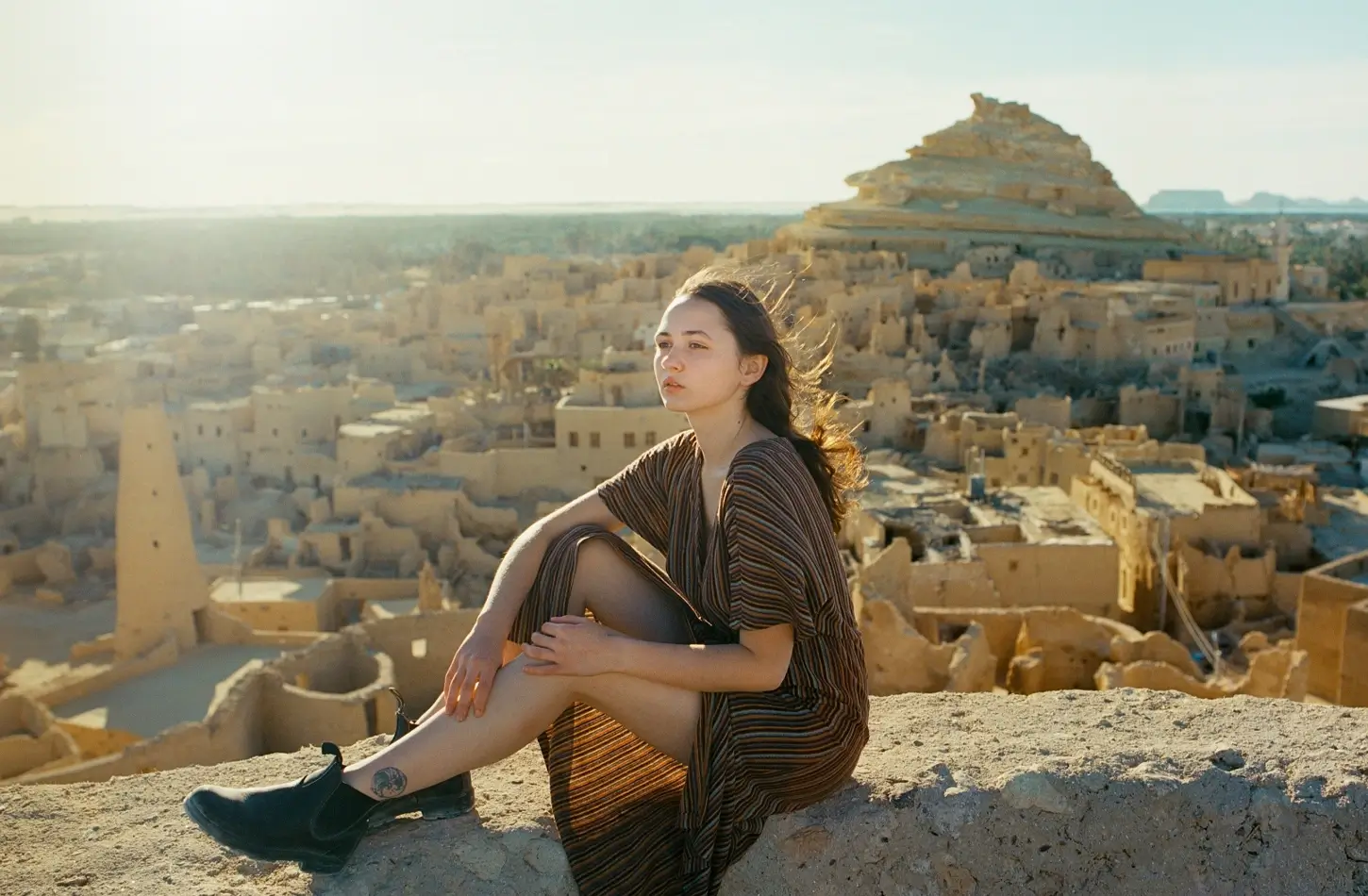
The remains of the old fortress village stand on a low hill in the centre of town: thick mud-brick walls, small rooms that were once family storerooms, and narrow lanes around them. Much of it has collapsed, but it gives a clear idea of how oasis communities protected themselves. Some houses nearby still have painted walls and palm-trunk doors.
Badr's Museum
A small private museum in the old town created by the local artist Badr Abdel Moghny, who built the mud-brick building himself and filled it with his paintings and sculptures of oasis life: farming, weddings, women at the well, the desert. It is one of the most personal museums in Egypt and worth half an hour.
Hot springs and wells
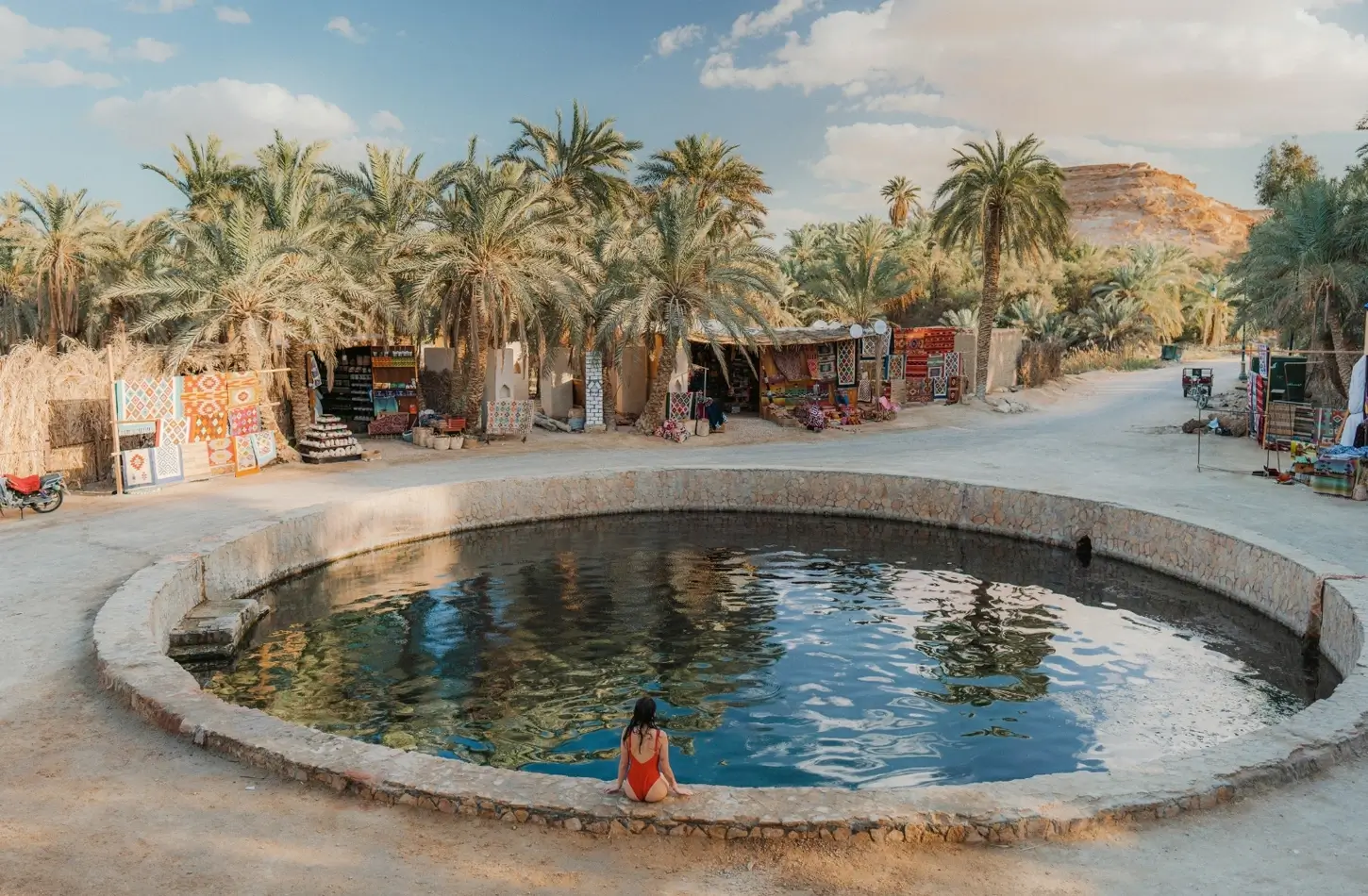
Farafra has more than a hundred wells. The best known for bathing is Bir Sitta ("the sixth well"), where warm sulphurous water pours into a concrete pool among the fields; Bir Sab'a and other wells are also used for swimming. A dip after a day in the desert is one of the pleasures of a Farafra stay. Bathe in modest clothing, as locals use the springs too.
El-Mufid lake
A lake formed by drainage water from the farms, surrounded by reeds and dunes, with birdlife in the cooler months. A quiet spot for sunset.
Ain Bishay and the palm gardens
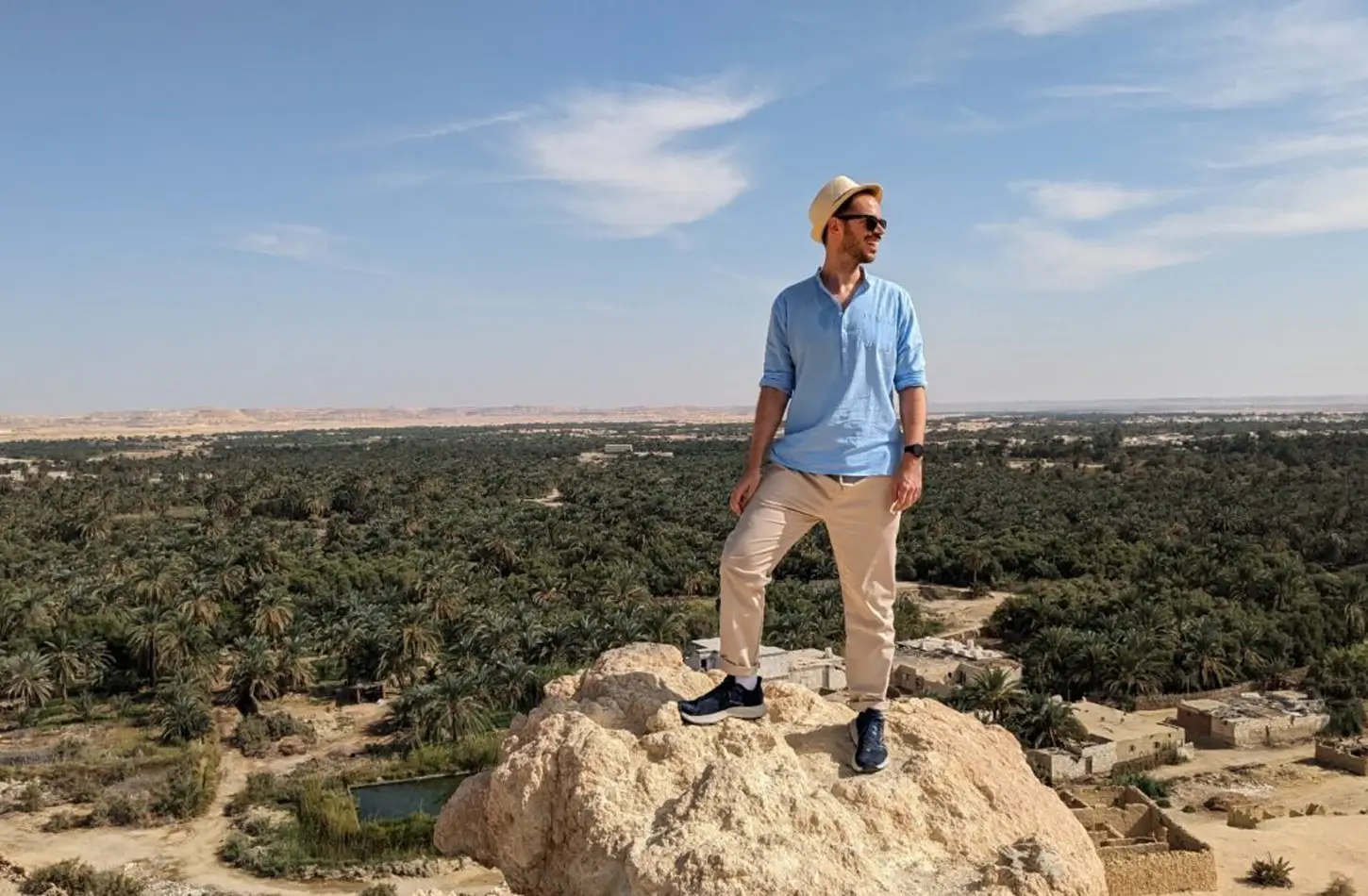
The gardens around the old spring of Ain Bishay grow date palms, olives, citrus, apricots and carob. Walking through them with a local guide shows how oasis farming works, with water shared between plots by turns.
The White Desert
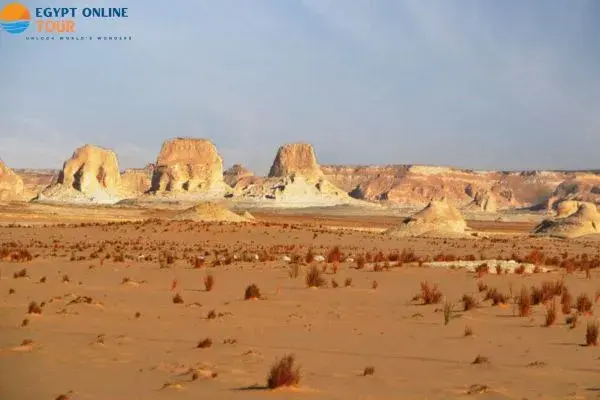
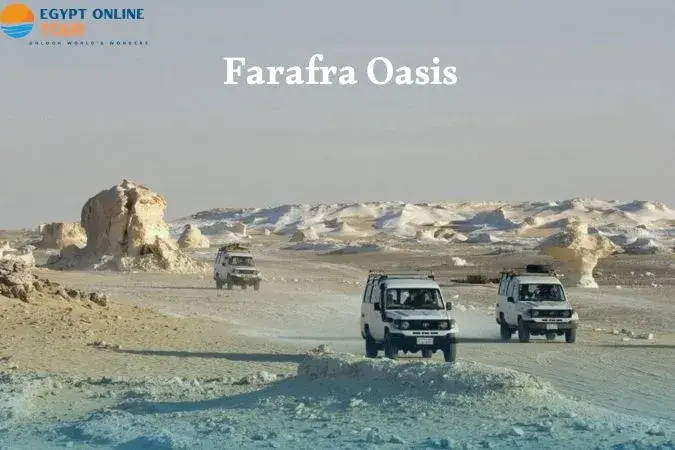
About 45 km north of Farafra town, the White Desert National Park is the reason most people come. Wind and sand have carved the white chalk into mushrooms, pillars and shapes that people name the Chicken and the Mushroom, the Inselbergs and the Monolith. The area is a protected area with a park fee, collected at the entrance or by your operator.
- Old White Desert: the area close to the road, with the most famous formations; best at sunset and sunrise.
- New White Desert: deeper in, with larger formations and fewer vehicles.
- Agabat: a valley of tall rock towers and sand slopes on the edge of the White Desert, often visited on the way in.
- Camping: licensed operators set up a Bedouin-style camp with mattresses, blankets, a campfire dinner and a windbreak. Foxes (the desert fennec) often come close at night; do not feed them.
The Black Desert, with its dark volcanic-capped hills, and the Crystal Mountain, a ridge of quartz crystals beside the road, lie between Bahariya and Farafra and are part of every trip from the north. Please do not take crystals away; the site is being stripped by visitors.
How to get to Farafra
- Private car with driver from Cairo: the most practical option; the drive passes Bahariya, the Black Desert and the Crystal Mountain. With stops, allow a full day.
- Organised desert tour: most White Desert camping trips start in Bahariya (Bawiti), where 4x4 vehicles take over for the off-road sections.
- Public bus: long-distance buses and local minibuses link the oases along the desert road, but schedules are irregular and change often; check locally before you rely on them.
- Checkpoints: carry your passport; police checkpoints along the oasis road register foreign travellers.
Where to stay
Farafra has a few simple hotels and eco-lodges built in local mud-brick style, some with their own hot spring pool, and campsites in the White Desert run by licensed operators. Facilities are basic compared with the Nile Valley: expect simple rooms, home-cooked meals and limited Wi-Fi. Many travellers sleep one night in the White Desert and one in Bahariya or Farafra.
Sample itineraries
Two days from Cairo: the White Desert camp
- Day 1: early drive from Cairo to Bahariya (about 4.5 hours), lunch, then by 4x4 through the Black Desert, the Crystal Mountain and Agabat to the White Desert for sunset and an overnight camp.
- Day 2: sunrise among the formations, breakfast, return north via Bahariya's hot spring and back to Cairo in the evening.
Four to six days: the Western Desert loop
Cairo, Bahariya, the White Desert, a night in Farafra with the hot springs and Badr's Museum, then Dakhla (Al-Qasr old town, Deir el-Hagar temple) and Kharga (Hibis temple, Bagawat necropolis), finishing in Luxor or returning to Cairo. This is one of the great road journeys in Egypt.
Practical tips
- Bring cash in Egyptian pounds; ATMs in Farafra are few and can be out of service.
- Pack a warm layer, a torch or headlamp, sunscreen, sunglasses and a scarf against wind and sand.
- Dress modestly in the town and villages.
- Mobile coverage is good in town and patchy in the desert.
- Take all rubbish out of the desert with you; the White Desert is fragile.
- Go with a licensed operator for any off-road travel; the desert is not a place to improvise.
To compare the oases, read our guides to Bahariya Oasis, Dakhla Oasis, Siwa and the Western Desert of Egypt.
Plan it with us
Our White Desert camp is the classic two-day trip from Cairo, the White Desert overnight trip is a shorter option, and the 10-day oasis tour includes Farafra, Dakhla and Kharga.
Ahmed Samir writes and updates the Egypt travel guides of Egypt Online Tour, a licensed tour company based in Cairo (ETAA licence 1466). Our travel advisors review each guide before it is published.
All guides by Ahmed Samir