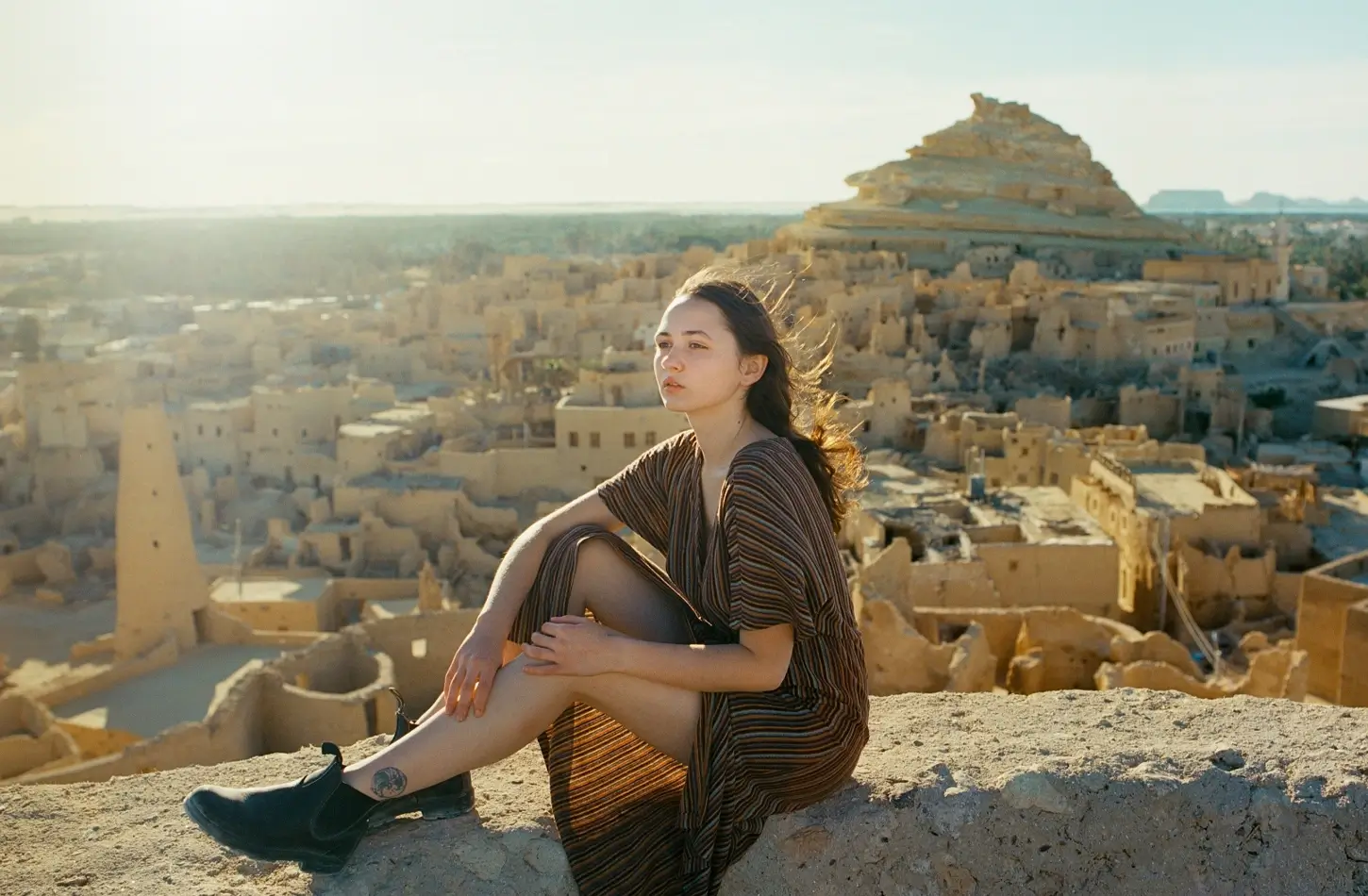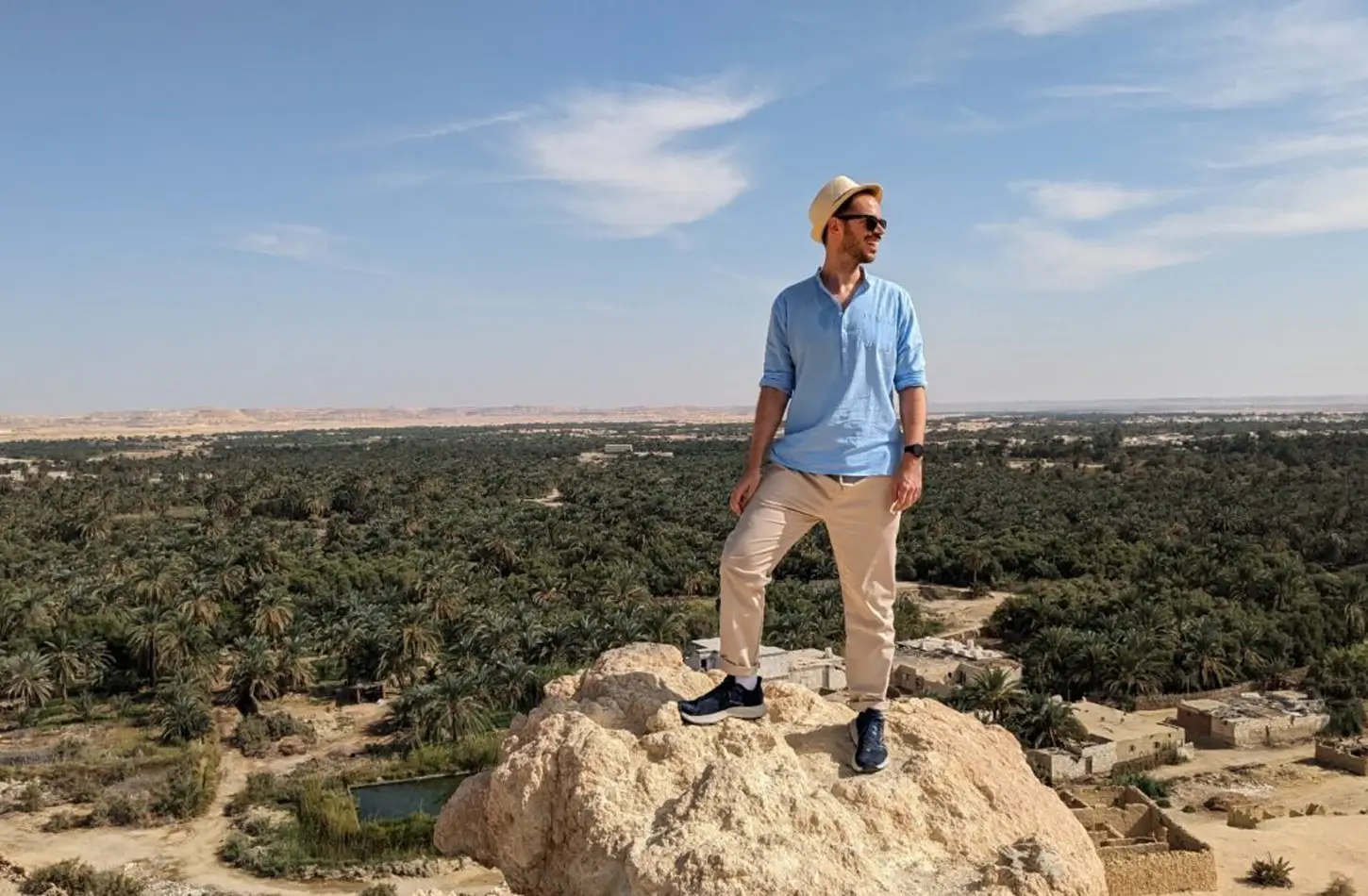
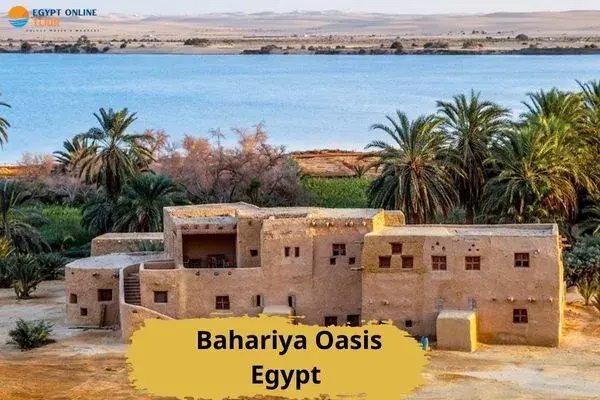
Bahariya Oasis is a green depression in Egypt's Western Desert, about 370 km south-west of Cairo (4 to 5 hours by road), and the usual starting point for trips to the Black Desert, Crystal Mountain and the White Desert. In the oasis itself you find the Valley of the Golden Mummies, a temple attributed to Alexander the Great, 26th Dynasty tombs and chapels, palm groves and hot springs. Most travellers spend one or two nights, combining a day in the oasis with a night camping in the White Desert. Our 11-day Christmas tour of Egypt includes a night in the White Desert before the flight to Aswan.
Our desert trips start in Bawiti, the oasis town, so this guide is written from the road: what is worth your time, how to get there, when to go, what it costs in time and effort, and how to plan the desert part safely.
Bahariya Oasis at a glance
| Fact | Detail |
|---|---|
| Location | Western Desert, Giza Governorate |
| Distance from Cairo | About 370 km; 4 to 5 hours by car |
| Main town | El Bawiti (about 33,000 people in 2006) |
| Size | An oval depression about 94 km long and up to 42 km wide, around 2,000 km2 |
| Economy | Dates, olives and other farming, iron ore mining, desert tourism |
| Best season | October to April |
| Typical stay | 1 night in Bawiti plus 1 night in the White Desert |
History of Bahariya
People lived in the oasis from the Neolithic period, and it was an Egyptian outpost from the Old Kingdom. Its heyday came under the 26th Dynasty (7th and 6th centuries BC) and in the Greek and Roman periods, when its springs watered vineyards and Bahariya wine was traded in the Nile Valley. Alexander the Great may have passed through on his way back from the oracle at Siwa in 331 BC, and a temple to Amun in his name stands in the oasis.
Much older, the rocks of the Bahariya depression, about 95 to 100 million years old, have produced famous dinosaur fossils, including Spinosaurus and the giant plant-eater Paralititan. During the First World War the British built a military railway into the area and kept a lookout post on a hill near Bawiti, still known as the English Mountain.
The Valley of the Golden Mummies
In the mid-1990s a Greco-Roman cemetery was found south of Bawiti, according to the popular story when a donkey's leg broke through a tomb roof. Excavations led by Zahi Hawass from 1999 opened dozens of tombs and recorded more than 200 mummies from the 1st and 2nd centuries AD, many with gilded masks and painted cartonnage, the reason for the name. The cemetery itself is not open; a selection of the mummies is shown in the small antiquities museum in Bawiti, which our guests visit before the desert drive.
What to see in Bahariya Oasis
In and around Bawiti
- The Golden Mummies museum: a few rooms with gilded mummies and finds from the cemetery.
- The 26th Dynasty tombs at Qarat Qasr Salim: painted tombs of local governors and merchants, with scenes of gods and offerings in bright colours.
- The chapels of Ain el-Muftilla: four chapels of the 26th Dynasty, when the oasis was richest.
- The Temple of Alexander the Great: the ruins of a temple to Amun at Qasr el-Miqisba, attributed to Alexander. It is in poor condition, but its story makes it worth the stop.
- The English Mountain: a low hill with the remains of the British lookout post and wide views over the palm groves at sunset.
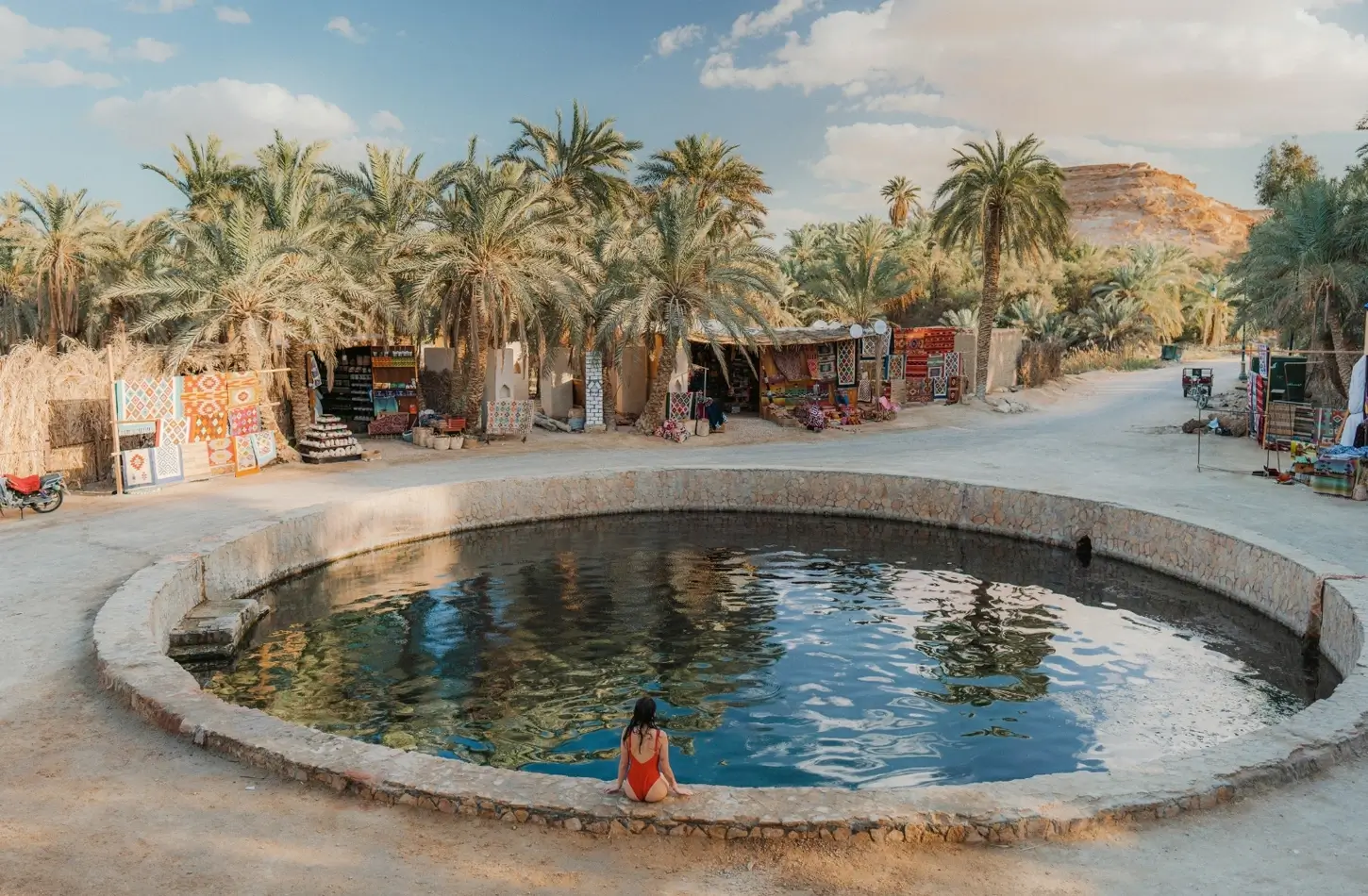
- Hot and cold springs: natural and piped springs in the palm gardens, some warm enough for a soak after the desert. Bir Sigam and several others are used by visitors; ask your guide which ones are clean and open that week.
The antiquities sites share a single Bahariya ticket, EGP 100 for a foreign adult and EGP 50 for a student, open 8:00 to 16:00, according to the ministry's ticket list (November 2024 edition). Prices change; check again before you travel.
On the road south: the desert
- The Black Desert: about an hour south of Bawiti, a landscape of orange sand covered with dark, volcanic-looking stones and cone-shaped hills. Climb one for the view.
- Crystal Mountain: a ridge of quartz crystal by the road, sparkling in the sun. Look, but do not take pieces: it is protected.
- Agabat: a valley of sand dunes between limestone cliffs, one of the most photogenic places in the Western Desert.
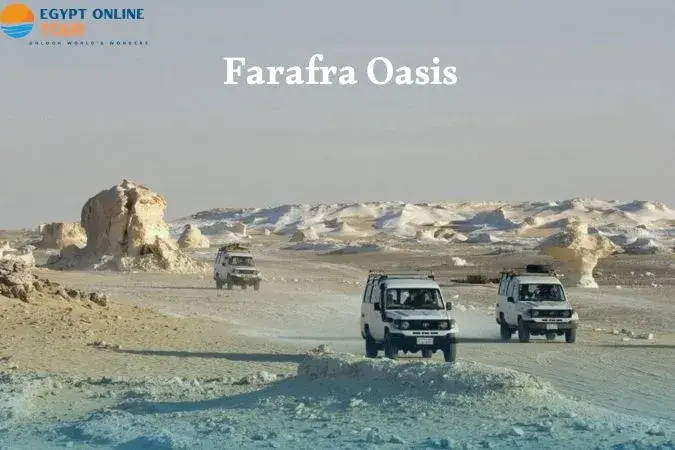
- The White Desert: the chalk formations shaped by wind into mushrooms and other shapes, in a national park of 300 km2 protected since 2002, about 45 km north of Farafra. Sunset, a night under the stars and sunrise here are the reason most people make the trip. Read our guide to the Western Desert of Egypt for the wider region. Bahariya is also the second stop of our 9-day Siwa and Marsa Matrouh trip from Cairo, with the Golden Mummies and the Black and White Deserts.
How to get to Bahariya Oasis
- By private car or 4x4: the easiest way, 4 to 5 hours from Cairo or Giza on the Bahariya road, with a stop on the way. Most trips leave Cairo early in the morning.
- By public bus: buses run from Cairo to Bawiti, slower and less comfortable, suitable for independent travellers with time.
- From other oases: the road continues south to Farafra (about 3 hours) and on to Dakhla and Kharga, so Bahariya can be the first stop of a longer oasis loop.
There is no airport in the oasis, and no train for passengers.
When to visit Bahariya
| Season | Conditions | Our advice |
|---|---|---|
| October to November | Warm days, cool nights | One of the best times for camping |
| December to February | Mild days, cold nights, close to freezing in the desert | Best for hiking; bring warm layers and a good sleeping bag |
| March to April | Warm, some windy days | Good, but check for sandstorms |
| May to September | Very hot, often above 40 C | Only short trips, early mornings; camping is uncomfortable |
How long to stay and sample plans
- Day trip from Cairo: possible but long, about 10 hours of driving for a few hours in the Black and White Deserts. We only recommend it if you have no other choice.
- Two days, one night: drive to Bawiti, the oasis sights at midday, the Black Desert and Crystal Mountain in the afternoon, sunset and camp in the White Desert, back to Cairo the next day.
- Three days, two nights: the best balance: a full day in the oasis with the springs, then the desert at a slower pace with Agabat and a second night under the stars.
Practical tips: clothes, fitness and safety
- Clothes: light, covering clothes and a hat by day; a fleece or down jacket for the desert night from November to March. Modest dress in Bawiti, which is a conservative village.
- Fitness: no special fitness is needed. Walking on sand and climbing a small hill for the sunset are the hardest parts.
- Permits and operators: trips into the desert are run by licensed local operators with 4x4 vehicles, who handle the registration with the authorities. Do not drive into the desert alone.
- Water and cash: carry plenty of water and some cash; card machines are rare in the oasis.
- Leave no trace: take all rubbish back, do not write on the chalk formations and do not collect stones or fossils.
- Phones: coverage disappears in parts of the desert; let someone know your plans.
Where to stay
Bawiti has simple eco-lodges and guesthouses built from local mud brick, many with their own spring or pool and a garden restaurant serving oasis food: rice, stewed vegetables, chicken or lamb, dates and bread baked in the sand. In the White Desert, camps are set up by the operator with mattresses, blankets and a fire; there are no buildings. Choose the camp night for the stars, and a lodge night for a hot shower.
Hot and cold springs in Bahariya
Bahariya sits on deep groundwater, and its springs and wells are what make farming possible. For visitors they come in two kinds:
| Hot springs | Cold springs | |
|---|---|---|
| Water | Warm to hot, often iron-rich and reddish, with a mineral smell | Cool, clear spring water in the palm gardens |
| Best time | Winter evenings and mornings, after a cold desert night | Warm afternoons in spring and autumn |
| Setting | Concrete pools fed by wells, some at lodges | Natural pools and channels under palms |
| Tip | Do not stay in very hot water too long, and drink water | Ask locals which pools are used for irrigation or drinking |
Many springs are used by farmers and families, so swim in modest clothes (a T-shirt and shorts or leggings for women) and ask before you get in. The iron in some hot springs can stain light swimwear.
Local food and souvenirs
Oasis meals are simple and generous: rice, vegetable stews, chicken or lamb, flatbread and salads, followed by tea with fresh mint. Bahariya's dates and olives are excellent, and in autumn you can buy dates straight from the farms. Good souvenirs are local dates and date paste, olive oil, hand-woven baskets and palm-leaf crafts, and simple embroidered items made by oasis women. Do not buy fossils or desert stones: taking them out of protected areas is not allowed.
Bahariya or Siwa?
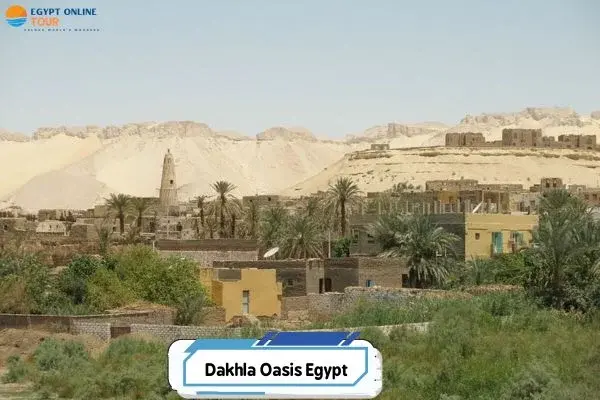
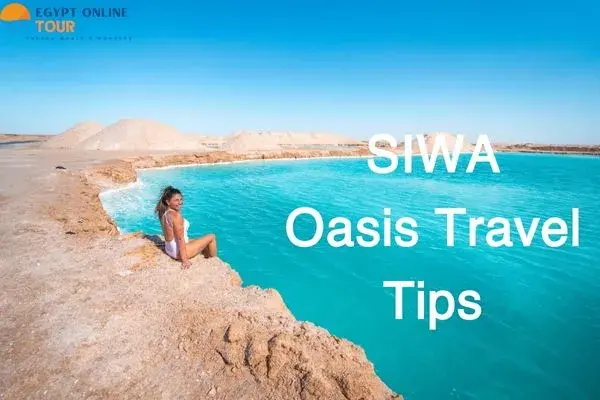
Both are oases in the Western Desert, but they suit different trips. Bahariya is closer to Cairo and is the base for the Black and White Deserts and camping. Siwa, far to the west near Libya, has its own language and culture, salt lakes and the oracle temple of Amun, and needs at least three nights. Our Siwa Oasis travel tips explain that trip, and our guides to Farafra and Dakhla cover the oases further south.
Plan it with us
Our White Desert camp tour spends three days and two nights between Bahariya, the Black Desert, Crystal Mountain, Agabat and the White Desert, with meals and camping gear included. If you are short of time, the Bahariya and White Desert trip from Cairo covers the highlights.
Bahariya Oasis: quick answers
How far is Bahariya Oasis from Cairo?
About 370 km, or 4 to 5 hours by car on the Bahariya road.
Can you see the Golden Mummies?
Yes, a selection is shown in the small antiquities museum in Bawiti. The cemetery itself is not open to visitors.
How far is the White Desert from Bahariya?
The White Desert National Park lies south of Bahariya, about 45 km north of Farafra; with stops at the Black Desert and Crystal Mountain it is an afternoon's drive by 4x4 from Bawiti.
When is the best time to visit Bahariya Oasis?
October to April. Desert nights are cold from December to February; May to September is very hot.
Ahmed Samir writes and updates the Egypt travel guides of Egypt Online Tour, a licensed tour company based in Cairo (ETAA licence 1466). Our travel advisors review each guide before it is published.
All guides by Ahmed Samir