Standard
Standard hotelsComfortable, well located
- Cairo 1 nightBarceló Cairo Pyramids or Jaz Pyramid Cairo, or similar
- Bahariya 2 nights
- Marsa Matrouh 1 night
- Siwa 2 nights
- Cairo 2 nightsBarceló Cairo Pyramids or Jaz Pyramid Cairo, or similar
9 days, 8 nights by private car and 4x4: Bahariya and the Black and White Deserts, Marsa Matrouh, Siwa Oasis with the Oracle of Amun and the Great Sand Sea, then the Pyramids of Giza. Includes hotels, meals as listed, a guide, entrance fees and desert permits.
This private 9-day tour is a loop through the Western Desert and the Mediterranean coast, with Cairo at both ends. You drive from Cairo to Bahariya Oasis for two nights, with a full day among the volcanic hills of the Black Desert, Crystal Mountain and the chalk shapes of the White Desert. The road then takes you north to Marsa Matrouh for a night by the sea, and south-west to Siwa, the most remote of Egypt's inhabited oases, for two nights. The last part of the trip is in Cairo, with the Pyramids of Giza, the Egyptian Museum, the Citadel and the Cave Church of St Simon on the Mokattam hills.
Most Egypt tours follow the Nile. This one goes the other way, into the desert, where the landscape changes from black basalt to white chalk to the dunes of the Great Sand Sea, and where the oasis towns still live from dates, olives and springs. Your guide and vehicle are private for your group, and the 4x4 excursions in the desert are part of the program.
It is a weaker fit if you want Luxor, Aswan or a Nile cruise; for those, see our Egypt classic tours. If you would like fewer hours in the car, a tailor-made trip can drop Marsa Matrouh or add a night, and our other Egypt adventure tours include shorter desert trips.
This is a road trip, and the distances in the Western Desert are long. The desert days themselves are relaxed, with time at the springs and stops for photographs, but four days are mainly travel:
The vehicle is air-conditioned and the driver stops whenever you need a break. Bring a book, downloaded music and a power bank, as the phone signal disappears on parts of the desert roads.

Our representative meets you in the arrival hall of Cairo International Airport, helps with your luggage and walks you to your private air-conditioned vehicle. The drive to the hotel takes 30 to 60 minutes, depending on traffic and the hotel's location.
At check-in your tour leader goes through the plan with you: the early start tomorrow, what to pack in a day bag for the desert, and the passport details needed for the desert permits if we do not already have them. The hotel offers a welcome drink at check-in.
No meals are included today. Keep the evening light and go to bed early: the drive to Bahariya starts after breakfast tomorrow. Overnight in Cairo.
After breakfast you leave Cairo on the road to the oases. Bahariya lies about 370 km south-west of the capital, four to five hours by road. Within an hour the city gives way to open desert, flat at first and then broken by low hills and escarpments. There is a stop at a roadside rest house for tea and a stretch.
Lunch is at a local restaurant on arrival in Bawiti, the main town of Bahariya. The oasis lies in a wide depression surrounded by dark hills, with palm groves, olive trees and springs that have supported farming here since pharaonic times. After check-in, the rest of the afternoon is free to rest or walk through the palm gardens with your guide.
Dinner is served at the hotel or at a camp outside town, with the desert sky above you. Away from city lights the stars are very clear, especially on moonless nights. Overnight in Bahariya. Meals: breakfast, lunch and dinner.
The day starts with the antiquities of the oasis. In 1996 a guard's donkey stumbled into a buried tomb near Bawiti, and the excavations that followed uncovered a large Greco-Roman cemetery now known as the Valley of the Golden Mummies. Several of the mummies, with their gilded masks, are displayed in the small museum in town. Nearby, the chapels of Ain el-Muftella were built in the 26th Dynasty, about 2,600 years ago, when Bahariya was an important stop on the caravan routes. From the top of the English Mountain, a hill where British soldiers kept a lookout during the First World War, you see the whole oasis spread below.
You change to a 4x4 for the drive south. About 50 km from Bawiti, the Black Desert is a field of cone-shaped hills capped with dark volcanic rock, with black stones scattered over the orange sand. Your driver stops for a short climb up one of the hills for the view. Further on, Crystal Mountain is a low ridge of quartz and calcite crystals that sparkle in the sun. Lunch is a picnic in the desert.
The White Desert National Park, protected since 2002, is the highlight of the day. Wind and sand have carved the white chalk into shapes that look like mushrooms, cones and animals, the most famous being the "Mushroom" and the "Chicken". In the late afternoon the chalk turns gold and pink, and this is when your driver will stop for the sunset. On the way you also pass the Agabat valley, where the chalk cliffs and golden dunes meet.
Back in Bawiti, you finish the day in a warm spring such as Bir Sitta, where the mineral water comes out of the ground at around 30 to 40 °C. Dinner is at the hotel. Overnight in Bahariya. Meals: breakfast, lunch and dinner.
Today is the main travel day of the tour. After an early breakfast you check out and drive back across the desert towards Cairo, then north-west on the desert highways to the Mediterranean coast. Plan on a full day in the vehicle, with stops for tea and lunch on the way.
The last part of the road follows the coast past El Alamein, where the Second World War battle of 1942 was fought, with the sea on your right. Marsa Matrouh is the main town of Egypt's north-west coast, known for its bays of fine white sand and calm, clear water that runs from turquoise to deep blue.
You check in to your hotel in Marsa Matrouh in the late afternoon or early evening, in time for a walk along the corniche or on the beach. Dinner is included. Overnight in Marsa Matrouh. Meals: breakfast, lunch and dinner.
This is a long day, so keep water, snacks, a charged phone and something to read in the car. In summer it is worth bringing your swimwear in your day bag for an evening swim.
After breakfast you have the morning at the beach. The bays west of town, among them Agiba with its cliffs and coves, are the most beautiful. From about June to October the water is warm enough to swim; in winter it is a place for a walk and photographs.
From Marsa Matrouh the road turns south, about 300 km and around four hours across a flat, empty plateau, until it drops into the Siwa depression, below sea level, with its salt lakes and palm groves. Lunch is on arrival in Siwa.
After check-in at your lodge you walk through the market of Siwa town with your guide. Siwa is famous for its dates and olives, for silver jewellery and for embroidery in black, orange and red. The Siwans have their own language, Siwi, a Berber language, which you will hear in the market alongside Arabic.
Dinner is at your lodge. Overnight in Siwa. Meals: breakfast, lunch and dinner.
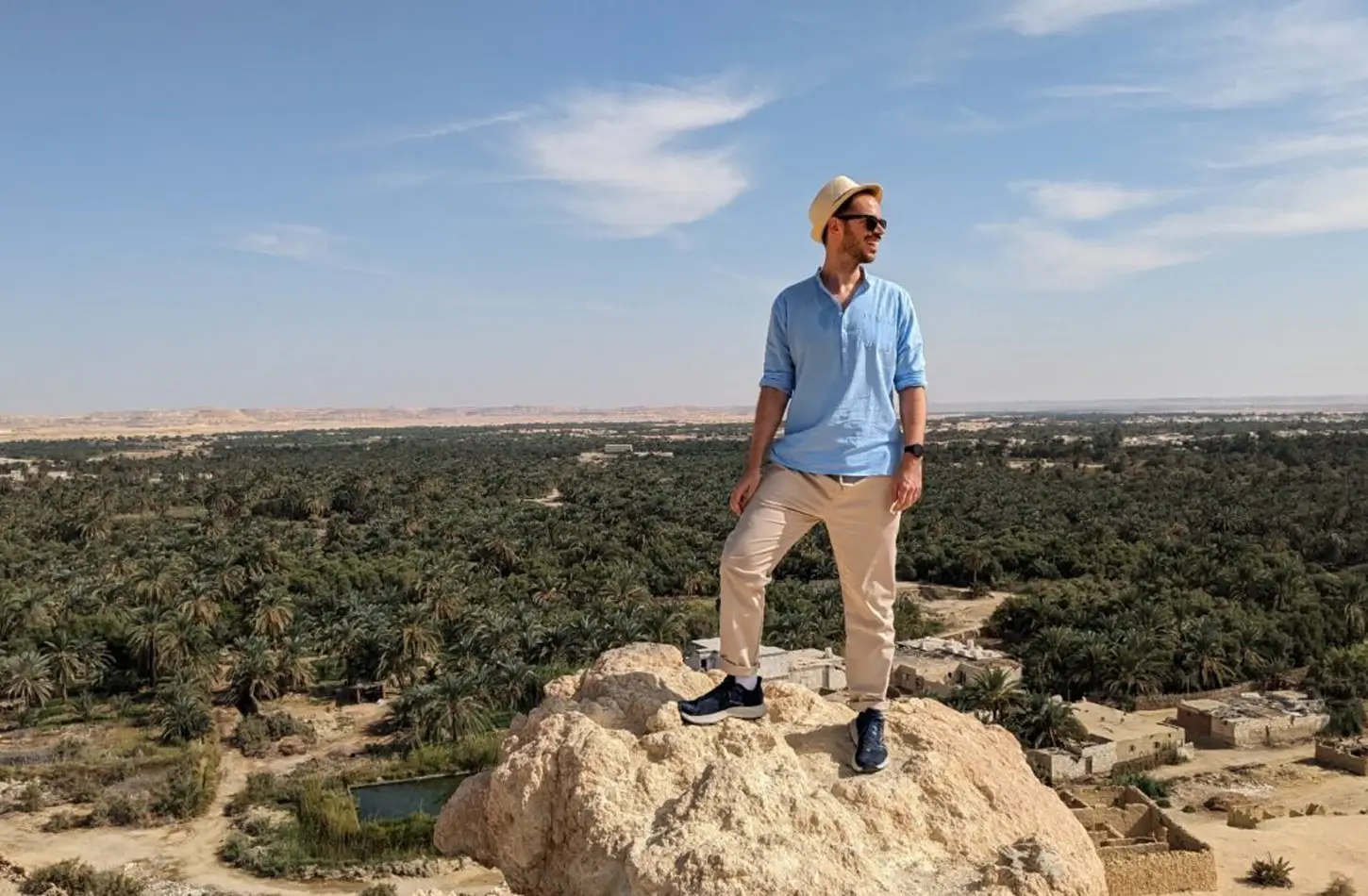
The day starts at Shali, the old fortified town in the centre of Siwa, built in the 13th century of kershef, a mix of salt rock and mud. Heavy rain in 1926 melted much of it, and the ruins now stand like a sculpture over the modern town; a climb to the top gives a view over the palm groves to the salt lakes. A few kilometres away, at Aghurmi, are the remains of the Temple of the Oracle of Amun. Alexander the Great came here in 331 BC, and the oracle, by the ancient accounts, greeted him as the son of Amun.
Gebel al-Mawta, the Mountain of the Dead, is a small hill honeycombed with rock-cut tombs from the last centuries before Christ. Some keep their painted walls, the best known being the tomb of Si-Amun, which mixes Egyptian and Greek styles. Which tombs are open varies from day to day.
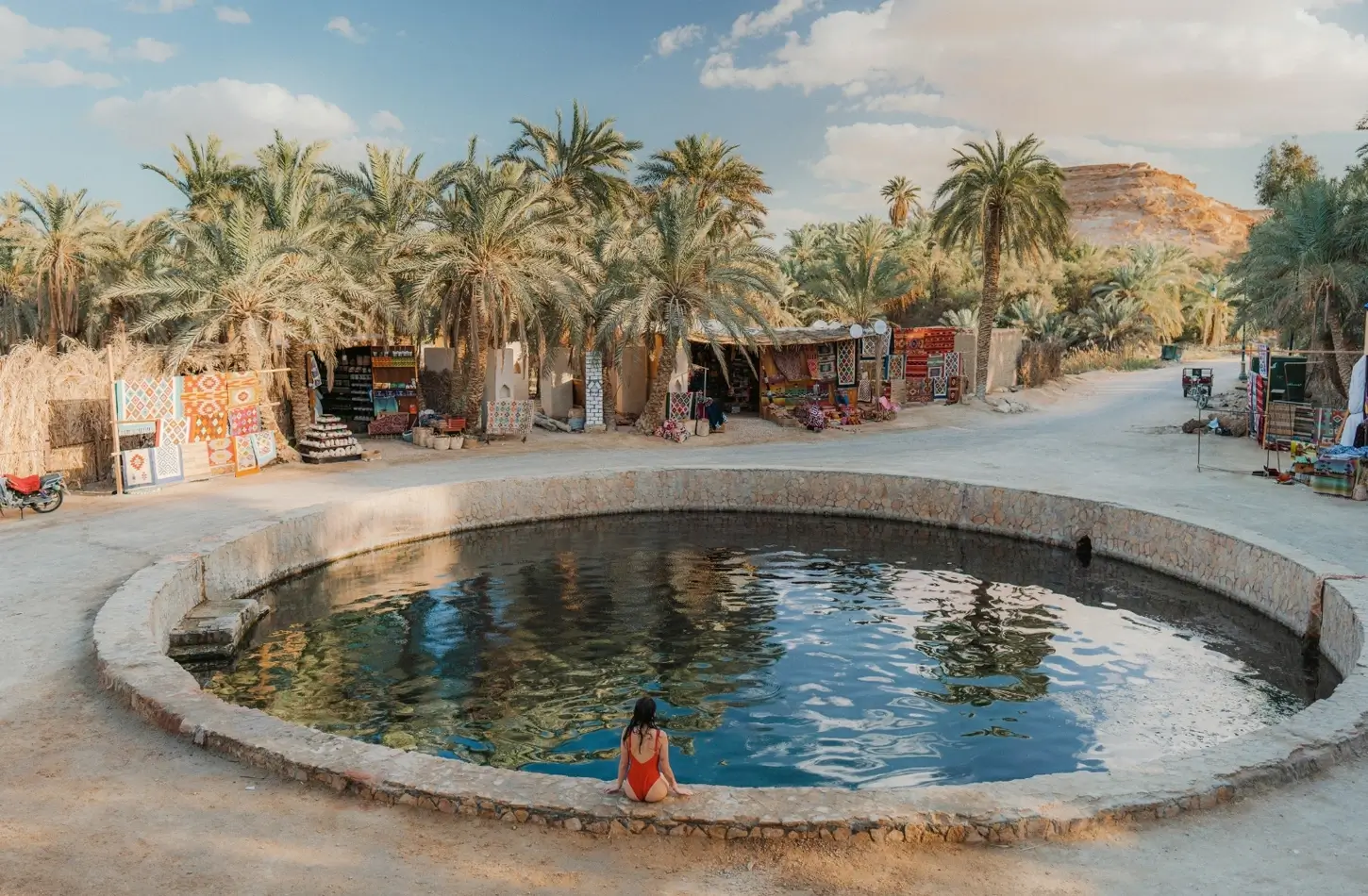
Lunch is in town, followed by time at Cleopatra's Pool, a round stone spring surrounded by palms, where you can swim in clear spring water. The name is a legend; the spring has been used by the people of Siwa for centuries.
In the afternoon you go into the dunes by 4x4. The Great Sand Sea stretches south-west from Siwa to the border with Libya, and the drive across the dunes is fun in its own right. There is time to try sandboarding, a stop at a warm or cold spring in the dunes when conditions allow, and a sunset from the top of a dune.
Dinner is a Bedouin-style meal at a desert camp or at your lodge. Overnight in Siwa. Meals: breakfast, lunch and dinner.
After breakfast you check out and start the long drive back to Cairo, north to the coast at Marsa Matrouh and then east on the coast and desert highways. If there is time before you leave, a short stop at the salt lakes on the edge of town is worth it for the view of the white salt crust against the blue water.
Lunch is at a restaurant on the way. The drive takes most of the day, with rest stops whenever you need them.
You reach your Cairo hotel in the evening. Dinner is included tonight, and the rest of the evening is for rest. Overnight in Cairo. Meals: breakfast, lunch and dinner.
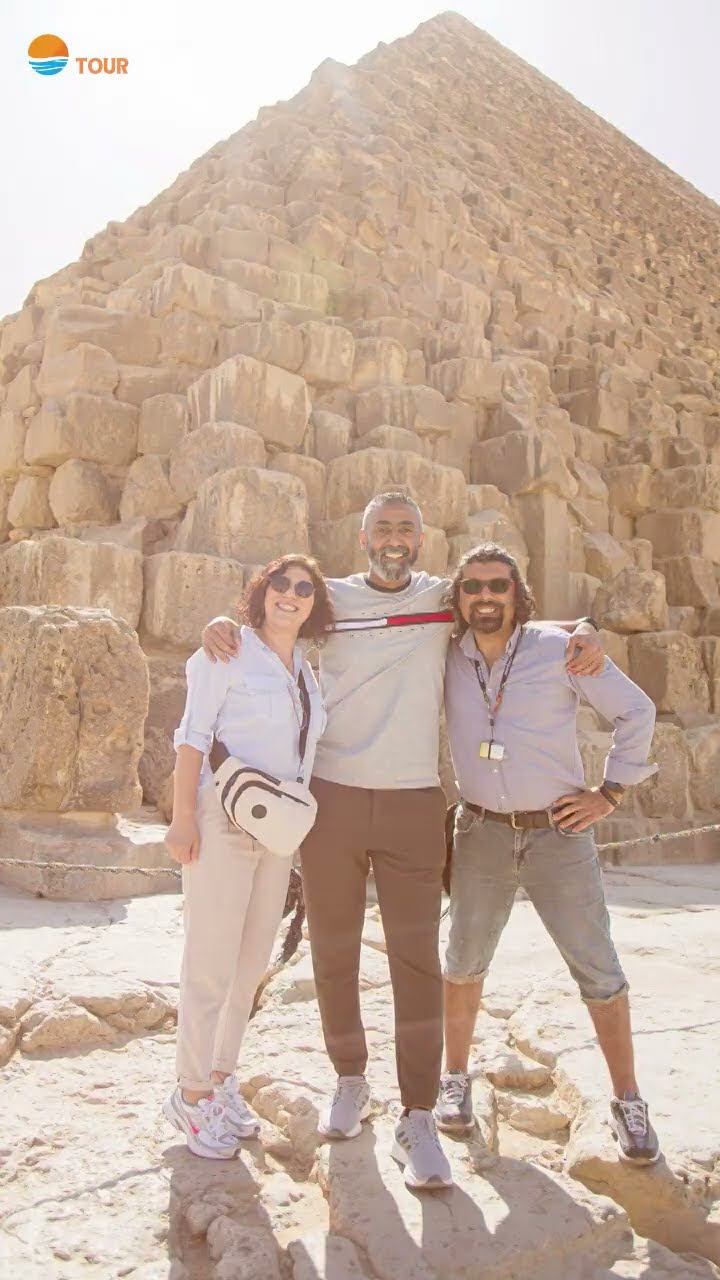
After breakfast your Egyptologist takes you to the Giza Plateau. The three main pyramids were built for the Fourth Dynasty kings Khufu, Khafre and Menkaure about 4,500 years ago. The Great Pyramid of Khufu is the largest and the only one of the Seven Wonders of the Ancient World still standing. Your guide explains how they were built and how the plateau worked as a royal cemetery. Going inside the Great Pyramid needs an extra ticket bought at the site. Below the pyramids you see the Great Sphinx and the Valley Temple of Khafre, with its walls of huge granite blocks.
Lunch is at a local restaurant. In the afternoon you visit the Egyptian Museum in Tahrir Square, opened in 1902, which still holds one of the largest collections of ancient Egyptian objects in the world, from the Narmer Palette to the statues of the Old Kingdom and the treasures of Tanis. After the sand and silence of the desert, it is a good place to see the history behind the sites you have passed.
Dinner is at a restaurant in Cairo before the drive back to your hotel. Overnight in Cairo. Meals: breakfast, lunch and dinner.
After breakfast you check out and keep your luggage in the vehicle. The Citadel of Salah al-Din, built from 1176 on a spur of the Mokattam hills, was the seat of Egypt's rulers for some 700 years. Inside stands the Mosque of Muhammad Ali, finished in 1848, with its domes and slender minarets, and a terrace with a view over the whole city.
Higher on the Mokattam hills, the Monastery of St Simon the Tanner, also called St Samaan, is built into the rock. Its largest church is an amphitheatre carved into the cliff that seats thousands. You reach it through Manshiyat Nasser, the district of the Zabbaleen, the Coptic community who collect and recycle much of Cairo's rubbish.
Lunch is at a local restaurant, followed by a walk through the lanes of Old Cairo before the transfer to Cairo International Airport, timed to your flight; airlines usually ask you to arrive three hours before departure. This is the end of the tour. Meals: breakfast and lunch.
The day plan is built for an evening flight. If you fly out in the morning, tell us when you book and we will move these visits to Day 8 or arrange an extra night.
Comfortable, well located
More space and better ships
Our highest level
Children pay less, see the children policy below. Christmas, New Year and Easter dates add 25%. Prices are per person in US dollars.
October to April is the right season for the Western Desert. Days are warm and dry, around 20 to 26 °C in Bahariya and Siwa from November to February, but nights in the desert are cold and can drop to 5 °C or lower in December and January. From May to September, daytime temperatures in Siwa and Bahariya often pass 40 °C, and the 4x4 trips are only comfortable early in the morning and late in the afternoon. Marsa Matrouh is a summer resort for Egyptians: the Mediterranean is warm enough for a swim from about June to October, while in winter the beach is for walking. Sandstorms can happen in spring, usually in March and April, and may change the order of the desert visits on the day.
Many nationalities can buy a tourist visa on arrival at Cairo airport or apply in advance for an e-visa on the official portal, visa2egypt.gov.eg; the rules and fee depend on your passport. Your passport should be valid for at least six months from your arrival. Keep it with you on the road: there are police checkpoints on the desert highways, and the drive to Siwa and the desert areas needs permits that we arrange with your passport details before you travel. The visa is not included in the tour price.
The currency is the Egyptian pound. There are cash machines in Bawiti, Marsa Matrouh and Siwa town, but they can be empty or out of order, so change enough cash in Cairo for the five days in the desert. Cards are rarely accepted in the oases outside the larger hotels. Tips are not included; the tipping guide in the travel policies below gives the usual amounts for guides and drivers, including the 4x4 drivers in the desert.
All prices are per person in US dollars. The price changes with the season (winter 1 October to 30 April, summer 1 May to 30 September), the accommodation level and the size of the group. Christmas, New Year and Easter dates add 25%. Your quote lists the final price and everything it covers. After the deposit, changes to your itinerary cost US$25 per request, plus any third-party fees.
A deposit of 30% of the total tour cost confirms your booking. We send you a secure payment link for the deposit; the balance is paid in cash or by card on arrival in Egypt, unless your written offer gives another date. We never ask for card details by email, chat or WhatsApp. We confirm every booking by email.
No-show travelers are charged 100%. During peak events in Egypt, hotels and Nile cruises do not refund deposits. Groups of more than 10 people may have different terms.
Add each child and their age in the enquiry form so the quote is exact.
Optional visits, such as a hot air balloon ride in Luxor, a Sound and Light show or a felucca ride, are not in the price. Tell us which ones you want and we add them to your quote with their cost.
Not included in the price: International flights to and from Egypt; Egypt entry visa; Optional tours and activities not listed in the itinerary; Personal spending, drinks with meals and souvenirs; Extra tickets at the sites, such as inside the Great Pyramid; Tips for guides, drivers and hotel staff.
Tipping is customary in Egypt and is not included in the price. A usual amount for a private tour is US$8 to 10 per person per day for your guide, US$4 to 5 for your driver and US$5 to 8 per person per day for the crew on a Nile cruise. Your guide can advise you on the day.
Cairo to Bahariya is about 370 km, four to five hours. Marsa Matrouh to Siwa is about 300 km, around four hours. The days from Bahariya to Marsa Matrouh (Day 4) and from Siwa back to Cairo (Day 7) are full travel days with stops. All drives are in a private air-conditioned vehicle, and you can stop whenever you need to.
No, all nights are in hotels or lodges: Cairo, Bawiti in Bahariya, Marsa Matrouh and Siwa. The White Desert is visited by day, with the sunset before you drive back to Bawiti. If you would like to spend a night camping in the White Desert, ask us: it can be added for an extra cost.
Bahariya, the White Desert, Marsa Matrouh and Siwa are visited by tourists all year, on main roads with police checkpoints. Travel in these areas needs permits, which we arrange in advance with your passport details, and the desert excursions are done with experienced local 4x4 drivers. We check the current conditions and official advice before every departure.
Yes. There are warm springs in Bahariya, Cleopatra's Pool and springs in the dunes near Siwa, and the sea at Marsa Matrouh, which is warm enough for swimming from about June to October. Bring modest swimwear, or a T-shirt and shorts to wear over it in the springs, as the oases are conservative.
Yes. Because the tour is private, nights can be added in Cairo at the start or the end, for example for the Grand Egyptian Museum, Saqqara or a day in Alexandria. Tell us your dates and we will adjust the plan and the price.
Independent reviews on the platforms travelers already trust.
Amazing Egyptian vacation! We did an 11 day private tour of Cairo, cruise on the Nile between Aswan and Luxor and a 4 day stay in Hurghada. The guided tours were very interesting, with extremely knowledgeable guides, attentive and helpful.
Egypt package to the Pyramids of Giza and Saqqara was a fascinating journey through Egypt's ancient past ,guide knowledge, the majesty of the pyramids, and the historical depth of Saqqara made this tour truly enriching!
our honeymoon to Egypt ,Giza and Saqqara was a magical escape into history The pyramids looming in the distance, the quiet serenity of the desert, and the ancient wonders of Saqqara created moments that will be with me forever!
Answers to the questions travelers ask before they book.

Our Siwa Oasis travel tips in short: go between October and April, plan at least three nights because the oasis is 560 km from Cairo, carry cash, dress modestly and swim only in the known springs and salt pools. Here is how to get there, what to do day by day and what to pack.
Read the guide
The Western Desert of Egypt covers about two-thirds of the country, from the Nile to Libya. A practical guide to its oases (Siwa, Bahariya, Farafra, Dakhla, Kharga and Fayoum), the White and Black Deserts, Wadi Al-Hitan, the best season, distances from Cairo, safety and what a desert tour includes.
Read the guide
Fayoum Oasis lies about 100 km south-west of Cairo, two hours by car. In one or two days you see the Wadi El-Rayan waterfalls, the 40-million-year-old whale skeletons of Wadi El-Hitan (UNESCO), Lake Qarun, the Magic Lake dunes and the potters of Tunis village. Here is how to plan it.
Read the guideWe always use the cookies this site needs to work. With your permission we also use the optional ones listed under Settings. You can change your choice at any time. Privacy policy