Standard
Standard hotelsComfortable, well located
- Cairo 2 nightsJaz Pyramid Cairo or Barceló Cairo Pyramids, or similar
- Luxor 1 nightSonesta St. George Luxor or similar
- Cairo 2 nightsJaz Pyramid Cairo or Barceló Cairo Pyramids, or similar
6 days, 5 nights: Dahshur, Saqqara and the Serapeum, a flight to Luxor for Karnak and Luxor Temple, a drive to Abydos and Dendera, then a guided meditation at Giza and a visit inside the Great Pyramid. Includes hotels, flights, lunches, a private guide and entrance fees.
This private 6-day tour is built for travelers who want time for stillness and reflection at Egypt's sacred sites, not only a guided walk through them. The route follows the story of the pyramid from its beginnings to its peak, and the temples that ancient Egyptians held most sacred. You start south of Cairo at Dahshur and Saqqara, where the first pyramids were built, fly to Luxor for Karnak and Luxor Temple, drive north the next day to Abydos and Dendera, two of the best-preserved temples in the country, and fly back to Cairo. The last full day is at Giza, with a guided meditation session at the foot of the pyramids and a visit inside the Great Pyramid.
The sites on the route are the Bent and Red Pyramids of Sneferu at Dahshur, the Step Pyramid of Djoser and the Serapeum at Saqqara, Karnak with the chapel of Sekhmet, Luxor Temple, the Temple of Seti I at Abydos with the Osireion behind it, the Temple of Hathor at Dendera, the Pyramids of Giza and the Sphinx. A private guide and an air-conditioned vehicle are with you for every visit, the timing at each site leaves room for quiet time, and both domestic flights, Cairo to Luxor and Luxor to Cairo, are included.
It is a weaker fit if you want the Valley of the Kings, Aswan or a Nile cruise, which are not on this route, or if a 12-hour day by road is hard for you (Day 4). For a longer route, see our meditation and spiritual tours, or ask for a tailor-made trip.
The pace is moderate, with two long days. Visits are timed early or late in the day when the sites are calmer, which suits meditation. Expect walking on sand and uneven ground, and steep, low passages inside the pyramids, where you walk bent over. Three days include longer travel:
Our representative meets you in the arrival hall of Cairo International Airport, helps with the visa counter if you buy your visa on arrival, and walks you to your private air-conditioned vehicle. The drive to the hotel takes 30 to 60 minutes, depending on traffic and on where your hotel is.
At check-in you receive a welcome drink, and we send you the plan and pick-up time for Day 2 by message. If your group has a meditation teacher or a practice you follow, this is the time to tell us, so your guide can plan the quiet moments around it.
No meals are included today. Keep the evening light: Day 2 starts after an early breakfast, to reach Dahshur while it is still quiet.
After breakfast you drive about one hour south of Cairo to Dahshur, on the edge of the desert. King Sneferu, the father of Khufu, built two pyramids here around 2600 BC, and they show how the Egyptians learnt to build a true pyramid. The Bent Pyramid changes its angle halfway up, a correction made during building; much of its outer casing is still in place. The Red Pyramid, a short drive away, was finished with the gentler angle and is the first smooth-sided pyramid.
You can walk down the long, low passage of the Red Pyramid (it is steep, and you go bent over) to its three chambers with high corbelled roofs. The chambers echo strongly, and many visitors use them for a few minutes of silence or chanting. Your guide leaves you time inside before you climb back up.
Lunch is at a local restaurant on the way to Saqqara, with Egyptian dishes such as grilled chicken, stuffed vine leaves and salads.
Saqqara was the burial ground of Memphis, Egypt's first capital. The Step Pyramid of Djoser, designed by the architect Imhotep around 2650 BC, is the earliest large stone building in Egypt; later Egyptians honoured Imhotep as a god of wisdom and healing. Your guide explains the enclosure around it, built as a stone copy of the king's palace and festival courts.
The day ends underground at the Serapeum, the burial galleries of the Apis bulls, sacred animals of the god Ptah. Corridors cut into the rock lead past side chambers holding more than twenty huge stone coffins, most of them cut from a single block of granite or basalt. It is cool and quiet inside, and a place many travelers on this tour remember most.
You are back at the hotel in the late afternoon. The evening is free.
After an early breakfast your driver takes you to Cairo airport for the domestic flight to Luxor, about one hour. Our representative meets you on arrival in Luxor; if your room is not ready yet, your luggage stays at the hotel while you start the visits.
Karnak was the main temple of the god Amun and the largest religious site of ancient Egypt, built and enlarged over some 2,000 years. You walk through the pylons into the Great Hypostyle Hall with its 134 columns, see the obelisks of Thutmose I and Hatshepsut, and the sacred lake where the priests purified themselves. In the small temple of Ptah, in the north of the site, a dark chapel holds a standing statue of the lioness goddess Sekhmet; light enters only through an opening in the roof, and it is one of the places where your guide gives you quiet time.
Lunch is at a local restaurant, followed by a rest at the hotel in the hottest hours.
Luxor Temple, built mainly under Amenhotep III and Ramses II, was linked to Karnak by the Avenue of Sphinxes, about 2.7 km long, along which the statues of the gods were carried each year in the Opet festival. In the 20th century the French scholar René Schwaller de Lubicz read the plan of the temple as a figure of the human body, an idea that brings many spiritual travelers here; your guide explains both his reading and what the inscriptions say. The temple is lit after sunset, and the late afternoon is the calmest time to visit.
The evening is free in Luxor; you spend the night at your Luxor hotel.
This is the longest day of the tour. After an early breakfast you check out and drive north with your guide, about three hours along the Nile valley through sugar-cane fields and villages, to Abydos.
Abydos was the holiest place in Egypt for the god Osiris, ruler of the afterlife; Egyptians hoped to be buried here or at least to leave a memorial. The temple built by Seti I and finished by his son Ramses II has seven chapels side by side, one for each of its gods, and its painted reliefs are among the finest of the New Kingdom. In a corridor you see the King List of Abydos, where Seti and the young Ramses honour 76 earlier kings. Behind the temple lies the Osireion, a sunken building of massive granite pillars made as a symbolic tomb of Osiris; groundwater often stands in it, and it can be viewed from above.
Lunch is at a local restaurant on the way south.
Dendera, about two hours from Abydos near the town of Qena, is the temple of Hathor, goddess of love, music and joy. Built in the Ptolemaic and Roman periods, it is one of the most complete temples in Egypt: the roof, the stairways and the crypts are all in place. The ceilings of the great hall were cleaned in recent years and show their blue and gold colours again, with the sky goddess Nut and the hours of day and night. On the roof stand the chapels of Osiris, where a cast of the round Dendera zodiac sits in the ceiling (the original is in the Louvre in Paris).
From Dendera you drive about 1 hour 15 minutes back to Luxor airport for the evening flight to Cairo, about one hour. Our representative meets you and drives you to your hotel for the night.
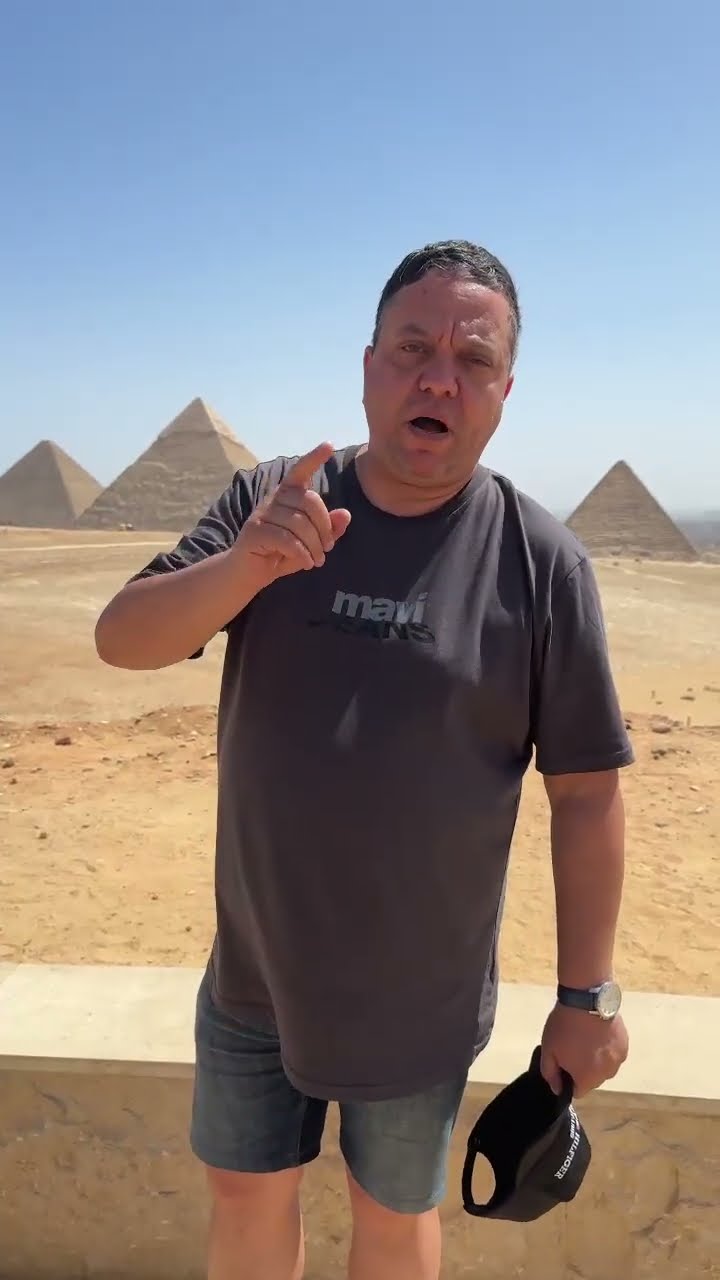
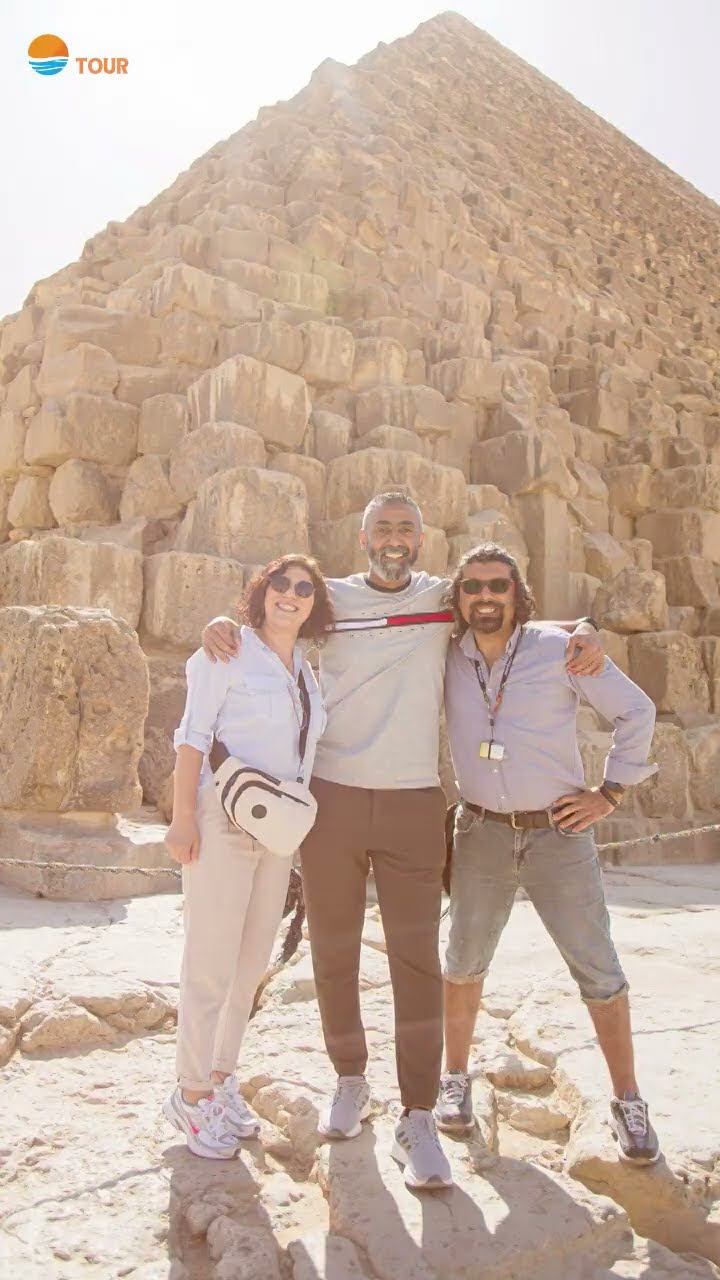
After breakfast your guide meets you at the hotel and you drive to the Giza Plateau, ideally for the opening time, when the plateau is quietest. The Great Pyramid of Khufu, built about 4,500 years ago, is the largest of the three and the only one of the Seven Wonders of the Ancient World still standing. You go inside through the Grand Gallery, a tall corbelled passage, to the King's Chamber, a room lined with red granite that holds the king's empty sarcophagus. The way up is steep and narrow, and the air inside is warm.
Your guide then takes you to a quiet spot on the plateau with a view of the pyramids for a guided meditation session, timed so that you are not rushed. Afterwards you see the pyramids of Khafre and Menkaure from the panoramic viewpoint.
Below the pyramids stands the Great Sphinx, carved from the bedrock with the body of a lion and the head of a king, and next to it the Valley Temple of Khafre, built of huge granite blocks, where the funeral rites of the king began.
Lunch is at a local restaurant near Giza before you return to the hotel. The rest of the day is free; the Sound and Light show at the pyramids is an optional extra in the evening.
The number of visitors allowed inside the Great Pyramid each day is limited, and the King's Chamber is sometimes closed for maintenance; your guide confirms the interior visit on the day. A private visit inside the pyramid outside public hours, for a group meditation alone in the chamber, needs a special permit from the antiquities authorities and is an optional extra with its own fee, subject to approval; ask us early if you want one.
After breakfast, our representative drives you to Cairo International Airport in time for your international flight and helps you as far as the check-in area; airlines usually ask you to be at the airport three hours before departure. This is the end of the tour.
If your flight leaves late in the day, ask us when you book about extra visits, such as the Grand Egyptian Museum near Giza, which are optional extras.
Comfortable, well located
More space and better ships
Our highest level
Children pay less, see the children policy below. Christmas, New Year and Easter dates add 25%. Prices are per person in US dollars.
October to April is the most comfortable time. In winter, Cairo has days around 19 to 22 °C and Luxor around 23 to 26 °C, with cold early mornings, which are the best hours for meditation at the sites. From May to September, Luxor and the road to Abydos often pass 40 °C; the long Day 4 is then started before sunrise and the time outdoors is kept short. The equinoxes and solstices are popular with spiritual groups, and the sites are busier around Christmas, New Year and Easter.
Our guide on what to pack for a trip to Egypt has a full list.
Many nationalities can buy a tourist visa on arrival at Cairo airport or apply for an e-visa in advance on Egypt's official portal, visa2egypt.gov.eg. The rules and the fee depend on your passport, so check them before you book your flights. Your passport should be valid for at least six months from the day you arrive. The visa is not included in the tour price.
The currency is the Egyptian pound. Cards are accepted in hotels and larger shops; keep small notes for toilets at some sites, temple guardians who open a chapel and personal extras. Photography is allowed at most sites with a phone; some interiors charge for a camera. Tips are not included in the price. The tipping guide in the travel policies below gives the usual amounts; how much you give is your choice.
All prices are per person in US dollars. The price changes with the season (winter 1 October to 30 April, summer 1 May to 30 September), the accommodation level and the size of the group. Christmas, New Year and Easter dates add 25%. Your quote lists the final price and everything it covers. After the deposit, changes to your itinerary cost US$25 per request, plus any third-party fees.
A deposit of 30% of the total tour cost confirms your booking. We send you a secure payment link for the deposit; the balance is paid in cash or by card on arrival in Egypt, unless your written offer gives another date. We never ask for card details by email, chat or WhatsApp. We confirm every booking by email.
No-show travelers are charged 100%. During peak events in Egypt, hotels and Nile cruises do not refund deposits. Groups of more than 10 people may have different terms.
Add each child and their age in the enquiry form so the quote is exact.
Optional visits, such as a hot air balloon ride in Luxor, a Sound and Light show or a felucca ride, are not in the price. Tell us which ones you want and we add them to your quote with their cost.
Not included in the price: International flight to/from Egypt; Entry visa to Egypt; Optional private meditation visit inside the pyramid (if requested); Any extra tours or activities not mentioned in the program; Gratuities (Tipping).
Tipping is customary in Egypt and is not included in the price. A usual amount for a private tour is US$8 to 10 per person per day for your guide, US$4 to 5 for your driver and US$5 to 8 per person per day for the crew on a Nile cruise. Your guide can advise you on the day.
During normal opening hours you visit the King's Chamber with other visitors, so a few quiet minutes are possible but not a group session. The included meditation session is at the foot of the pyramids. A private visit inside the pyramid outside public hours needs a special permit from the antiquities authorities, has its own fee and is subject to approval; ask us early if you want it.
It is a long day: about three hours by road from Luxor to Abydos, about two hours on to Dendera and about 1 hour 15 minutes back to Luxor, plus the visits and lunch, then the evening flight to Cairo. Expect to leave early in the morning and reach your Cairo hotel late in the evening.
Yes. The tour is private, so your own teacher can lead the practice and your guide will plan quiet time at each site around it. Tell us how much time you would like at each temple when you enquire.
No. The Luxor part of this route is Karnak and Luxor Temple, and Day 4 goes north to Abydos and Dendera. The Valley of the Kings or a night in Aswan can be added with extra nights; ask us for a tailor-made version.
Independent reviews on the platforms travelers already trust.
Amazing Egyptian vacation! We did an 11 day private tour of Cairo, cruise on the Nile between Aswan and Luxor and a 4 day stay in Hurghada. The guided tours were very interesting, with extremely knowledgeable guides, attentive and helpful.
Egypt package to the Pyramids of Giza and Saqqara was a fascinating journey through Egypt's ancient past ,guide knowledge, the majesty of the pyramids, and the historical depth of Saqqara made this tour truly enriching!
our honeymoon to Egypt ,Giza and Saqqara was a magical escape into history The pyramids looming in the distance, the quiet serenity of the desert, and the ancient wonders of Saqqara created moments that will be with me forever!
Answers to the questions travelers ask before they book.

Read more about Egyptian symbols to provide protection and peace for your journey and the story of more than 60 ancient Egyptian symbols.
Read the guide
Explore Egyptian tattoos symbols and meanings, from the Eye of Horus to the ankh. Discover their rich history, cultural significance, and timeless beauty.
Read the guide
Discover the power of Egyptian mythology with Egyptian goddesses Amathaunta facts, powerful gods, ancient rituals, and timeless secrets.
Read the guideWe always use the cookies this site needs to work. With your permission we also use the optional ones listed under Settings. You can change your choice at any time. Privacy policy