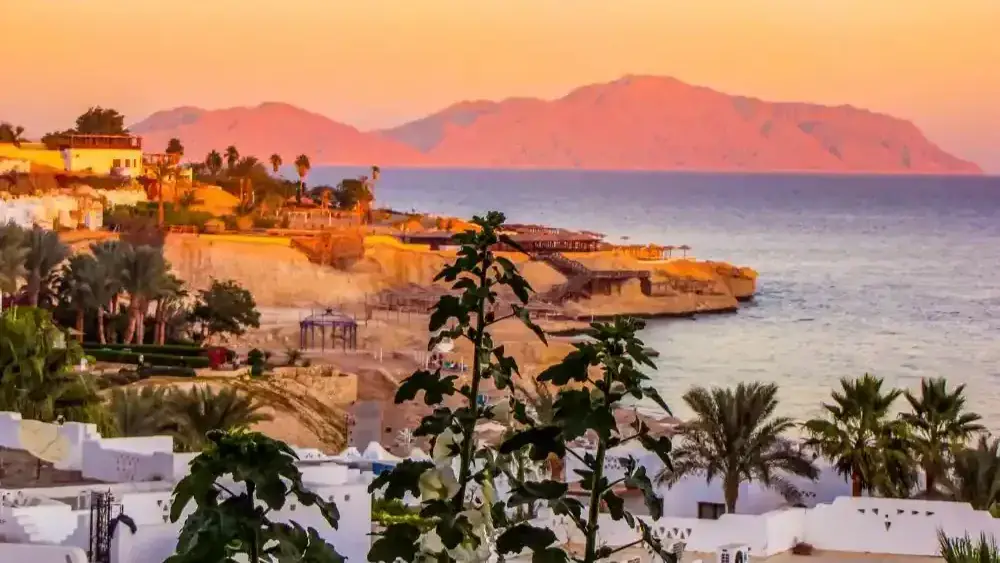
The best Sinai Peninsula things to do are the night climb of Mount Sinai for sunrise, a visit to Saint Catherine's Monastery at its foot, snorkeling or diving the reefs of Ras Mohamed National Park, the Blue Hole near Dahab, the Colored Canyon near Nuweiba and an evening at a Bedouin camp. Almost all of them are in South Sinai, within two to three hours of Sharm El Sheikh or Dahab. If you are staying in Sharm, you can book a day out from your Sharm hotel.
Sinai is the triangle of land between the Gulf of Suez and the Gulf of Aqaba, the only land bridge between Africa and Asia. Its south is granite mountains and desert valleys; its coast is one of the best reef coasts in the world. Below we list the top attractions with what they take in time and effort, then the activities, the seasons and the practical advice our guides give every traveller.
Top Sinai attractions at a glance
| Attraction | Base | Time needed | Best for |
|---|---|---|---|
| Mount Sinai sunrise climb | Saint Catherine (from Sharm or Dahab by night) | Overnight trip | Pilgrims, hikers, sunrise lovers |
| Saint Catherine's Monastery | Saint Catherine | 1 to 2 hours on site | History, faith, icons |
| Ras Mohamed National Park | Sharm El Sheikh | Full day by boat, half day by road | Snorkeling and diving |
| Blue Hole and the Bells | Dahab | Half day | Snorkeling, experienced divers |
| Colored Canyon | Nuweiba (from Sharm or Dahab) | Full day with the drive | Easy desert hike, photos |
| Bedouin camp evening | Sharm El Sheikh, Dahab, Saint Catherine | Afternoon and evening | Families, couples, first-timers |
| Nabq and Abu Galum protected areas | Sharm El Sheikh, Dahab | Half day to full day | Quiet coast, mangroves, snorkeling |
Mount Sinai (Jebel Musa): the sunrise climb
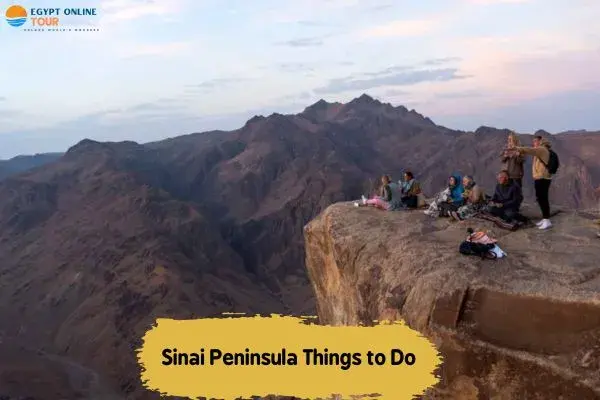
Mount Sinai, Jebel Musa in Arabic, rises to 2,285 m above the valley of Saint Catherine. Jewish, Christian and Muslim tradition identify it with the mountain where Moses received the Law; the Old Testament says Moses stayed on the mountain forty days and forty nights, and the Quran also names Mount Sinai (Tur Sina).
Two ways up
- The camel path (Siket El Bashait): the longer, gentler route, about 2.5 hours on foot. Camels can take you most of the way; the last section to the summit is about 750 steps on foot for everyone.
- The Steps of Penitence (Siket Sayidna Musa): 3,750 stone steps laid by monks in the ravine behind the monastery. Shorter but steep and hard on the knees; most people use it to come down, if at all.
How the night climb works
From Sharm El Sheikh you leave around 22:00 to 23:00 and drive about three hours to Saint Catherine; from Dahab the drive is about two hours. You start walking around 1:00 to 2:00 with a Bedouin guide, reach the top before dawn and come down after sunrise, in time to visit the monastery when it opens. The summit chapel, built in 1934, is closed to visitors. It is cold at the top in every season and close to freezing from December to February: bring a warm jacket, a hat and a torch, or rent a blanket at the top.
Saint Catherine's Monastery
At the foot of Mount Sinai stands Saint Catherine's Monastery, built between 548 and 565 under the Byzantine emperor Justinian and still home to Greek Orthodox monks. Together with the mountain it forms the Saint Catherine Area, a UNESCO World Heritage Site since 2002.
- The Burning Bush: tradition holds that the bush in the courtyard is the one where God spoke to Moses; the Chapel of the Burning Bush is behind the main church.
- The library: one of the oldest working libraries in the world. The Codex Sinaiticus, a 4th-century Bible, was found here in the 19th century.
- The basilica: 6th-century church with icons and the apse mosaic of the Transfiguration.
The monastery opens only for a few hours in the morning and closes on some days of the week and on Orthodox feasts, so check the day before. Cover shoulders and knees; photos are restricted in some areas. Most travellers combine the climb and the monastery on one night-and-morning trip.
Ras Mohamed National Park
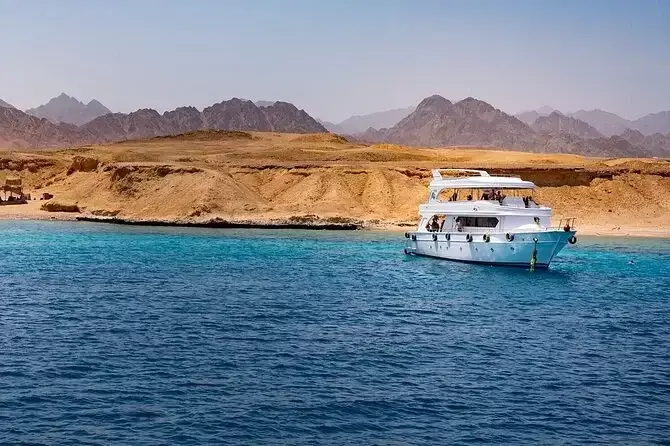
At the southern tip of Sinai, Ras Mohamed was Egypt's first protected area (1983). Shark Reef and Yolanda Reef are among the best-known dive sites in the Red Sea, with more than 220 coral species in the park. Snorkelers usually go on a full-day boat from Sharm El Sheikh; non-swimmers can take a road tour to the earthquake cracks, the mangrove channel and shore beaches. Read our full guide to Ras Mohamed National Park for fees, seasons and the boat or road choice.
The Blue Hole in Dahab
A few kilometres north of Dahab, the Blue Hole is a submarine sinkhole in the reef that drops to just over 100 m. It is round, deep blue and only metres from the shore, which is why it is one of the most photographed dive sites in the world. A day at the Blue Hole is part of our meditation tour to Cairo, a Nile cruise and Dahab.
Snorkeling at the Blue Hole
For most visitors the Blue Hole is a snorkeling stop, and a good one: the reef wall around the rim is covered with coral and reef fish, and the water is calm on most days. You enter from the shore, by the cafes, with no boat needed. A trip from Dahab takes half a day; from Sharm El Sheikh it is a full day, usually combined with Dahab town.
Diving: the Bells, the Saddle and the Arch
- The Bells to the Blue Hole: the classic recreational dive. You enter through a crack in the reef north of the hole, follow a wall to about 30 m, then swim south and cross into the hole over the Saddle, a shallow opening about 6 m deep. Most centres ask for an Advanced Open Water level or equivalent.
- The Arch: a tunnel about 26 m long connecting the hole to the open sea, with its roof at about 55 m. It is far beyond recreational limits and needs technical diving training and gas.
Safety matters here. Estimates of deaths at the Blue Hole since the late 1990s range from about 130 to 200, almost all of them divers who tried to reach the Arch without the right training. Stay within your certification, dive with a licensed Dahab centre, and do not let the depth tempt you. Snorkelers should stay near the rim, wear fins and stay with a buddy: the hole is deep from the first metre.
What else to do in Dahab
Dahab is the relaxed side of Sinai: low-rise, with cafes along the bay and a strong community of free divers, windsurfers and kitesurfers. Use it as a base for the Blue Hole, Abu Galum, the Colored Canyon and the night climb of Mount Sinai. See our guide to a week in Dahab.
The Colored Canyon near Nuweiba
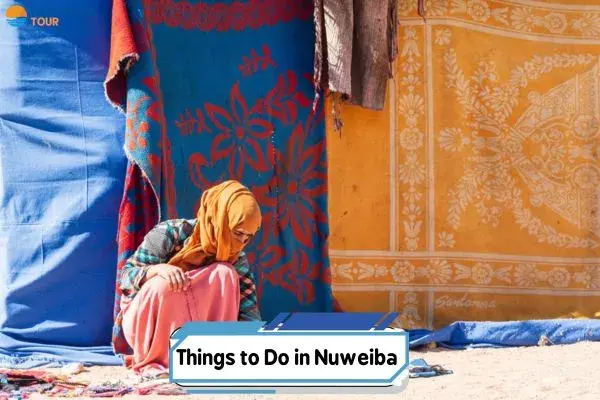
Inland from Nuweiba, the Colored Canyon is a narrow sandstone gorge whose walls show bands of red, orange, yellow and purple from iron and manganese minerals. The walk through it takes one to two hours and includes a few narrow squeezes and short scrambles, easy for anyone with normal fitness. Go with a local Bedouin driver and guide: the canyon is reached by 4x4 tracks. The light is softest in the morning and late afternoon. More in our guide to the Colored Canyon and our things to do in Nuweiba.
Snorkeling and diving along the Sinai coast
The Gulf of Aqaba side of Sinai has some of the clearest water in the Red Sea. Beyond Ras Mohamed and the Blue Hole, the main sites are:
- The Strait of Tiran: four reefs, Jackson, Woodhouse, Thomas and Gordon, reached by boat from Sharm El Sheikh. Hammerhead sharks gather near them in summer.
- The SS Thistlegorm: a Second World War supply ship sunk in 1941 in the Gulf of Suez, one of the most famous wreck dives anywhere, done on a long day from Sharm.
- Nabq Protected Area: about 600 km² of mangroves, dunes and reef north of Sharm, quieter than the town beaches. See Nabq Protected Area.
- House reefs: many hotels in Sharm El Sheikh, especially around Ras Um Sid, have reefs you can snorkel from the jetty.
Desert safaris and Bedouin culture
| Safari type | What you do | Our tip |
|---|---|---|
| Quad bike or jeep | Ride through the desert valleys behind Sharm El Sheikh or Dahab | Late afternoon to catch the sunset; wear a scarf against the dust |
| Camel ride | A slow ride on old trails, often to a camp or a viewpoint | Short rides suit children; long treks need a guide and planning |
| Bedouin dinner and stargazing | Tea, bread baked in the sand, a simple dinner and the night sky | Choose camps away from the town lights |
The Bedouin of South Sinai belong to several tribes, and the Jebeleya around Saint Catherine are known as mountain guides. Treks with them, from half a day to a week, lead to gardens, springs and peaks around Mount Catherine. Hiring a local guide is required on most mountain routes and supports the community.
Rock climbing and hiking in Sinai
Sinai is also a climbing and trekking destination. The main sport-climbing area is Wadi Qnai, a granite and sandstone valley roughly 15 to 30 minutes by car from Dahab, with equipped single and multi-pitch routes from beginner level up to about French 7b. Climbing is best from October to April; in summer the rock is too hot by mid-morning. Book through a Dahab climbing operator, who brings the gear and knows which routes are in good condition.
For hiking, the high mountains around Saint Catherine offer day walks and multi-day treks beyond Mount Sinai, with a local Bedouin guide, which is the accepted practice in the protected area and the way we arrange it. Along the coast, the trail north from the Blue Hole to Ras Abu Galum, on foot or by camel, combines a desert trail with snorkelling stops. In Bedouin villages and in Dahab's small shops you can buy hand-embroidered textiles, silver jewellery and local herbs for tea, which make better souvenirs than mass-produced items.
Windsurfing and kitesurfing
Steady north winds make Dahab and the lagoons north of Sharm El Sheikh good for windsurfing and kitesurfing, with schools for beginners and rentals for experienced riders. Wind is strongest in spring and summer afternoons.
Best time to visit Sinai
| Season | Coast (Sharm, Dahab) | Mountains (Saint Catherine) |
|---|---|---|
| October to April | Warm days, sea about 22 to 25 °C; the main season | Cold nights, near freezing on the summit in winter |
| March to May, September to November | The best balance of air and water | The best months for hiking |
| June to August | Hot, 33 to 37 °C by day; sea about 28 °C | Pleasant at night, hot in the valleys by day |
Read more in the best months to visit Egypt.
Practical tips: safety, transport and where to stay
Is Sinai safe?
The tourist areas of South Sinai, Sharm El Sheikh, Dahab, Nuweiba and Saint Catherine, receive visitors all year, with checkpoints on the main roads. Government advice differs between the north and the south: the UK, for example, advises against all travel to North Sinai and against all but essential travel to the northern part of South Sinai beyond the Saint Catherine to Nuweiba road, while the coastal areas are outside that advice. Check your own government's travel advice before you book, carry your passport on every road trip, and use licensed guides for the desert and the mountains.
Getting around
- Organised tours: the easiest way to reach the canyon, the monastery and Ras Mohamed, with transport, permits and a guide.
- Buses and taxis: public buses link Sharm El Sheikh, Dahab, Nuweiba and Saint Catherine; taxis are available for private trips (agree the price first).
- Car rental: possible, but checkpoints and desert roads make it better for experienced drivers.
Where to stay
Sharm El Sheikh has the large resorts, from Naama Bay to Nabq Bay (see our Naama Bay guide); Dahab has small hotels and lodges on the bay; Saint Catherine has simple guesthouses and camps for the night before or after the climb; Nuweiba has beach camps. If Sharm is your base, our guide to how many days to spend in Sharm El Sheikh helps you fit the day trips in.
Plan it with us
Our Saint Catherine Monastery tour from Sharm El Sheikh and the Colored Canyon and Saint Catherine jeep trip cover the mountain side of Sinai. To see Sinai as part of a full Egypt trip, the 12 days Pyramids, Nile and Sinai tour adds Cairo and a Nile cruise.
Sinai Peninsula: quick answers
How hard is the Mount Sinai climb?
Moderate. The camel path takes about 2.5 hours up, then about 750 steps to the summit. It is done at night, so the cold and the dark are harder than the gradient.
Can you snorkel at the Blue Hole?
Yes. Snorkeling around the rim is the most common way to see it and is suitable for confident swimmers. Deep diving there needs proper certification, and the Arch needs technical diving training.
How deep is the Blue Hole in Dahab?
Just over 100 m. The Arch that links it to the open sea starts at about 55 m and is about 26 m long.
How far is Saint Catherine from Sharm El Sheikh?
About three hours by road, and about two hours from Dahab.
How many days do you need in Sinai?
Four to five days lets you do a reef day, the Mount Sinai climb with the monastery, and Dahab or the Colored Canyon without rushing.
Do you need a visa for Sinai?
Many nationalities can get a free 15-day entry stamp limited to the South Sinai resorts when arriving at Sharm El Sheikh; travel beyond them needs a full Egyptian visa. Check the current rule for your passport.
Ahmed Samir writes and updates the Egypt travel guides of Egypt Online Tour, a licensed tour company based in Cairo (ETAA licence 1466). Our travel advisors review each guide before it is published.
All guides by Ahmed Samir