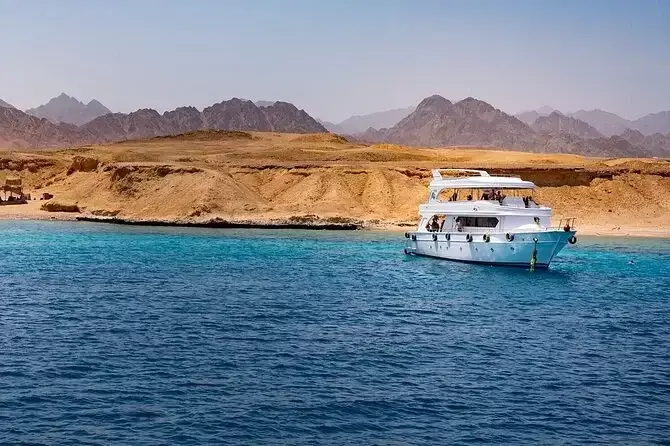
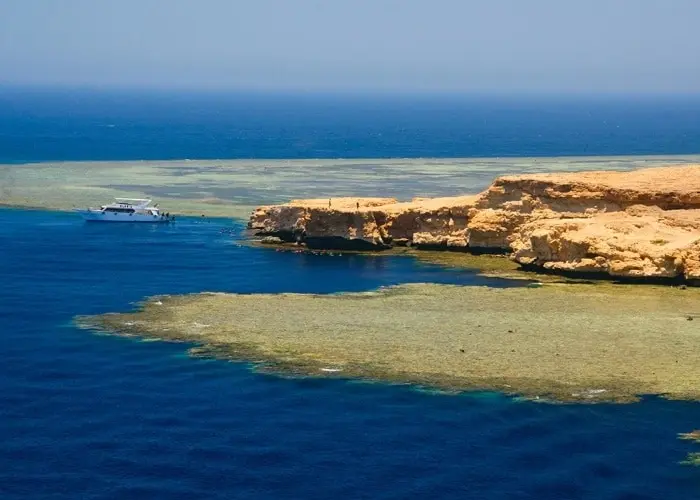
Ras Mohamed National Park is a protected area of reefs, desert and mangroves at the southern tip of the Sinai Peninsula, about 12 km from Sharm El Sheikh, where the Gulf of Suez meets the Gulf of Aqaba. Declared in 1983, it was Egypt's first nature protectorate, and it covers about 480 km², most of it sea. Most travellers visit it in one day from Sharm El Sheikh, either on a snorkeling boat or by road.
Below we explain what you can see, how to choose between the boat trip and the road trip, what the visit costs, the best time to go, and how Ras Mohamed compares with Egypt's other national parks. We run Ras Mohamed day trips from Sharm El Sheikh, so the advice is practical.
Ras Mohamed National Park at a glance
| Question | Answer |
|---|---|
| Where is it? | The southern tip of the Sinai Peninsula, South Sinai governorate, about 12 km from Sharm El Sheikh |
| Declared | 1983, Egypt's first protected area (under Law 102 of 1983) |
| Size | About 480 km²: some 135 km² of land and 345 km² of sea |
| Known for | Shark Reef and Yolanda Reef, more than 220 coral species and over 1,000 fish species, a mangrove channel, the earthquake cracks |
| How to visit | A full-day snorkeling boat from Sharm El Sheikh, or a half-day to full-day road trip by jeep, bus or private car |
| Best time | March to May and September to November; winter is fine for snorkeling with a wetsuit |
Why is it called Ras Mohamed?
"Ras" means head or cape in Arabic. A local story says that from the sea the cliff of the cape looks like the profile of a bearded man's head, which gave the place its name. Another explanation is simply the shape of the cape on the map: the point of the triangle formed by the mountains of South Sinai. You will also see the name written Ras Mohammed or Ras Muhammad.
When the park was declared in 1983 it also covered the islands of Tiran and Sanafir in the Strait of Tiran. Both islands passed to Saudi Arabia after Egypt's parliament approved the agreement in 2017, so they are no longer part of the park. The reefs in the strait are still visited on boat trips from Sharm El Sheikh, which we cover in our guide to how many days to spend in Sharm El Sheikh.
What to see in Ras Mohamed National Park
Shark Reef and Yolanda Reef
The two most famous sites are at the very tip of the cape. Shark Reef is a wall that drops into deep blue water, with large schools of fish and, at times, sharks and other pelagic fish in the current. Yolanda Reef, next to it, is known for the cargo of the Yolanda, a ship that ran aground in 1980: toilets, bathtubs and tiles still lie on the reef, while the hull itself slid into deep water. Divers usually do both in one drift dive. Snorkelers see the top of the wall, which is the best part of the colour.
Coral and marine life
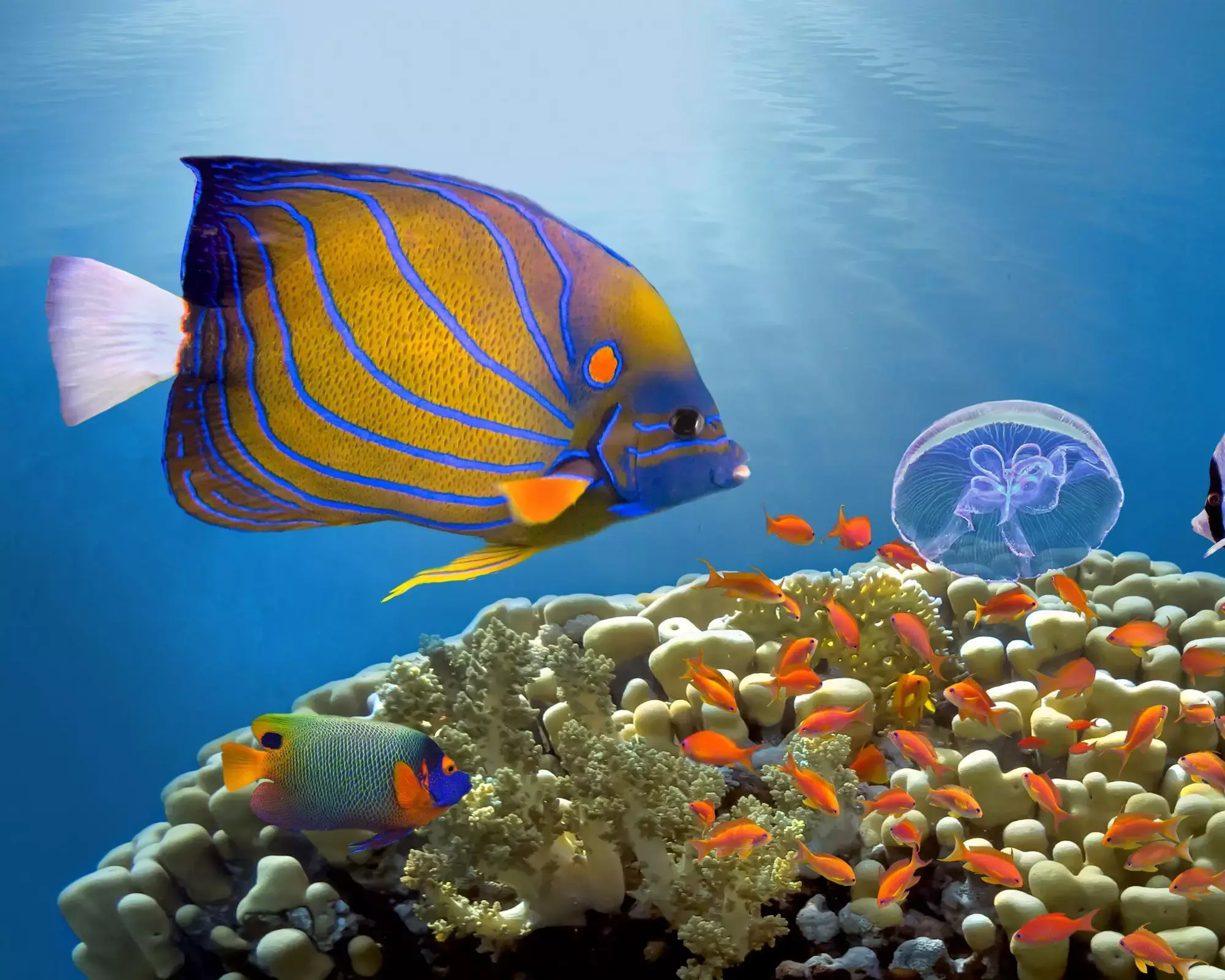
More than 220 species of coral grow in the park, 125 of them soft corals, and over 1,000 species of fish have been recorded. On a normal snorkeling day you can expect parrotfish, butterflyfish, anthias, groupers and moray eels; sea turtles are seen fairly often, and dolphins sometimes follow the boats. The water is usually very clear, with visibility often above 20 to 30 m.
The mangrove channel
At the southern end of the park, a shallow channel about 1.16 km long is lined by mangroves, among the northernmost mangroves on the Red Sea. It is a nursery for young fish and a good place for herons and ospreys. On the road trip you can walk along the shore here; swimming in the channel itself is not allowed.
The earthquake cracks
About 150 m inland, a line of cracks opened in the ground during an old earthquake. The longest is about 40 m long and up to 1.5 m wide, and some of its pools of sea water are more than 14 m deep. It is a short stop on every road tour. Look at the low cliffs on the way: much of the headland is raised fossil coral reef from the late Pleistocene, old reef that the sea left behind as levels changed, so you can see fossil corals in the rock tens of thousands of years old. You may read that the park has fossils "75 million years old"; these raised reefs date from the late Pleistocene, so their age is counted in tens of thousands of years, not millions.
Beaches, Hidden Bay and Magic Lake
The road tours stop at a few beaches inside the park, such as Main Beach and Hidden Bay, where you can snorkel from the shore. Magic Lake is a shallow salt lagoon near the coast whose colour shifts with the light during the day. You will hear stories about its healing water; they are local lore, not something we can confirm.
Desert wildlife and birds
On land the park is rocky desert. Lucky visitors see Nubian ibex, red fox or hyrax in the early morning. In spring and autumn the coast is on a bird migration route, and white storks rest in the park in large numbers.
How to visit Ras Mohamed: boat or road?
This is the first choice to make, and it depends on whether you want the best reefs or a mix of land and sea.
| Boat trip from Sharm | Road trip (jeep, bus or private car) | |
|---|---|---|
| What you see | Two or three snorkeling stops at the reefs of the cape, often White Island too | The gate, the earthquake cracks, the mangroves, Magic Lake, shore snorkeling at the beaches |
| Snorkeling quality | The best: the boat reaches Shark Reef and Yolanda Reef | Good from the shore, but not the famous walls |
| Duration | Full day, usually 8:00 to 16:00 with hotel pickup | Half day to full day |
| Good for | Snorkelers and divers, families who like boats | People who get seasick, photographers, travellers who also want the desert |
| Sea conditions | The cape can be windy and choppy, especially in winter afternoons | Not affected by waves |
Our advice: if you only do one sea trip in Sharm, make it the Ras Mohamed boat. If you are travelling with small children or someone who does not like boats, the road trip still gives you clear water from the beach without the swell at the tip.
Diving in Ras Mohamed
Dive boats leave from Sharm El Sheikh every morning. Most dive days at Ras Mohamed are drift dives along the walls, so the main sites suit divers with some experience; beginners usually start at the sheltered house reefs of Sharm first. Many full-day dive trips from Sharm combine the park with the wreck of the SS Thistlegorm, a Second World War cargo ship in the Gulf of Suez.
From Hurghada or Dahab
Ras Mohamed is a Sharm El Sheikh trip. From Hurghada it is a long day: a fast ferry crosses the Red Sea to Sharm when it runs, otherwise a flight. We only recommend it if you stay a night in Sharm. From Dahab it is about 1.5 hours by road to the park gate. If you are based in Hurghada, the reefs of Giftun Island are the nearer alternative.
Ras Mohamed entrance fee and opening hours
The park charges an entrance fee per person, plus a fee for the vehicle on road trips. The fee is set by the Egyptian Environmental Affairs Agency and has changed in recent years; we found no current official price list, so we do not quote a figure. Organised tours usually include the fee or collect it on the day: ask when you book. At the time of writing the park is open in daylight, roughly from 8:00 to 17:00; boats must leave the protected area before dark.
- Passport: carry it. There is a checkpoint on the road to the park.
- Visa: if you entered Egypt on the free 15-day "Sinai only" stamp, ask your operator whether your road trip is covered before you book.
- Rules: do not touch or stand on the coral, do not feed the fish, do not collect shells, and use reef-safe sunscreen. Rangers can fine visitors who break the rules.
Best time to visit Ras Mohamed
The park is open all year, and the water is warm enough for snorkeling in every month (about 23 °C in January and 28 to 29 °C in August).
| Season | Weather | Our view |
|---|---|---|
| March to May | Warm days, sea warming up | Very good, fewer crowds than winter holidays |
| June to August | Air often 35 to 40 °C, sea about 28 °C | Best water; start early and avoid midday on land |
| September to November | Warm sea, pleasant air | The best months overall |
| December to February | Days around 20 to 23 °C, cool evenings, more wind | Fine with a wetsuit; the boat can be cold and choppy |
The best time of day for the reefs is the morning, when the light is high and the wind is usually lower. For more on the season, read the best months to visit Egypt.
What to bring
- Swimwear, a towel, and a rash guard or shorty wetsuit (warmer in winter, and protects you from the sun)
- Reef-safe sunscreen, a hat and sunglasses
- Water shoes for the shore stops; some beaches have coral rock at the edge
- Your own mask if you have one; boats provide masks, fins and life jackets
- A light jacket for the boat ride back, especially from November to March
- Cash in Egyptian pounds for drinks, tips and photos
- Seasickness tablets if you are prone to it: the tip of the cape is exposed
Private or group tour?
Group boats are the most common and the most affordable, with lunch on board and a guide in the water. A private boat or car costs more but lets you choose the stops and the timing, which matters for families with small children, for photographers, and for travellers who want to reach the reefs before the group boats. Couples and families often book a private road tour and a shared boat on another day.
Other national parks in Egypt
Ras Mohamed is the most visited of Egypt's protected areas, but it is not the only one worth a trip. Egypt calls them protectorates; the main ones for travellers are below.
| Protectorate | Declared | Where | Why go |
|---|---|---|---|
| Ras Mohamed | 1983 | South Sinai | Reefs, snorkeling and diving |
| Gebel Elba | 1986 | Red Sea, far south | Mountain wildlife; access is restricted |
| Saint Katherine | 1988 | South Sinai | Mount Sinai, Saint Catherine's Monastery, high mountain trails |
| Wadi El Rayan | 1989 | Fayoum | Lakes and waterfalls in the desert, near the Valley of the Whales |
| Nabq and Abu Galum | 1992 | South Sinai coast | Mangroves, Bedouin coast, quiet snorkeling |
| White Desert | 2002 | Western Desert | Chalk rock formations and desert camping |
| Siwa | 2002 | Matrouh | Salt lakes, springs and dunes around Siwa Oasis |
| Wadi El Gemal | 2003 | Red Sea, south of Marsa Alam | Desert valley, reefs and islands |
You can read our guides to Nabq Protected Area, Wadi El Rayan, Wadi El Gemal National Park, Siwa Oasis and the Western Desert, or combine Ras Mohamed with the other highlights in our list of things to do in the Sinai Peninsula.
Plan it with us
Our Ras Mohamed boat trip and White Island is the classic snorkeling day from Sharm El Sheikh. If you prefer to stay on land, ask us for a private road trip that covers the cracks, the mangroves and the beaches; you will find it and more ideas in our Sharm El Sheikh day tours. To combine the Red Sea with the pyramids, the 7 days Cairo and Sharm El Sheikh holiday leaves time for a Ras Mohamed day.
Ras Mohamed National Park: quick answers
Is Ras Mohamed worth visiting?
Yes, if you like the sea. It has some of the best reefs in the Red Sea, with more than 220 coral species and very clear water, and it is an easy day trip from Sharm El Sheikh.
How far is Ras Mohamed from Sharm El Sheikh?
About 12 km from the southern edge of Sharm El Sheikh. By road from Naama Bay it is usually 30 to 45 minutes to the gate; by boat from the marina it is about 1 to 1.5 hours to the first reef.
Can you snorkel at Ras Mohamed without a boat?
Yes. The road tours stop at beaches such as Main Beach and Hidden Bay where you snorkel from the shore. The famous walls of Shark Reef and Yolanda Reef are best seen from a boat.
Can beginners snorkel at Ras Mohamed?
Yes, with a life jacket and a guide. Boats choose sheltered stops on windy days. Non-swimmers should stay with the guide and use a ring or jacket at all times.
Do you need a tour to visit Ras Mohamed?
No, you can go by taxi or private car and pay at the gate, but a tour is easier: it includes the fee or collects it, the transport and a guide who knows the stops. Boats must be licensed to enter the park.
Are Tiran and Sanafir still part of Ras Mohamed National Park?
No. They were part of the park when it was declared, but both islands passed to Saudi Arabia after 2017. Boats from Sharm still visit the reefs in the Strait of Tiran.
Ahmed Samir writes and updates the Egypt travel guides of Egypt Online Tour, a licensed tour company based in Cairo (ETAA licence 1466). Our travel advisors review each guide before it is published.
All guides by Ahmed Samir