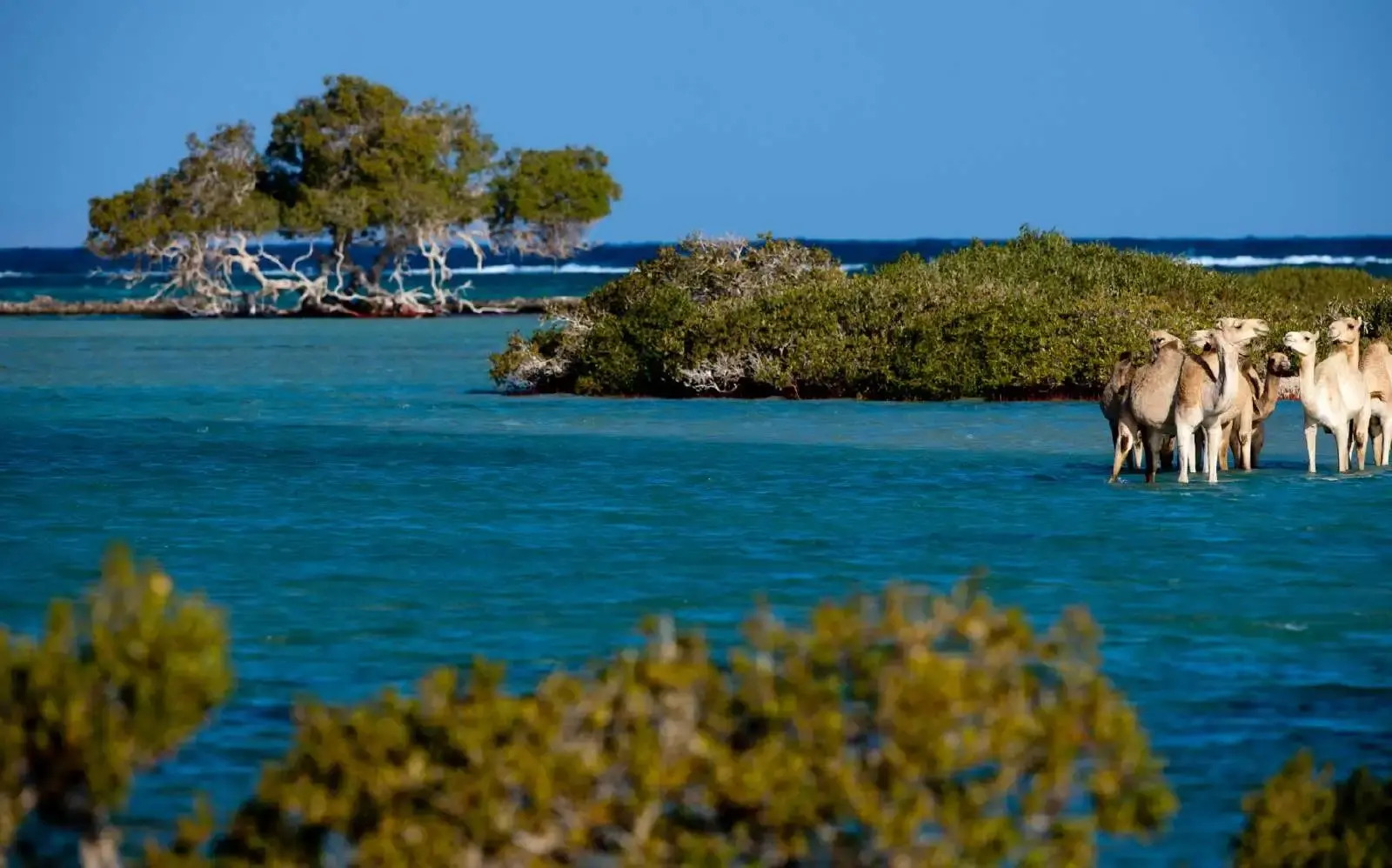
Wadi el Gemal National Park is a protected area of about 7,450 square kilometres on Egypt's southern Red Sea coast, south of Marsa Alam, created in 2003. It covers both sea and desert: coral reefs with about 450 coral species and more than 1,200 fish species, seagrass beds where dugongs and green turtles feed, mangroves, five islands, and a long desert valley with gazelles, ibex and the ruins of Roman-era emerald mines. Most travellers visit on a day trip from Marsa Alam that combines snorkelling with a 4x4 drive into the wadi.
The name means "valley of the camels". This guide covers what the park protects, what you can actually do there, how to get in and the best time to go.
Wadi el Gemal at a glance
| Item | Details |
|---|---|
| Location | Red Sea governorate, south of Marsa Alam, around the mouth of Wadi el Gemal |
| Declared | 2003; IUCN Category II (national park) |
| Area | About 7,450 km2 of land and sea |
| Marine life | About 450 coral species, more than 1,200 fish species, dugongs, green turtles, dolphins |
| On land | Dorcas gazelle, Nubian ibex, Barbary sheep, desert acacias, Ababda Bedouin communities |
| History | Prehistoric rock art, Ptolemaic and Roman ruins, the ancient emerald mines of Mons Smaragdus |
| Best season | October to April for the desert; the sea is good all year |
What the park protects
Coral reefs and islands
The marine part of the park has some of the least crowded reefs in Egypt. Five islands lie offshore, including Wadi el Gemal Island, and they are breeding grounds for seabirds. The Hamata islands further south are reached by boat on snorkelling trips. Because the area is far from the big resort towns, the reefs see far fewer boats than those of Hurghada or Sharm El Sheikh. If you stay further north, you can book a day out from your Hurghada hotel.
Seagrass, dugongs and turtles
Seagrass meadows in the shallow bays feed the endangered dugong and green turtles. Dugongs are rare and shy; turtles are much more likely. Sightings are never guaranteed, and any good guide will tell you so. Keep a respectful distance, never touch or chase an animal, and follow the instructions of the boat crew.
Mangroves
The largest mangrove forest of the Red Sea is reported in the south of the park. Qulan (Qolaan) is the most visited mangrove area, with shallow turquoise water, white sand and small mangrove islands close to the shore. It is beautiful for wading and photos; snorkel only where the guide says the water is deep enough.
The desert valley
Wadi el Gemal itself is one of the longest valleys of the Eastern Desert, running inland from the coast toward the Red Sea mountains. After rare rains its acacia trees turn green. You may see Dorcas gazelles in the early morning and late afternoon, and, with luck, Nubian ibex on the rocky slopes. Birdwatchers come for desert species and for migrants along the coast.
Emerald mines and Roman ruins
The mountains of the park held the ancient emerald mines of Mons Smaragdus, worked in the Ptolemaic and Roman periods. At Sikait, deep in the wadi, you see the remains of a mining settlement with stone buildings and small rock-cut temples. Reaching it needs a 4x4 and a guide who knows the tracks; some trips add a walk of a few kilometres among the ruins.
The Ababda
The Ababda are the Bedouin people of this part of the Eastern Desert. Many guides and drivers in the park are Ababda, and a visit often includes tea or coffee (jebena, brewed in a clay pot) and a simple meal in a desert camp.
Things to do in Wadi el Gemal
- Snorkelling from the shore or by boat: the reefs near Sharm El Luli and the Hamata islands are the classic choices.
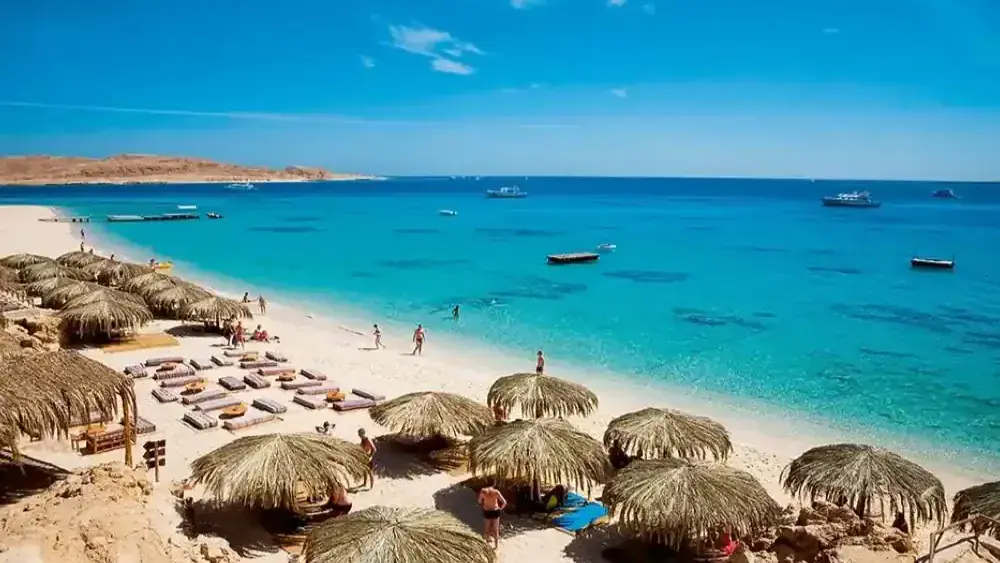
- Relaxing at Sharm El Luli: a sheltered lagoon with white sand and very clear, shallow water, often called one of the most beautiful beaches in Egypt. Facilities are basic.
- The Qulan mangroves: wading among the mangroves in shallow water.
- A 4x4 safari into the wadi: acacia valleys, wildlife, rock formations and the Roman mining sites.
- A Bedouin evening: dinner in a desert camp and stargazing; there is almost no light pollution here.
- Diving: the southern Red Sea liveaboards and dive centres include reefs inside and near the park.
Wadi el Gemal tours: what they include
Most visitors join an organised trip from Marsa Alam. The common formats are:
- Half-day beach and snorkel trips to Sharm El Luli or the Qulan mangroves, with transport, snorkelling time and sometimes lunch.
- Full-day boat trips to the Hamata islands, with two or three snorkelling stops and lunch on board.
- Desert safaris by 4x4 into the wadi, often with a Bedouin camp, a simple meal and stargazing; some add a quad bike or camel ride outside the park.
- Private trips with a guide and a 4x4, which let you go further, for example to the Roman mining sites, and set your own pace.
Before you book, check whether the price covers the park entrance fee, snorkelling equipment, lunch, drinks and hotel pickup, and how long you actually spend in the park rather than on the road. Group trips are cheaper and sociable; private trips are better for families, photographers and anyone who wants the quieter places.
How to get to Wadi el Gemal
The park is reached by the coastal road south of Marsa Alam. The main sights near the coast, such as Sharm El Luli and Qulan, are roughly 45 minutes to an hour and a half by car from Marsa Alam town, depending on your hotel; hotels further north, near Port Ghalib and the airport, add more time.
- Organised day trip: the easiest way. Most hotels in Marsa Alam sell trips that combine Sharm El Luli or Qulan with the wadi, with transport, guide, lunch and park fees included. Check what is included before you pay.
- Taxi or private driver: fine for the coastal beaches. Agree the waiting time and the return trip in advance.
- Self-drive: the coastal road is paved, but the wadi tracks are not. Driving into the desert needs a 4x4, local knowledge and the right permits, and there are police checkpoints. We do not recommend going into the wadi without a local guide.
Carry your passport on any trip in this area; checkpoints are routine.
Best time to visit
| Season | Desert | Sea |
|---|---|---|
| October to November | Warm days, comfortable evenings | Warm water, good visibility |
| December to February | Mild days, cold nights in camp | Cooler water; a wetsuit helps |
| March to April | Warm, often windy | Warming water |
| May to September | Very hot; only early morning and evening | Warmest water, best for snorkelling |
The south of the Red Sea is windy, especially in the afternoons. Plan snorkelling for the morning, when the sea is usually calmer.
What to bring and park rules
- Reef-safe sunscreen, a hat and a long-sleeved top or rash guard.
- Water shoes for the mangroves and rocky entries.
- Plenty of water and snacks: shops are few and far between.
- Cash for small purchases and tips.
- Do not touch or stand on coral, feed fish, collect shells or take sand.
- Do not drive off the existing tracks, and take all rubbish back with you.
Park entrance fees are set by the Egyptian Environmental Affairs Agency and are usually included in organised trips. Ask your operator or the park office for the current amount.
Is Wadi el Gemal worth visiting?
Yes, if you are staying in Marsa Alam or travel the Red Sea for nature rather than nightlife. It is one of the few places in Egypt where reef, mangrove and desert sit side by side, and it is far quieter than the protected areas near the big resorts. If you are based in Hurghada, the distance is long for a day trip; read our comparison of Marsa Alam and Hurghada before choosing where to stay. For the northern equivalent, see our guide to Ras Mohamed National Park near Sharm El Sheikh, and our overview of Red Sea beaches.
Plan it with us
Ask us to add a Marsa Alam stay with a Wadi el Gemal day to a tour of Egypt and we will check what is possible for your dates. Our 11 days classic Egypt with a Nile cruise and the Red Sea is a good base to adapt, and our Egypt adventure tours show other desert and nature trips.
Wadi el Gemal: quick answers
What does Wadi el Gemal mean?
"Valley of the camels" in Arabic.
Is Wadi el Gemal a UNESCO World Heritage Site?
No. It is an Egyptian national park, declared in 2003 and listed by IUCN as a Category II protected area.
Can you see dugongs in Wadi el Gemal?
Dugongs feed on the seagrass in the park, but they are rare and shy. Turtles are seen much more often. No sighting is guaranteed.
How far is Wadi el Gemal from Marsa Alam?
The coastal sights are roughly 45 minutes to an hour and a half by car from Marsa Alam town, depending on your hotel.
Ahmed Samir writes and updates the Egypt travel guides of Egypt Online Tour, a licensed tour company based in Cairo (ETAA licence 1466). Our travel advisors review each guide before it is published.
All guides by Ahmed Samir