Easter traditions in Egypt revolve around Coptic Easter, which follows the Orthodox calendar and falls on Sunday 2 May 2027 (it was 12 April in 2026), and Sham El-Nessim, the spring festival celebrated by all Egyptians on the Monday after it. For Copts, Easter ends 55 days of fasting with Holy Week services, a long liturgy on Saturday night and family feasts; for everyone else, Sham El-Nessim means picnics by the Nile, coloured eggs and salted fish.
Our guides are often asked what it is like to travel in Egypt over Easter. This guide gives the dates for the coming years, explains the Coptic customs as the Church observes them and the Sham El-Nessim traditions, and adds practical advice on crowds, weather and where to go.
When is Easter in Egypt?
Egypt's Coptic Orthodox Church, the largest church in the country, calculates Easter with the Julian-based Orthodox method, so its date is usually one to five weeks after Western Easter, and sometimes on the same day. Catholic and Protestant churches in Egypt follow the Western date. Sham El-Nessim is always the Monday after Coptic Easter.
| Year | Western Easter | Coptic (Orthodox) Easter | Sham El-Nessim |
|---|---|---|---|
| 2027 | Sunday 28 March | Sunday 2 May | Monday 3 May |
| 2028 | Sunday 16 April | Sunday 16 April | Monday 17 April |
| 2029 | Sunday 1 April | Sunday 8 April | Monday 9 April |
| 2030 | Sunday 21 April | Sunday 28 April | Monday 29 April |
Sham El-Nessim is an official public holiday for everyone. Coptic Easter Sunday is a holiday for Christian employees; government offices and banks may also close on nearby days, as the government announces each year.
Western Easter in Egypt
Egypt's Catholic communities (Coptic Catholic, Latin, Armenian, Maronite and others) and its Protestant churches celebrate on the Western date. In Cairo, churches in Heliopolis, Zamalek and downtown hold Easter services, some in English, French or Italian, and Red Sea resorts with many European guests often hold services or Easter brunches. If your trip falls in the Western Easter week, ask your hotel or our team which church near you holds a service in your language.
Coptic traditions from Lent to Easter Sunday
The Great Fast
Copts prepare for Easter with the longest fast of their year, 55 days in which observant believers eat no meat, fish, eggs or dairy. Bakeries and restaurants offer "fasting" (siyami) versions of their dishes, and many families eat beans, lentils, vegetables and koshari for weeks. You notice it in Cairo: even fast-food chains add vegan menus.
Palm Sunday
The Sunday before Easter (Hosanna Sunday) recalls Jesus' entry into Jerusalem. Street sellers outside churches weave palm fronds into crosses, crowns, donkeys and small baskets, and families carry them home. It is the best day for a visitor to see the craft.
Holy Week (Pascha Week)
Through the week, churches hold the Pascha prayers, with readings and hymns in Coptic and Arabic, and the churches are draped in black. Maundy Thursday includes the washing of feet. On Good Friday the services last most of the day and end with a symbolic burial of the cross in rose petals and spices.
The Easter liturgy
The main celebration is the long liturgy on Saturday night, which runs into the early hours of Sunday. At Saint Mark's Cathedral in Abbassia it is led by the Pope and broadcast on television. When the liturgy ends the fast is broken, often with a meal at home in the early morning.
Easter Sunday
Families visit each other with greetings ("Christ is risen", "Truly he is risen"), children get new clothes, and the first meat meal after the fast is the centre of the day. Kahk, the sugar-dusted butter cookies also made for the Muslim Eid, and ka'k with dates are on every table.
Traditional Easter foods in Egypt
- Kahk: round butter cookies dusted with icing sugar, often filled with dates, nuts or a honey paste, baked at home or bought by the kilo from bakeries in the days before Easter.
- Biscuits and ghorayeba: plain festive biscuits and the soft, crumbly butter cookies that sit next to the kahk on every tray.
- The first meat meal: after 55 vegan days, Easter lunch is about meat: roast or stewed lamb, beef or poultry, with rice and vermicelli and fatta (rice and bread with garlic and vinegar sauce) in many homes.
- Fasting food before the feast: if you travel in Lent, try the fasting versions of Egyptian staples: koshari, ful, ta'meya (Egyptian falafel) and vegetable stews, all vegan by tradition.
Our guide to the most common foods in Egypt describes these dishes and where to try them.
Sham El-Nessim: the spring festival for all Egyptians
On the Monday after Coptic Easter, Egyptians of all faiths spend the day outdoors. The name is usually translated as "smelling the breeze", and the festival is generally linked to the ancient Egyptian harvest season Shemu, which makes it one of the oldest festivals still celebrated anywhere.
Ancient roots
The customs fit an old spring festival of renewal: eggs as a symbol of new life, green onions and lettuce as signs of fertility, and salted fish from the Nile catch. Popular accounts trace the festival back more than 4,500 years. What is certain is that it predates both Christianity and Islam in Egypt and is shared by the whole country, which is why it outlived every change of religion and ruler.
Foods of Sham El-Nessim
- Fesikh: fermented, salted grey mullet with a very strong smell, the most famous and most argued-over dish of the day.
- Renga: smoked herring, the milder choice.
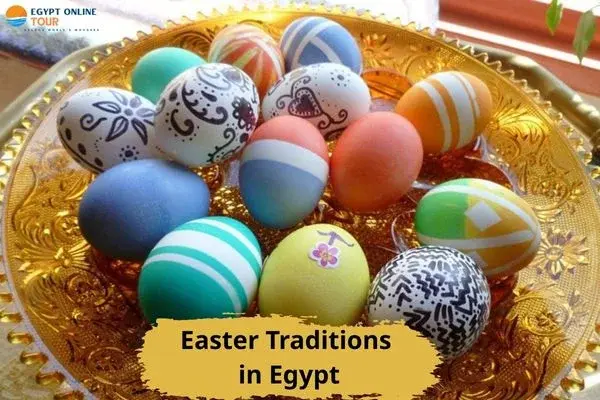
- Coloured eggs: boiled and painted, given to children and friends.
- Green onions, lettuce and lupin beans (termes), eaten together as symbols of spring.
Our advice to visitors: taste fesikh only from a trusted family or restaurant. Badly prepared fermented fish can cause serious food poisoning.
Where Egyptians celebrate
Public gardens, the Nile corniche, felucca rides, the zoo, Al-Azhar Park and the beaches of Alexandria are packed from the morning. Traffic in Cairo is heavy all day.
Travelling in Egypt over Easter: what to expect
Crowds and prices
Western Easter and the European school holidays bring one of the busiest weeks of the spring season. Flights, Nile cruises and Red Sea hotels fill early and cost more; book three to six months ahead for those dates. Coptic Easter itself affects Egyptian domestic travel more than foreign tourism, but Sham El-Nessim makes parks, the corniche and Alexandria very busy.
Weather
Late March to early May is warm and dry. Cairo usually sees days in the high 20s to low 30s C, while Luxor and Aswan reach the mid-30s and can pass 40 C in May. Spring can bring the khamaseen, a hot, dusty wind from the desert that blows for a day or two at a time.
Practical tips
- Plan outdoor sightseeing early in the morning, especially in Upper Egypt in late April and May.
- On Sham El-Nessim, avoid parks and the corniche if you dislike crowds; it is a good day for museums and the pyramids at opening.
- Check opening hours on Coptic Easter Sunday and Sham El-Nessim; most sites stay open, but some offices and shops close.
- Dress modestly for church services: shoulders and knees covered.
How travellers can take part
- Attend a service: visitors may join the Saturday night liturgy or a Holy Week service quietly, standing at the back. Large cathedrals have security checks; carry your passport. Our article on the Saint Mark Coptic Orthodox churches explains how to visit.
- Visit Coptic Cairo: the Hanging Church, Abu Serga and the Church of Saint George are open in Holy Week and full of local families. Go early and avoid service times if you want to sightsee.
- See the Cave Church: the Cave Church of Saint Simon in Mokattam holds large Easter services in its rock amphitheatre.
- Follow the Holy Family: spring is a good time for the sites linked to the Holy Family's journey in Egypt; our article on how long Mary and Joseph stayed in Egypt explains the tradition.
- Join Sham El-Nessim: take a felucca on the Nile in the afternoon or have a picnic lunch, with eggs and lettuce rather than fesikh if you are unsure.
Where to go in Egypt at Easter
- Cairo: Coptic Cairo, the Easter liturgy and the pyramids before the heat.
- A Nile cruise: Luxor and Aswan in late March or April, before the May heat.
- The Red Sea: Hurghada, Sharm El Sheikh or El Gouna; the sea is warm enough for most swimmers from April.
- Sinai: Saint Catherine's Monastery and Mount Sinai, for travellers who want a spiritual setting.
For the wider calendar, see the important holidays in Egypt, our guide to Christmas in Egypt and the best months to visit Egypt.
A short history of Easter in Egypt
Coptic tradition holds that Christianity reached Egypt with Saint Mark in the 1st century, and the Church of Alexandria played a central role in fixing the date of Easter: in the early centuries its bishops announced the date to other churches each year in "festal letters". The Coptic liturgy still keeps hymns and readings in Coptic, the last stage of the ancient Egyptian language. Sham El-Nessim, older than Christianity in Egypt, became attached to the Easter calendar over the centuries, and today it is the one spring holiday that Muslims and Christians celebrate together.
Plan it with us
Our Egypt Easter tours are planned around the Easter dates, with church visits in Cairo and time on the Nile. For a focus on Christian heritage, the Holy Family tour in Egypt visits the sites of the tradition, and the Old Cairo tour fits into any Easter week in Cairo.
Easter in Egypt: quick answers
When is Coptic Easter in 2027?
Sunday 2 May 2027, five weeks after Western Easter (28 March). Sham El-Nessim is on Monday 3 May 2027.
Is Easter a public holiday in Egypt?
Sham El-Nessim, the Monday after Coptic Easter, is a public holiday for everyone. Coptic Easter Sunday is a holiday for Christian employees.
Can tourists attend a Coptic Easter service?
Yes. Visitors can attend quietly, dressed modestly. Large cathedrals have security checks, so carry your passport.
What do Egyptians eat on Sham El-Nessim?
Fesikh (fermented salted mullet), smoked herring, coloured eggs, green onions, lettuce and lupin beans.
Ahmed Samir writes and updates the Egypt travel guides of Egypt Online Tour, a licensed tour company based in Cairo (ETAA licence 1466). Our travel advisors review each guide before it is published.
All guides by Ahmed Samir