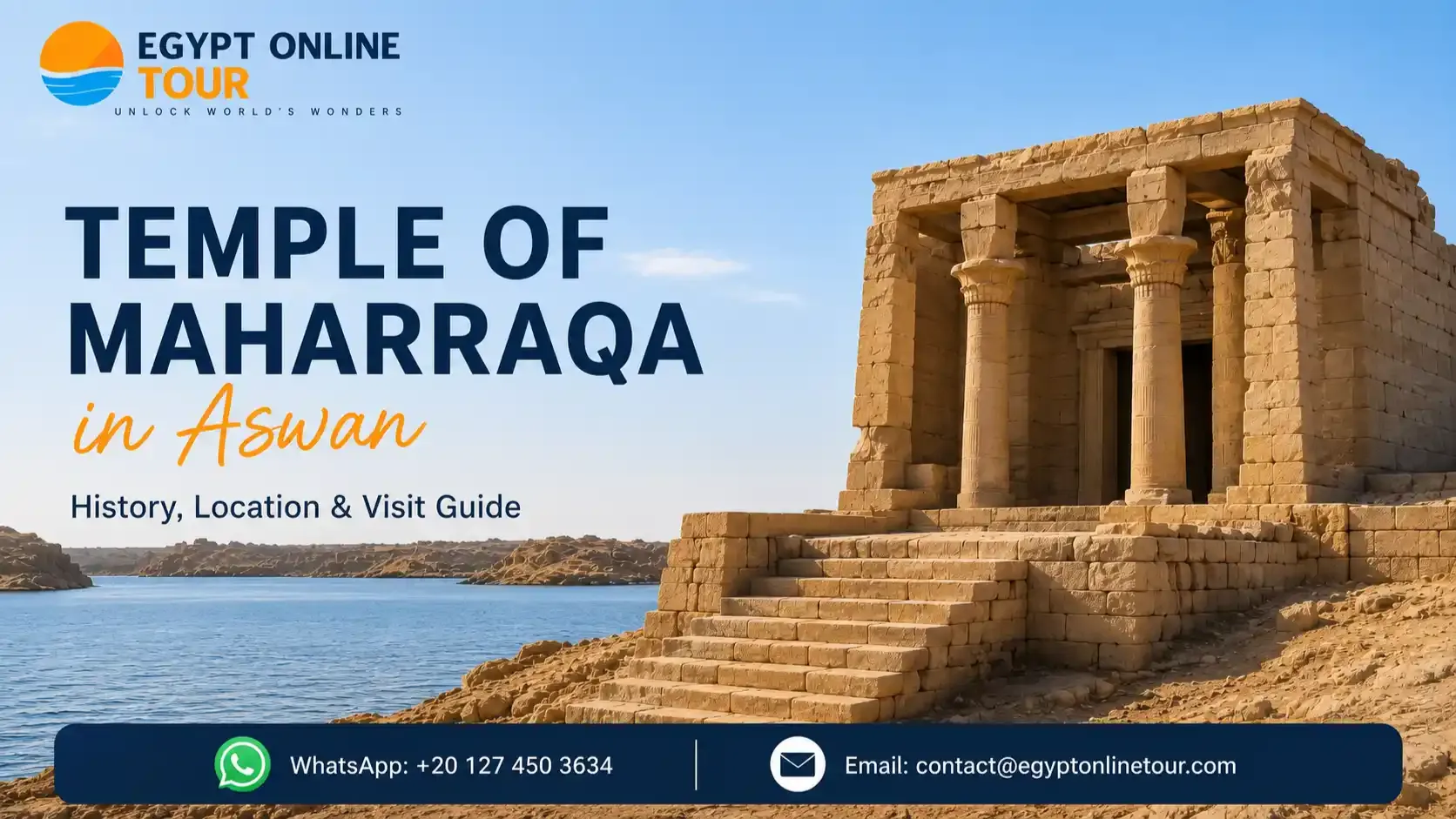
The Temple of Maharraqa in Aswan is a small unfinished Roman temple dedicated to Isis and Serapis. It first stood at al-Maharraqa in Lower Nubia, near Roman Egypt’s southern border. Later, rescue teams moved it to New Wadi es-Sebua during the Nubian rescue campaign.
Visitors can explore the temple’s distinctive spiral staircase, understand its role on Egypt’s southern frontier, and enjoy its scenic position beside Lake Nasser. Most Lake Nasser cruise excursions include Maharraqa with Dakka Temple and Wadi es-Sebua.
Temple of Maharraqa in Aswan
The Temple of Maharraqa in Aswan is a small unfinished Roman temple near Lake Nasser. It is known for its rare spiral staircase, simple open layout, and connection with Isis and Serapis.
Originally, the temple stood in Lower Nubia. During the Nubian monument rescue campaign, rescue teams moved it to New Wadi es-Sebua after the Aswan High Dam project threatened several ancient sites with flooding.
Why This Small Temple Matters
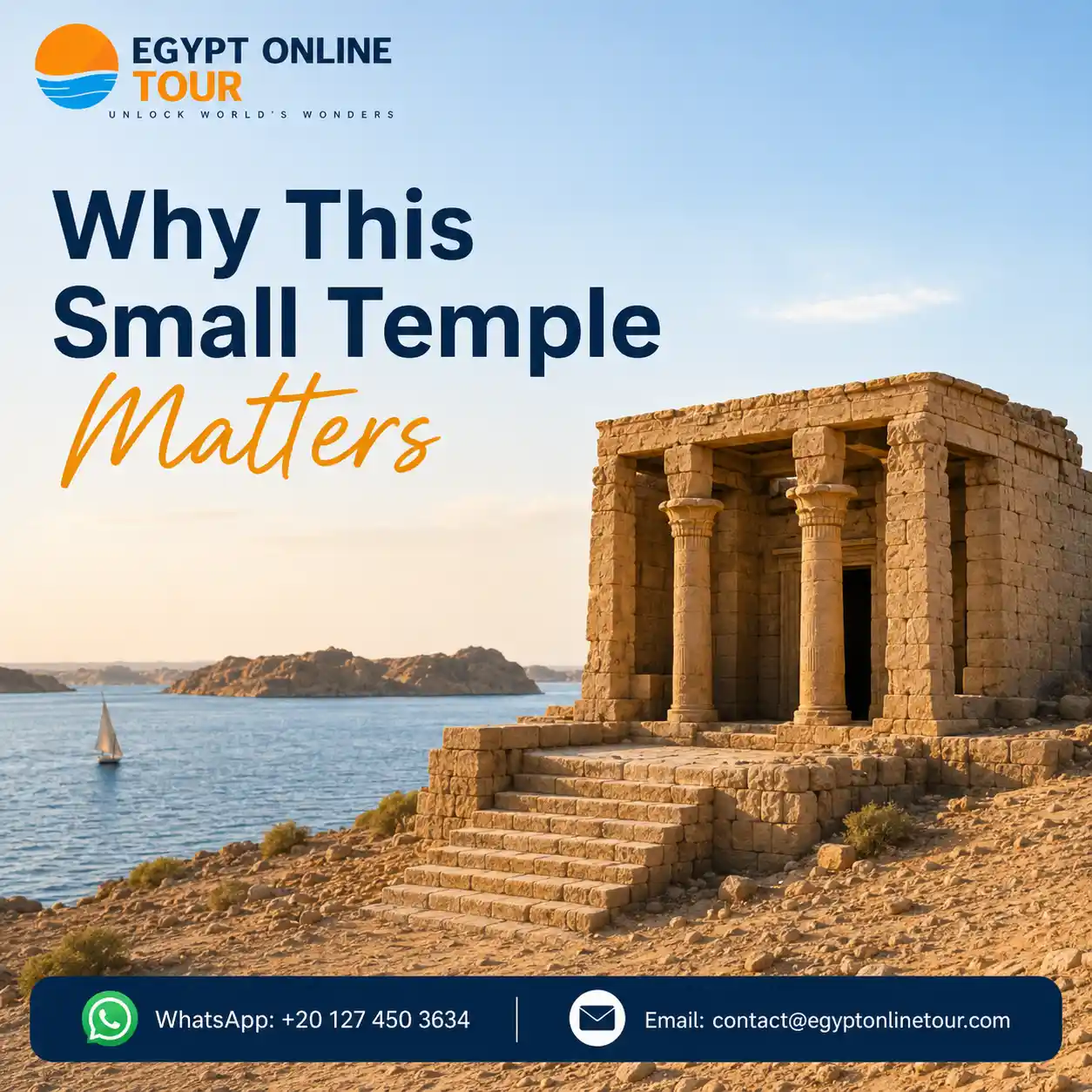
Maharraqa does not impress visitors with giant statues or heavily carved walls. Its value comes from context.
This small temple helps you understand:
- Roman Egypt’s presence in Nubia
- The shared worship of Isis and Serapis
- How an unfinished temple looked before completion
- Why the Nubian monument rescue campaign mattered
- How Lake Nasser cruises connect several relocated sites
For most travelers, Maharraqa works best as part of the New Wadi es-Sebua temple group, not as a single isolated stop.
Best Way to Visit Maharraqa
Most travelers visit Maharraqa with Dakka Temple and Wadi es-Sebua while sailing between Aswan and Abu Simbel. For travelers who want a dedicated Lake Nasser route, the Movenpick Prince Abbas Lake Cruise is one of the most relevant options to compare. Seeing the three sites together gives a clearer view of Nubia’s history than visiting one temple alone.
Before you leave, ask your guide about:
- The spiral staircase
- The missing sanctuary
- The unfinished walls
- The original Lower Nubian location
- The relocation to New Wadi es-Sebua
Why Visit Maharraqa With a Guide?
Maharraqa is easy to walk through, but easy to misunderstand. A guide helps turn a quick stop into a meaningful visit.
A good guide can explain:
- Why the temple was left unfinished
- What makes the spiral staircase unusual
- Where the sanctuary should have been
- How Maharraqa connects with Dakka and Wadi es-Sebua
- Why the relocation story matters for modern Egyptology
Field note from our team: Maharraqa may look simple at first because of its modest size and plain walls. Once the missing sanctuary, staircase, and relocation story are explained, the site becomes much clearer. It stops feeling like a small ruin and starts to feel like a practical lesson in Roman Nubia.
Read more: How to Plan a Trip to Cairo Egypt
What Is the Temple of Maharraqa?
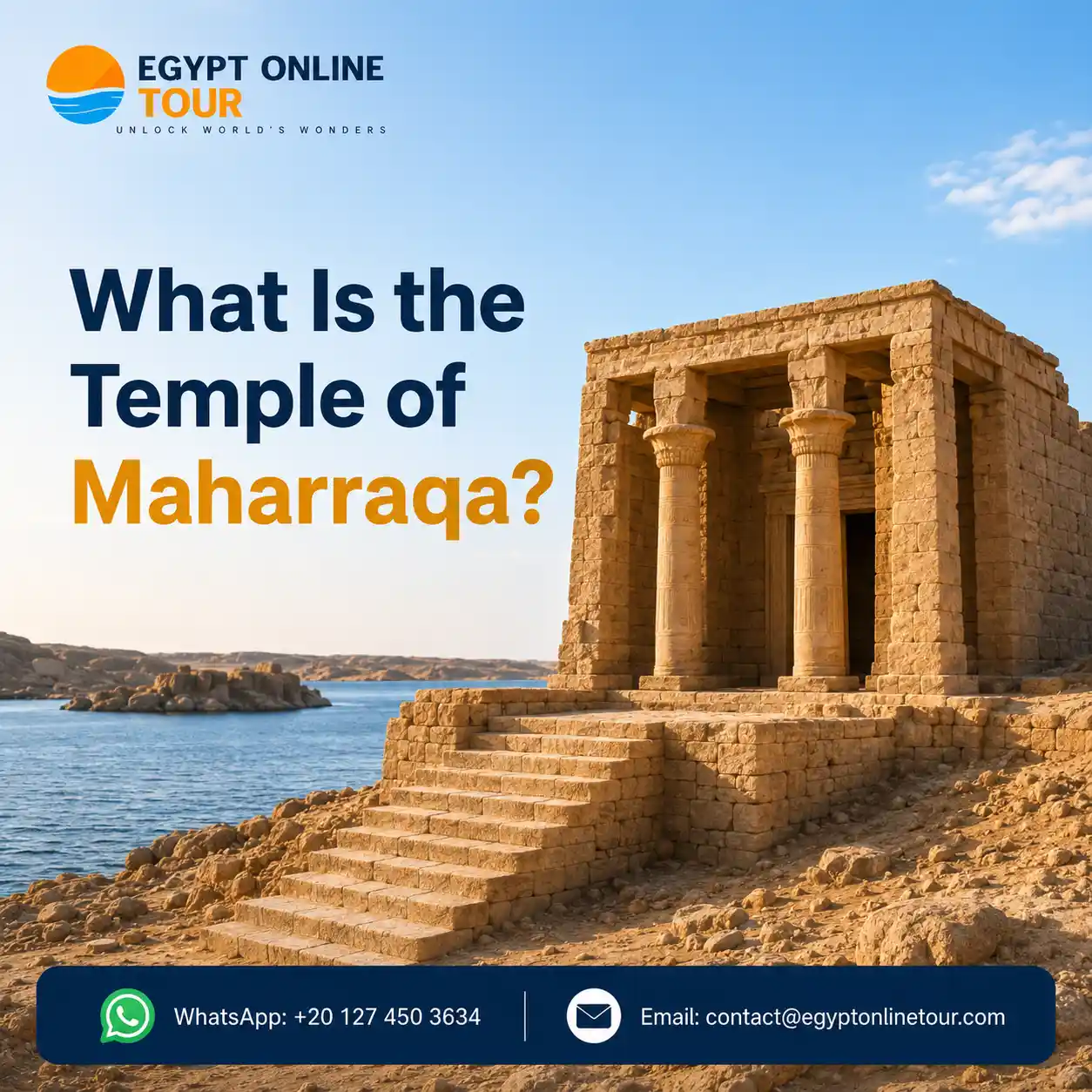
The Temple of Maharraqa in Aswan is an unfinished Roman-period temple from Lower Nubia. It was dedicated to Isis and Serapis and now stands at New Wadi es-Sebua beside Lake Nasser.
For visitors, the site shows a sacred building before its final decoration, sanctuary, and full ritual layout were completed.
What makes Maharraqa different?
- A rare spiral staircase gives the site its most distinctive feature.
- The sanctuary was never completed.
- Plain walls make the unfinished design easier to notice.
- Relocation saved the monument from flooding after the Aswan High Dam project.
- Nearby Dakka and Wadi es-Sebua give the visit stronger context.
Know more: How to Enjoy a Classic Holiday in Egypt
Quick Facts About the Temple of Maharraqa
Unlike many Egyptian temples, Maharraqa never reached its final design. Its missing sanctuary, limited decoration, and open layout help visitors understand how temple construction worked before the final carving and ritual spaces were completed.
Temple of Maharraqa History
The Temple of Maharraqa in Aswan dates to the Roman period, most likely the 1st century AD. Although Egypt was under Roman rule, temple builders in Nubia still used Egyptian forms while adding Greco-Roman religious influence.
Builders dedicated the temple to Isis and Serapis. Isis was one of Egypt’s most important goddesses, while Serapis blended Egyptian and Greek religious ideas. Together, their worship shows how mixed the culture of Lower Nubia was during the Roman era.
Unlike many temples from the same period, Maharraqa was never completed. Its walls lack the long royal inscriptions that usually help historians identify the emperor behind construction. Because of this, careful guides avoid linking the temple to one ruler as a confirmed fact.
For visitors, this unfinished state is part of the value. You can see how an ancient temple looked before the sanctuary, wall scenes, and final sacred layout were completed.
Read more: How to Spend Summer Vacation in Egypt
Where Was the Temple of Maharraqa Originally Located?
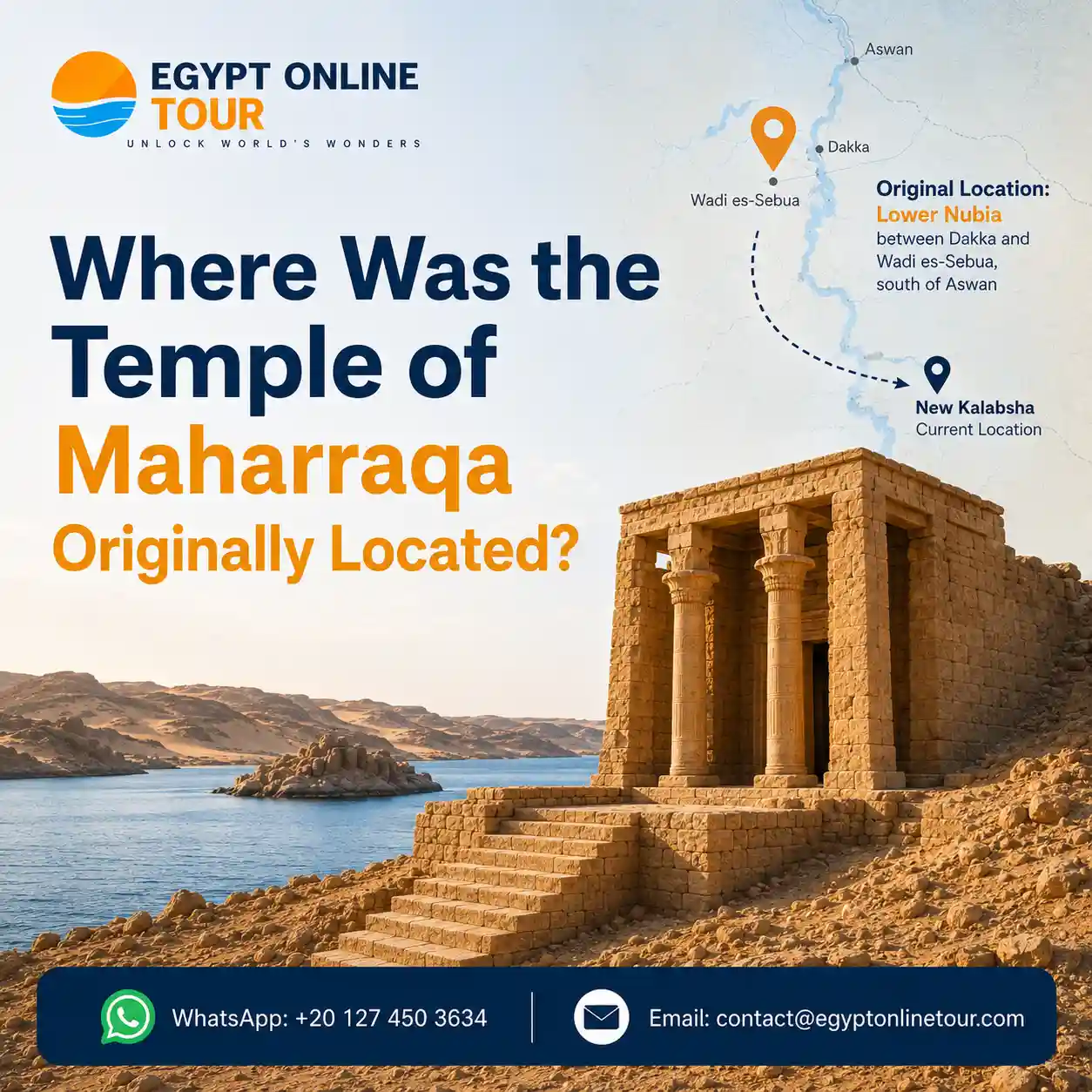
The Temple of Maharraqa in Aswan originally stood at al-Maharraqa in Lower Nubia, south of Aswan. The area was once called Hierasykaminos and stood near the southern edge of Roman Egypt.
Its location made the temple more than a place of worship. It stood in a frontier zone where Egyptian, Nubian, Greek, and Roman cultures met through trade, travel, and military movement.
Today, travelers no longer visit the original site. During the 1960s, rescue teams dismantled the temple and rebuilt it at New Wadi es-Sebua before Lake Nasser covered much of ancient Nubia.
This matters for visitors because the temple’s current location is part of its story. You are seeing more than a Roman-period temple here. The site also preserves a monument saved from flooding during one of the world’s largest heritage rescue projects. If your wider Egypt plan includes Luxor and Aswan first, the 8 Day Nile Cruise from Luxor to Aswan can help you connect the main Nile temples before adding Lake Nasser.
When Was the Temple of Maharraqa Built?
The Temple of Maharraqa in Aswan was probably built during the Roman period, most likely in the 1st century AD. No surviving inscription names the emperor who ordered its construction, so historians date the temple through its style, layout, and archaeological context.
Some sources suggest an early Roman date, possibly during the reign of Augustus. However, this remains a scholarly view rather than a confirmed fact.
For travelers, the safest answer is simple. Maharraqa belongs to the Roman period in Lower Nubia and shows how traditional Egyptian temple building continued under Roman rule.
To understand this period within the wider timeline of ancient Egypt, it helps to see how the country changed from ancient dynasties to Roman rule.
Temple of Maharraqa Facts and Highlights
Quick Takeaway
Maharraqa is not important because of its size. It matters because it shows Roman Nubia, unfinished temple construction, religious change, and the modern rescue of ancient monuments around Lake Nasser.
Read more: Facts about Tanis
Why Was the Temple Dedicated to Isis and Serapis?
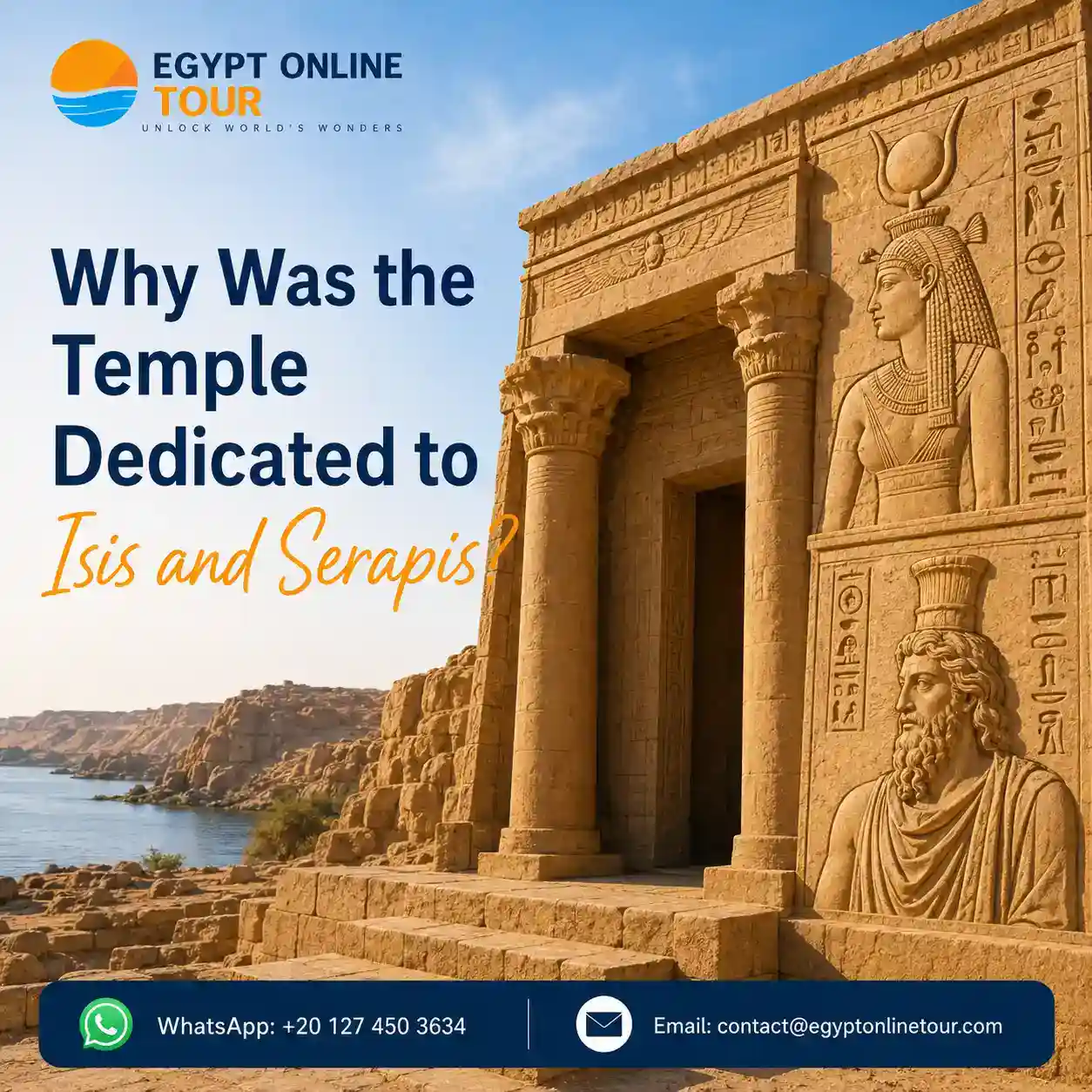
The Temple of Maharraqa in Aswan was dedicated to Isis and Serapis because both gods were widely worshipped in Greco-Roman Egypt. Their shared cult suited Lower Nubia, where Egyptian, Nubian, Greek, and Roman cultures met near the southern frontier.
This matters because Maharraqa was not built in an isolated place. It stood near a frontier where traders, soldiers, local Nubians, Egyptians, Greeks, and Romans moved through the Nile Valley.
This broader role makes the temple especially significant. Beyond serving as a religious sanctuary, it reflected the meeting of Egyptian, Nubian and Roman influences along the southern frontier of Roman Egypt.
Read about: How to Enjoy Egypt as a Solo Traveler
Maharraqa and the Southern Border of Roman Egypt
Maharraqa stood near the southern frontier of Roman Egypt, where Egypt, Nubia, and the Kingdom of Kush met along the Nile. This location gave the temple more meaning than its small size suggests.
To understand this wider border world, it helps to read more about the history of Ancient Nubia.
This was not just a border on a map. It was a living zone where people traded, traveled, worshipped, and shared ideas.
For visitors, this explains why Maharraqa feels different from temples built farther north. You are not only seeing an unfinished Roman temple. You are seeing a small monument from a wider border world shaped by movement, power, worship, and cultural exchange.
Why Was the Temple Never Completed?
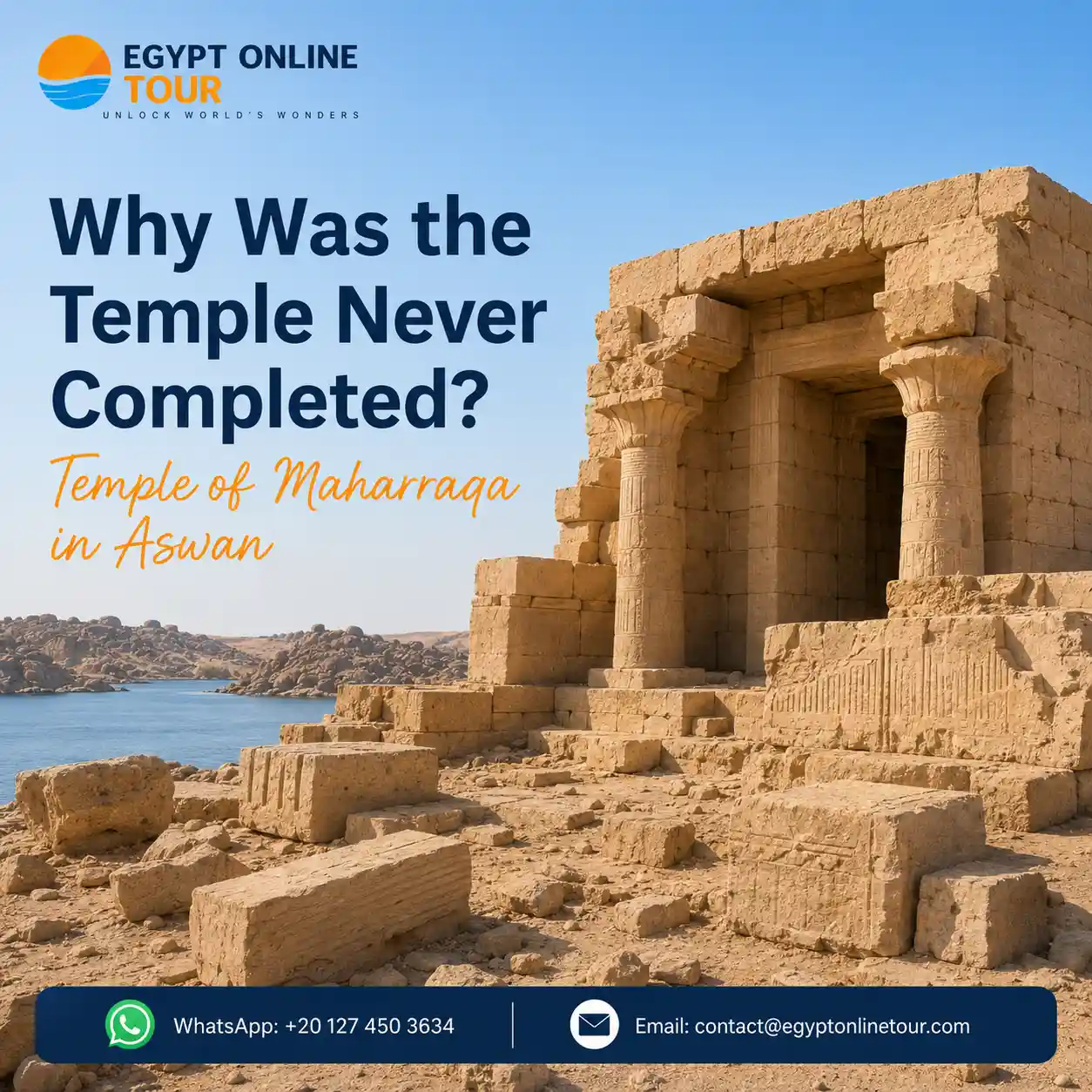
No surviving historical record explains exactly why the Temple of Maharraqa in Aswan was left unfinished. The safest answer is that construction probably stopped because of changing political priorities, limited funding, or reduced building activity in Roman Nubia.
Instead, visitors see a structure that stopped before its final stage. For a more decorative island temple experience, read our guide to Visiting Philae Temple in Aswan.
The unfinished state is one of Maharraqa’s strongest features. It shows how an ancient temple project looked before decoration and ritual spaces were completed.
For history lovers, this is rare. Maharraqa preserves a stage of construction that has disappeared from most complete Egyptian temples.
Architecture of the Temple of Maharraqa in Aswan
The Temple of Maharraqa has a simple layout built around an open courtyard. Its modest scale makes the building easy to understand, even for first-time visitors.
Main architectural features
The temple includes:
- An open rectangular court
- Columns along three sides of the courtyard
- Plain stone walls with limited decoration
- A sanctuary area that was never finished
- A rare spiral staircase leading toward the roof
How it differs from larger Egyptian temples
Unlike Karnak, Edfu, or Philae, Maharraqa does not lead visitors through a long sequence of pylons, halls, and shrines. Instead, it shows a smaller Roman-period temple before its final design was completed.
If you want to understand why temple walls, symbols, and unfinished decoration matter, read Interesting Facts About Ancient Egyptian Art before comparing Maharraqa with more decorated temples.
When you visit, focus on the layout, the open court, the plain walls, and the missing spaces. These details explain the temple better than decoration would.
The Unique Spiral Staircase
The spiral staircase is the detail our travel experts always tell visitors not to miss. It rises from one corner of the court toward the roof, creating one of the most memorable views inside Maharraqa.
Most Egyptian temples use straighter roof-access routes, so this compact spiral form feels unusual.
For the best photo:
- Stand inside the court.
- Look toward the staircase from the corner.
- Move closer to capture the stone curve.
- Step back to show how it fits into the unfinished layout.
- Visit in morning or late afternoon light when the shadows reveal the sandstone texture.
Do not photograph the staircase only from a distance. Its shape becomes clearer when you compare close details with the wider court.
How the Temple Became a Christian Church
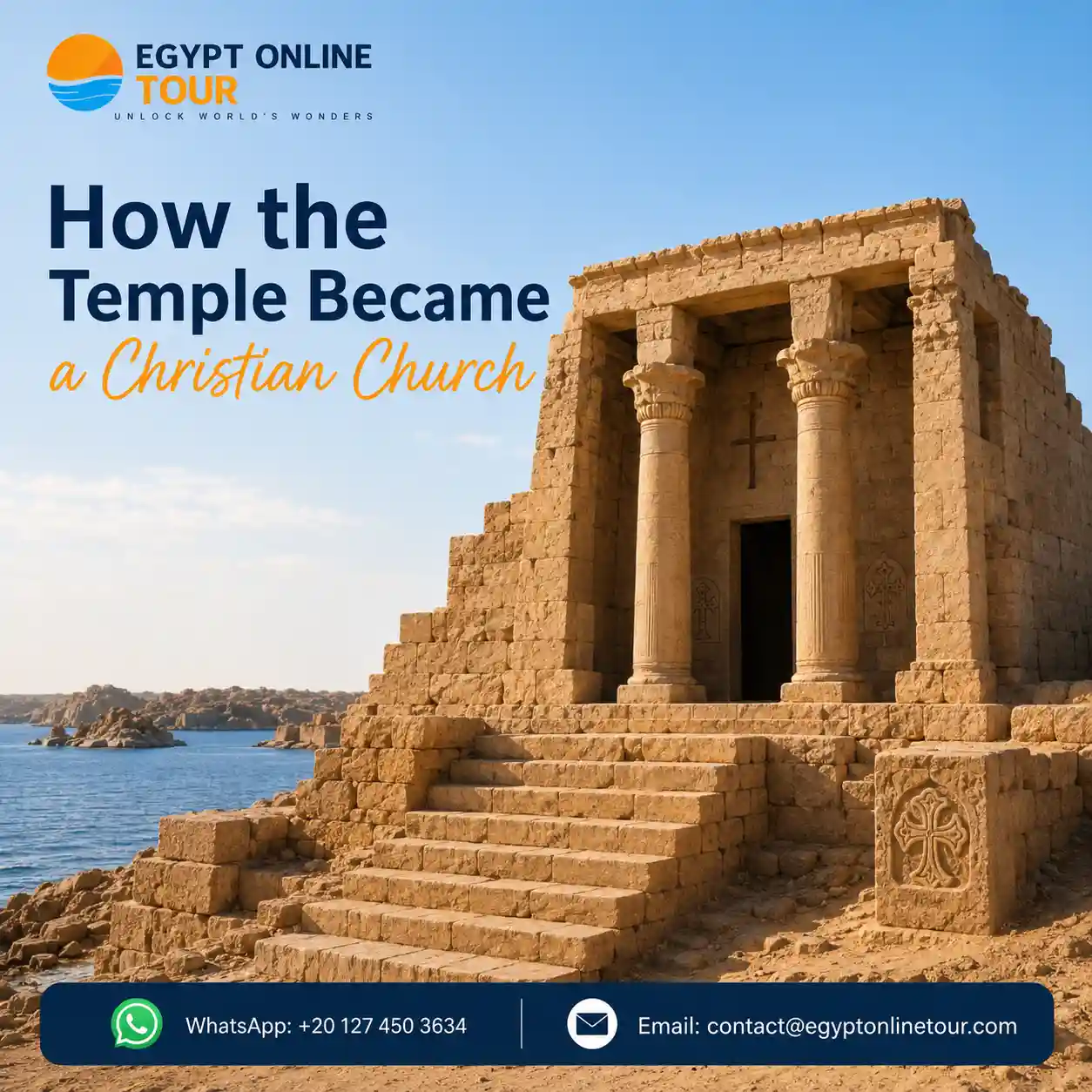
After ancient Egyptian temple worship declined, Maharraqa was reused as a Christian church. This change shows how sacred buildings in Nubia often gained new roles instead of being abandoned.
Why this matters
The temple’s Christian reuse adds another layer to its story. It shows that Maharraqa was not tied to one period only.
Over time, the building reflected:
- Ancient Egyptian religious tradition
- Roman influence in Lower Nubia
- Christian worship in Nubia
- Modern archaeological rescue after Lake Nasser was created
What visitors should understand
Many Egyptian and Nubian monuments had long lives. They were built, reused, restored, moved, and reinterpreted across different periods.
Maharraqa is a clear example. Its value comes not only from its Roman origin, but also from the way later communities adapted it for new religious use.
Know about: The Hanging Church
Why Was the Temple of Maharraqa Relocated?
Rescue teams relocated the Temple of Maharraqa because the Aswan High Dam project created Lake Nasser, which threatened many Nubian monuments with flooding.
What happened
During the Nubian monument rescue campaign, the temple was:
- Documented before removal
- Dismantled stone by stone
- Moved from its original site in Lower Nubia
- Rebuilt at New Wadi es-Sebua on safer ground
Without this rescue work, Maharraqa would have disappeared beneath Lake Nasser.
Historical Update
Maharraqa’s modern history is part of its value. After the Aswan High Dam project, many Nubian monuments faced flooding, so Egyptian and international teams worked to document, dismantle, and rebuild selected temples in safer locations.
Maharraqa now tells two stories at once:
- A Roman-period temple story from Lower Nubia
- A 20th-century rescue story linked to Lake Nasser
This makes the visit more meaningful. Travelers see more than an ancient monument here. They also see a site saved during one of the world’s largest heritage rescue efforts.
Where Is the Temple of Maharraqa Today?
The Temple of Maharraqa is now located at New Wadi es-Sebua on the western shore of Lake Nasser. It stands near two other rescued Nubian monuments: Wadi es-Sebua Temple and Dakka Temple.
Together, these three sites create one of the most useful archaeological stops on a Lake Nasser cruise.
Best way to reach the temple
Most travelers visit Maharraqa while sailing between Aswan and Abu Simbel. Before or after Lake Nasser, the 4 Days 3 Nights Nile Cruise From Aswan can help travelers connect Aswan, Kom Ombo, Edfu, and Luxor in one route.
The best options are:
- Lake Nasser cruise: the easiest choice for most visitors
- Private guided arrangement: possible, but better for archaeology-focused travelers
- Standard Aswan day trip: not ideal because of distance and lake logistics
If you are still planning your base city, read What to do in Aswan Egypt before deciding whether Maharraqa fits your Aswan and Lake Nasser route.
Trying to visit Maharraqa as a separate day trip usually needs extra planning. For most travelers, it makes more sense to see it as part of a cruise that also includes Dakka and Wadi es-Sebua.
What Can You See Inside the Temple?
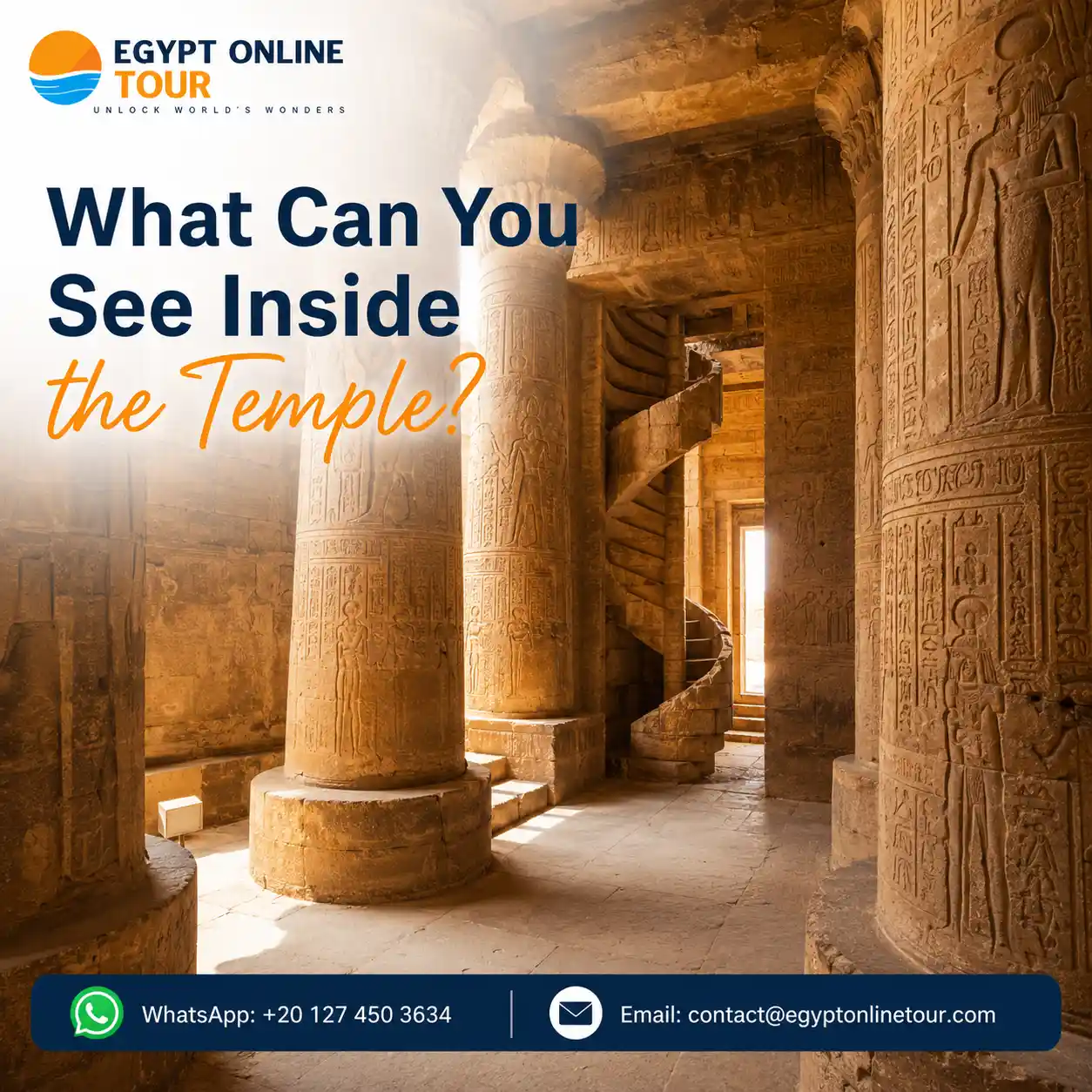
Inside Maharraqa, the main value comes from the layout, not decoration. The temple rewards visitors who look slowly at the structure.
Look for:
- The open courtyard at the center of the temple
- Columns along three sides of the court
- Plain sandstone walls with limited carving
- The sanctuary area that was never completed
- The spiral staircase rising from one corner
These details help explain why Maharraqa is different from larger temples. It shows the plan of a Roman-period temple before the final decoration was finished.
Best Way to Explore the Temple
A simple walking route helps you understand Maharraqa in the right order.
Our Egyptologists often recommend visiting Dakka before Maharraqa because the comparison makes the unfinished design easier to understand.
The temple is small, so the value comes from looking slowly, not from covering a large site.
Suggested walking route
- Stand outside the entrance and notice the temple’s modest size.
- Walk into the open courtyard and study the column layout.
- Look toward the sanctuary area that was never completed, then notice how the plain walls show where decoration would have continued.
- Spend a few minutes at the spiral staircase.
- Before leaving, look back across the courtyard and compare the layout with the temple of Dakka nearby.
This order helps the temple feel clear instead of looking like a small group of ruins. You see the plan first, then the missing details, then the feature that makes Maharraqa memorable.
Temple of Maharraqa, Dakka, and Wadi es-Sebua
Most visitors see Maharraqa, Dakka, and Wadi es-Sebua during the same Lake Nasser cruise stop. The three temples stand close together today, but each one tells a different part of Nubian history.
Why visit all three together?
Seeing the three sites together gives a stronger experience than visiting one alone.
- Wadi es-Sebua shows the scale of royal temple building.
- Dakka shows how Egyptian temples developed in the Greco-Roman period.
- Maharraqa shows what an unfinished Roman temple looked like before its final stage.
Each stop adds context to the next, which is why this group is one of the most useful archaeological visits on a Lake Nasser cruise.
If you want more detail before your trip, continue with our complete guide to the Temple of Dakka.
Expert Tip
Do not rush through Maharraqa because it looks smaller than Dakka or Wadi es-Sebua.
Many visitors give it only a few minutes. That is a mistake. Maharraqa often becomes memorable because it answers questions larger temples do not answer.
It helps you see:
- How temple projects were planned
- How Roman architecture appeared in Nubia
- Why unfinished monuments can still matter
- How ancient buildings survived into the modern world
In practice, the visitors who enjoy Maharraqa most are usually the ones who arrive with a guide who explains why the missing parts matter.
Can You Visit the Temple on a Lake Nasser Cruise?
Yes. A Lake Nasser cruise is the easiest way to visit the Temple of Maharraqa. For travelers comparing cruise options, Egypt Nile Cruises can help you choose the right itinerary before booking.
Most cruises between Aswan and Abu Simbel stop at New Wadi es-Sebua, where travelers usually visit Maharraqa, Dakka, and Wadi es-Sebua together.
Questions to ask before booking
Before booking your cruise, confirm:
- Does the itinerary mention Maharraqa by name?
- Are Dakka and Wadi es-Sebua included too?
- Is an Egyptologist guide provided?
- Are entrance tickets included?
- How much time is allowed at each temple?
- Will the visit happen early morning, midday, or late afternoon?
Some cruise programs mention only “Wadi es-Sebua” without explaining that more than one temple may be included. Checking the details helps you avoid a rushed visit.
If you prefer to visit Abu Simbel separately from your cruise plan, a Private Tour to Abu Simbel from Aswan by Car gives you a focused day trip without changing your Lake Nasser itinerary.
Is the Temple of Maharraqa in Aswan Worth Visiting?
Yes, Maharraqa is worth visiting if you enjoy archaeology, Nubian history, or quiet sites with fewer crowds.
The Temple of Maharraqa in Aswan should not be judged by size alone. Based on our experience planning Lake Nasser itineraries, travelers who spend a little longer at Maharraqa usually leave with a much better understanding of Nubian history.
Best for
- Travelers interested in Roman Egypt
- Visitors who enjoy ancient architecture
- Lake Nasser cruise travelers
- People who want to understand Nubia beyond Abu Simbel
- Photographers looking for quiet details, not crowded scenes
Not best for
- Travelers expecting huge statues
- Visitors looking for colorful wall reliefs
- People with only one short day in Aswan
- Anyone who prefers major headline monuments only
Maharraqa explains Roman temple building, frontier life, religious change, and the rescue of Nubian monuments. Its value comes from its story, not its scale.
Tips for Visiting the Temple of Maharraqa in Aswan
A visit to Maharraqa is simple when you know what to expect. The temple is small, open to the sun, and usually visited as part of a Lake Nasser cruise stop.
Use these tips:
- Visit with an Egyptologist guide. This helps you understand the staircase, missing sanctuary, and relocation story.
- Do not skip the spiral staircase
- Compare the temple with Dakka after your visit
- Bring water because shade is limited
- Wear comfortable walking shoes
- Take photos of the courtyard, columns, and staircase
- Read a little history before you arrive
Best Time to Visit
The best time to visit Maharraqa is from October to April, when the weather is cooler and walking around open archaeological sites feels easier.
If you visit between May and September, try to go early in the morning. Midday heat around Lake Nasser can be strong, especially in June, July, and August.
Read more about the Cheapest Time to Go to Egypt
What to Wear
Comfort matters more than style at Maharraqa. The site is open, sunny, and usually visited during a Lake Nasser cruise stop.
Wear:
- Lightweight, breathable clothing
- Comfortable walking shoes with good grip
- A wide-brimmed hat or cap
- Sunglasses
- Sunscreen
Since shade is limited, sun protection makes the visit much easier.
Know about: What to Wear in Egypt as a Female Tourist?
What to Bring
Bring only what you need for a short outdoor archaeological visit.
Useful items include:
- Drinking water
- A fully charged phone or camera
- A portable power bank
- Sunscreen
- A small backpack for personal items
Visitor facilities near the temple are limited, so prepare before you leave the cruise boat.
Look at: What to pack for a trip to Egypt
How Long Should You Spend There?
Most visitors need about 20 to 30 minutes to explore Maharraqa.
Spend longer if you enjoy photography, architecture, or Nubian history. The temple is small, but details like the spiral staircase, open court, and unfinished sanctuary deserve a slower look.
Maharraqa is usually visited with Dakka Temple and Wadi es-Sebua, so leave enough time for the full New Wadi es-Sebua group.
Common Mistakes to Avoid
Many travelers miss the value of Maharraqa because they judge it too quickly.
Avoid these mistakes:
- Expecting a massive temple like Abu Simbel
- Walking past the spiral staircase too fast
- Spending only a few minutes at the site
- Visiting without knowing why the temple was unfinished
- Forgetting that the temple was moved from its original location
- Judging the monument by size instead of historical meaning
A little background knowledge changes the whole visit.
Who Will Enjoy Visiting Maharraqa?
Maharraqa suits travelers who want more than famous photo stops.
You will likely enjoy it if you:
- Like archaeology and ancient history
- Have visited Egypt before
- Prefer quiet sites with fewer crowds
- Enjoy learning about Nubian culture
- Notice architecture more than giant statues
- Want to understand Roman Egypt beyond the main temples
Who May Prefer Other Sites?
Maharraqa may not be the highlight for every traveler.
You may prefer other temples if you:
- Want huge statues like Abu Simbel
- Prefer richly decorated walls
- Prefer dramatic cliffside temples such as the Mortuary Temple of Hatshepsut
- Have only one or two days in Aswan
- Mainly want iconic photo locations
This does not make Maharraqa less important. It simply offers a quieter and more historical type of visit.
Temple of Maharraqa in Aswan Budget Guide
The Temple of Maharraqa in Aswan is not usually visited as a standalone attraction. Most travelers see it as part of the New Wadi es-Sebua area, where Wadi es-Sebua, Dakka, and Maharraqa are visited together during a Lake Nasser cruise stop.
What Affects the Cost?
Your total cost usually depends on:
- The Lake Nasser cruise package
- Entrance fees included in the itinerary
- Egyptologist guiding service
- Boat logistics and cruise schedule
- Time allowed at New Wadi es-Sebua
- Whether Abu Simbel, Amada, and Kalabsha are included
How to Compare Your Options
Do not compare options by price only. A stronger route gives enough time at Maharraqa, Dakka, Wadi es-Sebua, Amada, Kalabsha, and Abu Simbel without rushing between sites.
If Maharraqa is part of a wider Egypt plan, Egypt Tour Packages can help you compare routes that include Cairo, Luxor, Aswan, and Lake Nasser.
Best Value Tip
Before choosing your itinerary, compare all Lake Nasser Cruises to see which routes include Maharraqa, Dakka, Wadi es-Sebua, Amada, and Abu Simbel.
A slightly better itinerary with more time at New Wadi es-Sebua can make the whole Lake Nasser experience stronger.
Conclusion
The Temple of Maharraqa in Aswan proves that a monument does not need to be large to be meaningful.
Its incomplete layout, spiral staircase, frontier setting, Christian reuse, and relocation story make it one of the most interesting stops on Lake Nasser.
If you visit only for photos, Maharraqa may feel small. If you visit to understand Roman Nubia and the rescue of ancient monuments, it becomes much more rewarding.
For the best experience, choose a Lake Nasser cruise that includes New Wadi es-Sebua. Take your time at Maharraqa, then compare it with Dakka and Wadi es-Sebua to understand the wider story of Egypt’s southern frontier.
Sources and Trust Notes
This guide was written for travelers planning a real visit to Maharraqa and the New Wadi es-Sebua temple group. Historical details were reviewed against trusted heritage references, including UNESCO World Heritage Centre, Egypt’s Ministry of Tourism and Antiquities, World History Encyclopedia, Museo Egizio archives, and archaeological references on Nubian temples.
Because Maharraqa has limited surviving inscriptions, this guide avoids naming one confirmed emperor as the builder. Where evidence remains uncertain, it uses careful wording such as probably, may have, and no surviving inscription confirms.