The history of ancient Nubia is the story of the land along the Nile south of Egypt, from the First Cataract at Aswan into today's northern Sudan. It runs from the Kerma kingdom (about 2500 to 1500 BC) through centuries of Egyptian rule, to the Kingdom of Kush, whose kings ruled Egypt as the 25th Dynasty (about 747 to 656 BC), and to Meroe, which lasted into the 4th century AD. Christian kingdoms followed, then Islam. The Nubians are still here: they live around Aswan, in Cairo and in Sudan, and they keep their own languages.
Below is the timeline in one table, the main chapters of Nubian history, the temples that were rescued from Lake Nasser (and the few that left Egypt, such as the Temple of Debod in Madrid), and how to see Nubia on a trip to Aswan. We run tours in Aswan and on Lake Nasser, so the last part is practical.
Ancient Nubia at a glance: the timeline
| Period | Approximate dates | What happened |
|---|---|---|
| A-Group and C-Group cultures | 4th millennium BC to about 1500 BC | Farming and herding communities in Lower Nubia; the C-Group appears by about 2300 BC. |
| Kingdom of Kerma | about 2500 to 1500 BC | The first great Nubian state, with its capital at Kerma in Sudan; peak 1750 to 1500 BC. |
| Egyptian rule (New Kingdom) | about 1500 to 1070 BC | Thutmose I destroys Kerma; Egypt governs Nubia and builds temples such as Amada and Abu Simbel. |
| Kingdom of Kush, Napata | 8th to 4th century BC | Kushite kings conquer Egypt and rule it as the 25th Dynasty, about 747 to 656 BC. |
| Kingdom of Kush, Meroe | about 300 BC to the 4th century AD | The capital moves south to Meroe; Meroitic script, royal pyramids, trade with Rome. |
| Christian Nubia | 6th to 15th century AD | Three kingdoms: Nobadia, Makuria and Alodia. |
| Islamic Nubia | from the 14th to the 16th century AD | Islam spreads; by the 16th century most Nubians are Muslim. |
| The High Dam | 1960 to 1980 | Lake Nasser floods Lower Nubia; about 100,000 Nubians are moved and the temples are rescued. |
Where was ancient Nubia?
Nubia stretched along the Nile from Aswan in the north to the area of today's Khartoum in the south. Historians divide it into Lower Nubia, between the First and Second Cataracts (most of it now under Lake Nasser), and Upper Nubia, further south in Sudan. The Egyptians called the land Ta-Seti, "the Land of the Bow", after the skill of Nubian archers, and later Kush. The name Nubia is often linked to the Egyptian word for gold, "nub", because the eastern desert of Nubia was Egypt's great source of gold, although the origin of the name is debated.
Nubia was the corridor between Egypt and inner Africa. Gold, ivory, ebony, incense, animal skins and cattle went north; grain, oil, wine, linen and manufactured goods came south. That trade made Nubia rich and made Egypt want to control it.
Which is older, Nubia or Egypt?
Both grew from the same prehistoric Nile Valley cultures, and people lived in Nubia as early as in Egypt. As states, Egypt came first: it was unified around 3100 BC, while the first Nubian kingdom, Kerma, took shape around 2500 BC. In Lower Nubia the A-Group culture lived at the same time as late predynastic Egypt and traded with it. So the honest answer is: Egypt is the older state, but Nubian culture is as old as Egyptian culture, and the two influenced each other for three thousand years.
Who are the Nubians, and where are they from?
The Nubians are the people of the middle Nile, in southern Egypt and northern Sudan. Their languages, such as Nobiin and Kenzi, belong to the Nilo-Saharan family; Arabic is their second language. Scholars have proposed several origins, from early Saharan herders who moved to the Nile when the Sahara dried, to links with peoples further south and west, and there is no single agreed answer. What is clear is that the Nile Valley was always a meeting place: Nubian culture absorbed Egyptian, Greek, Roman, Christian and Arab influences and kept its own identity. In the Bible the land is called Cush; some later traditions connect the Nubians with Cush, son of Ham, which is tradition rather than history.
What race were the ancient Nubians? Historians and geneticists do not sort ancient peoples into races; the ancient Nubians were Nile Valley Africans whose neighbours were the Egyptians to the north and the peoples of the Sudanese savanna to the south. Egyptian tomb paintings show Nubians with darker skin and their own dress, usually as soldiers, envoys or bearers of gold and ivory. A 2015 genetic study of Sudanese peoples (Dobon and colleagues, Scientific Reports) found that today's Nubians of northern Sudan group with north-eastern populations such as Egyptians, Beja and Ethiopians rather than with other Nilo-Saharan speakers, and carry mixed ancestry with later Arab influence. That is a picture of a crossroads people, not of a fixed type. For the wider debate about ancient Egypt, read our guide to the ancient Egyptian race controversy.
Kerma, the first Nubian kingdom
Kerma, near the Third Cataract in Sudan, grew into a powerful kingdom from about 2500 BC and was at its height between 1750 and 1500 BC. Its rulers built the Western Deffufa, a huge mud-brick temple that still stands, and were buried in large tumulus tombs. Kerma controlled the trade routes to the south and, during Egypt's Second Intermediate Period, allied with the Hyksos against Thebes. Around 1500 BC Thutmose I campaigned deep into Nubia and destroyed Kerma, and Egypt ruled the region for the next four centuries.
Egyptian Nubia: forts, gold and temples
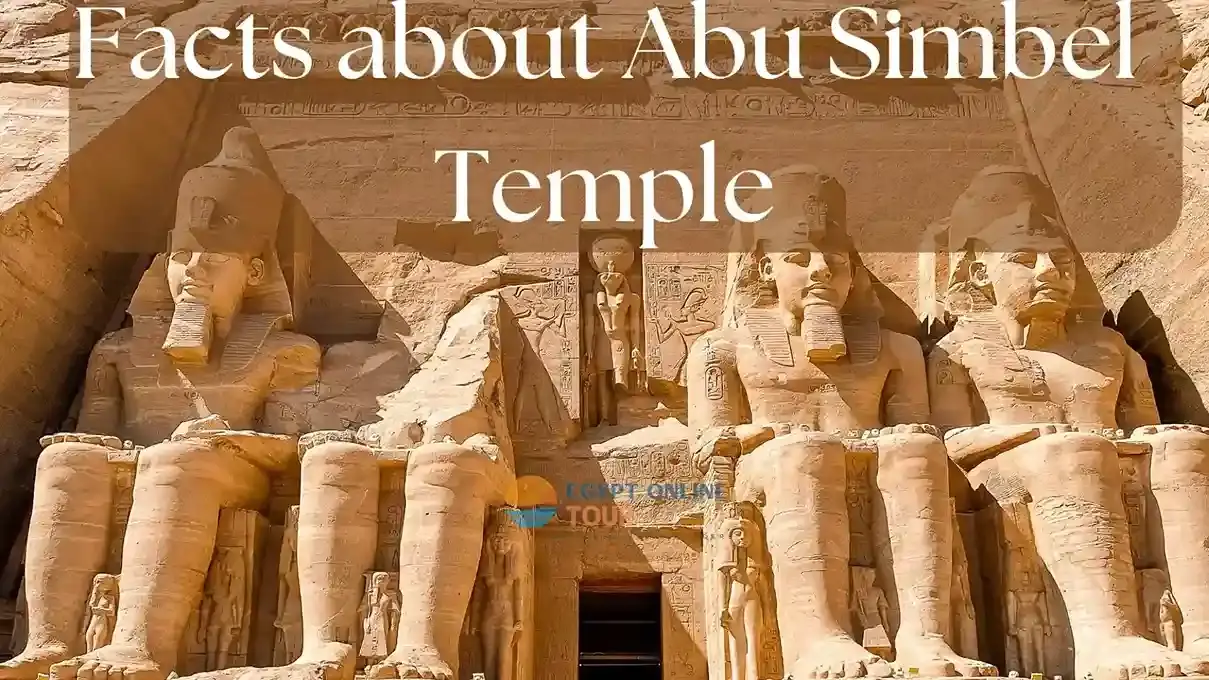
Egypt had built fortresses at the Second Cataract in the Middle Kingdom to control trade. In the New Kingdom it went further: Nubia was governed by a viceroy, the "King's Son of Kush", and the pharaohs built temples to show their power. Amada, built by Thutmose III and Amenhotep II, is the oldest surviving temple of Lower Nubia; Ramesses II built more than any other king, from Beit el-Wali and Wadi es-Sebua to the two temples of Abu Simbel. Nubian princes were educated at the Egyptian court and Nubian soldiers served in the Egyptian army, so by the end of the New Kingdom the two cultures were closely mixed.
The black pharaohs: Kush rules Egypt
After Egyptian rule ended, a new Nubian kingdom rose at Napata, near the Fourth Cataract. Its king Kashta pushed north into Upper Egypt, and his successor Piye conquered the whole of Egypt, recording his victory on a great stela. Piye, Shabaka, Shebitku, Taharqa and Tantamani ruled Egypt as the 25th Dynasty from about 747 to 656 BC. They saw themselves as restorers of Egyptian tradition: they worshipped Amun, built at Karnak and revived the pyramid as a royal tomb, first at El-Kurru and then at Nuri, where Taharqa's pyramid is the largest. Wars with Assyria ended their rule in Egypt: the Assyrians sacked Thebes in 663 BC, and in 656 BC Psamtik I took Thebes. The Kushite kings withdrew to Nubia.
Meroe: pyramids, iron and a Nubian script
Around 300 BC the royal centre moved south to Meroe, between the Nile and the Atbara, where more rain fell and the land depended less on the flood. Meroe produced iron, traded with the Ptolemies and Rome, and developed its own writing, the Meroitic script, which can be read aloud but is still only partly understood. Its kings and queens, among them the ruling queens called Kandake, were buried under steep pyramids: the rulers and officials of Kush built more than 200 pyramids over about a thousand years. Meroe declined in the 4th century AD.
Christian and Islamic Nubia
After Meroe, Nubia converted to Christianity in the 6th century and formed three kingdoms: Nobadia in the north, Makuria in the centre and Alodia in the south. Churches were painted with fine murals, and some Egyptian temples, such as Amada and Wadi es-Sebua, were used as churches; you can still see painted saints over the old reliefs. Islam reached Nubia from the 8th century through trade and spread widely from the late 14th century, and by the 16th century most Nubians were Muslim.
The High Dam and the rescue of the Nubian temples
The Aswan High Dam created Lake Nasser, which flooded most of Lower Nubia. About 100,000 Nubians in Egypt and Sudan lost their villages; in Egypt many were resettled in new villages near Kom Ombo, known as New Nubia. At Egypt's request, UNESCO launched the International Campaign to Save the Monuments of Nubia on 8 March 1960. By its end on 10 March 1980, 22 to 24 monuments had been cut up and moved to higher ground. Abu Simbel was moved in 1964 to 1968, 65 m higher and 200 m back from the river, and Philae was moved to Agilkia Island in the 1970s. In 1979 UNESCO inscribed the "Nubian Monuments from Abu Simbel to Philae" on the World Heritage List. Read more about the Aswan High Dam.
Nubian temples you can visit today
| Site | Built | Where it is now | How to visit |
|---|---|---|---|
| Abu Simbel (two temples) | Ramesses II, 13th century BC | Abu Simbel, 280 km south of Aswan | Day trip by road or air from Aswan, or by Lake Nasser cruise |
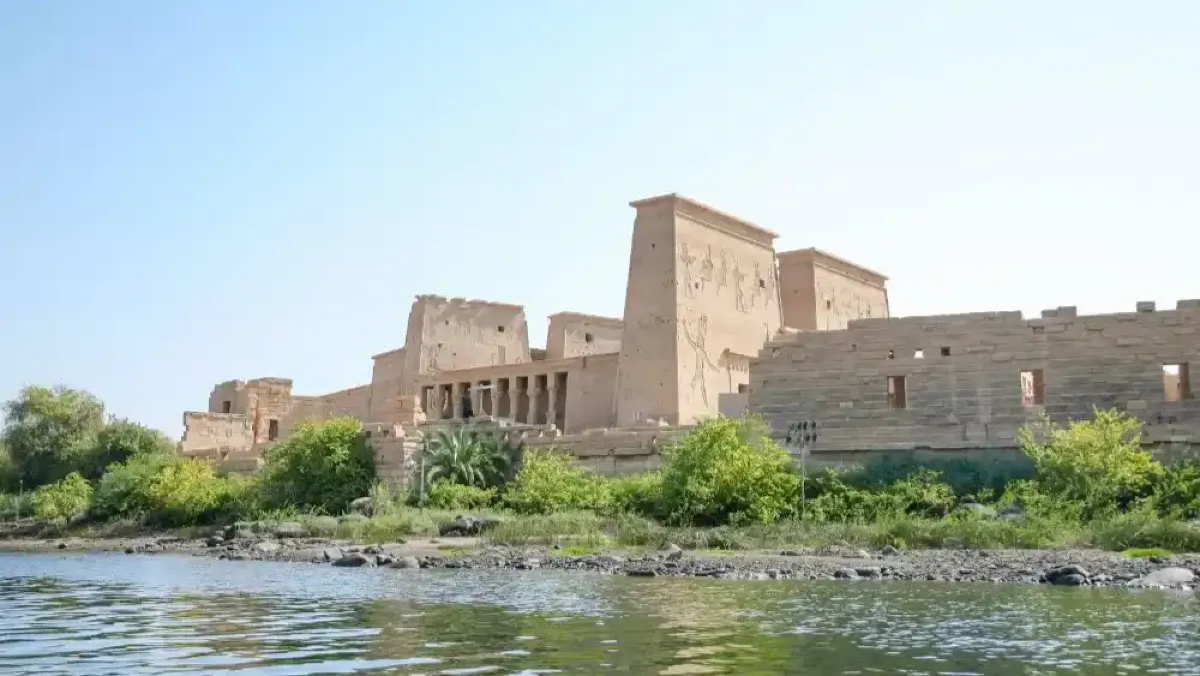
| Philae, Temple of Isis | Ptolemaic and Roman, from the 4th century BC | Agilkia Island, Aswan | Short boat ride from the Aswan dam area |
| Kalabsha, with Beit el-Wali and the Kiosk of Qertassi | Kalabsha: Roman, for the god Mandulis; Beit el-Wali: Ramesses II | New Kalabsha, by the High Dam | Boat from the west end of the High Dam; half a day from Aswan |
| Wadi es-Sebua, Dakka and Maharraqa | Ramesses II; Ptolemaic and Meroitic; Roman | New Sebua, on Lake Nasser | Lake Nasser cruise |
| Amada, Derr and the tomb of Pennut | Thutmose III; Ramesses II; 12th century BC | New Amada, on Lake Nasser | Lake Nasser cruise |
| Qasr Ibrim | Fortress and town used from pharaonic to Ottoman times | Still in place, now an island | Seen from the deck of a Lake Nasser cruise; no landing |
Our guides' order for Aswan: Philae early in the morning, then the High Dam and Kalabsha, and the Nubian Museum in the late afternoon. Abu Simbel needs its own day. The lake temples (Sebua, Amada, Qasr Ibrim) are only practical on a cruise between Aswan and Abu Simbel; see Lake Nasser cruise vs Nile cruise. Before you go, read our guides to Abu Simbel and Philae, and the short notes on Beit el-Wali and Amada.
The Nubian temples that left Egypt: the Temple of Debod and others
As thanks for help with the rescue, Egypt gave five monuments to the countries that contributed most. The best known in Europe is the Temple of Debod in Madrid.
The Temple of Debod, Madrid
The Temple of Debod stood about 15 km south of Aswan. The Meroitic king Adikhalamani began it in the early 2nd century BC as a chapel for Amun; Ptolemaic kings and the Roman emperors Augustus and Tiberius enlarged and decorated it, and the later temple was dedicated to Isis of Philae. Egypt gave it to Spain in 1968 for Spain's help in saving the temples of Abu Simbel. It was rebuilt stone by stone in 1970 to 1972 and opened in 1972 in the Parque del Oeste (Cuartel de la Montaña), next to Plaza de España, keeping its original east to west orientation.
At the time of writing, entry is free; the temple is open Tuesday to Sunday (closed Mondays), 10:00 to 20:00 in winter and 10:00 to 19:00 from 15 June to 15 September, with a limit of 30 people inside for up to 30 minutes and no groups. Madrid recommends booking a free slot online. Go at sunset: the temple and its reflecting pool are a classic Madrid view.
The other gift temples
- Temple of Dendur: Metropolitan Museum of Art, New York.
- Temple of Taffeh: Rijksmuseum van Oudheden, Leiden.
- Rock chapel of Ellesyia: Museo Egizio, Turin.
- Kalabsha gate: Egyptian Museum, Berlin.
The Nubian Museum in Aswan
The Nubian Museum is the best single place to understand Nubia. The idea came from the 1960 UNESCO campaign; the museum, designed by the Egyptian architect Mahmoud El-Hakim, opened in 1997 on a rocky hill in Aswan. It is built of local sandstone and pink granite in a style that recalls Nubian houses and temples, and it won the Aga Khan Award for Architecture in the 1999 to 2001 cycle.
Inside, thousands of objects follow Nubia from prehistory through Kerma, the Kushite pharaohs, Meroe, Christian and Islamic Nubia, with finds from the rescue excavations, statues of Kushite kings and a large diorama of village life and crafts. The garden is an open-air museum with a cave of prehistoric rock art, part of a Fatimid cemetery, a channel that stands for the Nile and a reconstructed Nubian house.
| Nubian Museum | At the time of writing |
|---|---|
| Hours | Daily 9:00 to 17:00 (ticket window closes 16:00); evening opening Thursday and Friday 18:00 to 21:00; Ramadan 9:00 to 15:00 |
| Foreign visitors | EGP 400 adult, EGP 200 student |
| Egyptians | EGP 30 adult, EGP 10 student |
| Time needed | 1.5 to 2 hours, plus the garden |
Fees change, so check the official monuments site before you go. The museum is a short taxi ride from the Corniche; it is cooler and quieter in the late afternoon or on the evening opening.
Nubian villages, crafts and culture today
Nubian villages near Aswan, on the west bank and on the islands, are reached by boat and are the easiest way to meet Nubian culture: brightly painted houses with domed and vaulted mud-brick rooms, guest houses, Nubian food and music. Traditional crafts are still made, above all by women: colourful plates and covers woven from palm fronds, baskets and mats, beadwork and hand-woven cloth. Boatbuilders decorate the feluccas and small boats that link the villages.
- Be a guest, not a spectator: ask before photographing people and inside homes.
- Dress: shoulders and knees covered is respectful.
- Buy direct: crafts sold in the villages support the families who make them.
- Timing: go in the afternoon by felucca or motorboat and come back at sunset.
Nubian heritage is tied to the river; for the bigger picture, read 5 facts about the Nile and our guide to what to do in Aswan.
Plan it with us
Our Kalabsha Temple and Nubian Museum tour covers the rescued temples and the museum in one day with an Egyptologist guide. The Nubian village day tour by boat takes you to a Nubian home on the west bank, and our private tour to Abu Simbel from Aswan completes the picture with the greatest Nubian temple of all.
Ancient Nubia: quick answers
What is the brief history of Nubia?
The Kerma kingdom (about 2500 to 1500 BC), Egyptian rule in the New Kingdom, the Kingdom of Kush with its capitals at Napata and Meroe (its kings ruled Egypt as the 25th Dynasty, about 747 to 656 BC), Christian kingdoms from the 6th century AD, and then Islam, which most Nubians had adopted by the 16th century.
Do Nubians still exist?
Yes. Nubians live in Aswan Governorate (including New Nubia near Kom Ombo), in Cairo and in northern Sudan. Many still speak Nubian languages such as Nobiin and Kenzi alongside Arabic.
Who were the Kushite pharaohs?
Nubian kings from Napata, including Piye and Taharqa, who conquered Egypt and ruled it as the 25th Dynasty until the Assyrian wars pushed them back to Nubia in 656 BC.
Is the Temple of Debod really Egyptian?
Yes. It stood about 15 km south of Aswan and was begun in the early 2nd century BC by the Meroitic king Adikhalamani. Egypt gave it to Spain in 1968, and it opened in Madrid in 1972.
How much is the Nubian Museum ticket?
At the time of writing, EGP 400 for a foreign adult and EGP 200 for a foreign student, according to the official monuments site. Fees change, so check before you go.
Which Nubian temples were not moved?
Qasr Ibrim is the only Lower Nubian site that stayed in its original place; it is now an island in Lake Nasser and is seen from cruise boats.
Ahmed Samir writes and updates the Egypt travel guides of Egypt Online Tour, a licensed tour company based in Cairo (ETAA licence 1466). Our travel advisors review each guide before it is published.
All guides by Ahmed Samir