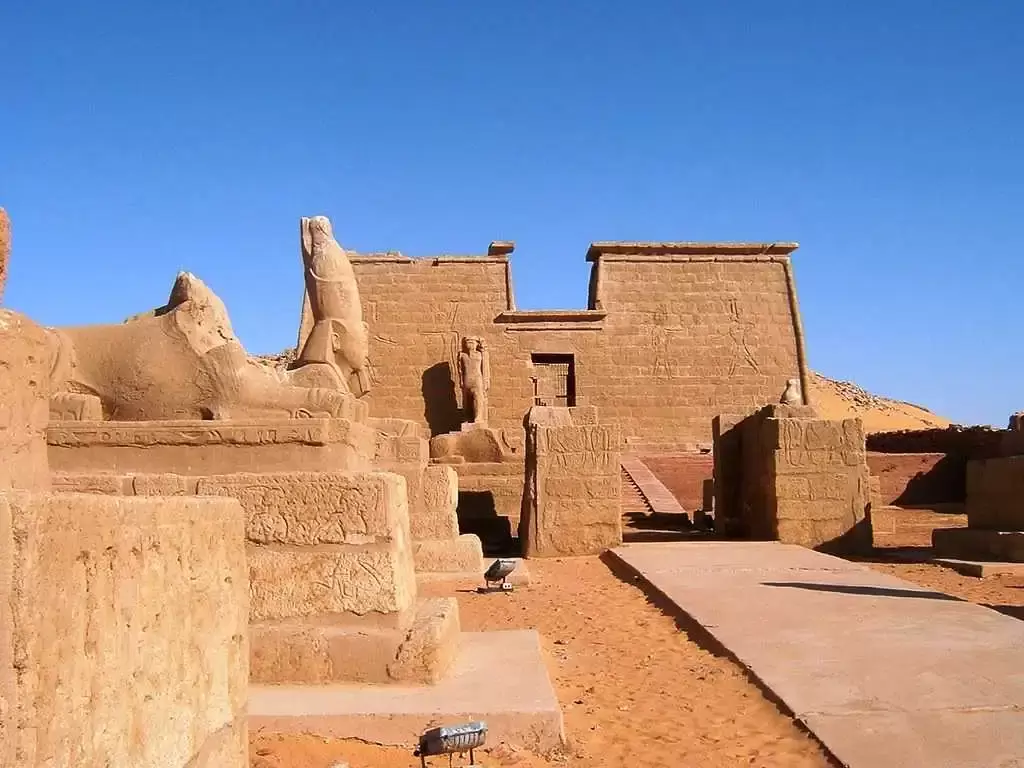
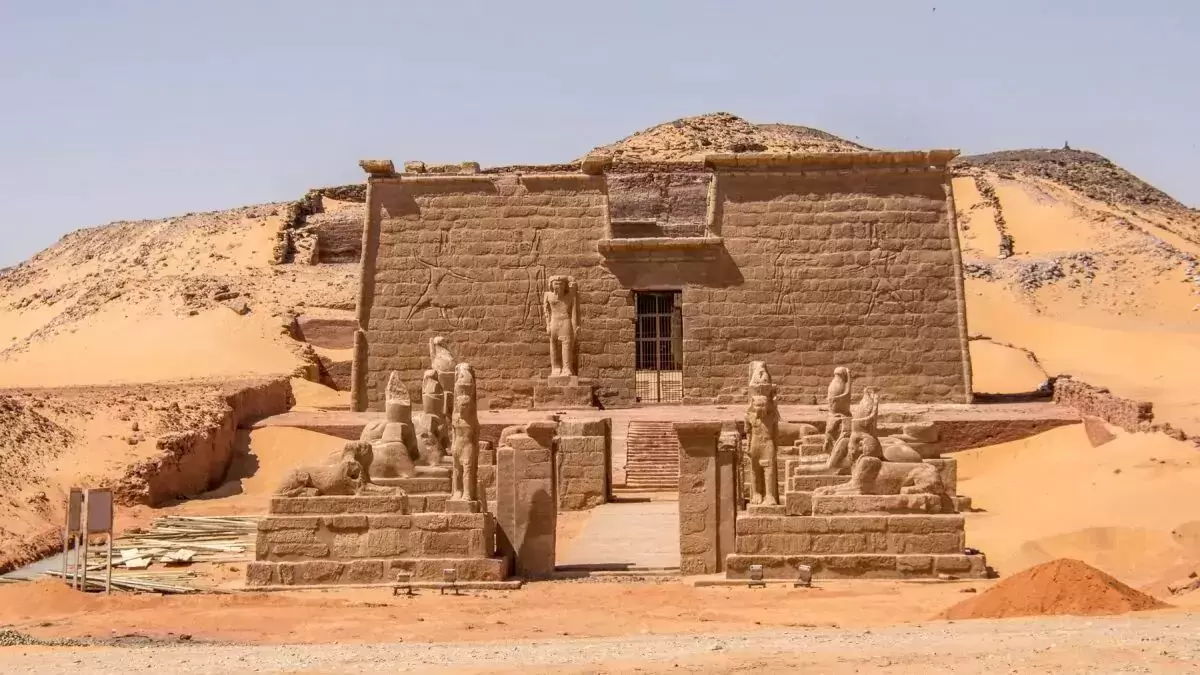
The Temple of Dakka is a temple of Thoth, the god of wisdom, built in Lower Nubia between the 3rd century BC and the early 1st century AD by a Nubian king, the Ptolemies and the Roman emperors. When Lake Nasser was about to flood it in the 1960s, it was taken apart and rebuilt at New Wadi al-Sebua, on the western shore of the lake, beside the temples of Wadi al-Sebua and Maharraqa. Its 12-metre pylon is one of the best preserved in Nubia.
Few travellers see Dakka, because the site has no town and no regular road traffic. Most visitors arrive by Lake Nasser cruise ship between Aswan and Abu Simbel, and that is how our guests usually see it. This guide covers its history, what to look for and how to visit.
Temple of Dakka at a glance
| Dedicated to | Thoth, as Thoth of Pnubs |
|---|---|
| Built | 3rd century BC to early 1st century AD |
| Builders | King Arqamani of Meroe, Ptolemy IV, Ptolemy IX, Augustus, Tiberius |
| Original site | Ad-Dakka (ancient Pselchis), Lower Nubia |
| Current site | New Wadi al-Sebua, western shore of Lake Nasser, about 4 km north-west of the original Wadi al-Sebua |
| World Heritage | Part of the Nubian Monuments from Abu Simbel to Philae, inscribed by UNESCO in 1979 |
| Opening hours | 07:00 to 16:00 daily |
| Ticket (site of New Wadi al-Sebua) | EGP 150 foreign adult, EGP 75 student |
Hours and prices are from the Ministry of Tourism and Antiquities at the time of writing (checked 5 November 2026).
History of the Temple of Dakka
A Nubian king and a Greek pharaoh
Dakka is unusual because a Nubian ruler started it. In the late 3rd century BC, Arqamani (also written Ergamenes II), king of Meroe in today's Sudan, built a small chapel to Thoth on the west bank of the Nile at Pselchis. At the same time Ptolemy IV, the Greek pharaoh in Alexandria, added an antechamber and a gateway. The two kingdoms were rivals for Lower Nubia, and both chose to honour the same god here: the temple is a stone record of a shared frontier. The Greeks identified Thoth with their own Hermes, one of the pairings in our guide to the Greek names of Egyptian gods.
Ptolemaic and Roman additions
Ptolemy IX added a pronaos (a columned porch) in front of the chapel. After Rome took Egypt, Augustus and Tiberius added a second sanctuary at the back, the inner and outer enclosure walls and the great pylon. Pselchis became a Roman frontier post, and the temple stood inside a fortified enclosure about 270 by 444 metres.
From temple to church
In the Christian period the pronaos was turned into a church and its walls were painted. Those paintings did not survive the move in the 1960s.
Collapse, rebuilding and the rescue of Nubia
Part of the temple collapsed in 1908 to 1909 and was rebuilt by the Italian engineer Alessandro Barsanti. Fifty years later the Aswan High Dam threatened the whole of Lower Nubia. During the international campaign to save the monuments of Nubia, Dakka was dismantled block by block and re-erected at New Wadi al-Sebua with two neighbours: the Ramesside temple of Wadi al-Sebua and the small Roman temple of Maharraqa.
What to see at the Temple of Dakka
- The pylon: 12 metres high and nearly complete. Because the enclosure walls were not rebuilt, it now stands apart from the temple, which makes it easy to photograph from all sides. Look for ancient visitors' graffiti, mostly in Greek, with some Demotic and Meroitic.
- The processional way: at the original site a 55-metre path led from the pylon to a terrace on the Nile; at the new site the axis still runs from the pylon to the temple.
- The pronaos: the columned porch of Ptolemy IX, later used as the church.
- The chapel of Arqamani: the oldest part, with reliefs of the Nubian king making offerings to the gods.
- The sanctuaries and the granite naos: the shrine that held the god's image, with reliefs of cows offered to Thoth.
- The view: from the top of the pylon area, the desert and the lake shore, with Wadi al-Sebua's avenue of sphinxes nearby.
Thoth at Dakka
Thoth was the god of writing, wisdom and the moon, shown with the head of an ibis or as a baboon. At Dakka he was worshipped as Thoth of Pnubs, a local form linked to a sacred tree in Nubia. In Egyptian myth Thoth brought the angry lioness goddess Tefnut back from Nubia to Egypt, which may be why the Nubian frontier was a fitting place for his temple.
How to visit the Temple of Dakka
By Lake Nasser cruise
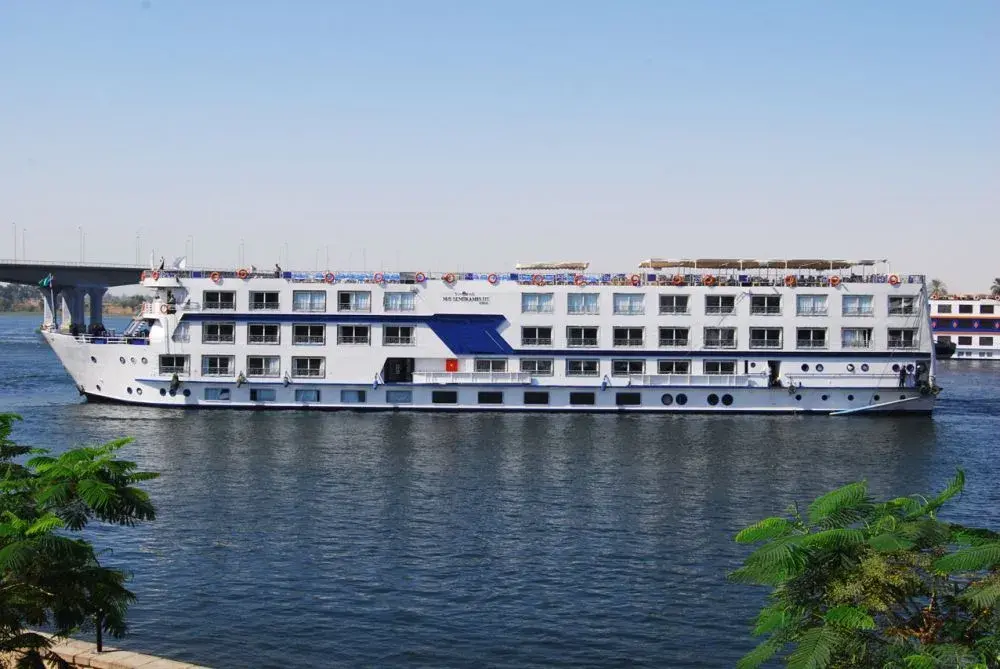
The easiest way is a Lake Nasser cruise between Aswan and Abu Simbel. The ships stop at New Wadi al-Sebua, and you visit Wadi al-Sebua, Dakka and Maharraqa together in one walk across the sand, usually in the early morning or late afternoon. The Steigenberger Omar El Khayam Lake Nasser cruise, for example, visits Wadi El Seboua on Day 3, on its way from Abu Simbel to Aswan. Our guide comparing a Lake Nasser cruise and a Nile cruise explains how these voyages work.
By road
The site can be reached by a long desert road from Aswan, several hours each way. It is rarely done because of the distance, the heat and the need for permits and a reliable driver; if you want it, plan it as a private trip with an operator who knows the route.
Tips
- The three temples stand in open desert with no shade; bring a hat, water and closed shoes.
- Allow about 1.5 to 2 hours for all three temples.
- The ticket for New Wadi al-Sebua is bought at the site; cruise packages usually include it.
Other temples of Lake Nasser
Dakka is one of a chain of rescued Nubian temples. On the same shore you find Wadi es-Sebua and the temple of Maharraqa; further south are Amada, Derr and Qasr Ibrim, and at the end Abu Simbel. Near Aswan, the temple of Beit El-Wali stands beside Kalabsha. For the wider story of the region, read the history of ancient Nubia.
Plan it with us
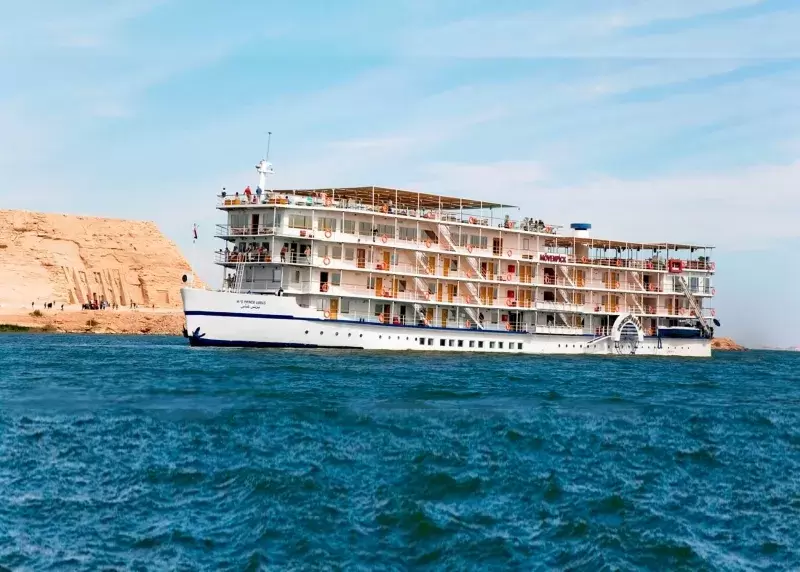
Our Movenpick Prince Abbas Lake Nasser cruise stops at New Wadi al-Sebua for Dakka, and you can compare the other ships in our Lake Nasser cruises.
Temple of Dakka: quick answers
Who is the Temple of Dakka dedicated to?
Thoth, the god of wisdom and writing, worshipped here as Thoth of Pnubs.
Where is the Temple of Dakka now?
At New Wadi al-Sebua on the western shore of Lake Nasser, beside the temples of Wadi al-Sebua and Maharraqa.
Who built the Temple of Dakka?
It was begun by the Meroitic king Arqamani and Ptolemy IV in the 3rd century BC and extended by Ptolemy IX, Augustus and Tiberius.
How do you get to the Temple of Dakka?
Most visitors arrive on a Lake Nasser cruise between Aswan and Abu Simbel; a long desert road from Aswan is the alternative.
Ahmed Samir writes and updates the Egypt travel guides of Egypt Online Tour, a licensed tour company based in Cairo (ETAA licence 1466). Our travel advisors review each guide before it is published.
All guides by Ahmed Samir