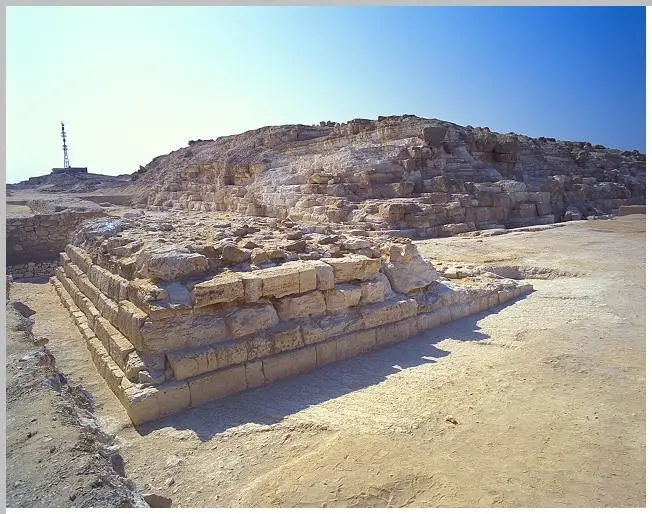

Wadi es-Sebua, Arabic for "Valley of the Lions", is a temple built by Ramesses II in Lower Nubia, today on the western shore of Lake Nasser about 140 km south of Aswan. It takes its name from the avenue of sphinxes in front of it. When the High Dam was built, the temple was dismantled in 1964 and moved about 4 km west to a new site, where it now stands beside the temples of Dakka and Maharraqa. Most travellers reach it on a Lake Nasser cruise between Aswan and Abu Simbel.
It is one of the quietest temple sites in Egypt: on most days you share it only with the passengers of one or two small ships. Our guides on Lake Nasser cruises rank it with Amada as the best stop between Aswan and Abu Simbel.
Wadi es-Sebua at a glance
| Location | West shore of Lake Nasser, Lower Nubia, about 140 km south of Aswan |
|---|---|
| Main temple | Ramesses II, built probably between years 35 and 50 of his reign (about 1244 to 1229 BC) |
| Earlier temple | Amenhotep III, later restored by Ramesses II |
| Dedicated to | Amun-Re, Re-Horakhty and the deified Ramesses II |
| Moved | 1964, about 4 km west, with US support |
| Also on the site | The temples of Dakka and Maharraqa |
| Status | Part of the UNESCO World Heritage site "Nubian Monuments from Abu Simbel to Philae" (1979) |
History of Wadi es-Sebua
Two temples, two kings
The first temple here was built by Amenhotep III of the 18th Dynasty, a small shrine partly cut into the rock. About a century later, Ramesses II restored it and built a much larger temple some 150 metres away. The work was carried out under Setau, viceroy of Kush, the official who ran Nubia for the king. The temple is partly free-standing and partly cut into the sandstone hillside, a style typical of Ramesses II's Nubian temples, of which Abu Simbel is the most famous.
From temple to church
Nubia became Christian in the 6th century AD, and the hypostyle hall of the temple was turned into a church. The Christians plastered over the pagan reliefs and painted saints. In the sanctuary, where Ramesses II had been shown offering to Amun and Re-Horakhty, they painted Saint Peter in place of the gods. When the plaster partly fell away, the result was a strange scene that visitors still photograph: Ramesses II offering flowers to Saint Peter.
Saved from the lake
The Aswan High Dam, built in the 1960s, created Lake Nasser and flooded most of Lower Nubia. In the international campaign led by UNESCO to save the Nubian monuments, Egypt's Antiquities Service dismantled Wadi es-Sebua in 1964, with American support, and rebuilt it on higher ground about 4 km to the west. Two other threatened temples, Dakka and Maharraqa, were moved to the same spot, which is sometimes called New Wadi es-Sebua.
What to see at Wadi es-Sebua
- The avenue of sphinxes: lion-bodied sphinxes line the approach, some with the head of the king and some with the head of a falcon. They gave the valley its Arabic name.
- The pylon and colossal statues of Ramesses II at the entrance, weathered but impressive against the desert.
- The courtyard with pillars fronted by standing figures of the king.
- The rock-cut hall and sanctuary, where the painted Saint Peter appears among the Egyptian reliefs.
- The Temple of Dakka, a Ptolemaic and Roman temple to Thoth with a tall, well-preserved pylon. See our Temple of Dakka page.
- The Temple of Maharraqa, a small Roman-period temple, unfinished, with a rare spiral staircase. Read about the Temple of Maharraqa.
Allow about 1.5 hours for the three temples. The walk between them is on sand, with no shade.
How to visit Wadi es-Sebua
On a Lake Nasser cruise
The usual way. The few cruise ships on Lake Nasser sail between Aswan and Abu Simbel in about three or four nights and stop at Kalabsha, Wadi es-Sebua, Amada and Qasr Ibrim (seen from the boat). On our Lake Nasser cruise the temple entrance fees are included in the price; with other operators, check when you book. The Steigenberger Omar El Khayam is another Lake Nasser ship, sailing from Abu Simbel to Aswan in 3 nights with stops at Kasr Ibrim, Amada, Wadi El Seboua and Kalabsha. Without a cruise, the official ticket for the Wadi es-Sebua temples is EGP 150 for a foreign adult (EGP 75 for students). Our comparison of a Lake Nasser cruise vs a Nile cruise helps you decide whether it suits you.
By road
The temples lie off the desert road south of Aswan, and overland visits are possible with a private car and driver, but they need planning and are rarely offered. For most travellers the cruise is far simpler.
Best time
October to April. In summer the site is extremely hot by mid-morning; cruise ships schedule the visit for early morning or late afternoon.
Wadi es-Sebua and the other Nubian temples
Wadi es-Sebua is one of a chain of rescued temples on Lake Nasser. Continue south to the Temple of Amada, one of the oldest temples in Nubia, from the time of Thutmose III, with remarkably fresh colours, and end at Abu Simbel. Closer to Aswan, the Temple of Beit el-Wali stands beside Kalabsha. Our private morning at Kalabsha and the Nubian Museum reaches both temples by boat from Aswan. Our article on the history of ancient Nubia puts all of them in context.
Plan it with us
Our Lake Nasser cruises stop at Wadi es-Sebua between Aswan and Abu Simbel; the Movenpick Prince Abbas Lake Nasser cruise is one of them.
Wadi es-Sebua: quick answers
What does Wadi es-Sebua mean?
"Valley of the Lions" in Arabic, after the avenue of lion-bodied sphinxes in front of the temple.
Who built Wadi es-Sebua?
Ramesses II built the main temple, through his viceroy of Kush, Setau. An earlier, smaller temple was built by Amenhotep III.
How do you get to Wadi es-Sebua?
Almost all visitors arrive on a Lake Nasser cruise between Aswan and Abu Simbel. Overland visits from Aswan are possible but rare.
Ahmed Samir writes and updates the Egypt travel guides of Egypt Online Tour, a licensed tour company based in Cairo (ETAA licence 1466). Our travel advisors review each guide before it is published.
All guides by Ahmed Samir