Many people talk about the Giza Pyramids, but only a few truly know the story of Pyramid of Djedefre, This pyramid has its own unique character and historical details that make it stand out from the more famous ones.
What Is the Pyramid of Djedefre?
The Pyramid of Djedefre is considered the northernmost royal pyramid in Egypt. It is located in Abu Rawash, about 8 km north of Giza. It was built approximately between 2566 and 2558 BC, during the height of the Old Kingdom.
Its original height is estimated to have ranged between 49 and 67 meters, according to archaeological studies. The pyramid was constructed mainly of mudbrick with a limestone foundation and casing.
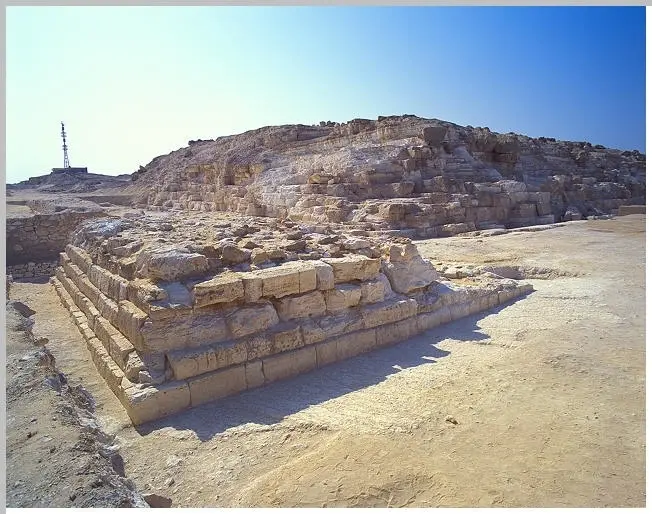
Over the centuries, however, much of it was dismantled and quarried for stone, which is why today only the base and lower structural remains are visible. This heavy destruction is one reason it is less famous than the Giza pyramids, despite its historical importance.
The pyramid was not a standalone structure; it was part of a large and complete funerary complex, which included:
- A mortuary temple for ritual ceremonies.
- A small subsidiary pyramid (likely for a queen or ritual purposes).
- An enclosure wall surrounding the complex.
- A boat pit for a solar boat.
- A burial chamber cut about 20 meters deep into the bedrock, a design choice with strong symbolic meaning related to the afterlife.
Because it was built on an elevated plateau at Abu Rawash, its natural height may have enhanced its visual dominance, possibly compensating for its smaller size compared to the pyramids of Giza.
Read more: Pyramid of Menkaure
Who Was King Djedefre?
Djedefre, sometimes referred to as Radjedef, was the son of Khufu, the pharaoh who constructed the Great Pyramid. After Khufu’s death, Djedefre succeeded him and took the throne of Egypt.
One of the most significant aspects of his reign is that he was the first pharaoh to officially use the title “Son of Ra” in his royal titulary. This marked an important religious development, reflecting the growing prominence of the sun god Ra in royal ideology.
His reign was relatively short, estimated at about 8 to 11 years. He married Queen Hetepheres II (his sister and the widow of his brother Kawab) and also Queen Khentetka. He fathered sons such as Setka and Baka, along with several daughters.
Some theories suggest that his death may have been linked to internal family conflict and that his brother Khafre, who ruled after him, might have played a role.
However, there is no definitive archaeological evidence to confirm this theory. What is known is that his sons did not succeed him on the throne.
Book one of our Egypt tour packages to explore both Giza and the Pyramid of Djedefre.
His Position in the Fourth Dynasty
Djedefre was the third ruler of the Fourth Dynasty of Egypt, the dynasty famous for constructing the greatest pyramids in ancient Egyptian history.
The dynasty began with Sneferu, followed by Khufu, then Djedefre, and later Khafre and Menkaure. This period (around 2613–2494 BC) represents the peak of pyramid-building power, showcasing Egypt’s extraordinary administrative organization and economic strength.
Djedefre’s decision to build his pyramid at Abu Rawash rather than at Giza may have had several motivations:
- A desire to distinguish himself from his father’s monumental project.
- Possible family tensions following Khufu’s death.
- Or religious reasons connected to his devotion to Ra.
Architecturally, the deep underground burial chamber connects his pyramid to earlier traditions seen in places like Saqqara, showing that pyramid design was still evolving rather than following a fixed formula.
Although the pyramid today stands largely in ruins, it remains a unique and often overlooked monument of the pyramid age — a forgotten gem that offers a different perspective from the traditional Giza experience and deserves a place in any in-depth historical tour of ancient Egypt.
Where Is the Pyramid of Djedefre Located?
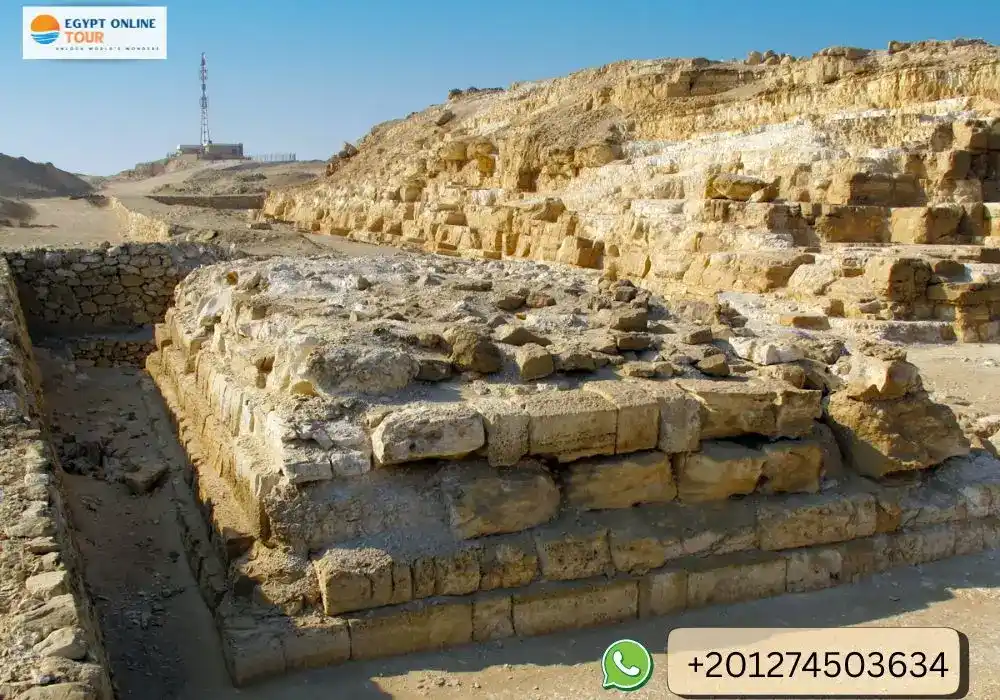
The Pyramid of Djedefre is located in Abu Rawash, which is the northernmost royal pyramid site near Giza. This makes it an important addition for anyone planning a comprehensive pyramid tour in Cairo.
Geographically, the site is about 15 km north of Cairo and overlooks the ring road connecting Giza, the pyramids, and the Cairo–Alexandria Desert Road, making it easily accessible for both locals and tourists. The elevated plateau was intentionally chosen to enhance the visual impact and prominence of the pyramid.
Abu Rawash Location Near Giza
Abu Rawash is a high plateau north of Giza, named after a historical figure from the medieval period called “Abu Rawash.” King Djedefre built his pyramid on this elevated area to take advantage of the natural height, which amplified the structure’s grandeur.
The site is part of the Western Desert but also overlooks the Nile Valley and modern Cairo, creating a unique view that combines ancient history with contemporary landscapes.
In addition to the pyramid, the area contains the remains of a complete funerary complex, including temples, a small subsidiary pyramid, and enclosure walls.
The location is much quieter than the main Giza plateau, offering a more private and serene experience for visitors.
See the ancient secrets of Abu Rawash on our 8 Days Pyramids & The Nile by Air adventure.
Distance from the Giza Pyramid Complex
The distance between the Pyramid of Djedefre and the Giza Pyramid Complex is approximately 8 km north of the Great Pyramid of Khufu, which is about a 10–15 minute drive from Giza. This makes it an ideal addition to a full-day tour instead of just visiting the main pyramids.
From downtown Cairo, the site is roughly 20–25 km depending on traffic, and from Cairo International Airport, it’s about 25 km northwest, making it convenient for tourists with limited time who still want to visit a distinct and nearby site.
How to Reach the Site
There are several ways to reach the Pyramid of Djedefre:
- The easiest way is by private car from Giza via the Cairo–Alexandria Desert Road or the ring road.
- You can also book an organized tour with a company like Egypt Online Tour, which provides comfortable transport and a guide explaining the historical details.
- For public transport, take a bus from Ramses to Giza, then a taxi or ride-hailing service like Uber to Abu Rawash. However, for safety and comfort, a private driver or joining a tour group is recommended.
The site is open to visitors, but it’s best to check opening hours and book in advance, especially if visiting with a group.
A typical visit takes about 1–2 hours. You’ll see the remains of the pyramid, which currently stands around 7 meters high, but the viewpoint from the plateau is spectacular, offering panoramic views of the Giza Plateau and the Great Pyramid in the distance — a truly unique experience compared to the standard Giza pyramid tours.
Why Did Djedefre Build His Pyramid at Abu Rawash?
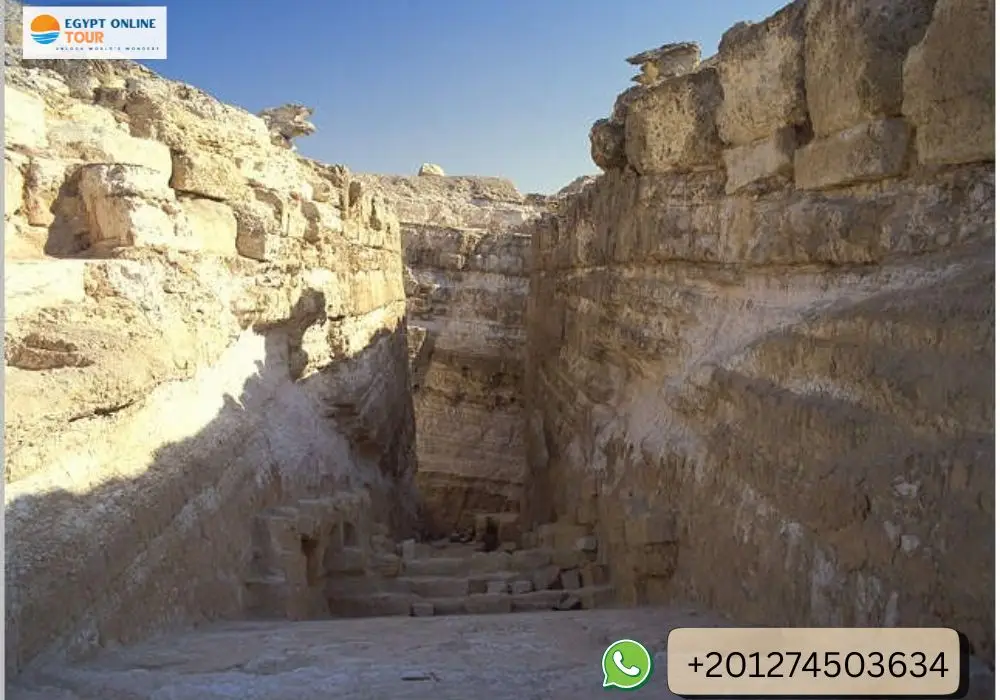
King Djedefre’s decision to build his pyramid at Abu Rawash was far from random. It was a carefully planned choice that combined religious, strategic, and political considerations after the death of his father, Khufu.
The location allowed him to assert his independent identity and achieve his religious goals, while staying away from potential family conflicts in Giza.
Combine your visit to the Pyramid of Djedefre with our 8 Days Cairo, Luxor, Aswan Classic Tours.
Strategic and Religious Reasons
Strategically, Abu Rawash sits on a high plateau north of Memphis, the main royal center during the Old Kingdom. This elevated position made the pyramid visible from afar and also facilitated the transport of stones from the Nile via nearby water channels.
Religiously, the site is near Heliopolis (On), the center of worship for the sun god Ra. This was significant for Djedefre, who was the first pharaoh to use the title “Son of Ra.” The pyramid faces the rising sun in the east, and the funerary complex includes a symbolic solar boat trench, adding clear religious meaning to the design.
The natural height of the plateau also enhanced the pyramid’s visual prominence, aligning with the evolving pyramid designs started by Sneferu at Dahshur and Abu Sir.
Political Context After Khufu
After Khufu’s death, there were significant tensions regarding succession, especially after the deaths of Djedefre’s brothers, such as Kawab and Hetepheres’ sons. This likely influenced Djedefre to choose a location north of Giza to establish a secure base away from the power of the royal court.
Some archaeologists believe the choice of Abu Rawash was influenced by family or political disputes, particularly after his brother Khafre returned to Giza and built his pyramid next to Khufu’s. The later destruction of Djedefre’s children’s monuments also points to possible political rivalries.
Despite these challenges, Djedefre managed to mobilize state resources to build a complete funerary complex during his short reign, demonstrating his ability to maintain political stability and the unity of the kingdom before Khafre succeeded him.
Architecture and Design of the Pyramid
The Pyramid of Djedefre at Abu Rawash stands out for its intelligent design, combining ancient traditions with new innovations of the Fourth Dynasty.
Even though it now exists mostly as ruins, it still tells the story of the remarkable skill of ancient Egyptian builders. Its design follows the “shaft-and-ramp” style similar to the pyramids at Saqqara, with carefully selected materials for durability and aesthetics, making it a clear example of the evolution of pyramid architecture.
Witness the lesser-known pyramids like Djedefre on our 12 Days Pyramids, Nile & Sinai Tour.
Original Height and Base Dimensions
The original height of the pyramid was around 67 meters (about 220 feet), with a square base measuring roughly 106–110 meters per side, similar in size to the second pyramid of Menkaure at Giza.
Its slope angle was approximately 51–52 degrees, topped with a small granite pyramidion, and the base covered about 12,100 square meters. Building on a natural hill added to the sense of grandeur and power.
Today, only 7–11 meters remain due to erosion and looting, but if it had been completed, it would have been one of the most beautifully crafted pyramids with its sculpted design.
Read about the achievements of King Tut
Construction Materials
The materials used were carefully chosen:
- Mudbrick (sun-dried clay) for the inner core to speed up construction and save resources.
- Fine white limestone for the exterior surface, giving it a reflective shine under the sun.
- Hard limestone and red granite from Aswan for critical parts like the temples and entrances.
- Large granite blocks in the center acted as structural supports, precisely carved to distribute weight.
All these materials were transported via the Nile using nearby canals, highlighting the state’s organizational capabilities despite the remote location.
Internal Chambers and Layout
The interior layout of the pyramid is unique:
- The chambers are not directly inside the pyramid, but in a deep pit about 20 meters long and 21×9 meters wide, with a ramp at a 22°35’ angle for constructing the entrance and rooms before filling the pit and building the pyramid above.
- The internal passage is covered, leading to the main burial chambers, which possibly had vaulted ceilings.
- The surrounding complex included a funerary temple to the east, a small subsidiary pyramid, rectangular enclosure walls aligned north-south like Djoser’s complex, and two solar boat trenches.
This design prevented ventilation and collapse issues, sped up construction, and provided a symbolic panoramic view of Heliopolis, linking the king with the sun and emphasizing his religious role.
Why Is the Pyramid of Djedefre in Ruins Today?
Today, the Pyramid of Djedefre at Abu Rawash stands mostly as distorted ruins, and it’s not because of a curse or natural disaster, but due to continuous looting over the centuries and the reuse of its stones in other buildings.
This destruction started thousands of years ago and continued until the 19th century, turning what could have been a jewel of precious stones into a pile of broken, scattered blocks.
Stone Reuse in Later Periods
From the end of the Old Kingdom, looting began, but the situation worsened during the Roman and early Christian periods when a nearby monastery in Wadi Al-Qarin was built, using the pyramid’s stones for fortifications and military structures.
By the 19th century, records indicate that around 300 camels were transporting stones daily from the site to build houses and structures in modern Cairo, especially the white limestone and shiny granite that had given the pyramid its distinctive appearance.
During the Medieval and Ottoman periods, the area was inhabited, and locals used the stones in their homes and mosques. This explains why Abu Rawash is scattered with remnants of pyramid stones around nearby houses.
Take a scenic stop at the Pyramid of Djedefre during your 10 Days Round Trip Nile Cruise and Pyramids.
Theories About Destruction
Several theories explain the pyramid’s ruin:
- One major theory says the pyramid was never completed due to Djedefre’s sudden death or disputes with his father Khufu. However, modern excavations, like those by Michael Baud, confirm that it was finished and covered with granite.
- Another theory suggests the destruction was deliberate by successors like Khafre due to family disputes, especially since the monuments of Djedefre’s children were erased, or because the Romans and Arabs saw it as an easy source of building stones.
- Some more unusual theories propose that it was an open solar temple rather than a pyramid, or that it was flooded by ancient waters, causing erosion of the stones. Still, most scholars agree that human looting combined with time and wind erosion is the primary reason for its current state.
Today, the pyramid remains just ruins, but these remnants still give a glimpse of the remarkable skill of the ancient Egyptians in construction and engineering, telling a long story of building, destruction, and reuse over thousands of years.
Read about: Pyramid of Khafre Facts
Djedefre’s Pyramid Compared to Khufu and Khafre
The Pyramid of Djedefre at Abu Rawash is different from the pyramids of his father Khufu and his brother Khafre in terms of size, design, and historical significance, but all of them reflect the power of the Fourth Dynasty.
This comparison shows how each king tried to leave his own mark despite the similarities in family and era.
Enhance your 15 Days Marvelous Tour Package in Egypt with a stop at Abu Rawash.
Size Comparison
Before diving into the numbers, it’s important to note that comparing Fourth Dynasty pyramids isn’t just about height—it’s also about the sense of grandeur, the building location, and the base size, which all affect the overall impression.
Djedefre chose a natural hill to enhance the pyramid’s presence, even though it’s smaller than his siblings’, and its base is roughly half the size of Khufu’s pyramid.
Djedefre’s pyramid is much shorter than his siblings’, likely due to his short reign or his choice of a high hill, which enhanced the impression of height while keeping the base smaller but still carefully designed.
Architectural Differences
Each pyramid has its unique architectural features:
- Khufu’s pyramid had a limestone core with a shining outer casing, internal chambers, complex passageways, and a granite sarcophagus.
- Khafre’s pyramid was similar but included a larger mortuary temple and the Great Sphinx, emphasizing artistic grandeur.
- Djedefre returned to an older design: mudbrick core, burial pit 20 meters deep under the hill before the pyramid was built, a symbolic solar trench, and a rectangular complex aligned north–south like Djoser, with chambers outside the main pyramid body unlike the Giza pyramids.
This shows that Djedefre combined the ancient Saqqara style with solar innovation, while his siblings focused more on external grandeur and sheer size.
Enjoy unmatched comfort on Luxury Egypt tourswith Nile cruise, including a day at Djedefre.
Historical Importance
The historical significance of the pyramids goes beyond size:
- Khufu’s pyramid symbolizes the Old Kingdom and is the only remaining Wonder of the Ancient World.
- Khafre’s pyramid with the Sphinx represents the artistic peak with preserved temples.
- Djedefre’s pyramid is important because he was the first king to use the title “Son of Ra”, marking a significant religious shift, and his choice of Abu Rawash reflects family political struggles. Even though it’s now in ruins, it shows he mobilized vast resources to build a full complex in a short time.
Together, the three pyramids tell the story of power transition and innovation in the Fourth Dynasty, and visiting all three on a Giza tour is a fantastic experience for anyone interested in ancient Egyptian architecture and history.
Archaeological Discoveries at Abu Rawash
Abu Rawash is a site rich in archaeological discoveries that gradually reveal the full complex of Djedefre’s Pyramid, making it a must-visit for anyone interested in history and ancient artifacts.
Excavations there started in the early 20th century and continue to this day, uncovering pieces that confirm the pyramid was truly a royal masterpiece.
Excavations and Findings
The first major excavations were carried out by French archaeologist Emile Chassinat in 1901, east of the pyramid, where he uncovered:
- A complete mortuary temple with a rising causeway and a valley temple.
- And a solar boat pit carved into the rock south of the temple, part of the symbolic sun-related rituals.
More recent missions, like the Djedefre Pyramid Expedition, revealed:
- Remains of a Coptic church from the Middle Ages.
- Artifacts from Prehistoric times and burials from the First and Second Dynasties, showing that the area had been considered sacred long before the Fourth Dynasty.
Current excavations focus on Abu Rawash hill, which is full of pharaonic remains. Despite challenges like unofficial digging, each excavation uncovers new details about the pyramid complex and its religious rituals.
Combine family fun with history on Egyptian Family Holiday, including Abu Rawash stop.
Statues and Royal Artifacts
Among the most important discoveries:
- The impressive head of King Djedefre carved from quartzite, showing his strong features and royal headdress, now preserved in the Louvre Museum in Paris.
- Other finds include additional statues of the king and small royal artifacts, such as a small Sphinx-like statue, along with remains of funerary furniture and ritual tools indicating the wealth and sophistication of the era.
These pieces are rare due to ancient looting, and they focus on Djedefre himself as the first king to use the title “Son of Ra”, helping us understand his personality and the artistic style that distinguished his reign from the Giza pyramids.
Visiting the Pyramid of Djedefre Today
The Pyramid of Djedefre at Abu Rawash is now open to visitors as part of the archaeological sites managed by Giza Governorate. It’s a quieter and less crowded spot compared to the Giza pyramids, making it perfect for anyone who wants to explore rare ruins away from the tourist crowds.
A visit usually takes around 1–2 hours with a guide or organized tour, which makes the experience more structured and enjoyable.
Is It Open to Visitors?
Yes, the site is generally open daily from 8 AM to 5 PM, especially after recent excavations that improved access. However, it may occasionally close for maintenance or ongoing archaeological work.
No special permit is needed like in the past, and the site is open to both local and international visitors, though it’s recommended to go with a tour group or driver since the area is a bit desert-like.
Entrance Fees and Access
Approximate entrance fees:
- For Egyptians: 100–200 EGP.
- For foreigners: 5–10 USD (subject to updates).
The ticket covers entry to the entire pyramid complex, not just the pyramid itself, and you can also get a combined ticket including the Giza pyramids.
Getting there is easy:
- By car or Uber from Giza, around 10–15 minutes (8 km north).
- Or by bus from Ramses Station, then taxi.
There are parking spots nearby, but facilities like restrooms are limited, so it’s best to bring water with you.
What to Expect at the Site
When you arrive, you’ll see:
- The ruins of the main pyramid, currently about 7–11 meters tall.
- The hill’s base with a panoramic view of Khufu’s pyramid, other Giza pyramids, and Heliopolis.
- Remains of the mortuary temple and carved solar boat pit.
You’ll also notice a small subsidiary pyramid and surrounding walls, along with recent excavation traces and explanatory signs. The site is very peaceful, giving you a sense of the isolation Djedefre chose—perfect for photography or quiet reflection.
Make sure to bring a hat and sunscreen, as the sun is strong, and enjoy the story that this land tells about the golden era of the Pharaohs.
Best Time to Visit Abu Rawash
If you’re planning to visit Djedefre’s Pyramid at Abu Rawash, the best time is during the winter months, from October to April, when the weather is mild and comfortable. This way, you can enjoy the desert views without getting too hot or tired.
The best times of day are early morning or just before sunset, when the sun is gentle, the lighting is perfect for photos, and you can avoid the midday crowds.
Weather Conditions
Here, we’ll talk about the weather at Abu Rawash and the best times to visit the pyramid without getting tired or overheated:
- Winter (November–March): Daytime temperatures range from 15–25°C, with cooler nights. Perfect for walking around the ruins without the heat. Bring a light jacket if you stay until late afternoon or evening.
- Summer (June–August): Extremely hot, often over 35°C, with occasional sand winds. If you must visit in summer, go early at 8 AM or late at 4 PM, and bring a hat and sunscreen to protect yourself from the intense sun.
- Avoid visiting during Ramadan or major holidays like Eid al-Fitr if you want a quieter experience. Spring (April–May) is also good, though it gets warmer toward the end of the day.
Sail in style on Dahabiya Nile Cruise Aswan to Luxor and explore the lesser-known Pyramid of Djedefre.
Combining with Giza Plateau Tours
Abu Rawash is very close to Giza, only about 8 km north of Khufu’s Pyramid, making it easy to combine with a full day of sightseeing:
- Start your day at the famous Giza Pyramids in the morning.
- Then head to Abu Rawash before sunset for panoramic views of Giza and Heliopolis.
Tour companies like Egypt Tours offer combined programs that include Giza + Abu Rawash + Saqqara, with comfortable transport and a guide. This saves time and money while ensuring safety in the desert area.
A full day usually takes around 6–8 hours, giving you a complete experience that includes the wonders of Giza and the forgotten Pyramid of Djedefre in a single day—perfect for travelers with limited time in Cairo.
Travel Tips for Visiting the Pyramid of Djedefre
Visiting the Pyramid of Djedefre at Abu Rawash needs a bit of planning since it’s a quiet desert site away from the crowds.
These tips will help you enjoy your trip comfortably, safely, and make the most out of your visit.
Guided Tour vs Independent Visit
Choosing between a guided tour or exploring on your own can make a big difference in your experience.
- Guided Tours: Perfect for first-time visitors. An Egyptian guide explains Djedefre’s story and the entire complex in detail, takes you to hidden spots, and keeps you safe from local vendors. Cost: around $50–100 per group.
- Independent Visit: Ideal if you like freedom and exploring at your own pace. You’ll need to do some reading beforehand to fully understand what you see. Best if you have a trusted driver.
Tours are great for beginners, while independent visits suit those who want privacy and photography freedom. Both options are easy to start from Giza.
Transportation Options
Knowing the best way to get to the site makes the visit much easier and stress-free.
- Private car or ride-hailing apps (Uber/Careem): Fastest option, about 200–300 EGP, 15 minutes from Giza.
- Organized mini-bus tour: Companies like Egypt Tours pick you up from your hotel and return you after the visit. Comfortable and safe.
- Public transportation: Bus from Ramses to Giza (around 20 EGP), then a taxi to Abu Rawash (around 100 EGP). Less convenient, requires planning.
- From the airport: Official taxi or Uber (around 400 EGP, roughly 1 hour). Avoid stopping in the street; there are nearby parking spots at the site.
Safety and Visitor Facilities
Making sure your visit is safe and comfortable is key for a smooth experience.
- Safety: The area is secure with archaeological police, but stay in allowed zones and avoid wandering alone in the desert. Bring water and snacks.
- Facilities: Basic but sufficient; clean restrooms at the entrance, a small café, and signage in Arabic and English. No museums or big restaurants on site, so pay your entrance fee before entering.
- Be prepared with a hat, sunscreen, and camera, visit in a group if you’re a woman or child, and finish before sunset due to cold and closing times.
Following these tips will let you explore the Pyramid of Djedefre safely, enjoy its rare ruins, and experience Pharaoh-era history far from the crowds—an unforgettable alternative to the Giza Pyramids.