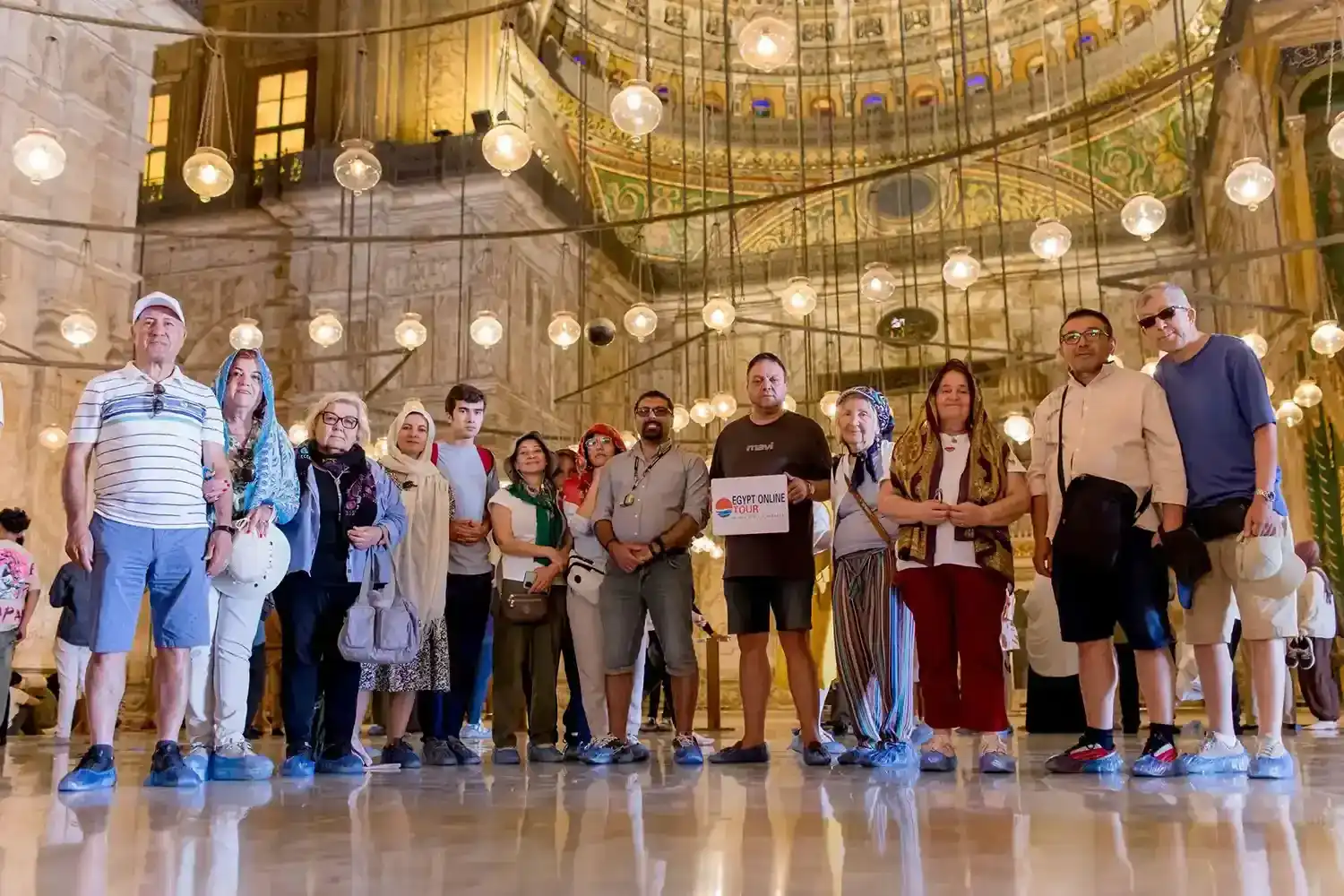
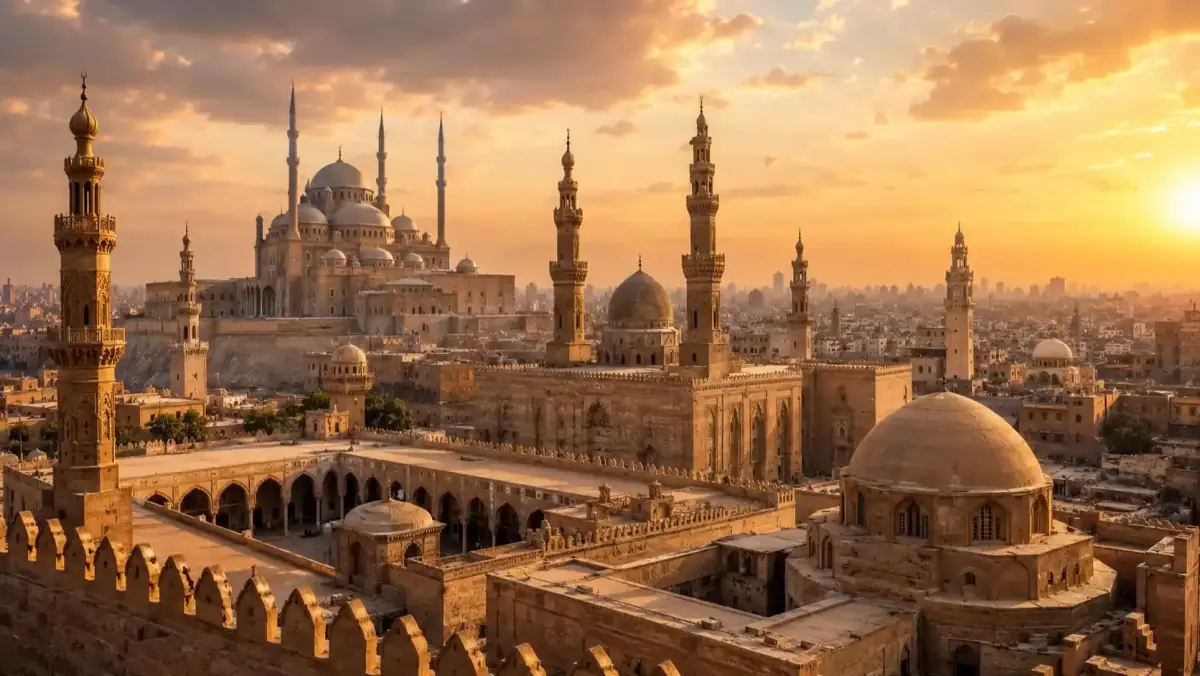
Islamic Cairo is not just a collection of historic mosques but also a living district where architecture, religion, and everyday life come together in one experience. From monumental medieval structures to narrow streets filled with centuries of history, exploring this area can feel overwhelming without a clear plan. That’s why having a structured tour makes a real difference in understanding what you’re actually seeing. In this article, we will guide you through famous mosques in Cairo in a clear and organized way, so you can understand how each mosque connects to the city’s historical background rather than seeing them as separate stops.
Are Cairo’s Famous Mosques Worth Visiting?
Yes, Cairo’s famous mosques are worth visiting because they offer more than just historic buildings. Places like Al-Azhar Mosque, Mosque-Madrasa of Sultan Hassan, and Mosque of Muhammad Ali give visitors a chance to experience Islamic architecture, local culture, and the historic atmosphere of Old Cairo in one trip. Many travelers enjoy the detailed designs, massive domes, peaceful courtyards, and city views. For visitors looking beyond the pyramids, these mosques offer a different side of Cairo that feels more authentic and connected to the city’s history.
Quick Guide to Cairo’s Most Famous Mosques
Cairo is home to some of the most famous mosques in the Islamic world, and each one feels different once you step inside. Some are closely tied to history, others stand out because of their architecture or location, and several are still active mosques that are part of everyday life in Old Cairo. Whether you’re interested in Islamic history, city views, or just exploring a different side of Cairo beyond the pyramids, these mosques show you a more authentic side of the city. The guide below highlights the most important ones based on what travelers usually look for.
Most Iconic Mosque in Cairo
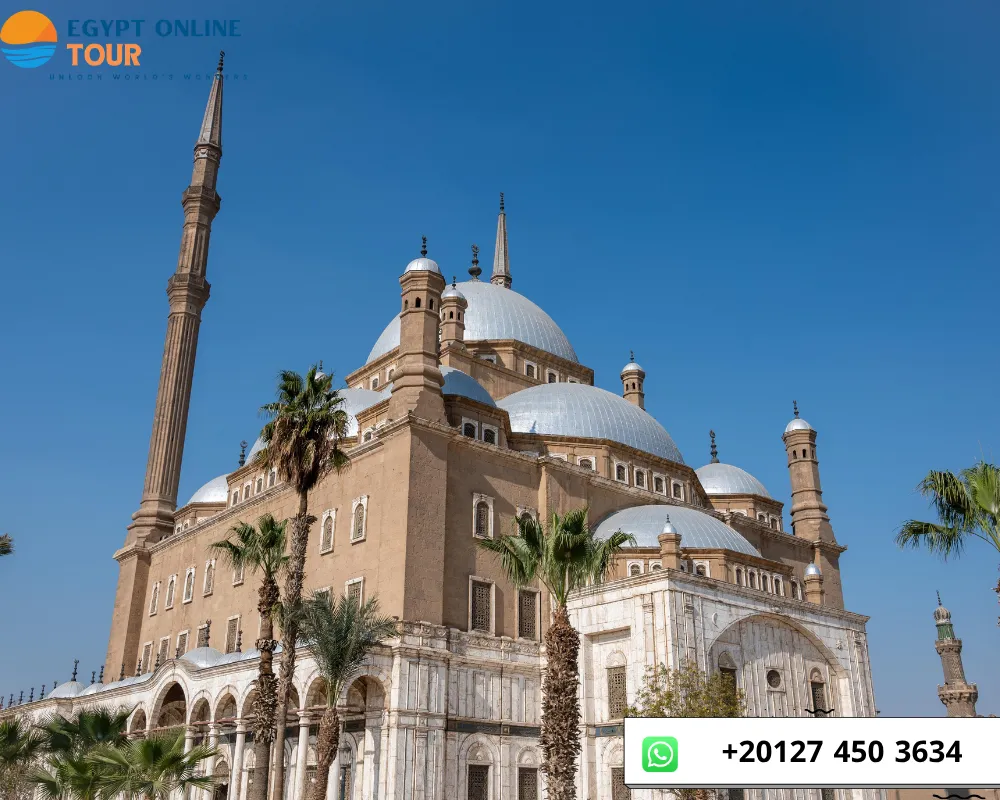
The Mosque of Muhammad Ali is one of Cairo’s most iconic Ottoman-style landmarks, located inside the Citadel of Saladin. It stands among major historic sites such as the Sultan Hassan Mosque and the Al-Rifa’i Mosque, forming part of the rich architectural landscape of Islamic Cairo. The mosque is easily recognized by its large central dome, twin minarets, and the distinctive clock tower in the courtyard, which together create one of the city’s most famous silhouettes.
Many travelers first see it in Cairo skyline photos, but visiting it in person offers a completely different experience. Its elevated position provides panoramic views over Cairo, while the alabaster interior gives the space a bright, glowing atmosphere unlike any other mosque in the city.
For first-time visitors, it is often the most striking introduction to Islamic Cairo, combining architecture, history, and location in one memorable stop.
Oldest Historic Mosque in Cairo
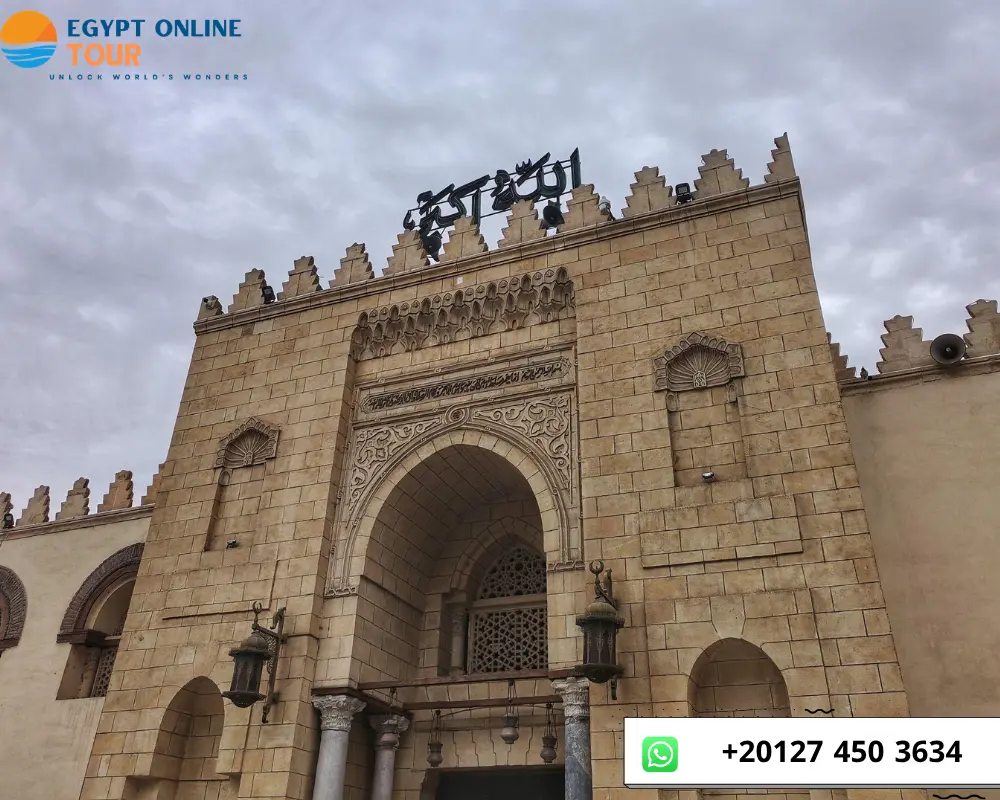
The mosque of ʿAmr ibn al-ʿAs is widely recognized as the oldest surviving mosque in Egypt and across Africa. It marks the beginning of Islamic Cairo and gives a real sense of how the city of Fustat first took shape as Egypt’s earliest Islamic capital. For many visitors, it’s not just a historic site but a starting point for understanding how Cairo’s story began.
Read about: Cheapest Time to Go to Egypt
The Mosque of ʿAmr ibn al-ʿAs and the Founding of Fustat
The mosque of ʿAmr ibn al-ʿAs is widely recognized as the oldest surviving mosque in Egypt and across Africa. It was established after the Muslim conquest of Egypt in 20 AH / 640 AD, when General ʿAmr ibn al-ʿAs, one of the early companions of the Prophet Muhammad, founded the city of Fustat, the first Islamic capital in Egypt, now part of modern Cairo.
Read the full article here: Amr ibn Al-A'as Mosque
A Center of Early Islamic Community Life
A year later, by order of Caliph ʿUmar ibn al-Khattab, the mosque was constructed as the central place of worship for the new capital. It quickly became more than just a mosque; it served as a gathering point for the Muslim community and the army, which was still a small group at that time. Notably, several companions of the Prophet contributed to its construction, including al-Zubayr ibn al-ʿAwam and Ubada ibn al-Samit, which gives the site deep historical and religious significance.
Centuries of Reconstruction and Change
Over the centuries, the mosque went through many architectural changes, with repeated rebuilding and restoration. As a result, very little of the original structure remains today, and what stands in Old Cairo is largely a 20th-century reconstruction. Despite that, the mosque still preserves the simplicity of early Islamic architecture, evolving from a basic structure supported by palm trunks into the more refined arcaded halls that continue to host worshippers today. You can, after that, explore Egypt’s ancient civilization at the Grand Egyptian Museum Tour to see the most important pharaonic artifacts.
Take a look of: Is Egypt a popular place to visit
Best Mosque for Islamic Architecture
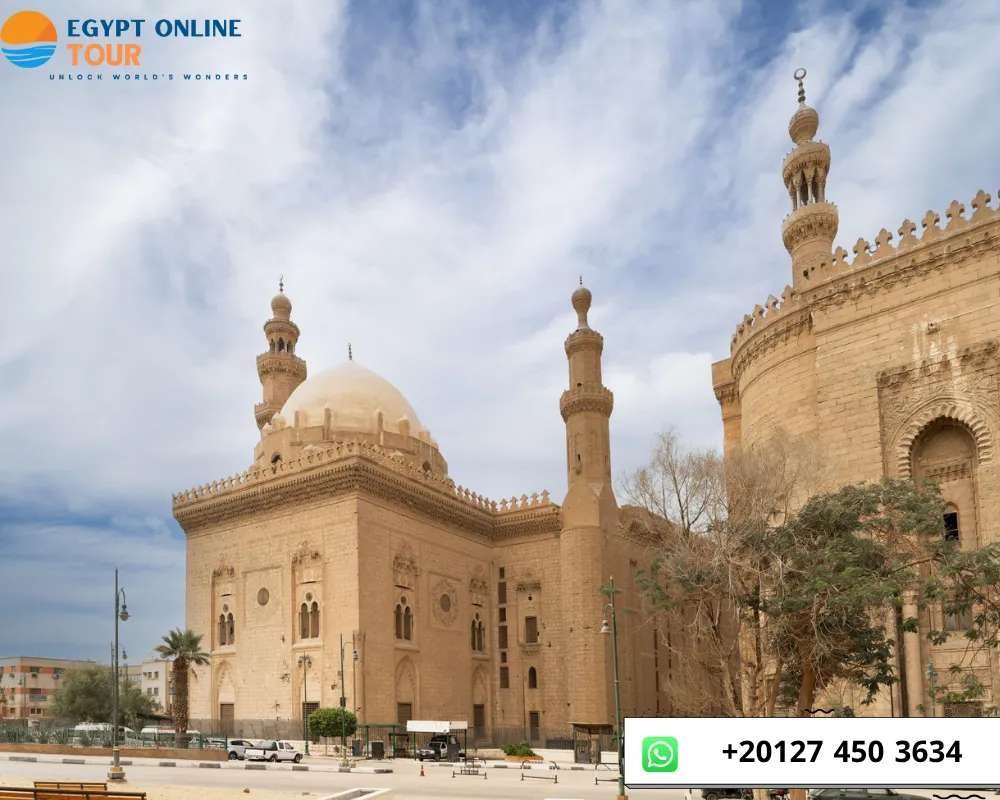
Before stepping into any discussion about Cairo’s architectural landmarks, it’s important to understand that the city is not only about history, but about living monuments where design, faith, and craftsmanship come together in one space. Among all of these, the Mosque-Madrasa of Sultan Hassan stands out as one of the most powerful examples of Islamic architecture in the city.
Islamic Architectural Grandeur of the Mosque-Madrasa of Sultan Hassan
The Mosque-Madrasa of Sultan Hassan is widely regarded as one of the most remarkable examples of Islamic architecture in Cairo, known for its monumental scale, perfect symmetry, and the refined precision that defines Mamluk design at its peak. In the following section, we’ll explore its key architectural details and uncover what makes this historic landmark truly stand out.
Monumental Scale
The mosque stretches over 150 meters in length and rises to about 36 meters in height, making it one of the most massive religious structures in the medieval Islamic world. Its original minaret, which once reached around 68 meters, used to dominate Cairo’s skyline and signal the mosque’s importance from a distance.
The Entrance and Courtyard
The main entrance is one of its most striking features, standing nearly 38 meters high and decorated with carved floral and geometric patterns inspired by earlier Mamluk styles. Once inside, visitors enter a vast open courtyard surrounded by four monumental iwans, each historically linked to one of the four Sunni schools of law. At the center, a marble ablution fountain adds both function and visual balance to the space.
The Qibla Iwan and Mihrab
The southern iwan, facing Mecca, is the most richly decorated area of the mosque. Its mihrab features inlaid marble, gilded stucco, and detailed Qur’anic inscriptions that reflect the craftsmanship of the period. Above it hangs a large iron chandelier that once lit gatherings of scholars and worshippers, giving the space a strong sense of scale and atmosphere.
Today, it remains one of the most impressive mosques in Cairo, where visitors can still feel the scale and craftsmanship in a very real way. After that, you can continue your experience in Cairo by discovering local flavors through a Cairo food tour, which adds another cultural dimension to Cairo beyond its historic sites and architectural heritage.
Look at: Museum of Islamic Art in Cairo
Best Mosque Near Cairo Citadel
Before stepping inside Al-Rifa’i Mosque, it’s important to understand that you’re not just visiting a place of worship but entering one of the most significant stops when exploring famous mosques in Cairo. Located right next to the Mosque of Sultan Hassan in Citadel Square, this landmark reflects both royal history and the transition into modern Islamic architecture.
Set right on Salah al-Din Square, also known as Citadel Square, Al-Rifa’i Mosque rises in front of visitors as one of the most striking landmarks near the Cairo Citadel. Built in the nineteenth century beside the earlier Sultan Hassan Mosque, it was designed to mirror its historic neighbor while adding a more modern architectural identity.
Architecture and Material Innovation
The mosque carries deep historical layers, from its early transformation of an older Fatimid structure into a shrine to its later redesign under Hoshiyar Hanim, the mother of Khedive Ismail. Today, it is closely tied to the legacy of the Muhammad Ali family, whose members are buried inside its richly decorated mausoleum, making it more than just a place of worship—it is a royal resting place that reflects Egypt’s transition into a modern era.
Architecturally, the mosque stands out with its European-influenced materials like Italian marble, massive columns, and highly detailed exterior walls. Its minarets and grand gates immediately catch the eye, while its construction also marked an important turning point, as cement was used here for the first time in an Islamic monument in Egypt.
Inside, the space is divided between prayer areas and royal tombs, including members of Egypt’s ruling dynasty and even the last Shah of Iran, turning the mosque into a layered historical archive rather than a single-purpose site.
If you want to know more about The Citadel of Qaitbay read this article
Best Mosque to Visit in Islamic Cairo
Al-Azhar Mosque stands as one of the most influential landmarks in Islamic Cairo, not just for its age, but for its long-standing role as a center of learning and religious thought. Founded by the Fatimids in 970 AD, it was originally established as both a place of worship and a seat of knowledge, which later evolved into one of the most important institutions in Islamic education worldwide. Today, it remains deeply connected to the identity of Cairo as a city of scholarship, faith, and cultural exchange.
A Living Center of Islamic Learning
Over more than a thousand years, Al-Azhar developed far beyond a mosque into a global academic hub. Students from different countries continue to arrive in Cairo to study Islamic theology, Arabic language, and the major schools of Islamic thought. What makes it especially unique is its long history of intellectual diversity, where scholars from different traditions studied and debated within the same institution, shaping a more open and layered understanding of Islamic knowledge.
Architecture Through Centuries of Change
The mosque itself reflects a deep architectural timeline shaped by different dynasties. It has been expanded and renovated multiple times, and its five minarets represent distinct historical periods in Egypt’s Islamic rule. Inside, the white marble courtyard still preserves elements of its original Fatimid foundation, while the surrounding prayer halls and madrassas show how the structure adapted over centuries without losing its identity. From the courtyard, the view of its tallest minarets highlights the architectural evolution that turned Al-Azhar into a symbol of continuity rather than a static monument.
Al-Azhar Mosque is still active today as both a place of worship and part of Al-Azhar University, offering a rare mix of history, religion, and daily learning in one landmark. For a wider Egypt experience, the 10-Day Egypt Nile & Alexandria Tour connects Cairo’s Pyramids and Egyptian Museum with a Nile cruise and Alexandria highlights in one complete journey.
Famous Mosques in Cairo by Area
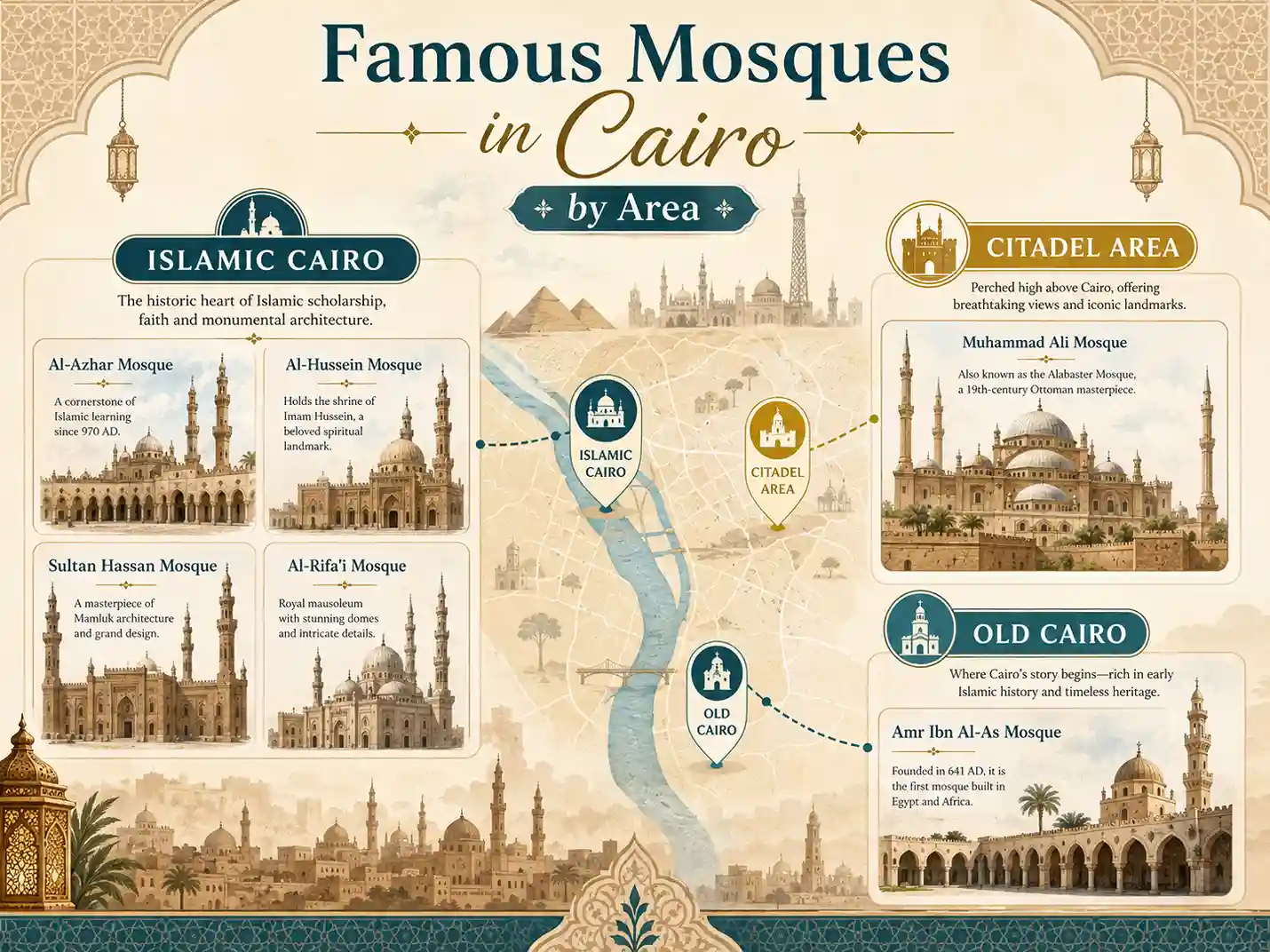
One of the best things about exploring famous mosques in Cairo is that every area of the city offers a completely different atmosphere and historical background. Some mosques are surrounded by royal citadels and massive medieval walls, while others sit in narrow historic streets filled with local cafés, markets, and centuries-old buildings. Dividing Cairo’s mosques by area also makes planning easier, especially for travelers who want to explore nearby landmarks in the same visit.
Here are some of the most famous mosques in Cairo by area, helping visitors explore nearby historic mosques more easily.
Mosques Near Cairo Citadel
The area around the Cairo Citadel is home to some of the most famous mosques in Cairo. This part of the city is known for large-scale Islamic architecture, panoramic views over Cairo, and strong ties to Egypt’s ruling dynasties. Visitors often explore the Mosque of Muhammad Ali, Sultan Hassan Mosque, and Al-Rifa’i Mosque together because they are located within a short walking distance of one another.
The Mosque of Muhammad Ali is especially recognized for its Ottoman-style domes and elevated position inside the Citadel, while Sultan Hassan Mosque stands out for its monumental Mamluk architecture and enormous iwans. Nearby, Al-Rifa’i Mosque combines royal tombs, imported European materials, and highly detailed decoration reflecting Egypt’s transition into a more modern era.
Mosques in Islamic Cairo
Islamic Cairo offers a very different experience compared to the Citadel area. Instead of open courtyards and elevated viewpoints, this district feels more connected to everyday life, traditional markets, and centuries-old streets that still remain active today. It is considered one of the richest historic Islamic areas in the world and contains many of the most visited famous mosques in Cairo.
Al-Azhar Mosque is one of the most important landmarks here because it combines worship, education, and Islamic scholarship in one place. Founded in 970 AD during the Fatimid period, it later became one of the world’s oldest and most influential Islamic universities. The surrounding area also includes historic markets like Khan El Khalili, making the experience feel cultural as much as architectural.
Mosques in Old Cairo
Old Cairo is usually associated with churches, Roman ruins, and early religious history, but it also contains some of Cairo’s oldest Islamic landmarks. The most significant example is the Mosque of ʿAmr ibn al-ʿAs, widely recognized as the oldest surviving mosque in Egypt and across Africa. Originally established after the Muslim conquest of Egypt, the mosque later became part of the foundation of Fustat, the first Islamic capital in the country.
Unlike the monumental mosques near the Cairo Citadel, mosques in Old Cairo often feel simpler and more connected to the earliest stages of Islamic architecture. The atmosphere here is quieter, more historical, and less crowded, giving visitors a clearer sense of how Cairo first developed centuries before the modern city expanded around it.
If you want to explore the deeper historical side of the city beyond the famous mosques in Cairo, join the Old Cairo Tour Packages.
Best Cairo Mosques for First-Time Visitors
For first-time visitors, Cairo can feel overwhelming at the beginning because it brings together different layers of history, architecture, and religious heritage all in one city. The easiest way to experience it is to follow a simple route that connects a few key areas, where each stop reflects a different chapter in the story of the city. This approach helps you understand how Cairo developed over time instead of just moving between isolated landmarks, especially when exploring the most important famous mosques in Cairo.
A Simple Route Through Cairo’s Mosque History
A great starting point is the Citadel area, where Cairo Citadel, the Mosque of Muhammad Ali, the Mosque of Sultan Hassan, and Al-Rifa’i Mosque sit close together. This short route clearly shows the mix of Ottoman, Mamluk, and royal-era architecture in one walkable stop.
For a deeper historical experience, Islamic Cairo introduces another layer of the city, where Al-Azhar Mosque stands as one of the most important religious and educational centers that shaped Islamic scholarship for centuries, surrounded by lively streets and traditional markets. Then in Old Cairo, the Mosque of Amr ibn al-As marks the earliest chapter of the story, representing the beginning of Islamic presence in Egypt after the conquest.
This route helps first-time visitors explore the most meaningful mosques in Cairo in a clear, structured way without feeling overwhelmed. For a broader Egypt experience, the 11 Days of Classic Egypt, Cairo, Nile Cruise & Red Sea package takes the journey beyond Cairo.
Most Beautiful Mosques in Cairo for Architecture Lovers
When it comes to the most famous mosques in Cairo for architecture lovers, the city offers a rare mix of Islamic styles that reflect different historical eras in one place. Cairo works like an open-air architectural museum where each mosque represents a distinct design language, from massive Mamluk structures to refined Ottoman elegance and early Islamic simplicity.
A great starting point is the Citadel area, where you can clearly see this contrast in one walkable stop:
- Mosque of Muhammad Ali with its Ottoman domes, balanced symmetry, and dominant skyline presence.
- Mosque of Sultan Hassan, one of the greatest examples of Mamluk architecture with its massive scale and perfectly structured iwans.
- Al-Rifa’i Mosque, which adds a later layer of 19th-century design influenced by European materials and highly detailed decoration.
Moving deeper into Islamic Cairo, Al-Azhar Mosque introduces a different dimension of beauty, not based on size but on historical depth and continuous evolution. Founded in 970 AD during the Fatimid era, it has developed through multiple architectural layers over centuries while remaining active as both a mosque and an educational institution.
Together, these landmarks create a visual timeline of Cairo’s Islamic architecture, showing how the city evolved through different eras of design, culture, and power. From the vibrant streets of Cairo to the timeless atmosphere of Luxor, the 3 Days in Cairo and Luxor tour brings these highlights together in one smooth journey—ideal for a short escape filled with history, culture, and memorable experiences.
Historic Mosques in Cairo You Should Not Miss
Cairo is home to some of the most famous mosques in the Islamic world, where history, architecture, and spirituality come together in one place. Each mosque reflects a different era of Islamic design, giving visitors a chance to explore the city’s deep cultural layers through its most iconic landmarks. Before you explore, here are a few of the most famous mosques in Cairo you shouldn’t miss on your visit.
Mosque of Ibn Tulun
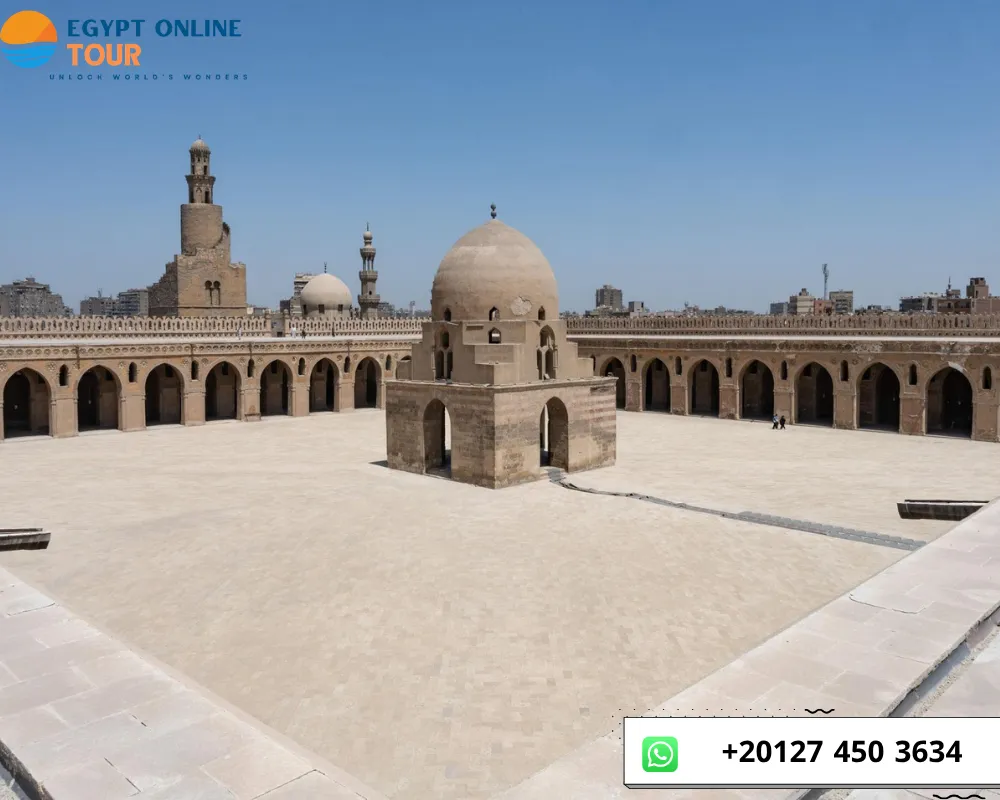
One of the most famous mosques in Cairo, the Mosque of Ibn Tulun is also the oldest surviving mosque in the city, dating back to the Abbasid period. It is known for its massive open courtyard, simple geometric design, and peaceful atmosphere, making it one of the most authentic examples of early Islamic architecture in Egypt. Located in El-Sayeda Zainab, it offers a quiet escape in the middle of the city’s busy rhythm.
Mosque of Al-Hakim
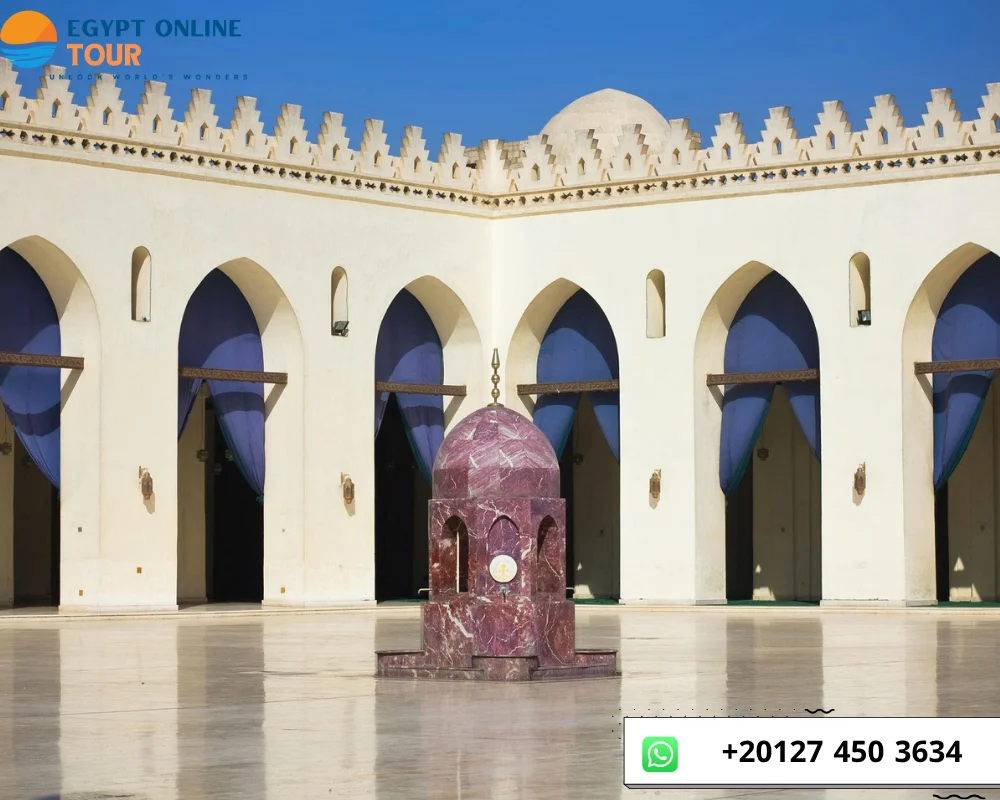
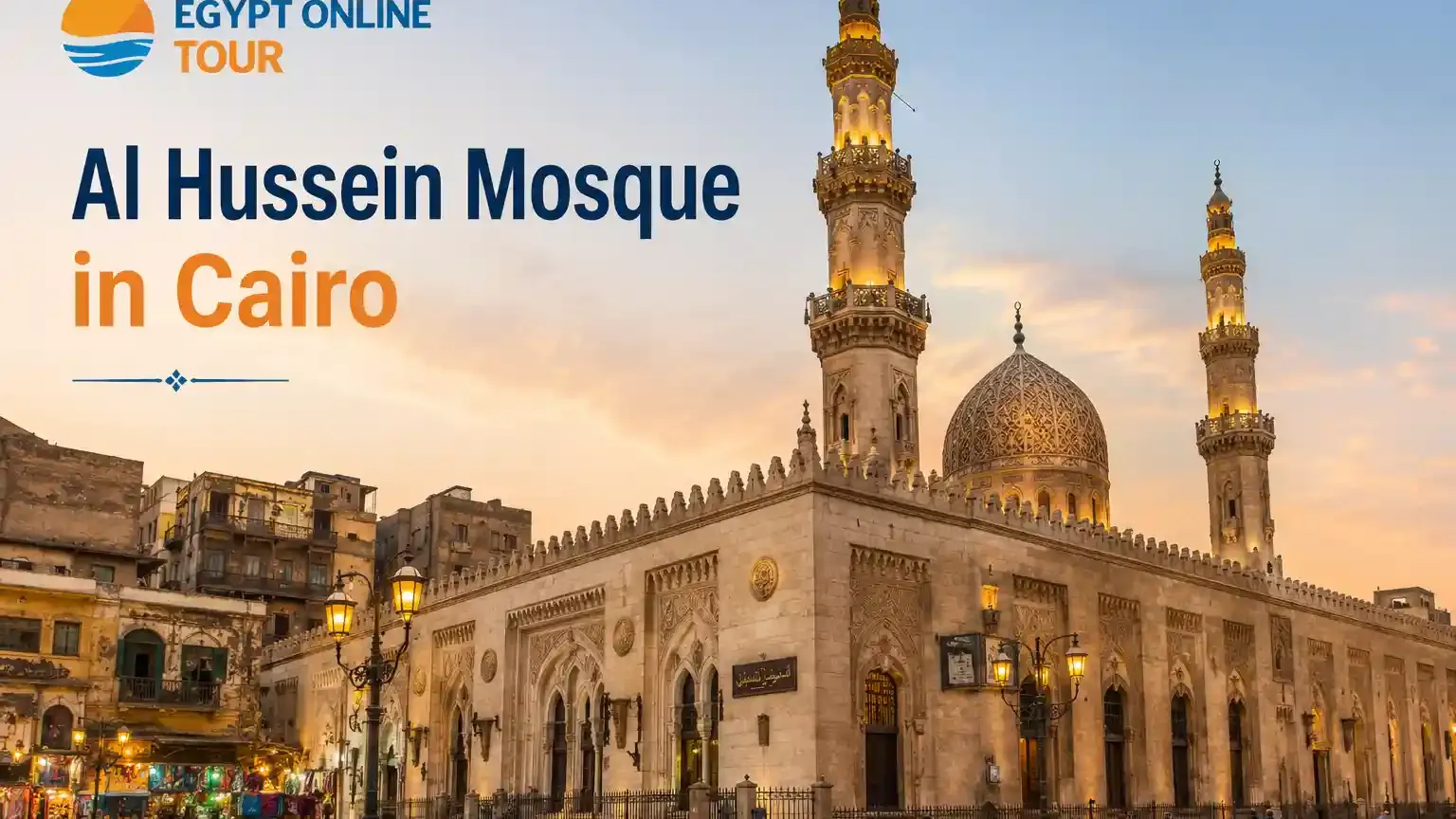
Another important stop among the famous mosques in Cairo, Al-Hakim Mosque stands near Bab Al-Futuh in Islamic Cairo. Built during the Fatimid era, it is recognized for its large courtyard and historic minarets. The mosque has a long history of transformation, having served different roles before being fully restored, which adds to its cultural and historical value today.
Mosque of Amir Al-Maridani
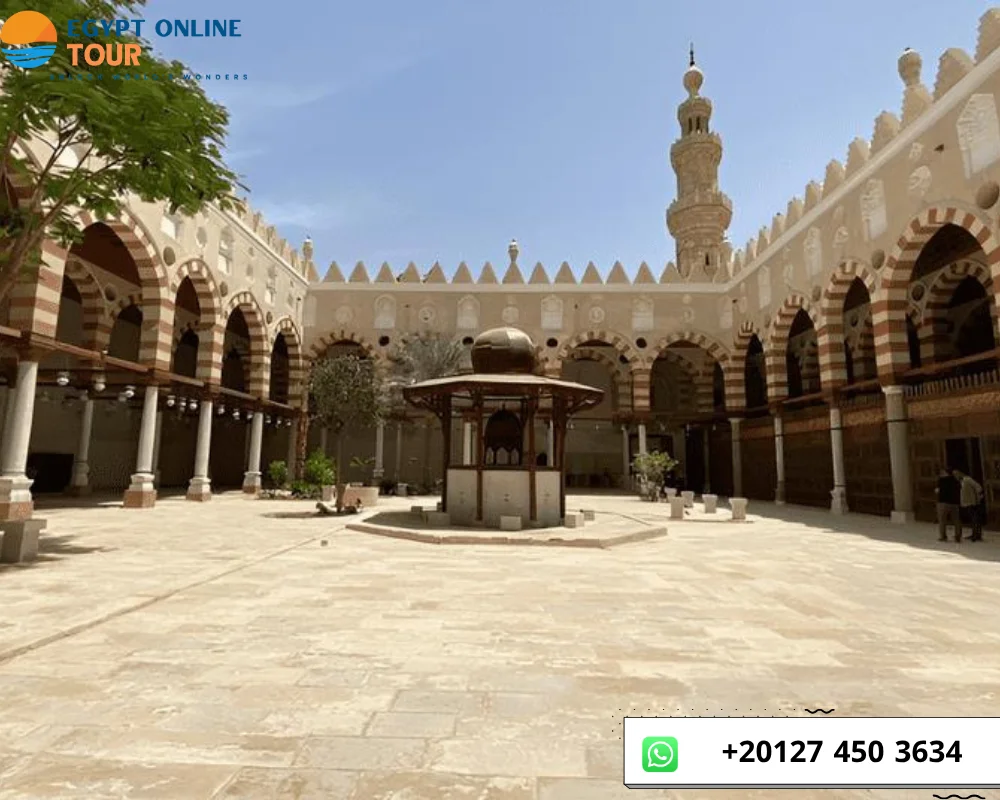
In the Darb El-Ahmar district, this 14th-century mosque stands out as one of the most visually rich examples among the famous mosques in Cairo because it reflects a rare blend of architectural influences shaped by the city’s long history. Its design brings together Islamic craftsmanship with subtle elements inspired by Christian, Ottoman, and even Roman architectural traditions, showing how Cairo developed as a crossroads of cultures over centuries.
One of the most remarkable details is the use of mashrabiya screens, the finely carved wooden latticework that filters sunlight while maintaining privacy and airflow. This feature is not just decorative—it reflects a deeply practical approach to architecture in Cairo’s climate. Inside the mosque, visitors can also notice intricate woodwork, stained glass, and a peaceful courtyard that feels surprisingly calm despite being located in the heart of one of the city’s busiest historic districts.
Learn more: 10 Best Places to Visit in Egypt
How to Visit Cairo’s Famous Mosques in One Day
Exploring Cairo’s Islamic landmarks in a single day can feel ambitious at first, but when you group them by location, the experience becomes surprisingly smooth. Each stop adds a different layer of the city’s history—from royal architecture at the Citadel to the deep scholarly roots of Islamic Cairo, ending in the oldest surviving chapters of the city in Old Cairo. This route is designed to keep everything connected, so you’re not just moving between sites but actually following Cairo’s historical timeline through its most important mosques. Here’s a suggested plan to help you explore Cairo’s mosques in one day.
Morning: Cairo Citadel and Nearby Mosques
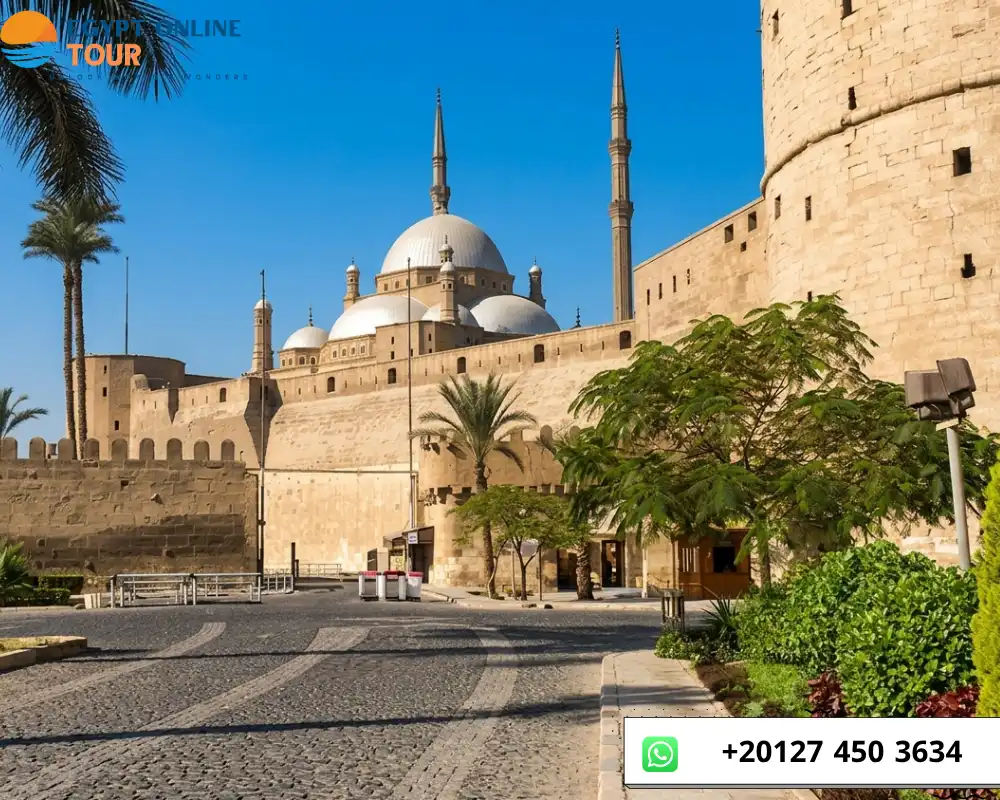
The best way to start the day is from the elevated Citadel area, where the city opens up in wide panoramic views and monumental architecture dominates the landscape. The highlight here is the Mosque of Muhammad Ali, with its Ottoman-style domes and dramatic presence overlooking Cairo. Just a short walk away, Sultan Hassan Mosque brings a completely different feeling—massive, symmetrical, and built with the kind of scale that instantly shows why it’s considered a masterpiece of Mamluk design. Nearby, Al-Rifa’i Mosque adds another layer, blending royal history with intricate interiors and serving as a resting place for members of Egypt’s ruling dynasty.
This morning route gives you a clear visual introduction to Cairo’s architectural identity in just a few hours.
Afternoon: Islamic Cairo and Al-Muizz Street
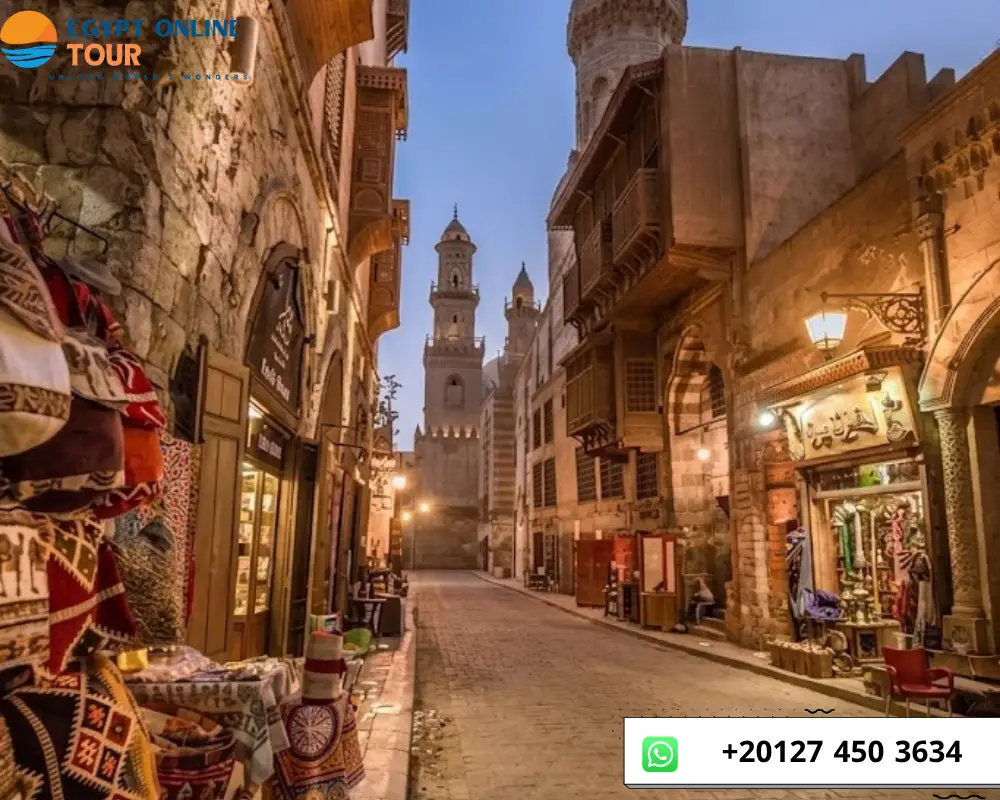
By midday, the experience shifts into a much more immersive and street-level atmosphere. Islamic Cairo feels alive in a different way, where historic mosques sit among narrow lanes, traditional shops, and constant movement. Al-Azhar Mosque stands at the center of this district, not only as a place of worship but also as one of the world’s oldest centers of Islamic learning. Walking through the surrounding streets and Al-Muizz Street nearby gives the visit a cultural rhythm, where architecture, daily life, and history all overlap in one continuous space.
Evening: Khan El Khalili and Al-Hussein Area
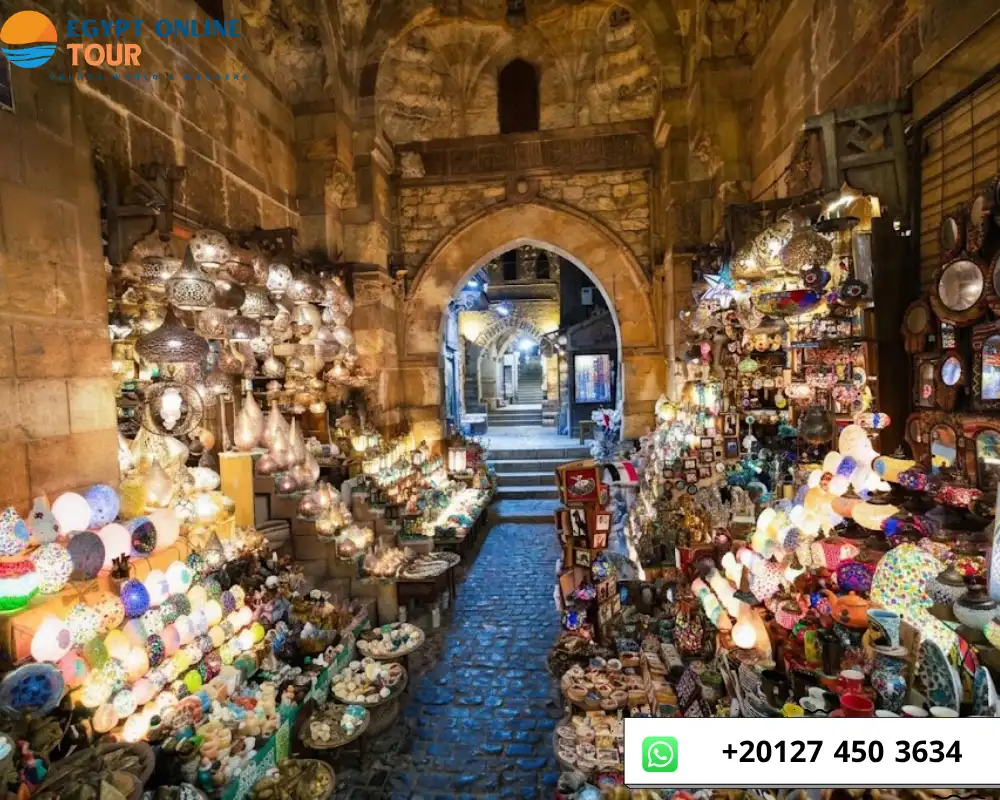
As the day slows down, the atmosphere becomes more relaxed and atmospheric around Khan El Khalili and the Al-Hussein area. This part of Cairo is less about scale and more about feeling—warm lights, busy cafés, and centuries-old streets that stay active well into the night. Ending the route here allows you to reflect on everything you’ve seen, especially after moving through such different eras of Islamic architecture in a single day.
What makes this route special is how each area connects to a different layer of Cairo’s history, from the Citadel and Islamic Cairo to the city’s oldest living neighborhoods. It gives visitors a complete look at famous mosques in Cairo in just one day without feeling overwhelming. For travelers who want to continue beyond Cairo, the 8 Days Cairo to Abu Simbel and Back Overland journey extends the experience from the Pyramids of Giza to the temples of Abu Simbel across Egypt.
Can Tourists Visit Mosques in Cairo?
Yes, visiting mosques in Cairo is generally open to tourists, and it’s actually one of the most meaningful ways to experience the city’s Islamic heritage up close. Many of the most famous sites, including those in Islamic Cairo and around Cairo Citadel, are active religious spaces that also welcome visitors throughout the day.
Places like Al-Azhar Mosque and Sultan Hassan Mosque are not just monuments—they are living landmarks where worship, history, and daily life still overlap. That’s why you’ll often see tourists quietly exploring courtyards while prayers continue inside, which gives the visit a very real cultural layer rather than a staged experience.
The main thing to keep in mind is respect for the space. Modest clothing, removing shoes before entering prayer halls, and avoiding disruption during prayer times are expected. Once you follow these simple rules, visiting mosques in Cairo becomes one of the easiest and most rewarding cultural experiences in the city.
What to Wear When Visiting Mosques in Cairo
When you explore the famous mosques in Cairo, the experience is not just about architecture and history—it also includes how you present yourself inside these sacred spaces. Cairo’s climate is usually hot and dry, but mosques require a balance between comfort and modesty so you can move easily through different sites without any issues. Before diving into practical tips, here are a few important guidelines to keep in mind before entering some of the most famous mosques in Cairo.
Start with modest clothing as the main rule
Clothes should cover shoulders and knees for both men and women. This applies across all major mosques in Cairo, especially places like Al-Azhar Mosque and Mosque of Muhammad Ali.
Go for light and breathable fabrics
Cotton and linen are the best choice because they keep you comfortable while walking between crowded streets, courtyards, and mosque entrances.
Women should always carry a light scarf
A scarf is useful for covering the hair when entering mosques. It’s a simple detail, but it makes the visit smoother and more respectful.
Men should avoid shorts inside mosques
Long trousers are the safer choice, especially in well-known religious landmarks where dress expectations are more noticeable.
Wear comfortable shoes you can easily remove
You’ll walk a lot through stone courtyards and historic areas, and inside prayer halls shoes must be taken off, so practical footwear matters.
Think about the weather, not just the dress code
Summer requires airy clothing to handle the heat, while winter evenings in Cairo can feel cooler, especially after sunset visits.
Keep it simple and respectful
The goal is not strict fashion rules, but making sure you feel comfortable while moving between Cairo’s historic and religious atmosphere without standing out in the wrong way.
For tourists who want to balance Cairo’s historic mosques with a completely different side of Egypt, the Hurghada to Luxor day trip—private tour—combines the relaxing atmosphere of the Red Sea, warm weather, peaceful beaches, and the timeless temples and royal tombs of Luxor in one smooth experience.
Best Time to Visit Famous Mosques in Cairo
The best time to explore Egypt’s mosques is from October to April, when the weather is cooler and more comfortable for walking through Cairo’s historic streets and open courtyards. During these months, daytime temperatures are much easier to handle, making visits to architectural landmarks more relaxed and enjoyable.
Within the day, timing also makes a big difference. Early mornings are perfect for quieter visits and soft light that brings out the fine details of Islamic architecture. In contrast, late afternoons create a warm golden atmosphere that is ideal for photography, especially in areas like Islamic Cairo.
Choosing these times not only improves comfort but also changes the entire experience inside the mosques. The atmosphere feels calmer and more reflective, allowing visitors to appreciate both the architectural beauty and the cultural depth without crowds or intense heat.
Tips Before Visiting Cairo’s Historic Mosques
Visiting Cairo’s mosques is not just a sightseeing stop, it’s a walk into active spaces where history, worship, and everyday life still exist side by side. These mosques are open to visitors, but they follow simple traditions that come from respect and long-standing local customs. A bit of preparation makes the visit easier and helps you experience the place the way it’s meant to be seen.
Here are the essential tips for visiting famous mosques in Cairo:
Dress modestly
Wear clothes that cover your shoulders and legs, and avoid anything tight or revealing for both men and women. It’s not about strict rules as much as it is about respecting the place and the people inside. In many cases, it also helps you enter without any issues or delays.
Remove your shoes
Before stepping into prayer areas, shoes are always removed as part of the normal etiquette in mosques. You’ll notice this especially in historic sites where carpets and interiors are carefully preserved. Carrying a small bag or plastic cover for your shoes makes things more practical.
Respect prayer times
Some areas may close briefly during prayer, especially in active mosques around Islamic Cairo. This is part of daily life here, not a tourist restriction. Planning your visit around these moments keeps the experience smooth and uninterrupted.
Follow photography rules
Photography is often allowed, but not everywhere inside the mosque, especially near prayer spaces. Always look for signs or ask staff before taking photos to avoid misunderstandings. Some areas are kept quiet on purpose, so respecting that makes a big difference.
Respect restricted areas
Certain sections are reserved for worshippers only, especially in older and more active mosques. These boundaries are usually clear, either through signage or staff guidance. Staying within allowed areas keeps the visit respectful and well organized.
Keep behavior quiet and respectful
Mosques are living places of worship, not tourist attractions in the usual sense, so quiet behavior is expected. Moving calmly and keeping your voice low helps you feel the atmosphere better. It also makes the visit feel more authentic and memorable.
Before visiting famous mosques in Cairo, understanding a few local customs can make the experience much smoother and more meaningful. These simple tips help you move comfortably through Islamic Cairo while respecting the spiritual atmosphere and historical importance of some of the city’s oldest mosques.
For travelers who have not experienced Upper Egypt yet, the 4 Days – 3 Nights Nile Cruise From Cairo by Flight gives you the chance to live the atmosphere of Luxor and the Nile through ancient temples, relaxing river views, and one of the most timeless parts of Egypt in a smooth and memorable journey.
Book an Islamic Cairo Tour with Egypt Online Tour
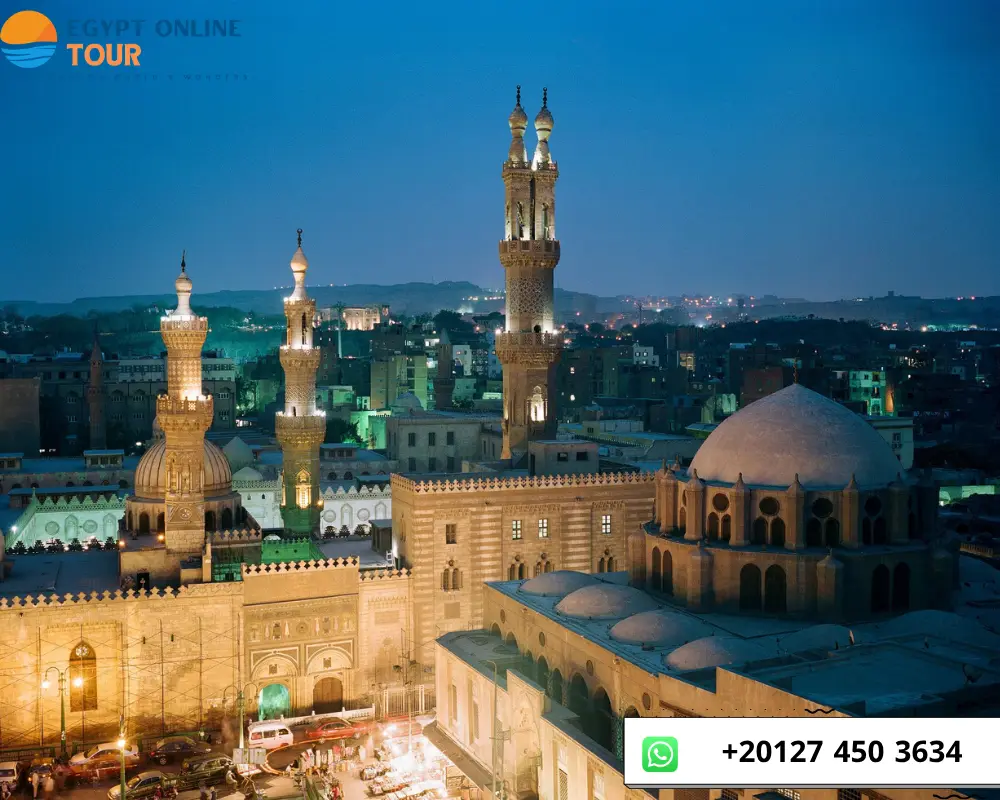
If you want to experience Islamic Cairo in a structured and easy way, booking a guided tour with Egypt Online Tour can make a big difference in how much you understand the city’s history. Instead of moving randomly between mosques and streets, a guided experience helps you connect the story of each landmark in a clear historical flow.
Islamic Cairo is full of layers—from ancient mosques to medieval streets like Al-Muizz to bustling traditional markets. Having a local guide means you won’t just see the architecture but also understand the meaning behind it, the dynasties that built it, and how each mosque reflects a different period of Egyptian Islamic history.
A well-planned tour usually covers key landmarks like major historic mosques, nearby heritage streets, and cultural stops that are hard to organize on your own in one day. This makes the experience smoother, especially for first-time visitors who want depth without confusion.
Conclusion
By the end of this journey, you’ve explored different layers of Cairo’s history—from monumental mosques with Ottoman and Mamluk influence to some of the oldest Islamic sites in Africa. Each stop adds a new perspective, showing how architecture, religion, and daily life have shaped the city over centuries. If you want to experience this flow in a more structured way, booking a guided Islamic Cairo tour can help you connect these landmarks in a single, well-planned route instead of navigating them separately.
Overall, exploring famous mosques in Cairo this way gives you a clearer understanding of the city’s evolution and makes the experience far more meaningful than simple sightseeing.