Does Dahshur pyramids have bodies? Not in the way most people imagine: no intact royal mummy has ever been found inside the two great pyramids of Dahshur, the Red Pyramid and the Bent Pyramid, both built by King Sneferu around 2600 BC. The only human remains reported from the Red Pyramid are fragments found in 1950, which the anatomist Ahmed Batrawi judged consistent with 4th-dynasty mummification; whether they belong to Sneferu is uncertain. The Bent Pyramid has given no burial at all.
Dahshur did hold bodies, though. Around the later Middle Kingdom pyramids, archaeologists found the skeleton of King Hor in his shaft tomb, an untouched princess burial beside it and royal women's tombs full of jewellery. Below we explain what was found where, why the great pyramids were empty, and how to visit Dahshur today. Our guides take travellers inside both pyramids, so the second half of the article is practical. To see the nearby pyramid fields with a guide, see our Giza and Saqqara day tour.
Do the Dahshur pyramids have bodies? The short answer, pyramid by pyramid
| Monument | Built for | Was a body found? |
|---|---|---|
| Red Pyramid | Sneferu (4th dynasty) | Fragments of human remains found in 1950, consistent with 4th-dynasty mummification; identity uncertain |
| Bent Pyramid | Sneferu (4th dynasty) | No. No sarcophagus and no sign of a burial in either chamber |
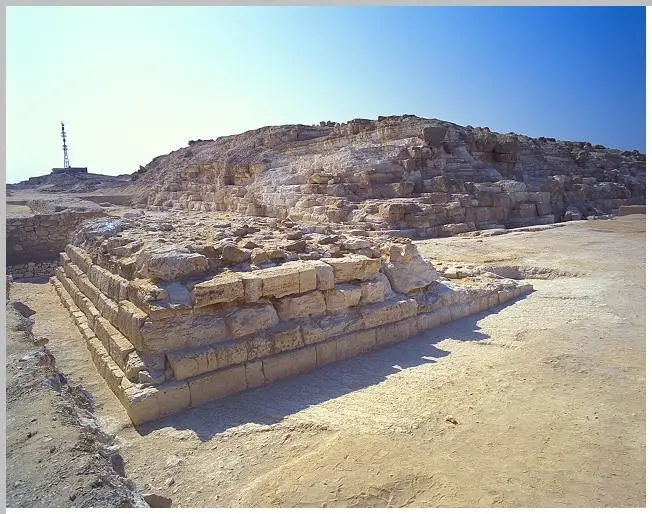
| Bent Pyramid satellite pyramid | Probably the king's ka (spirit) | No burial; a ritual tomb |
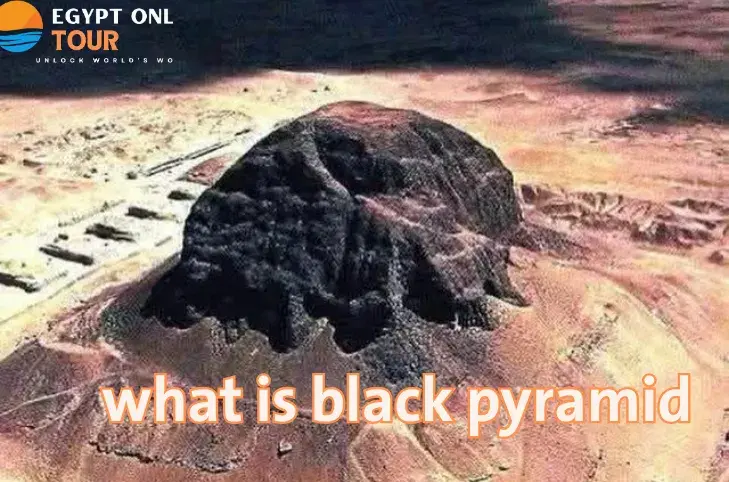
| Black Pyramid complex | Amenemhat III (12th dynasty) | Yes, nearby: the skeleton of King Hor and the undisturbed burial of a princess, found by Jacques de Morgan in 1894 |
| Pyramid of Senusret III | Senusret III (12th dynasty) | Galleries with the tombs and jewellery of the princesses Sit-Hathor and Merit |
Why the great pyramids were empty
Royal pyramids were robbed in antiquity, often within a few centuries of the burial. Robbers took the jewellery and amulets and usually broke the body to reach them. In the Red Pyramid the floor of the third chamber is rough and sunk below the passage, damage that is put down to tomb robbers digging for treasure. Sneferu also built more than one pyramid, so Egyptologists still discuss which one was meant to be his tomb. Most think it was the Red Pyramid, the last of the three he built.
King Hor: the body that was found at Dahshur
The best-known body from Dahshur is not a 4th-dynasty king but Hor Awibre, a 13th-dynasty ruler. In 1894 the French archaeologist Jacques de Morgan found his shaft tomb on the north-east side of the pyramid complex of Amenemhat III, nearly intact. Robbers had stripped the jewellery, but the skeleton of a man in his forties still lay in the gilded coffin, with a wooden mask over the skull. The tomb also held the famous life-size wooden ka statue of the king, now in the Egyptian Museum in Tahrir. Next to it lay the untouched burial of the princess Nubhetepti-khered, probably his daughter.
Do Egyptian pyramids have mummies?
Very few. Almost every royal pyramid was emptied in antiquity, and no pharaoh's mummy has been found intact inside a pyramid. The royal mummies you can see today, in the Royal Mummies Hall of the National Museum of Egyptian Civilization, come from the New Kingdom tombs of Luxor, which the priests had moved to hiding places to save them from robbers. Tutankhamun, often quoted as the exception, was buried in a rock-cut tomb in the Valley of the Kings, not in a pyramid. If you want to understand how bodies were preserved, read our history of ancient Egyptian mummies.
Where is Dahshur and why does it matter?
Dahshur is the southern end of the great royal cemetery of ancient Memphis, on the desert edge about 10 km south of Saqqara and roughly an hour's drive from central Cairo. It is part of the UNESCO World Heritage Site "Memphis and its Necropolis, the Pyramid Fields from Giza to Dahshur", inscribed in 1979. Our 6-day spiritual tour of the Pyramids, Cairo and Luxor starts at Dahshur and Saqqara on day 2.
It matters because this is where the true pyramid was invented. Sneferu, the first king of the 4th dynasty and the father of Khufu, who built the Great Pyramid of Giza, built two huge pyramids here. The first changed its angle halfway up; the second, the Red Pyramid, was the first smooth-sided pyramid to be completed. Giza followed one generation later. Several Middle Kingdom kings came back to Dahshur about 700 years later and built their own pyramids, among them Amenemhat II (the White Pyramid), Senusret III and Amenemhat III (the Black Pyramid).
The Bent Pyramid: why it changes angle
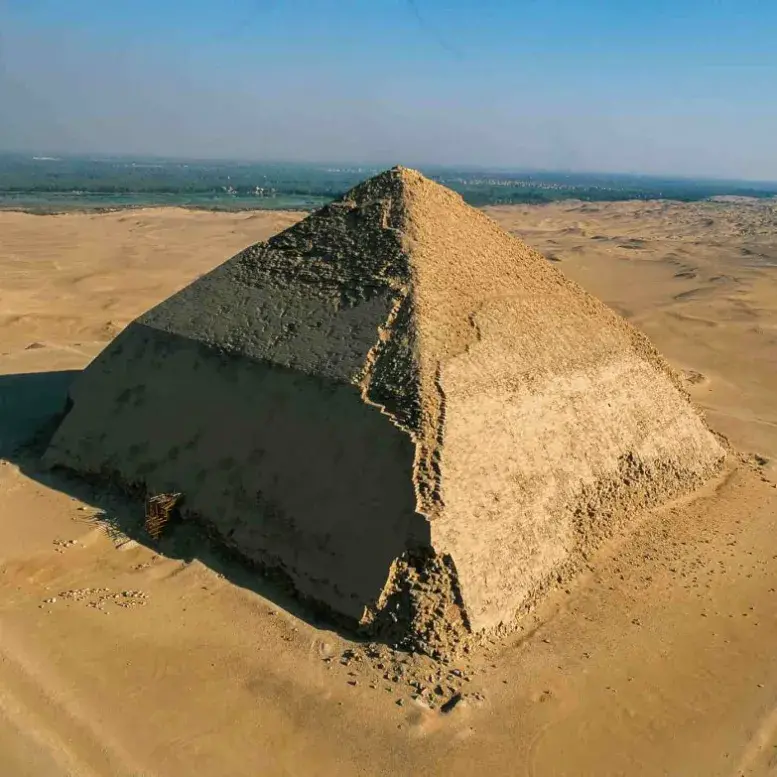
The Bent Pyramid is the most unusual pyramid in Egypt. It rises at about 54 degrees for the lower 47 metres, then bends to a gentler 43 degrees for the top. It stands about 104.7 metres high on a base about 189 metres square, and much of its fine white limestone casing is still in place, more than on any other pyramid of its size.
Why did the builders change the angle?
No text tells us. The most accepted explanation is structural: cracks appeared in the chambers while the pyramid was going up, and the builders lowered the angle to reduce the weight on them. Another view is that the shallower top simply needed less stone and finished the work faster. Either way, the lesson was learned: the Red Pyramid was built from the start at the gentler angle of the Bent Pyramid's top.
Two entrances and two chambers
The Bent Pyramid is the only great pyramid with two separate entrances: one on the north face, about 12 metres above the ground, and one on the west face, about 33 metres up. Each leads to its own chamber. The upper chamber has a corbelled roof about 16.5 metres high. Neither chamber held a sarcophagus.
The satellite pyramid and the valley temple
About 55 metres south of the main pyramid stands a small satellite pyramid, about 26 metres high originally, which Egyptologists link to the king's ka rather than to a real burial. Down towards the cultivation lies the valley temple, one of the earliest of its kind, with reliefs of offering bearers that are now in the Egyptian Museum.
Can you go inside the Bent Pyramid?
Yes. Egypt reopened the Bent Pyramid to visitors in July 2019, for the first time since 1965, together with its satellite pyramid. You enter from the north side and walk down a passage of about 79 metres to the lower chambers.
The Red Pyramid: the first true pyramid
The Red Pyramid is about 105 metres high, with a base of about 220 metres and sides at 43 degrees. It is the third-largest pyramid in Egypt, after the pyramids of Khufu and Khafre at Giza, and it was built around 2600 BC. Read our separate guide to the Red Pyramid for its full history.
Why is it called the Red Pyramid?
The name comes from the reddish limestone of its core, which you see today because the white Tura limestone casing was stripped away in later centuries for building stone. The colour is strongest in the late afternoon light.
What is inside the Red Pyramid?
- The entrance: high on the north face, reached by a staircase up the side of the pyramid.
- The descending passage: long, low and steep, about 1 metre high, so you walk bent over for several minutes.
- Two antechambers: with corbelled roofs about 12 metres high, rising in eleven steps. The second lies directly under the apex.
- The burial chamber: the third and highest room, reached by a wooden staircase, with a corbelled roof about 15 metres high. Its rough, dug-up floor is the work of robbers.
There is nothing in the chambers today: no sarcophagus, no inscriptions. What you come for is the architecture, the corbelled roofs that show how Sneferu's builders learned to carry the weight of a pyramid over an open room.
Visiting Dahshur: tickets, hours and tips
| Details (at the time of writing) | |
|---|---|
| Opening hours | Daily, 8:00 to 17:00 |
| Ticket, foreign adult | EGP 200 for the Dahshur site |
| Ticket, foreign student | EGP 100 |
| Time needed | 1.5 to 2 hours for both pyramids, including going inside |
| Getting there | By car only, usually combined with Saqqara and Memphis |
Fees and hours are set by the Ministry of Tourism and Antiquities and change from time to time, so check the official site before you go.
Tips from our guides
- Go early or late: the site has almost no shade. Morning is best in summer; in winter the late afternoon light on the Red Pyramid is beautiful.
- The descent is physical: the passages are low and steep. Skip them if you have back or knee problems or do not like tight spaces; the outside is worth the trip on its own.
- The air inside is stale: the chambers smell of ammonia and can feel stuffy. Ten to fifteen minutes inside is enough for most people.
- Quiet site: Dahshur sees a fraction of the visitors of Giza, so you often have a chamber to yourself.
- Combine it: Dahshur, Saqqara and the open-air museum of Memphis make one easy day from Cairo, and tell the story of the pyramid from the Step Pyramid to the true pyramid in the right order.
Plan it with us
Our Saqqara, Dahshur and Giza day tour takes you inside the Red and Bent Pyramids with an Egyptologist guide and adds the Step Pyramid and the Great Pyramid on the same day. If Dahshur is part of a longer trip, the 8 Days Pyramids and the Nile by Air tour combines Cairo with a Nile cruise, and our Cairo day tours list every other option.
Dahshur pyramids: quick answers
Was Sneferu's mummy found?
No identified mummy of Sneferu has been found. Fragments of human remains found in the Red Pyramid in 1950 were consistent with 4th-dynasty mummification, but nobody has shown they are his.
Which pyramid at Dahshur is Sneferu's tomb?
Most Egyptologists think the Red Pyramid, his last pyramid, was his intended tomb. The Bent Pyramid has given no sign of a burial.
Can you go inside the Dahshur pyramids?
Yes. Both the Red Pyramid and the Bent Pyramid are open to visitors; the Bent Pyramid reopened in July 2019.
How tall is the Bent Pyramid?
About 104.7 metres. It rises at about 54 degrees, then changes to about 43 degrees for the top part.
Is Dahshur older than Giza?
Yes. Sneferu built the Dahshur pyramids before his son Khufu built the Great Pyramid of Giza. You can also read our guide to the Pyramid of Djedefre.
How far is Dahshur from Cairo?
About an hour by car from central Cairo, about 10 km south of Saqqara, so the two are usually visited together.
Ahmed Samir writes and updates the Egypt travel guides of Egypt Online Tour, a licensed tour company based in Cairo (ETAA licence 1466). Our travel advisors review each guide before it is published.
All guides by Ahmed Samir