Pricing policy
All prices are per person in US dollars and depend on the size of your group. Your quote lists the final price and what it covers. After the deposit, changes to your plan cost US$25 per request, plus any third-party fees.

A 5-hour private morning in Aswan with an Egyptologist: Kalabsha Temple on the shore of Lake Nasser and the rock temple of Beit el-Wali, then the Nubian Museum. Pickup from your hotel or Nile cruise ship by private car, the boat to Kalabsha, entrance tickets and water are included.
When the Aswan High Dam was built in the 1960s, Lake Nasser rose over the Nile valley of Nubia and threatened dozens of temples. An international campaign led by UNESCO cut many of them into blocks and rebuilt them on higher ground. Kalabsha is one of the largest: a temple of the Nubian god Mandulis, built in the reign of the Roman emperor Augustus, taken apart in some 13,000 blocks and raised again on a headland by the lake, just south of the High Dam. Beside it stand the rock temple of Ramesses II from Beit el-Wali and the elegant Kiosk of Qertassi, rescued in the same campaign. Few tour groups come here, so you often have the site almost to yourselves.
The second half of the morning is the Nubian Museum in Aswan, which tells the story of Nubia and its people from the first rock drawings to the villages flooded by the lake, with statues of the kings of Kush, objects saved from the drowned sites and a model of a Nubian house. Your Egyptologist collects you from your hotel or Nile cruise ship, drives you south past the High Dam to Kalabsha, then back to the museum, and returns you in the early afternoon.
It does not include Philae, the Unfinished Obelisk or Abu Simbel. To add them, see our Aswan day tours; for Nubian life today, pair this tour with our Nubian village tour by boat in the afternoon.
Kalabsha has almost no signs, and its reliefs mix Egyptian, Nubian and Roman ideas: a Roman emperor shown as a pharaoh, offering to a Nubian god. Your Egyptologist reads them with you, explains the Greek and Meroitic inscriptions left by later rulers and pilgrims, and links the three monuments on the site to the museum, where the story of the flooding and the rescue comes together.
Times assume an 08:30 pickup from a hotel in central Aswan; the guide adapts the order to the lake level and the museum's hours.
Your Egyptologist and driver meet you in the lobby or at the ship's reception and drive south, past the old Aswan Dam and on towards the High Dam.
From the landing on the west side of the High Dam, a short motorboat ride, or a walk when the water is low, brings you to the headland where the temples were rebuilt in the 1960s.
The temple of Mandulis, the largest free-standing temple of Egyptian Nubia, built under Augustus on the site of an older shrine. You walk from the stone quay through the pylon, the court and the hypostyle hall to the sanctuary, and climb the stairs to the roof, when open, for the view over the lake.
Nearby, the small rock-cut temple of Ramesses II from Beit el-Wali keeps lively reliefs of the king's campaigns in Nubia and Syria, with tribute of animals and goods. Beside it stands the small Kiosk of Qertassi, with its columns topped by the face of the goddess Hathor.
The boat returns you to the landing and you drive back to the town, crossing the High Dam area with views of Lake Nasser on one side and the Nile on the other.
About an hour and a half in the museum: the colossal statue of Ramesses II in the main hall, prehistoric tools and rock art, the kings of Kush who ruled Egypt as the 25th Dynasty, objects from Christian and Islamic Nubia, and the reconstructed Nubian house and the display on the UNESCO rescue campaign. If time allows, you finish with a walk in the museum's landscaped garden, which displays more monuments outdoors.
A short drive returns you to your hotel or Nile cruise ship at about 13:30.
Prices are per person in US dollars. Children pay less, see the children policy below.
Get a quoteKalabsha opens in the morning and closes in the afternoon. At the time of writing the Nubian Museum is open daily from 09:00 to 17:00, with the ticket window closing at 16:00, and also in the evening on Thursdays and Fridays from 18:00 to 21:00; hours are shorter during Ramadan. An 08:30 pickup puts you at Kalabsha before the heat, which is strong on the lakeshore from May to September.
The entrance tickets to the Kalabsha site, which covers Beit el-Wali and the Kiosk of Qertassi, and to the Nubian Museum are included. Depending on the level of the lake, the temple is reached by a short motorboat ride from the landing near the High Dam or on foot; the boat is included. Bring your passport: there is a security check on the road to the dam.
Personal photos with a phone or camera are allowed at Kalabsha and in the Nubian Museum, without flash. Photographing the High Dam's installations and security points is not allowed; your guide tells you where you can stop for photos of the lake.
Pickup is at about 08:30 from any hotel or Nile cruise ship in Aswan. Kalabsha is about 20 kilometres south of the town, a drive of 25 to 30 minutes; the Nubian Museum is in the town, close to the Old Cataract hotel. You are back at about 13:30.
Children are welcome. The boat landing and the temple's uneven paving make Kalabsha difficult for wheelchairs; the Nubian Museum is accessible, with ramps. The museum is air-conditioned, and the car is always close by if anyone needs a rest.
All prices are per person in US dollars and depend on the size of your group. Your quote lists the final price and what it covers. After the deposit, changes to your plan cost US$25 per request, plus any third-party fees.
A deposit of 30% of the total tour cost confirms your booking. We send you a secure payment link for the deposit; the balance is paid in cash or by card on arrival in Egypt, unless your written offer gives another date. We never ask for card details by email, chat or WhatsApp. We confirm every booking by email.
No-show travelers are charged 100%. During peak events in Egypt, hotels and Nile cruises do not refund deposits. Groups of more than 10 people may have different terms.
Add each child and their age in the enquiry form so the quote is exact.
Add a lunch stop, a longer visit or a second site to your day. Tell us what you want and we add it to your quote with its cost.
Not included in the price: Meals (unless specifically added to your package); Tipping for the guide or driver; Any personal expenses.
Tipping is customary in Egypt and is not included in the price. A usual amount for a private day tour is US$5 to 10 per person for your guide and US$3 to 5 for your driver.
About five hours from pickup to drop-off: two hours at Kalabsha and Beit el-Wali, an hour and a half in the Nubian Museum, and the drives.
Its original site, about 50 kilometres further south, was flooded by Lake Nasser after the High Dam was built. In the early 1960s the temple was cut into blocks and rebuilt near the dam, in a project funded by West Germany.
Yes. When the lake is high, the temple headland is reached by a short motorboat ride, included in the price; when it is low, you walk.
Yes. Philae Temple and a stop on the High Dam can be added, with their tickets, to make a full day. Tell us when you book.
No. You are back in Aswan in the early afternoon; your guide can suggest a Nubian restaurant by the Nile.
Independent reviews on the platforms travelers already trust.
Amazing Egyptian vacation! We did an 11 day private tour of Cairo, cruise on the Nile between Aswan and Luxor and a 4 day stay in Hurghada. The guided tours were very interesting, with extremely knowledgeable guides, attentive and helpful.
Egypt package to the Pyramids of Giza and Saqqara was a fascinating journey through Egypt's ancient past ,guide knowledge, the majesty of the pyramids, and the historical depth of Saqqara made this tour truly enriching!
our honeymoon to Egypt ,Giza and Saqqara was a magical escape into history The pyramids looming in the distance, the quiet serenity of the desert, and the ancient wonders of Saqqara created moments that will be with me forever!
From the same category, with the same private service.


Answers to the questions travelers ask before they book.

Where is Aswan High Dam? Located in southern Egypt, this engineering marvel controls the Nile’s flow, generates hydroelectric power, and supports irrigation.
Read the guide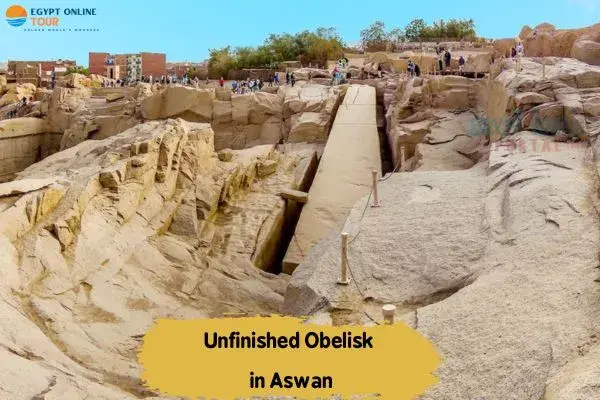
The Unfinished Obelisk in Aswan is a granite obelisk still lying in its ancient quarry: about 42 metres long and 1,168 tonnes, abandoned when it cracked, probably under Hatshepsut. Here is what the site shows, seven things most guides skip, the ticket price, hours and how to fit it into an Aswan day.
Read the guide
Elephantine is the island in the Nile opposite Aswan where Egypt's southern frontier town stood for 3,000 years. Foreign adults pay EGP 200 for the archaeological site, open daily 8:00 to 16:00. What to see, how to get there by ferry or felucca, and how long to spend.
Read the guideWe always use the cookies this site needs to work. With your permission we also use the optional ones listed under Settings. You can change your choice at any time. Privacy policy