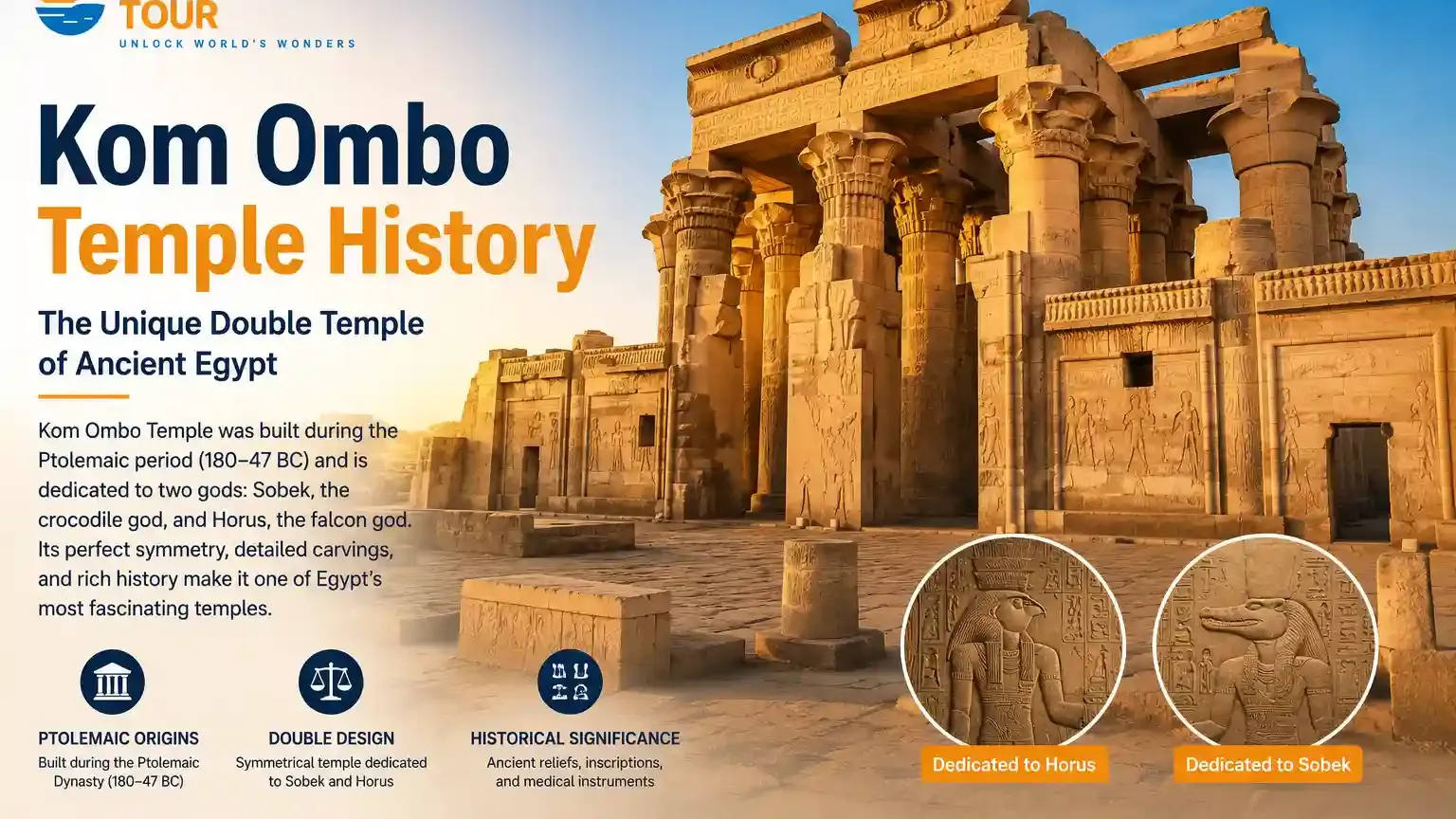
Few ancient sites in Egypt stop travelers in their tracks the way Kom Ombo Temple history does. Perched on the eastern bank of the Nile with its columns rising against the sky, this temple breaks every rule of Egyptian sacred architecture — it was built for two gods at once, with two of everything running side by side in perfect symmetry.
Researching Egyptian history, or simply curious about one of antiquity's most unusual religious monuments, this guide covers everything when you visit today.
Kom Ombo Temple History Overview
Kom Ombo Temple stands as one of ancient Egypt's most architecturally distinctive monuments.
Unlike virtually every other Egyptian temple — which was dedicated to a single deity — this one was designed from the ground up to serve two gods simultaneously. Two gods divided this temple equally:
- Sobek, whose crocodile form embodied the raw, life-giving force of the Nile.
- Haroeris — the elder, conquering aspect of Horus — whose falcon crown marked him as the divine model of every pharaoh who ever ruled Egypt.
Understanding why this happened, and how, is the starting point for everything else about the site — and one of the reasons Kom Ombo appears on every serious Egypt Tours itinerary that ventures into Upper Egypt.
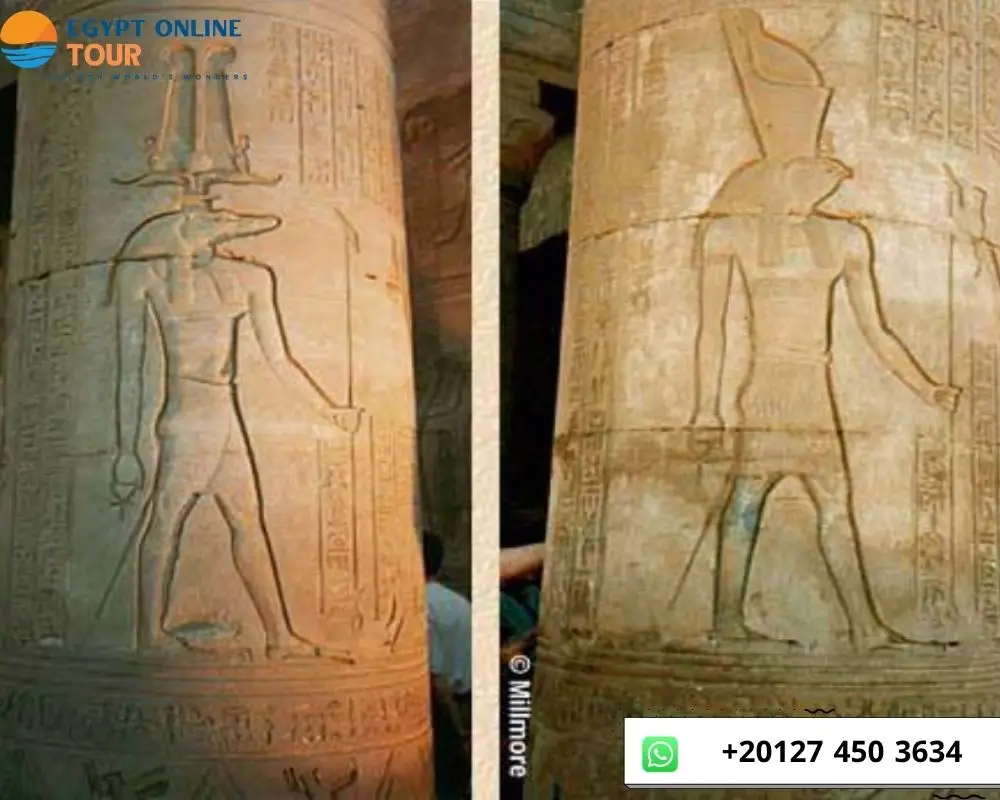
Why Is Kom Ombo Temple Famous?
Three things make Kom Ombo genuinely unlike anything else in Egypt:
- Its perfectly mirrored double layout, with two entrances, two axes, and two sanctuaries.
- Its wall carvings, which include what is widely regarded as the oldest depiction of surgical instruments in the ancient world.
- Its ritual calendar inscriptions, which give historians a detailed picture of how religious life was organized across the Egyptian year.
When Was Kom Ombo Temple Built?
The current stone structure dates to the Ptolemaic period. Construction began under Ptolemy VI Philometor (180–145 BC), making the temple roughly 2,200 years old.
Decoration continued through several successive rulers, with Ptolemy XII (80–51 BC) completing most of the visible carved reliefs. Roman emperors — including Tiberius, Domitian, and Caracalla — added further elements, meaning the temple took shape over approximately four centuries.
A sacred site existed here well before the Ptolemies, however. Evidence points to an earlier temple from the New Kingdom period (around 1550–1069 BC), with traces of work by Thutmose III, Hatshepsut, and Ramesses II.
Who Built Kom Ombo Temple?
The credit belongs primarily to the Ptolemaic dynasty — the Greek-speaking rulers who governed Egypt after Alexander the Great's conquest.
Building in the traditional Egyptian style was a deliberate political strategy: by honoring local gods with grand temples, the Ptolemies reinforced their legitimacy as rightful pharaohs. The construction sequence ran as follows:
- Ptolemy V (Epiphanes) — earliest foundations at the site.
- Ptolemy VI — main building program begins.
- Ptolemy VIII through XII — successive expansions and decoration.
- Roman emperors (1st–3rd century AD) — additional reliefs and minor structures.
Where Is Kom Ombo Temple?
Kom Ombo Temple sits in Upper Egypt on the eastern bank of the Nile, approximately 45 km north of Aswan.
Positioned where the Nile bends sharply eastward, Kom Ombo sat at the crossroads of ancient caravan routes linking the Nile Valley to the Eastern Desert goldfields and the roads leading south toward Nubia — a geographic role that made the city commercially and spiritually significant long before its famous temple was built.
If you're wondering what to do in Aswan Egypt, a visit to Kom Ombo is one of the most rewarding half-days you can plan from the city.
Location Near Aswan
The temple is located in Kom Ombo city, Aswan Governorate, set on a high bend of the Nile with a commanding view of the river.
The site sits elevated above the floodplain, which is why much of it has survived while lower sections were gradually eroded by Nile floods over the centuries.
Nile Cruise Route
Kom Ombo falls naturally on the classic Luxor–Aswan cruise corridor, making it accessible without detour.
Most cruise ships dock directly below the temple for two to three hours — enough time to visit both the main temple and the adjacent Crocodile Museum comfortably.
Curious about how much a Nile cruise costs? Prices vary by duration and cabin class, but Kom Ombo is included as a standard stop on virtually every itinerary.
Distance from Luxor and Aswan
The Meaning of Kom Ombo
The name of this site carries layers of meaning that connect the location to its ancient identity as a sacred, economically significant settlement on the Nile.
Both words in the name — "Kom" and "Ombo" — have distinct origins that together describe what the place meant to the people who lived and worshipped here.
The Kom Ombo Name
"Kom" is an Arabic word meaning mound or hill, applied across Egypt to archaeological sites that accumulated over centuries of successive habitation.
"Ombo" derives from the ancient Egyptian "Nubt" (nbt), most commonly interpreted as meaning gold.
The Golden City
The golden meaning likely reflects the region's historical role as a gateway to the gold-mining areas of the Eastern Desert and the trade routes connecting Egypt to Nubia and Sudan.
The full place name translates roughly as "Mound of the Golden City" — a fitting label for a site that became one of Upper Egypt's most important religious centers.
That same corridor connecting Egypt to ancient Nubia shaped the region's identity for millennia; the history of ancient Nubia and the rise of Kom Ombo as a religious hub are stories that cannot be fully separated.
Sacred Nile Location
In ancient times, the site's strategic position mattered as much as its religious significance.
Kom Ombo sat at the start of the overland road leading to the Western Oases and the caravan route south to Sudan, making it a hub for traders, soldiers, and pilgrims passing through the region.
Every trade route, every flood season, every sacred crocodile kept in a temple pool — all of it traced back to one source.
To understand why Kom Ombo existed where it did, it helps to first understand the river that made it possible. Our guide to 5 facts about the Nile River puts the geography of this entire region into sharper focus.
The History of Kom Ombo Temple
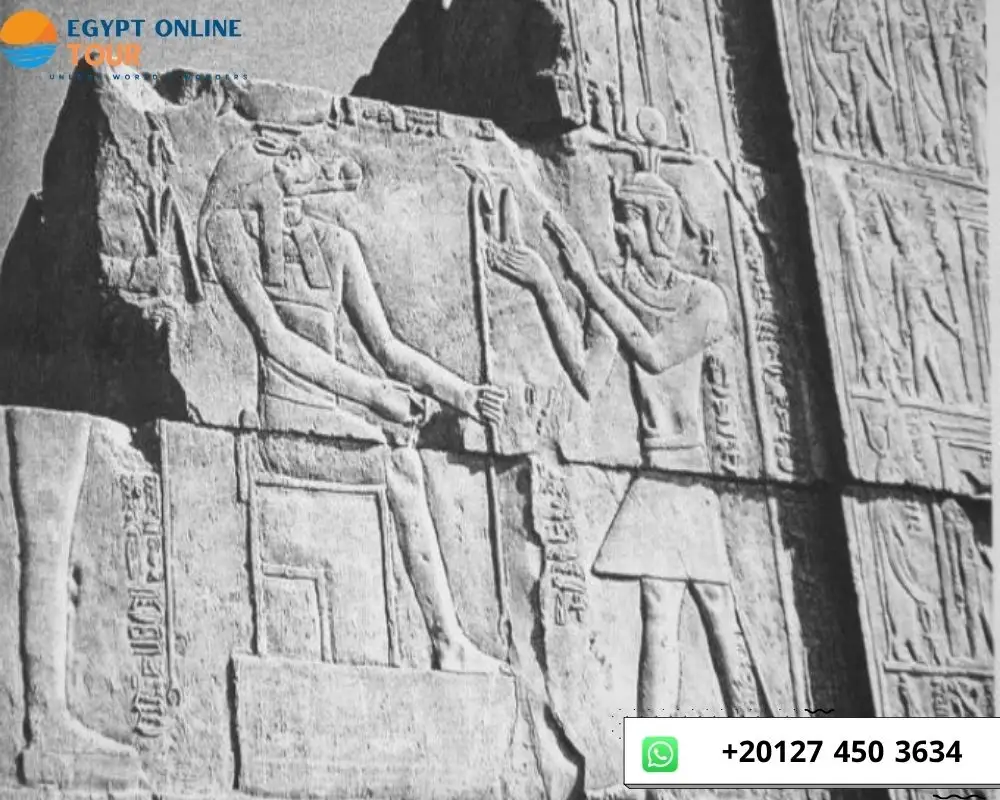
The history of Kom Ombo Temple spans more than three thousand years, from its earliest traces in the New Kingdom through its Ptolemaic expansion and Roman completion.
What visitors see today is largely the product of the Ptolemaic and Roman periods, but the site's sacred identity is far older than its surviving stones.
The Ptolemaic Period
The Ptolemaic era (305–30 BC) transformed Kom Ombo from a regional cult site into one of Egypt's most elaborate temple complexes.
Under the Ptolemies, the city of Ambus rose from a provincial settlement to the capital of the first nome of Upper Egypt, and the building program reflected that elevated status.
Construction of the main structure began under Ptolemy VI and advanced steadily through the reigns of his successors — a process that spanned roughly 400 years in total, longer than the entire construction history of Edfu Temple.
Roman Additions
Roman emperors continued investing in Kom Ombo well after Egypt became a Roman province in 30 BC, and their contributions are visible throughout the complex. Key additions included:
- Tiberius — completed the decoration of the outer hypostyle hall.
- Domitian — built the external forecourt and pylon.
- Caracalla — constructed the Chapel of Sobek on the northeast side.
- Macrinus and Geta — made further decorative additions.
Like the Ptolemies before them, Roman emperors had themselves depicted in full pharaonic regalia on the temple walls — confirming that the political logic of Egyptian religious legitimacy continued under Roman rule.
Damage and Restoration
Over the centuries, Kom Ombo suffered damage from multiple causes, and understanding what survives today requires knowing what was lost. The main sources of deterioration were:
- Nile floods — erosion of the western and northern sections over centuries.
- Earthquakes — structural damage to walls and columns.
- Later reuse — parts of the temple were used as a Christian church, leading to defacement of some reliefs.
The French archaeologist Jacques de Morgan conducted the first systematic clearing and partial restoration in 1893, revealing the full double-axis layout that defines the temple's character.
Ongoing conservation work continues today under Egypt's Ministry of Tourism and Antiquities.
Why Was Kom Ombo Temple Built?
Kom Ombo Temple was not built for a single reason — it served overlapping religious, political, and civic purposes simultaneously.
The dual dedication to Sobek and Horus the Elder reflects a theological balance between natural abundance and royal power, two forces that Egyptian civilization depended on in equal measure.
Worship of Sobek
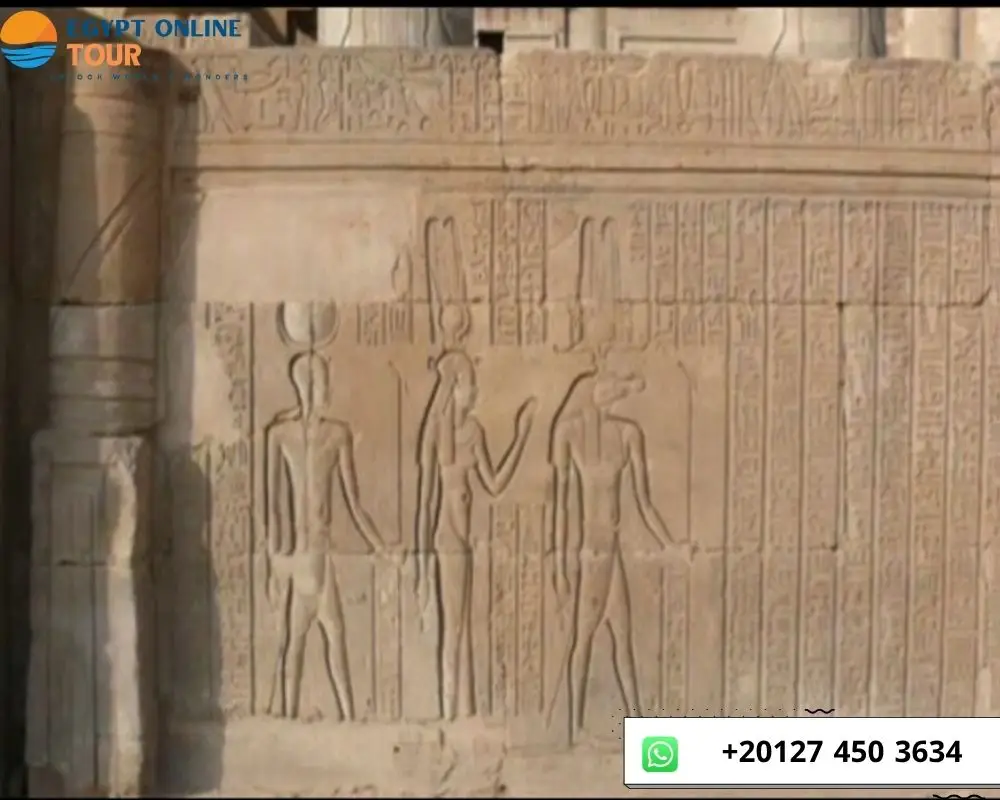
Sobek was the crocodile god, associated with the fertility of the Nile, the abundance of water, and protection of the living.
At Kom Ombo, where Nile crocodiles were once common, his cult was particularly strong — live crocodiles were kept in sacred pools as living manifestations of the god.
Sobek was worshipped here alongside his divine family:
- Sobek — the deity whose crocodile form the ancient Egyptians saw not as a threat, but as living proof that the Nile's most dangerous creature was also its most powerful protector.
- Hathor — goddess of love and motherhood (his consort).
- Khonsu — god of the moon (their son).
Worship of Horus the Elder
Horus the Elder (Haroeris) was the mature, triumphant form of the falcon god — distinct from the infant Horus depicted elsewhere.
He was the avenger of his father Osiris, the conqueror of Seth, and the divine model of kingship. At Kom Ombo, he was worshipped with his own triad:
- Haroeris — falcon god of the sky and kingship.
- Tasenetnofret — "The Good Sister," his divine consort.
- Panebtawy — the divine heir whose very name declared sovereignty over both Upper and Lower Egypt, a title that mirrored the political claim of every pharaoh who commissioned work on this temple.
Religion and Royal Power
The dual dedication carried clear political meaning beyond theology. Sobek embodied the generative power of the Nile — the natural world that sustained Egyptian civilization.
Horus embodied legitimate royal authority. A temple that housed both deities under one roof symbolized the unity of nature and kingship under the pharaoh — a powerful message for the Ptolemies to communicate to a population that had been governed by foreign dynasties for centuries.
This same genius for monumental religious architecture is explored in depth in our guide to the architectural achievements of ancient Egypt.
A Unique Double Temple
What makes Kom Ombo genuinely unlike any other site in Egypt — or the ancient world — is the completeness of its duplication.
This was not a temple with a secondary shrine added as an afterthought; every element of the design was planned from the foundation as a mirror image of itself, serving two equal and parallel cults.
Two Entrances
Entering the forecourt, visitors immediately encounter two parallel gateways side by side — one opening onto the axis of Sobek's half, the other onto the axis of Horus's half.
This double entry is the first visible sign of the temple's organizing principle, and it continues all the way through to the innermost sanctuaries.
Two Sanctuaries
At the heart of the temple, behind three successive inner halls, lie two sanctuaries (qudus al-aqdas) — the holiest rooms where the divine statues were kept.
Both are identical in plan, both attributed to Ptolemy VI, and both retain their original granite bases where sacred barques once rested during ritual processions.
Symmetrical Design
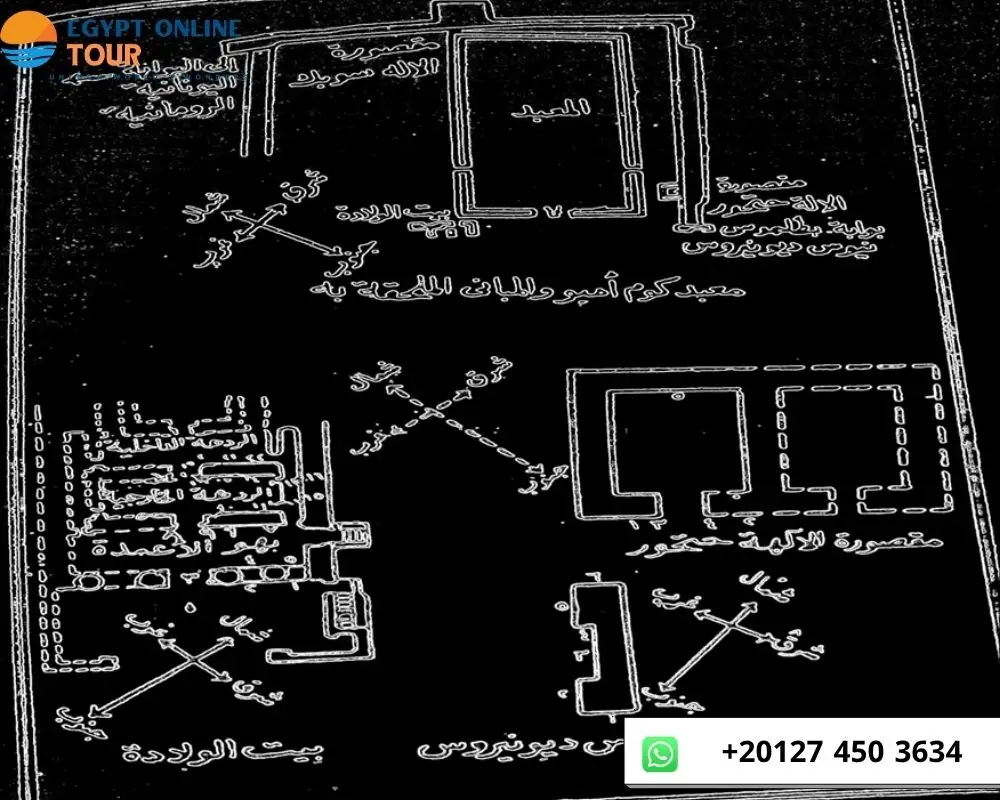
The full symmetry runs from the entrance to the rear wall without interruption. A summary of the mirrored layout:
- 2 entrance pylons
- 2 parallel processional axes
- 2 hypostyle halls (shared space, divided by the central axis)
- 2 offering halls
- 2 halls of the Ennead
- 2 sanctuaries
- 7 shared storage and service rooms behind the sanctuaries
The dividing line between the two halves is visibly marked on the rear wall of the temple — one of the most striking and most-photographed details at the site.
Sobek and Horus at Kom Ombo
The two gods at the heart of Kom Ombo were not random choices — both had deep roots in the theology and mythology of the region.
Their coexistence in a single temple was the result of a specific mythological resolution, and understanding both deities makes the temple's imagery far more readable.
Sobek the Crocodile God
Sobek was a deity of immense local importance in the Kom Ombo region, where Nile crocodiles were both feared and venerated.
Their power over the river made them natural embodiments of a god associated with fertility, water, and protection.
Sacred crocodiles were raised within temple precincts, adorned with jewelry in life and carefully mummified in death. More than 300 mummified crocodiles have been recovered from the Kom Ombo site.
Horus the Elder
Unlike the infant Horus (Harpocrates) depicted at temples such as Edfu and Dendera, Haroeris at Kom Ombo was the fully grown, conquering form of the god — the celestial falcon who defeated Seth and avenged his father's murder.
His iconography shows a man with a falcon head wearing the double crown of Upper and Lower Egypt, the universal symbol of unified pharaonic rule.
Balance Between Both Gods
Ancient Egyptian mythology records a dispute between Sobek and Horus that was eventually resolved by Ma'at, the goddess of truth and cosmic order — and that resolution is literally inscribed on the temple walls.
The equal division of the building reflects this mythological reconciliation: both gods received perfectly equal sacred space, equal triads, and equal ritual attention.
In some wall scenes, the divine consorts and sons are deliberately exchanged between the two triads — a theological nuance that signals the intentional parity between the two cults.
Kom Ombo Temple Architecture
The architecture of Kom Ombo follows the standard Ptolemaic temple plan — a series of halls progressing from open public space to enclosed sacred space — but doubles it at every stage.
Walking through the complex is an experience of gradual narrowing and deepening, moving from the wide forecourt toward the twin sanctuaries at the rear.
Forecourt
The open forecourt is fronted by 16 columns and was largely completed under Emperor Tiberius, with the outer pylon added by Domitian.
Stone screens connect the five front columns of the façade, creating three doorways — one large central entrance and two smaller side entrances, one for each cult axis.
Hypostyle Halls
The two hypostyle halls form the ceremonial heart of the temple. Key details of each:
- Outer hypostyle hall — 15 columns with varied capitals (papyrus, lotus, palm leaf, composite); ceiling decorated with astronomical scenes including the goddesses Nekhbet and Wadjet; attributed to Ptolemy XII.
- Inner hypostyle hall — 10 columns; attributed to Ptolemy VIII; contains a scene of the king with both his principal and secondary wives simultaneously — a composition unrecorded in any earlier Egyptian temple.
Offering Rooms
Three successive inner halls connect the second hypostyle to the sanctuaries, each slightly elevated above the last:
- First hall — function uncertain; notable scene of the king with the goddess Seshat (divine scribe).
- Second hall — the offering hall; contains the carved ritual calendar of festivals and corresponding priestly duties.
- Third hall — the Hall of the Ennead, dedicated to the nine principal gods.
Twin Sanctuaries
The two sanctuaries are identical in layout and were built during Ptolemy VI's reign. Only granite bases survive today — the platforms where the sacred barques once rested.
Behind the sanctuaries, seven service rooms were used for grain storage, priestly quarters, and roof access via a staircase in the central chamber.
Reliefs and Inscriptions
The walls of Kom Ombo Temple are among the most information-dense carved surfaces in ancient Egypt.
Beyond the standard scenes of royal offering and divine coronation, the temple preserves several inscriptions that have no parallel elsewhere — making its reliefs a genuine primary source for historians of medicine, religion, and Ptolemaic court culture.
Medical Instruments
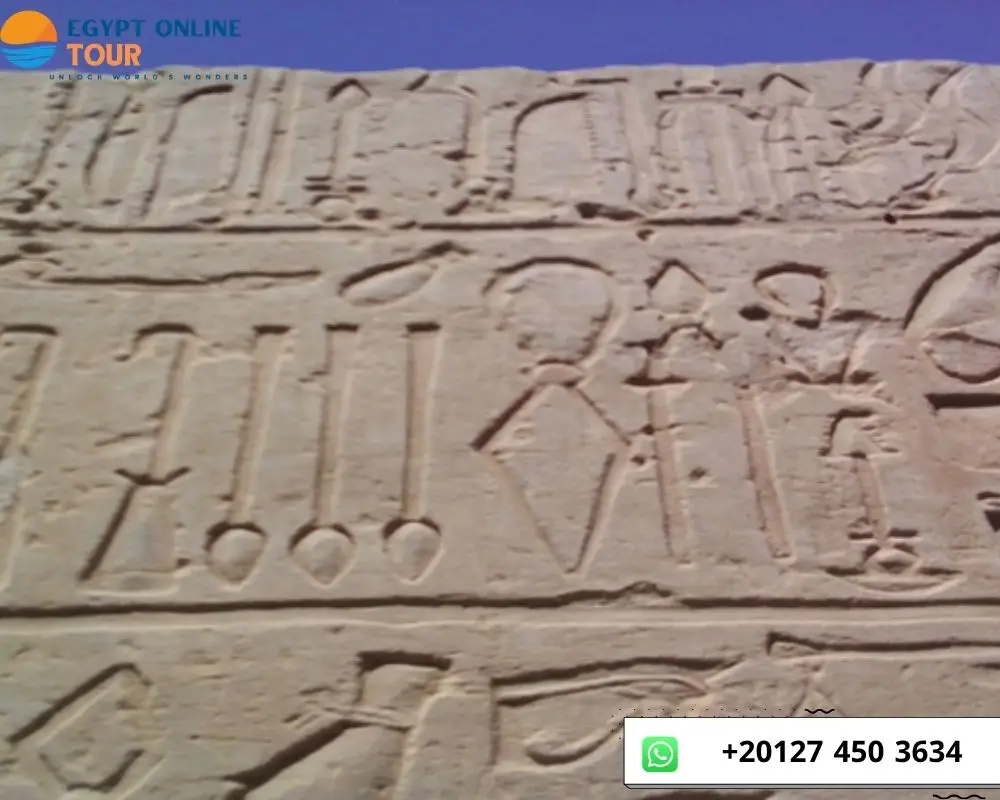
The most internationally discussed relief at Kom Ombo runs along the outer corridor. Carved during the Roman period, approximately the 2nd century AD, it depicts a collection of objects widely interpreted as surgical and medical instruments — including items:
- Resembling scalpels
- Forceps, bone saws
- Probes
- Cupping vessels used for bloodletting.
Many of the tools shown are still recognizable to modern surgeons. This carving is frequently cited as evidence of the sophistication of ancient Egyptian medical knowledge and its continuity into the Roman era.
Ritual Calendar
One of the inner halls preserves a detailed festival calendar — a structured table listing religious festivals, their dates in the Egyptian year, and the ritual activities associated with each.
A corresponding table opposite it pairs each festival day with specific priestly duties.
For historians, this inscription is a primary-source document of how religious time was organized in Ptolemaic Egypt — equivalent in function to a modern liturgical calendar.
Festival Scenes
Throughout the temple, wall reliefs depict the full cycle of royal and divine ritual:
- Coronation and investiture ceremonies.
- Divine processions carrying sacred barques.
- Offerings of incense, wine, linen, and food to the gods.
- The king presenting the figure of Ma'at (truth) to Thoth in the first inner hall.
Royal Offerings
One scene stands out for its complete rarity across all Egyptian temples: the presentation of a goose and papyrus plants to the god Kamutef ("Bull of His Mother"), a deity of fertility and cyclical regeneration.
The ritual depicted was intended to renew the cycle of life — and this specific sequence has not been found in any other Egyptian temple.
The Crocodile Museum
Immediately adjacent to the main temple, the Crocodile Museum was established in recent decades to house and display the extraordinary collection of crocodilian remains recovered from the Kom Ombo site.
It provides essential context for understanding the cult of Sobek and transforms a temple visit into a more complete experience of ancient Egyptian religious life.
Mummified Crocodiles
The museum holds more than 300 mummified crocodiles, ranging from large adults to small juveniles and preserved eggs. The collection also includes:
- Crocodile-shaped coffins
- Votive statuettes
- Objects used in the rituals of Sobek worship.
The quality of mummification on the larger specimens is remarkable — some retain skin, scales, and facial features in recognizable condition.
Sobek Worship
The museum explains in depth how crocodiles were raised, venerated, and ritually prepared at Kom Ombo. Far from being merely feared, crocodiles were regarded as living gods whose behavior on the river carried divine significance.
Priests tended them, fed them, and adorned them with gold jewelry and amulets; in death, they were embalmed with the same care given to human priests and nobles before being offered to the temple as sacred gifts.
Museum Visit Tips
A few practical notes for making the most of the museum:
- Admission is included with the standard temple entrance ticket.
- Allow 20–30 minutes after the main temple tour.
- Exhibit labels are in Arabic and English.
- Photography is permitted throughout the museum.
Kom Ombo Temple Today
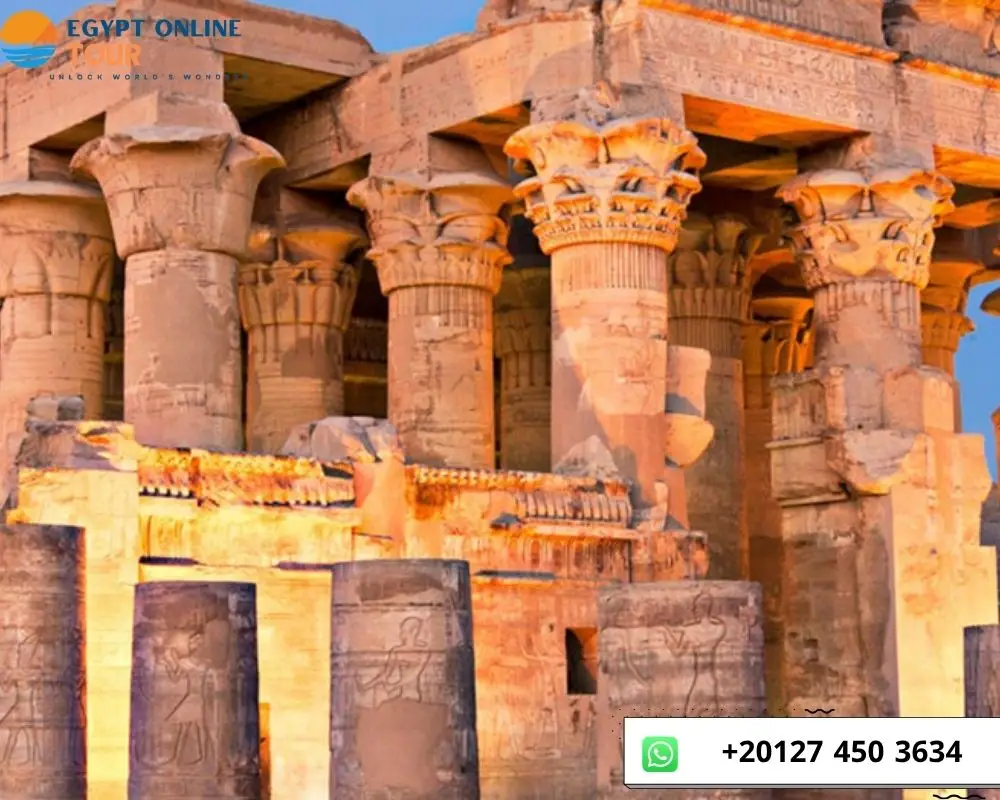
Despite centuries of Nile erosion, earthquake damage, and later reuse, Kom Ombo Temple survives in a state that allows visitors to understand its layout, read its inscriptions, and follow its dual organization from entrance to sanctuary.
It is one of the most visitor-accessible ancient temples in Upper Egypt, combining architectural clarity with genuine historical depth.
What Visitors Can See
The surviving structures give a remarkably complete picture of the Ptolemaic temple complex. Visitors can walk through and observe:
- The open forecourt and outer hypostyle hall with varied column capitals.
- The inner halls with preserved ceiling astronomical decorations.
- The corridor relief of medical and surgical instruments.
- The rear wall with the visible dividing line between the Sobek and Horus halves.
- The Chapel of Hathor (containing three mummified crocodiles on display).
- The Nilometer — a well used in antiquity to measure Nile flood levels and calculate agricultural taxes.
- The birth house (mammisi), partially surviving on the temple's western side.
Best Time to Visit
How Long to Spend
Most visitors spend between 1.5 and 2.5 hours at Kom Ombo, including time in the Crocodile Museum.
Nile cruise passengers are typically given a 2 to 3 hour window at the dock, which is sufficient for a thorough visit without rushing.
Visiting Kom Ombo Temple
Kom Ombo is one of the most straightforward ancient sites in Egypt to visit — whether you're arriving on a Nile cruise, taking a day trip from Aswan, or combining it with a visit to Edfu.
The practical information below covers everything you need to plan your time at the site.
Opening Hours
Kom Ombo Temple is open daily from 9:00 AM to 5:00 PM. Hours may extend slightly during peak tourist season.
Always confirm current timings through your tour operator or Egypt's official tourism channels before visiting, as schedules can change during national holidays or special events.
Tickets
- Adult ticket: approximately 180 EGP (subject to change).
- Student ticket: reduced rate with valid international student ID.
- Crocodile Museum: included in the main temple entrance fee.
Tickets are purchased at the site entrance; no advance booking is required for independent visitors.
Best Tour Option
Kom Ombo rewards visitors who arrive with a guide. The dual iconography, the mythological story behind the temple's division, and the significance of the medical relief carvings are all considerably easier to understand with expert explanation on site.
Options include:
- 8 Days Cairo, Luxor, Aswan Classic Tours — covers Kom Ombo alongside Edfu, Philae, and the key sites of Luxor and Cairo.
- 10 Days Cairo, Aswan, Luxor & Hurghada Overland Tour — adds Red Sea relaxation after the temple circuit.
- 8 Days Cairo to Abu Simbel and Back Overland — goes deeper into Upper Egypt with Kom Ombo as a natural waypoint.
Kom Ombo on a Nile Cruise
A Nile cruise remains the most natural and historically resonant way to experience Kom Ombo — arriving by river as travelers and pilgrims have done for thousands of years.
The temple's position on a dramatic Nile bend means it comes into view gradually from the water, which is one of the most memorable approaches of any Egyptian site.
Luxor to Aswan Route
Southbound cruise passengers (Luxor to Aswan) typically visit Kom Ombo on the third or fourth day, after Edfu. The standard sequence:
- Luxor — Karnak and Luxor Temples
- Esna — Temple of Khnum
- Edfu — Temple of Horus
- Kom Ombo — Temple of Sobek and Horus the Elder
- Aswan — Philae Temple, High Dam, Abu Simbel day trip
Aswan to Luxor Route
Northbound passengers (Aswan to Luxor) encounter Kom Ombo early — typically day two — before proceeding to Edfu and then Esna and Luxor.
In this direction, the contrast between Kom Ombo's dual dedication and Edfu's single-god focus becomes a useful point of comparison as the cruise progresses.
Why Cruises Stop Here
Every serious Nile cruise includes Kom Ombo, and for good practical and historical reasons. The site is:
- Geographically positioned between Aswan and Edfu — a natural and logical stop on the river.
- Compact enough to visit thoroughly in 2 to 3 hours.
- Dramatically situated on a Nile bend with views of the river from the temple columns.
- Thematically essential — no other temple in Egypt illustrates the dual nature of Ptolemaic religious thought as clearly.
For many travelers, Kom Ombo turns out to be the most memorable stop of the entire cruise — precisely because its double design breaks every expectation built up by every other temple along the Nile.
Plan Your Visit to Kom Ombo Temple with Egypt Tour Online
Kom Ombo Temple has stood on the Nile for over 2,200 years — a double temple built for two gods, carved with surgical reliefs that still puzzle historians today, and divided by a line so precise it runs from the entrance straight through to the twin sanctuaries.
A site this layered deserves more than a rushed two-hour cruise stop.
At Egypt Tour Online, we design Nile experiences that give Kom Ombo the time it actually deserves — not just a glance at the crocodile museum on the way back to the boat.
Here is what sets us apart:
- Expert Egyptologist guides who can read the wall reliefs, explain the mythological dispute between Sobek and Horus, and point out the medical instruments carving most visitors walk straight past.
- Flexible itineraries — whether you want Kom Ombo as part of a full Luxor–Aswan Nile cruise or a private day trip combined with Edfu from Aswan.
- Small groups that let you stand in front of the twin sanctuaries without a crowd blocking the view.
- End-to-end logistics — transfers, tickets, Nilometer access, and Crocodile Museum time all built into your schedule.
You came to understand one of Egypt's most unusual ancient monuments.
Browse Egypt Tour Packages and Book Your Kom Ombo Experience
Conclusion
Kom Ombo Temple is not Egypt's largest monument, but it may be its most intellectually distinctive. Its double design reflects a sophisticated theological and political compromise — two competing divine cults, two triads, and two complete sets of sacred architecture, unified under one roof and one pharaoh.
Built over four centuries by Ptolemaic and Roman rulers who understood that legitimacy in Egypt flowed through its temples, Kom Ombo stands as one of the clearest surviving examples of how religion, architecture, and power were inseparable in the ancient world.
The Kom Ombo Temple history stretches from traces of New Kingdom worship through centuries of Ptolemaic construction and Roman completion — a timeline that makes the site older, deeper, and more layered than its well-preserved stones might initially suggest.
Add the medical relief carvings, the ritual calendar, the mummified crocodiles next door, and a position on one of the most beautiful stretches of the Nile, and you have a site that rewards every hour you give it.