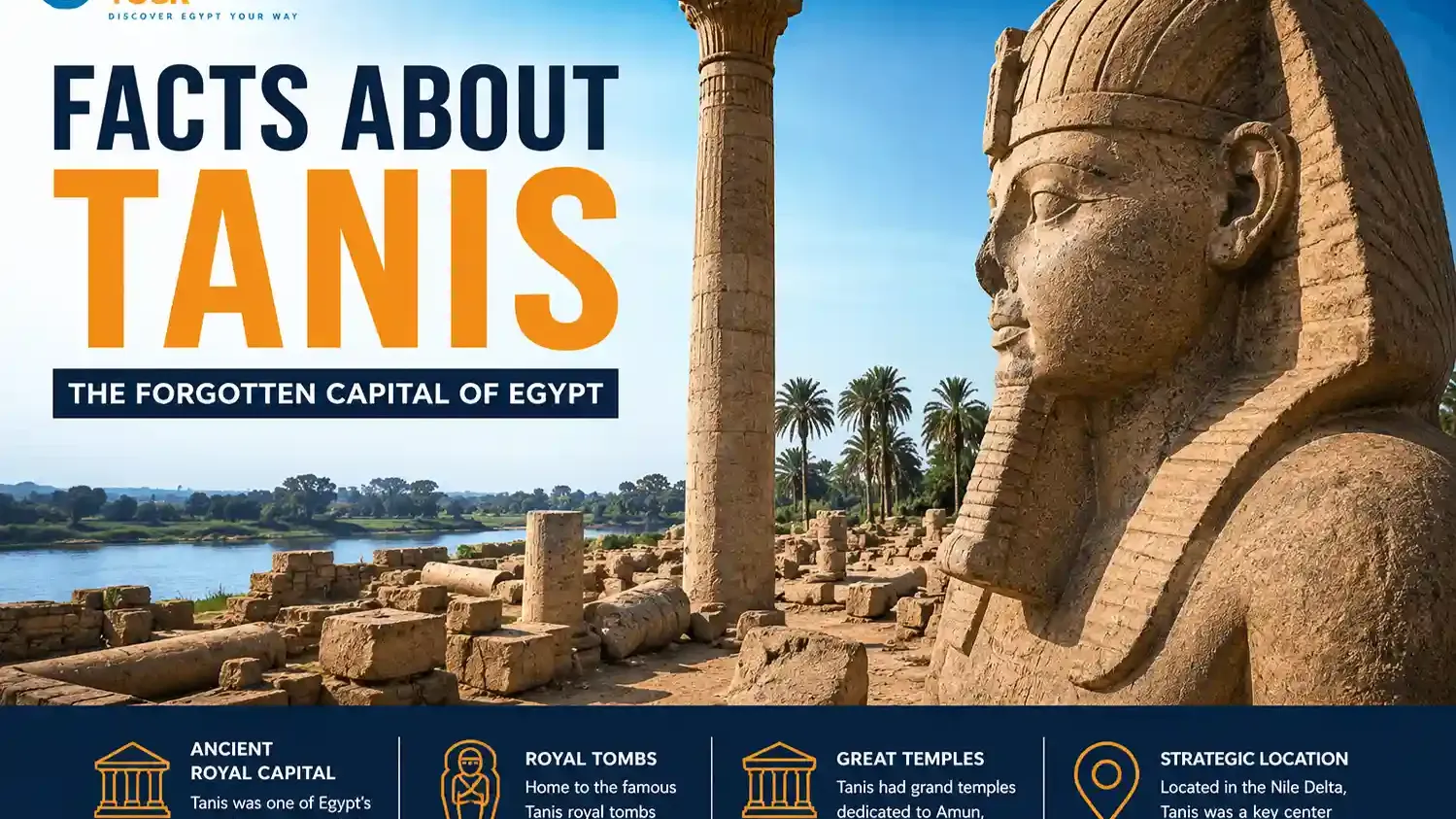
True love for a place is always shown by taking an interest in it when it is out of the spotlight, and this is particularly evident among those who love the city of Tanis. That great city was buried beneath silt, but when the time came for it to be unearthed, it revealed its astonishing significance and how it had been a remarkable hub of Egyptian history. Let’s dive into this comprehensive article to discover some facts about Tanis.
Facts about Tanis Egypt
From the moment it was first discovered, the city of Tanis has embodied a blend of grandeur and mystery, as evidenced by numerous facts relating to it
Tanis is also called San El Hagar
The ancient city of Tanis is known today as San al-Hajar and is located in the Sharqiyah Governorate. Scholars have used the name Tanis to refer to the ancient Pharaonic city, whilst San al-Hajar refers to the present-day site, a testament to the grandeur of this place from millions of years ago to the present day.
Tanis is in the Nile Delta
The city of Tanis is situated in the north-eastern part of the Nile Delta, a region renowned for its fertile soil and proximity to waterways and trade routes.
Facts about Tanis, The city’s unique geographical location has afforded it significant strategic and economic advantages in terms of both agriculture and trade, making it one of the most important cities in northern Egypt.
Tanis was a royal capital
The city of Tanis was one of Advanced Cities In Ancient Egypt reached the height of its importance when the kings of the 21st and 22nd Dynasties, during the Late Period of the New Kingdom, made it their capital.
Once it had been established as the seat of government, they began to construct magnificent temples, palaces and obelisks that symbolised their power and made the city an important administrative and religious centre.
Tanis is not in Luxor
Some people may mistakenly believe that Tanis is located in Luxor, but this is incorrect, as:
- The city of Tanis is situated in the north-east of the Delta, whilst Luxor is located in the south.
- Luxor was renowned as an important religious and royal centre in Upper Egypt, whilst Tanis stood out as a political and administrative capital.
and thus each city represents a different aspect of ancient Egyptian civilisation.
Where Is Tanis?
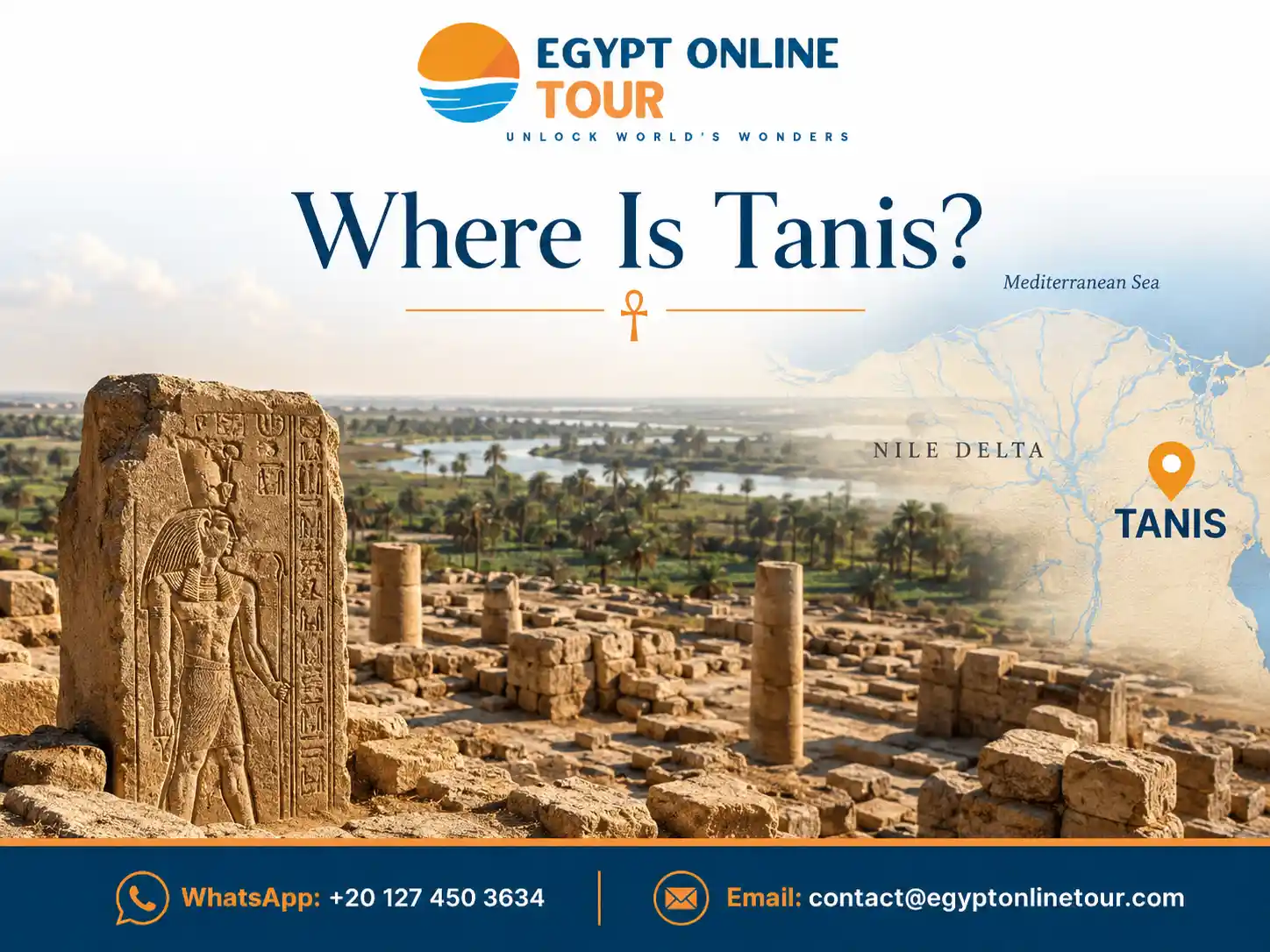
Tanis became important because of its position near the ancient Nile branches, which supported trade, agriculture, and its later role as a capital in the Delta.
Tanis location in Egypt
Facts about Tanis is that it is located in the Nile Delta region of north-eastern Egypt, specifically in San al-Hajar today. It is considered one of the most important archaeological sites due to the remains of its massive ancient temples.
Distance from Cairo
Tanees is around 140 to 170 kilometres from Cairo, which is a two- to three-hour drive, making it a suitable day trip from the capital.
How to visit Tanis
There are several ways to visit the city of Tanis, including:
- Individual visits by private car, provided you are familiar with the roads.
- Joining licensed guided tours to ensure complete safety and security.
- Hiring a specialist tour guide, whether for individual trips or as part of a group, to ensure a comprehensive experience combining excitement, historical information and safety.
Don’t miss our 5-day Cairo to Luxor tour packages for a comprehensive experience from Cairo to Upper Egypt
Learn about: How to Enjoy a Classic Holiday in Egypt
History of Tanis
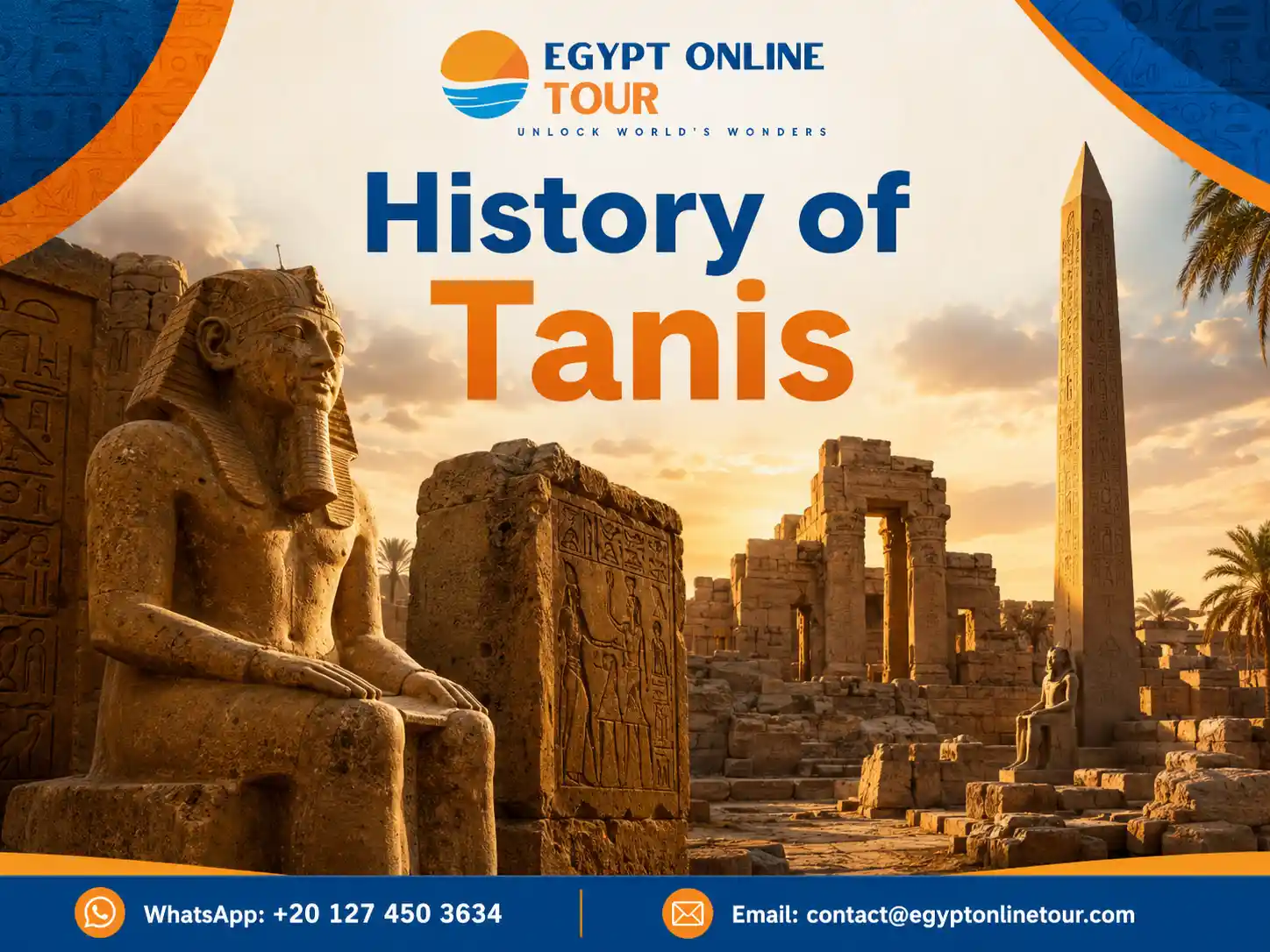
Facts about Tanis that it was an important archaeological site and became the capital of Lower Egypt following the decline of Per-Ramses; it was renowned for its massive temples and lavish royal tombs
Tanis in the 21st Dynasty
- The city of Tanis emerged as the capital of Lower Egypt when King Smendes established it as his seat of government at the start of the 21st Dynasty in 1075 BC, following the decline of Per-Ramses.
- The priests of the god Amun retained strong influence in Thebes to the south, leading to a form of power-sharing between the two sides.
- The city of Tanis was a major centre for the worship of Amun, housing temples dedicated to the triad of Amun, Mut and Khonsu.
- The city of Tanis was famous for its rich royal tombs, which contained silver coffins, gold masks and exquisite jewellery, considered among the greatest discoveries since the tomb of Tutankhamun. This underscores its religious and social significance.
Tanis in the 22nd Dynasty
- Tanis retained its status as the political and religious capital during the reign of the 22nd Dynasty as well; this was a dynasty of Libyan origin founded by Shoshenq I, who succeeded in unifying Egypt to some extent.
- Tanis remained an important centre of worship; its ancient temples were renovated and new structures added, whilst the religious traditions of the 21st Dynasty were preserved.
- The city of Tanis contained royal tombs for a number of kings of the 22nd Dynasty; the remains of these tombs revealed precious treasures of gold and silver, despite some of the tombs having been looted.
- It was characterised by the presence of obelisks, massive monuments and temples, indicating cultural, religious and architectural progress.
Look at: How many days in Egypt first time
Why Tanis was called Northern Thebes
Tanis was known as the ‘Thebes of the North’ due to its striking resemblance to Thebes in both religious and architectural terms. It worshipped the same divine triad “Amon, Mut and Khonsu” and its temples were built in the style of those at Thebes, particularly the temples of Karnak.
The kings of Tanis sought to assert their legitimacy by adopting the titles and religious traditions associated with Thebes, which led to the city being regarded as the northern extension of the Theban religious centre in ancient Egypt.
What Was Found in Tanis?
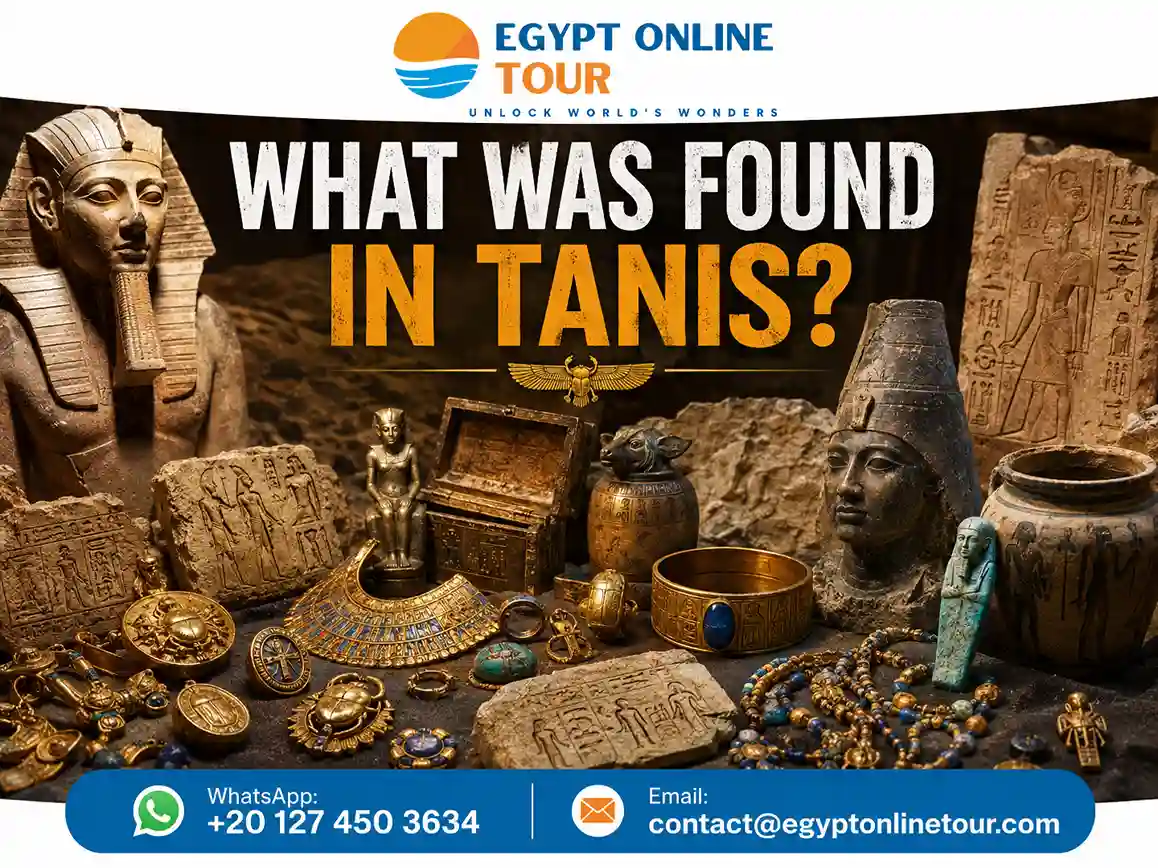
When excavation and exploration work began, archaeologists discovered numerous ancient ruins and magnificent statues, including:
Royal tombs
The royal tombs discovered in the ancient city of Tanis are among the most significant archaeological finds. These tombs date back to the 21st and 22nd Dynasties.
Although some of these tombs were looted, they still contained a large number of artefacts and precious treasures which revealed the continuity of royal funerary traditions and provided important information that has helped researchers learn much about the lives of the kings and burial rites.
Temple of Amun
- The Temple of Amun is the most important and largest religious complex in the city of Tanis and formed the city’s main religious centre.
- The temple was built in the style of the temples of Thebes, particularly the Facts about The Temple of Karnak, with the aim of extending the worship of the god Amun to northern Egypt, which contributed to the city being given the title ‘Thebes of the North’.
- The construction relied primarily on the reuse of stones, obelisks and columns transported from the city of Per-Ramses, which helped to give the city a majestic, regal character.
- The temple was surrounded by vast courtyards and huge obelisks, as well as subsidiary temples dedicated to the gods Mut and Khonsu, the triad of deities worshipped in Thebes.
- The temple contained massive architectural remains, including colossal columns and inscribed stone blocks, as well as a sacred lake dedicated to the god Mut within the temple precincts.
Statues and obelisks
- Tanis is famous for its large number of colossal statues and obelisks, most of which were brought from Per-Ramses and reused in these temples, particularly the Temple of Amun.
- More than twenty massive granite obelisks have been found at the site, though some have fallen due to earthquakes over time.
- There is also a vast number of royal statues, the most notable of which are the statue of King Ramses II and the pink Sphinx, as well as statues of queens and princes from various eras.
- These obelisks and colossal statues reflect the political and religious significance of this great city, and these artefacts are now on display at the Egyptian Museum in Cairo and other museums around the world.
Read about: Unfinished Obelisk in Aswan
Gold and funerary treasures
- The royal treasures at the Tanis necropolis have revealed an exceptional collection of artefacts, considered among the richest archaeological finds in ancient Egypt, including:
- Distinctive gold masks of kings such as Shoshenq II.
- Rings, necklaces and precious vessels.
- Large numbers of ushabti figurines used in funerary rituals.
- Some tombs contained rare silver coffins and vessels decorated with imported gemstones.
- Archaeological analyses have revealed the use of advanced techniques in metalworking and jewellery making, reflecting the wealth and social status of the deceased.
Although some tombs were looted, thousands of artefacts remained intact, enabling experts to study a crucial aspect of funerary beliefs and rituals in Ancient Egypt.
Why Is Tanis Famous?
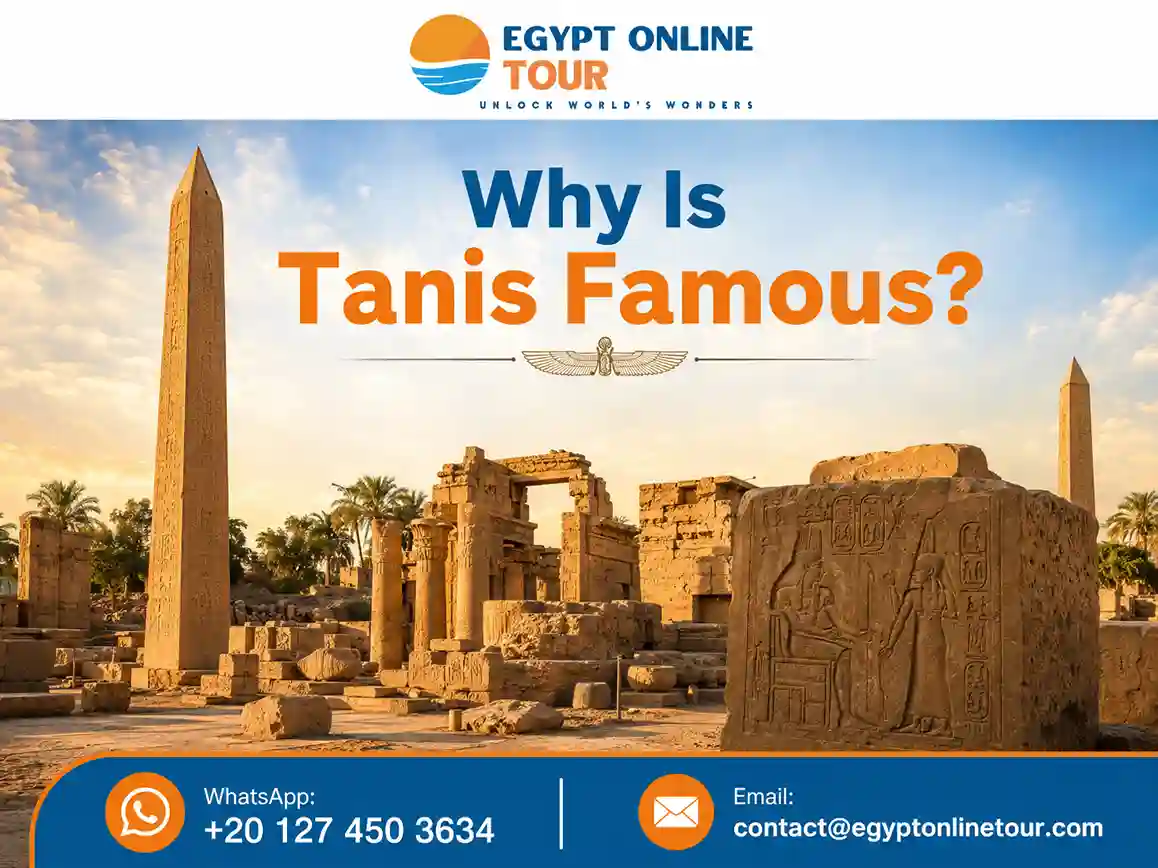
The city of Tanis was an exceptional site in ancient Egypt, home to many Facts about Tanis
Royal necropolis
The city of Tanis witnessed some remarkable archaeological discoveries in the late 1930s, including the unearthing of royal tombs, amongst which were:
- Precious funerary treasures, most notably the tomb of King Psusennes I, which was found almost entirely intact and contained a magnificent gold mask.
- The tomb of King Sheshonq II, which contained a distinctive silver coffin, a gold mask and jewellery set with precious stones.
Indiana Jones connection
Tanis appeared in the famous film *Raiders of the Lost Ark* as a fictional lost city where the Ark of the Covenant was buried and the Nazis were searching for its archaeological treasures.
None of these events are based on historical facts, and the location where the film was shot is in the Tunisian desert and has no connection whatsoever to Egyptian territory. Nevertheless, the film contributed significantly to increasing Tanis’s fame and attracted interest in its ancient history.
Hidden city of the Nile Delta
The city of Tanis is part of the Nile Delta; it was situated on an ancient branch of the river that has now disappeared, causing the city to be buried under silt.
It was rediscovered during the French expedition, and excavations began in the 19th century, revealing temples, colossal statues and extremely important ruins, which have helped us to understand the city’s history.
Is Tanis Worth Visiting?
Yes, certainly. The city of Tanis is of great historical significance, as it was not only an important royal capital but also the site of unique archaeological discoveries that are considered among the most significant Egypt Classic Tours of the 20th century.
Best for history lovers
Tanis reveals an important part of ancient Egyptian history through its monuments, royal ruins, and religious remains, while its Delta location helped strengthen its political and commercial role.
Best for archaeology fans
The city of Tanis is one of the most significant archaeological sites in the Nile Delta, as it contains the remains of temples, obelisks and colossal statues; moreover, its ruins reveal the political and religious role the city played in ancient times.
Best for hidden Egypt sites
True lovers of archaeology and history are those who seek out the lesser-known, off-the-beaten-track destinations, and the city of Tanis is a prime example of this.
It is the perfect destination for exploring another side of Egyptian civilisation, far from the tourist crowds, and offers the chance to enjoy an archaeological site rich in relics.
Tips for Visiting Tanis
Here at Egypt Online Tour, we’d like to offer you some important tips before you set off to explore Facts about Tanis
Best time to visit
Winter, particularly the period from October to April, is the best time to visit the city of Tanis, as the mild temperatures make it ideal for exploring the desert.
Read more: Best Months to Visit Egypt
Go with an Egyptologist guide
Enlisting the help of a specialist is of the utmost importance, as Tanis consists of scattered temple ruins and architectural fragments; consequently, having a specialist on hand helps to understand the significance of the site and uncover the historical stories associated with it.
Combine Tanis with a Cairo trip
Including a visit to Tanis in your itinerary when visiting Cairo is highly recommended, particularly if you are planning to visit The Egyptian Museum, as it allows you to see the original artefacts and treasures that were actually discovered in the city, offering a truly exceptional experience.
Plan Your Tanis Tour in Egypt
You should appreciate the significance and importance of this place by planning your visit carefully and setting aside enough time to explore it and learn about its rich history.
Why choose Egypt Online Tour for your visit to Tanis?
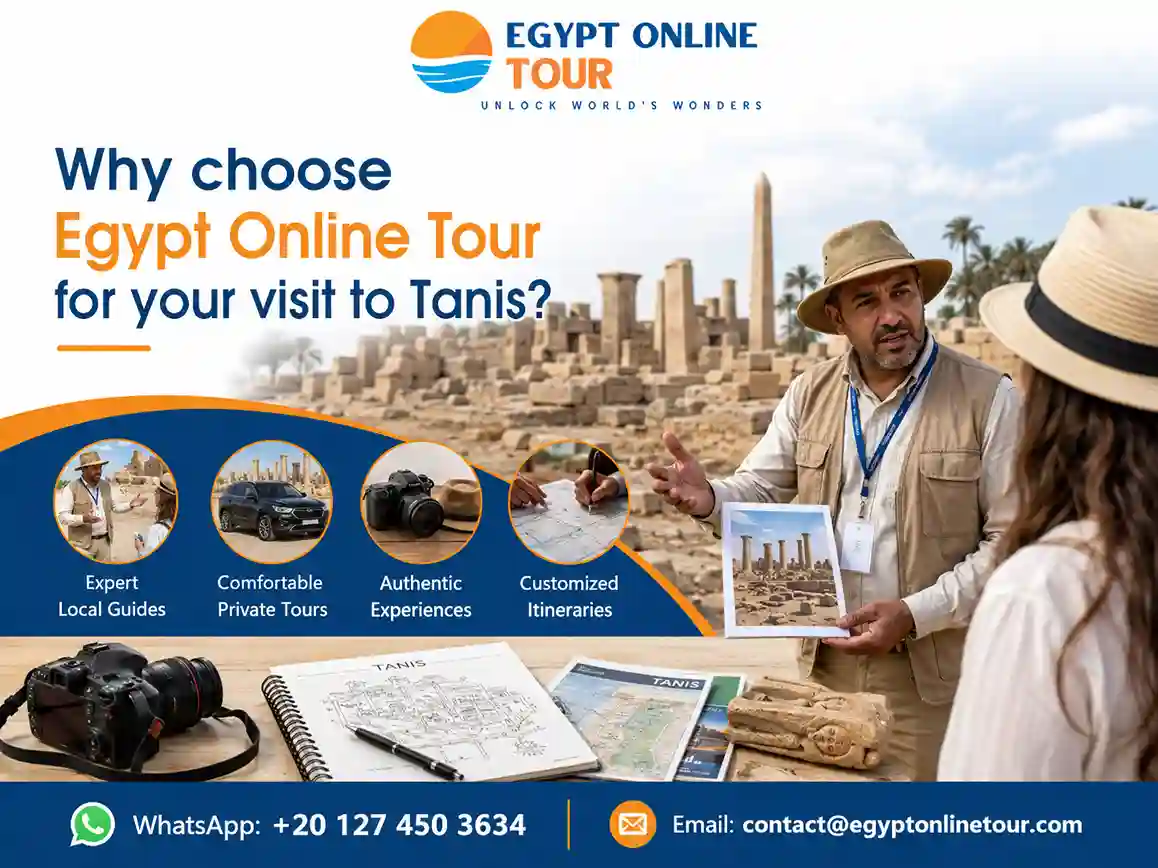
- We provide certified tour guides with extensive experience, enabling them to offer in-depth historical commentary.
- We offer unique, tailor-made tour programmes designed to fit your schedule.
- Our tour guides have extensive knowledge of Egyptian antiquities and are also able to speak more than one language
- We offer private Egypt Tours or small group tours suitable for family trips.
- A combination of local and tourist experiences, ensuring interaction with the local community and the discovery of modern cultures.
- A trusted reputation with five-star traveller reviews, confirming the quality of the experience.
- Quick and simple booking methods, reducing costs and encouraging you to try the experience.
Conclusion
Following this fascinating journey exploring facts about Tanis. from its geographical location and historical significance to the buried treasures that have helped archaeologists gain a deeper understanding of ancient Egyptian history, we would like to say that ancient Egyptian history continues to amaze us day after day with its scientific, religious and cultural ingenuity.