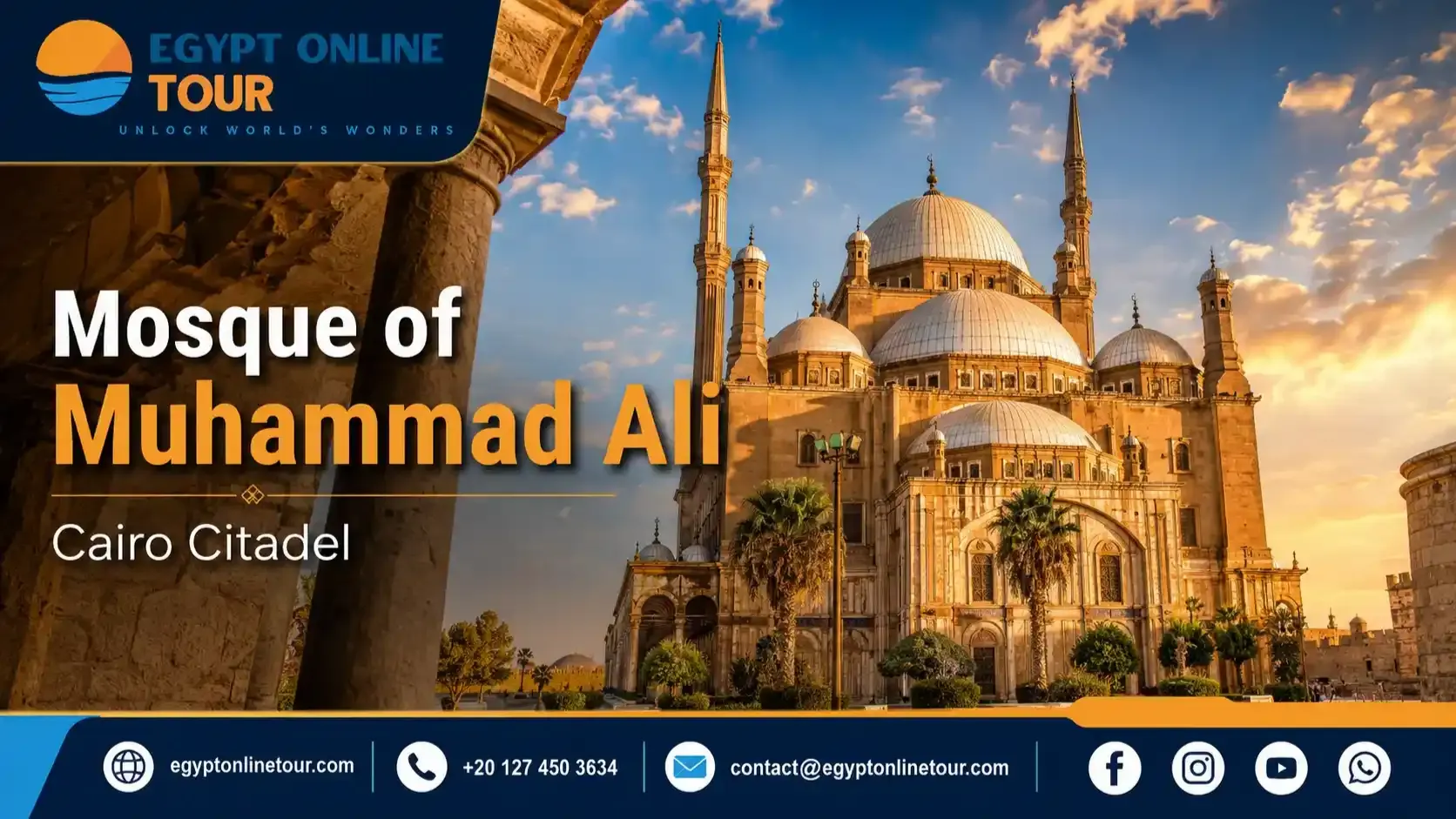
The Mosque of Muhammad Ali is the kind of Cairo landmark that catches your eye before you reach it. Yet the real story starts inside the Citadel. From guided Cairo visits, we know travelers enjoy it more when they notice the alabaster walls, Ottoman domes, quiet prayer hall, and wide city views. This guide shows what to see, when to go, and how to plan your visit well.
Field Notes From Our Cairo Tours
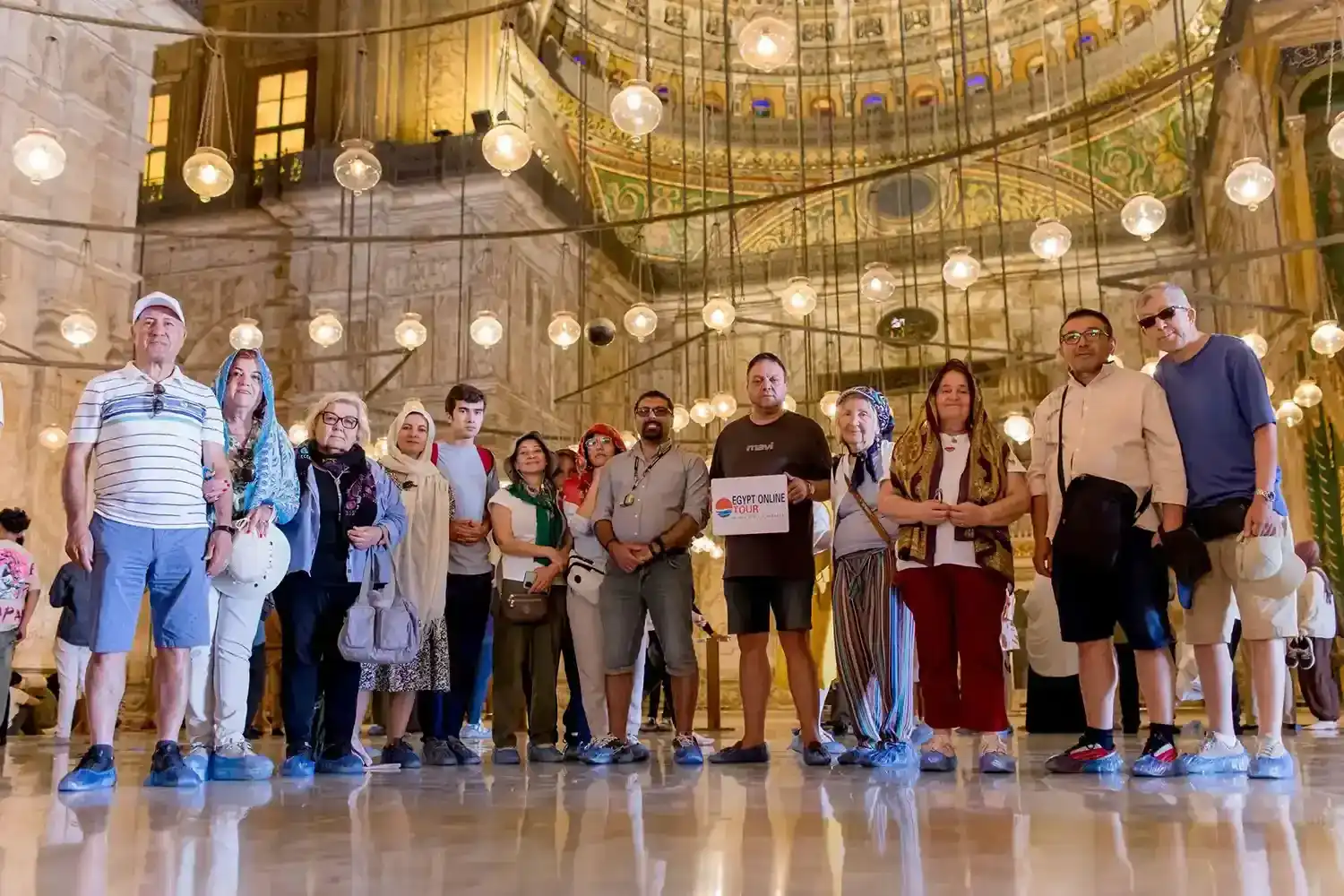
On many Cairo tours, we’ve found that most travelers enjoy this stop more when they follow a simple order: start with the courtyard, enter the prayer hall, then finish with the Citadel view.
This route helps visitors understand the mosque better. The courtyard shows the full design from outside. The prayer hall gives the quiet interior experience. The final view from the Citadel connects the mosque to the wider story of Cairo.
It also gives better photo chances without rushing the visit.
Mosque of Muhammad Ali in Cairo
This guide helps you understand why the Alabaster Mosque matters, where it stands inside the Cairo Citadel, and which details deserve your attention once you arrive.
Quick Facts About the Mosque of Muhammad Ali
- Location: Cairo Citadel, also known as the Citadel of Salah al-Din
Why Is the Mosque of Muhammad Ali Famous?
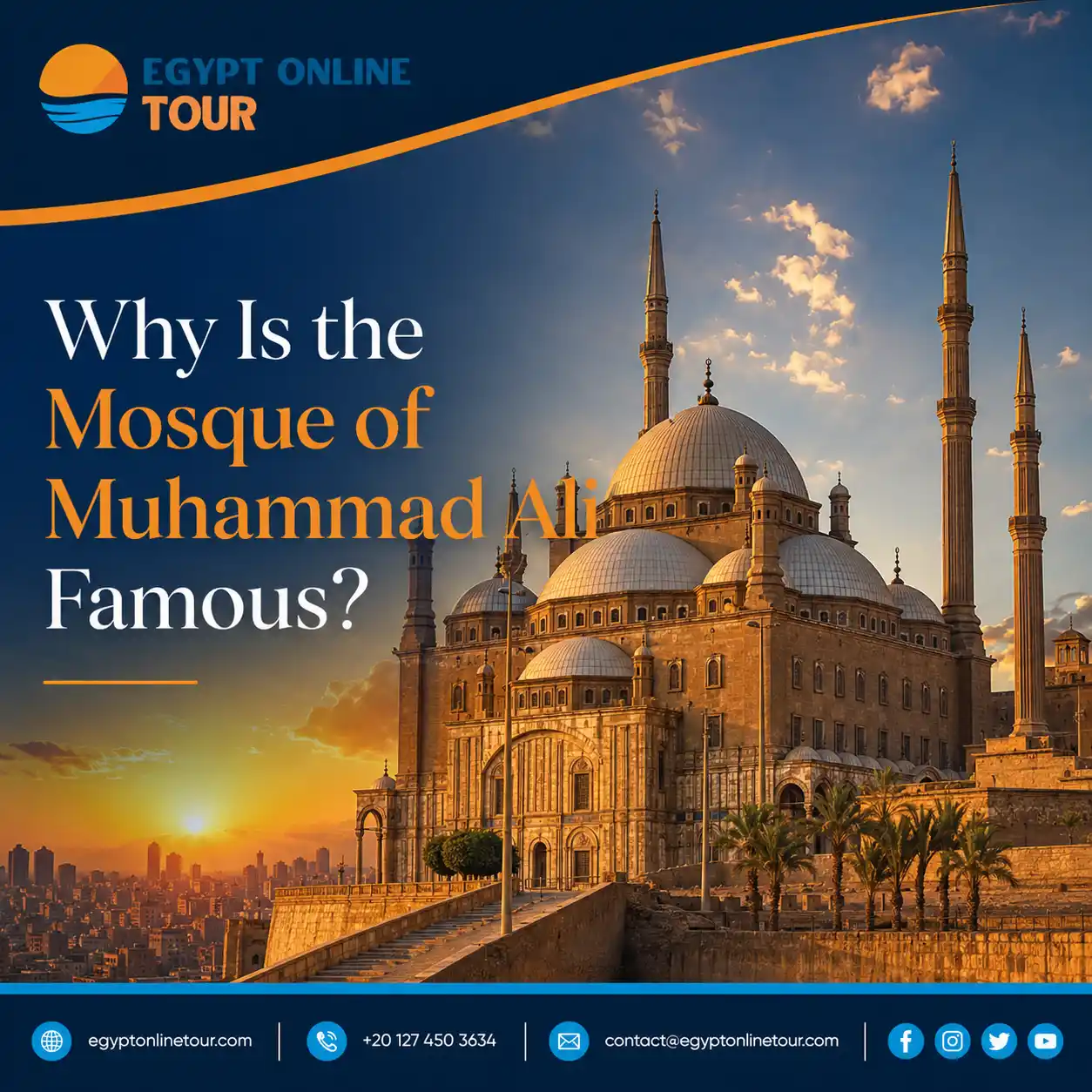
The Mosque of Muhammad Ali is famous because it brings together history, Ottoman architecture, Islamic heritage, and wide views over Cairo.
Visitors know it for:
- A high location inside the Cairo Citadel
- Bright alabaster walls that gave it the name Alabaster Mosque
- A large central dome with clear Ottoman style
- Two slim minarets that shape the Citadel skyline
- A direct link to Muhammad Ali Pasha
- Wide views over Islamic Cairo
The mosque becomes more meaningful when you understand why it stands inside the Citadel. It was built for worship, but it also expressed authority, ambition, and a new chapter in Egypt’s modern history.
You can see the mosque from outside, walk through the courtyard, enter the prayer hall, then end with one of Cairo’s best views.
Read about: Famous Mosques in Cairo
Why Is It Called the Alabaster Mosque?
It is called the Alabaster Mosque because alabaster and marble panels cover parts of its walls.
This pale stone gives the building a bright, smooth look, especially in the courtyard and lower wall sections. It also helps the mosque stand apart from many older stone monuments in Islamic Cairo.
Travelers usually understand the nickname as soon as they see the walls up close. The stone is not just decoration. It is one of the main features that shaped the mosque’s identity.
Where Is It Located?
It is located inside the Cairo Citadel on Mokattam Hill.
The mosque’s place inside the Citadel is part of its importance. This historic fortress once controlled and protected Cairo, and today it offers great city views and quick access to nearby Islamic sites.
You can visit it with:
- Cairo Citadel
- Sultan Hassan Mosque
- Al Rifai Mosque
- Khan El Khalili
- Al Muizz Street
Why Do Tourists Visit the Mosque of Muhammad Ali?
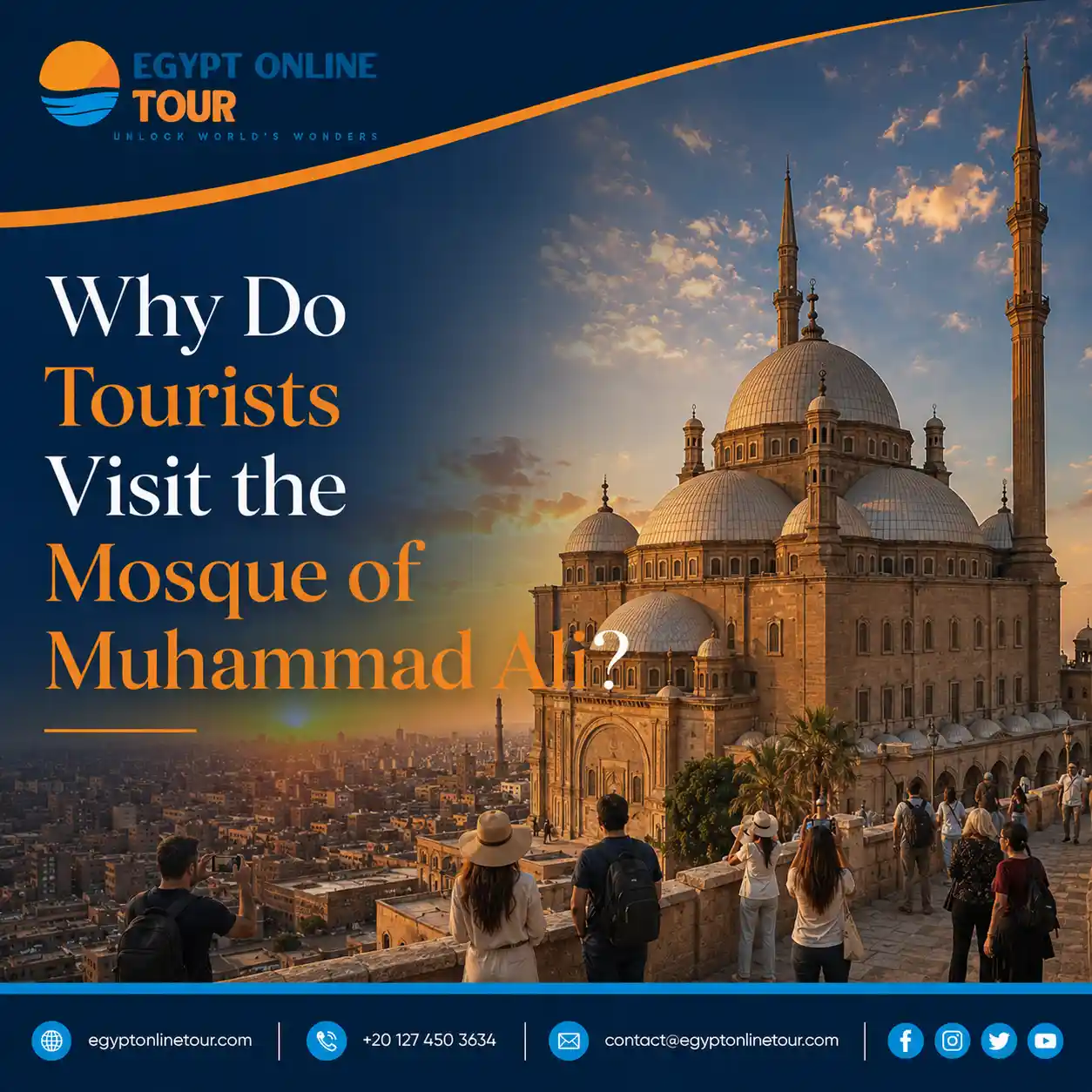
Tourists visit the Mosque of Muhammad Ali because it offers history, Ottoman architecture, Islamic heritage, and Cairo views in one stop.
Most visitors come to:
- See one of Cairo’s best-known Islamic landmarks
- Learn about Muhammad Ali Pasha
- Walk through the courtyard and prayer hall
- View the Ottoman domes and minarets
- Enjoy the Citadel views over Cairo
- Add it to an Islamic Cairo tour
Visitors understand this landmark better when they know the story behind it. With context, the visit becomes more than a photo stop. It shows faith, power, design, and Egypt’s modern history in one place.
Many visitors arrive expecting a short stop, then stay longer because the architecture, history, and city views offer more than they expected.
Read about: Amr ibn Al-A'as Mosque
Common Questions Visitors Ask
Visitors often ask similar questions once they enter the Citadel.
- Some visitors want to know why the mosque looks different from many older mosques in Cairo.
- Others ask whether the alabaster covers the entire building or only parts of it.
- Many travelers are surprised to learn that Muhammad Ali Pasha is buried inside the mosque itself.
- We also hear frequent questions about the French clock tower and why it became one of the most talked-about features in the courtyard.
History of the Mosque of Muhammad Ali
Its history is linked to Egypt’s 19th-century shift toward a modern state.
Muhammad Ali Pasha built it inside the Cairo Citadel, a place tied to rulers, armies, and state power for centuries. So, the location was part of the message. It helped connect his name with one of Cairo’s most important historic sites.
Quick history facts:
This background helps visitors see why the site feels different from older Islamic landmarks nearby.
Who built the mosque
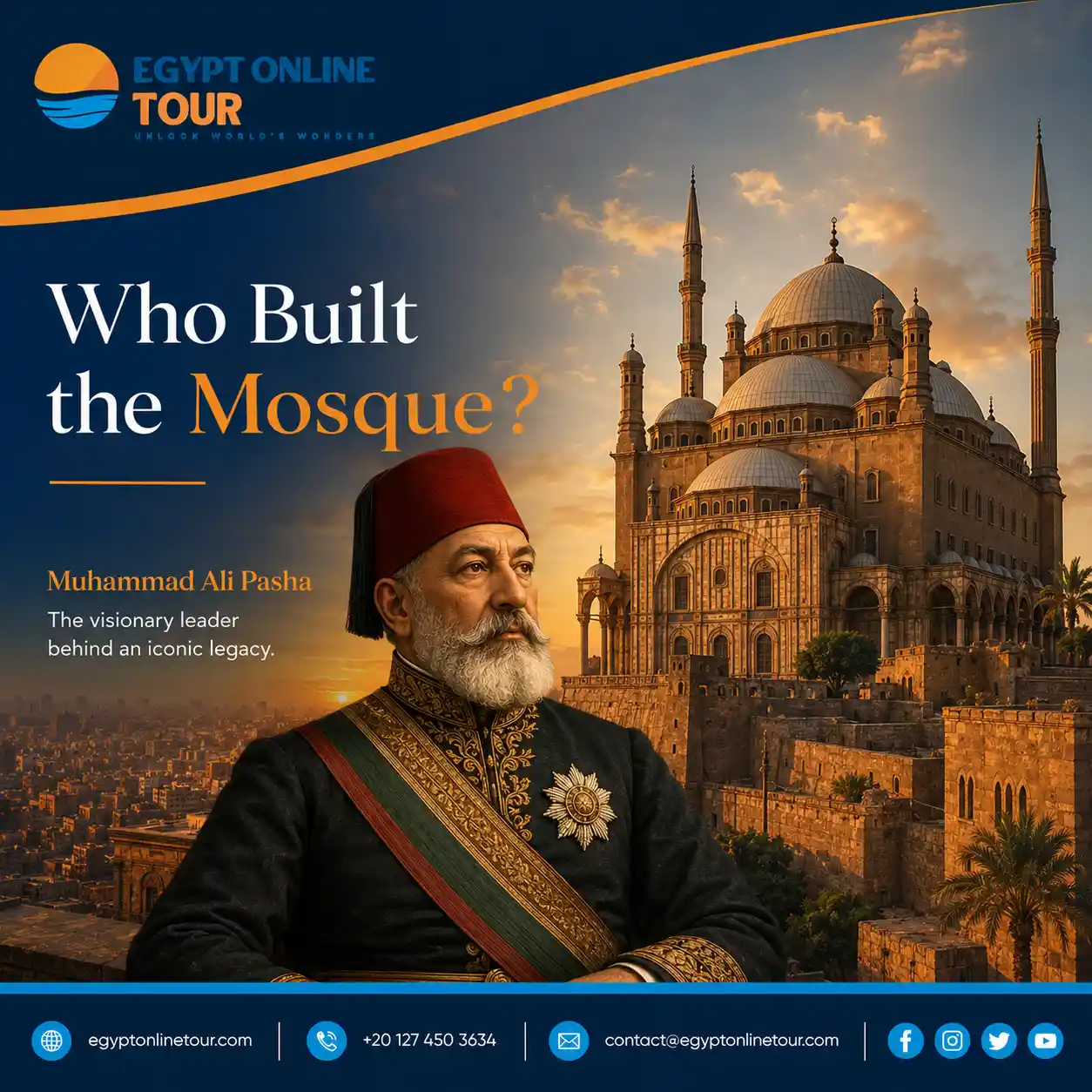
Muhammad Ali Pasha commissioned the mosque.
He chose the Cairo Citadel because it was already linked to power and rule. This made the mosque more than a religious building. It also became part of his public legacy.
When it was built
The mosque belongs to the 19th century.
Official Egyptian heritage information dates it to 1265 AH / 1848 AD. Construction began earlier and continued for years, which explains the scale of the building and its detailed Ottoman design.
Muhammad Ali Pasha
Muhammad Ali Pasha was one of the most influential rulers in modern Egyptian history.
His reforms changed the army, education, agriculture, industry, and state administration. The mosque reflects that ambition. It stands inside the Citadel, carries his name, and contains his tomb.
Mosque of Muhammad Ali Architecture
Its architecture is one of the main reasons travelers visit the site.
Unlike many older mosques in Cairo, it has a clear Ottoman style. You see this in its large dome, smaller domes, slim minarets, open prayer hall, and balanced layout.
Quick architecture facts:
Ottoman Design
The mosque follows Ottoman design, with a central dome, smaller domes, slim minarets, and a wide interior.
This makes it look different from many Mamluk mosques in Islamic Cairo. Those older buildings often use heavy stone fronts, carved entrances, and detailed minaret shapes.
Here, the design feels open, balanced, and easy to read from the courtyard.
Central Dome
The dome is the main feature inside the mosque.
It rises above the prayer hall and gives the space its height. When visitors enter, they often look up first because the dome controls the whole interior view.
Its scale is impressive, with a height of about 52 meters and a diameter of around 21 meters. This scale is one reason the prayer hall feels open and impressive as soon as visitors step inside.
Minarets
The mosque has two slim Ottoman minarets.
The mosque’s two minarets are easy to recognize from a distance and play a major role in the Cairo Citadel skyline. Official heritage sources list each minaret at 84 meters high.
Their shape is different from many older Cairo minarets. They look taller, cleaner, and more direct than the carved Mamluk style.
Alabaster Walls
The alabaster walls are one of the mosque’s most memorable details.
The pale stone gives the building a bright, smooth look and helped create the name Alabaster Mosque.
Visitors usually notice the alabaster in the courtyard and lower wall sections. It is not just decoration. It is part of the mosque’s identity.
Inside the Mosque of Muhammad Ali
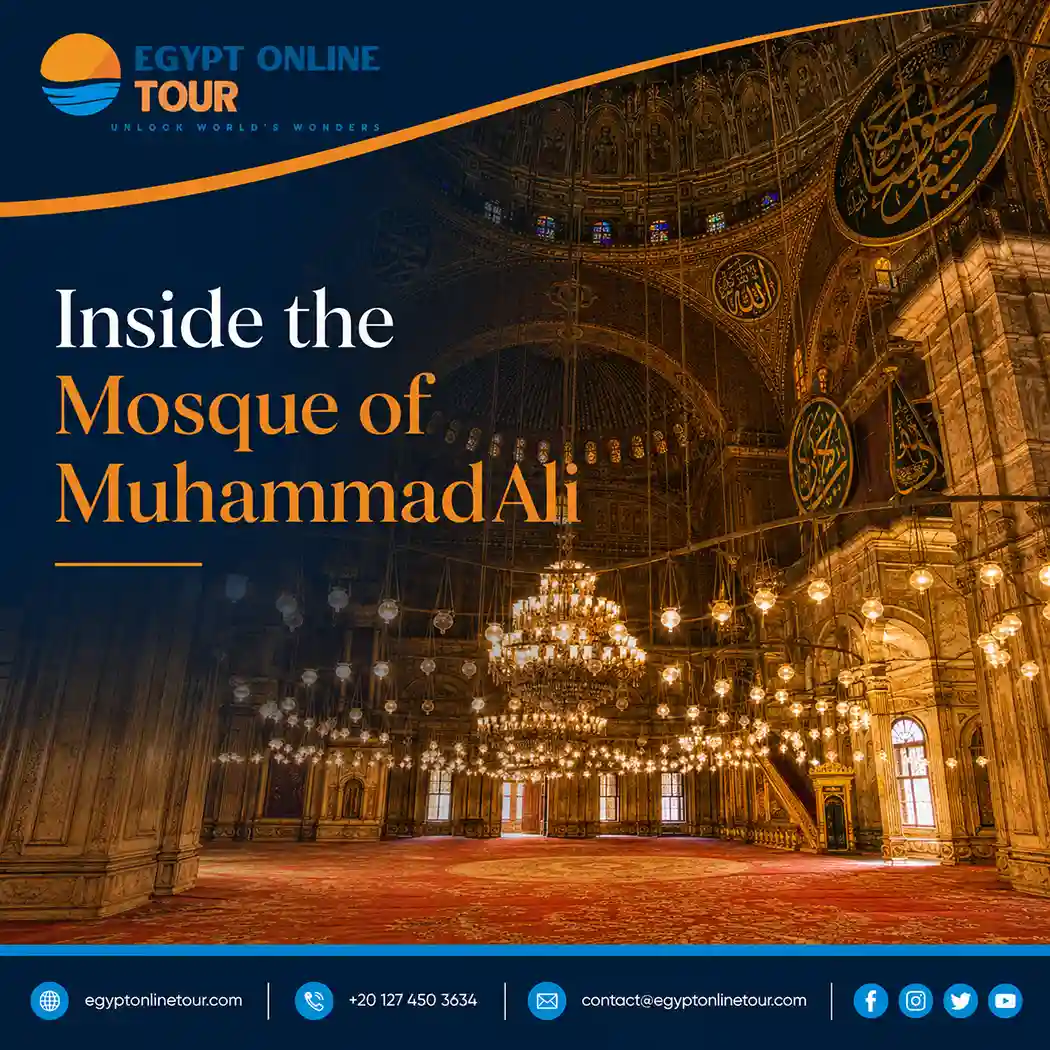
Inside the Mosque of Muhammad Ali, the visit becomes quieter and more focused.
The courtyard feels open and bright. Then, the prayer hall gives a different mood with its high dome, chandeliers, carpets, arches, mihrab, minbar, and tomb.
What to notice inside:
Visitors should speak softly, dress modestly, and avoid blocking worshippers. This is still a religious space, not only a historic monument.
Many travelers pause near the entrance before walking deeper inside. The first full view often feels stronger than photos suggest.
Prayer Hall
The prayer hall is wide, open, and centered under the main dome. Its nearly square layout helps the space feel balanced, while the high central dome gives the hall its strong sense of height. Its arches, lights, carpets, and dome work together to create a calm space for prayer. Outside, the mosque shows power. Inside, it feels quieter and more personal.
Travelers often stop near the entrance for a few moments before exploring further. The scale of the dome and the openness of the hall are usually the first details they notice.
Mihrab and Minbar
The mihrab shows the direction of prayer toward Mecca. Beside it, the minbar serves as the pulpit used for sermons. These two features help visitors understand the mosque as a living religious space, not just a place for photos.
Chandeliers
The chandeliers hang below the main dome and add warmth to the prayer hall.
They help visitors see the height of the ceiling and the balance of the interior. For photos, the best angle is often from the center of the hall, looking toward the dome and arches.
Tomb of Muhammad Ali Pasha
The tomb of Muhammad Ali Pasha is inside the mosque.
This detail gives the visit more historical meaning. The mosque carries his name, reflects his ambition, and holds his final resting place inside the Citadel.
The Courtyard and French Clock
The courtyard is one of the best places to understand the Mosque of Muhammad Ali from outside.
It gives visitors space to see the façade, minarets, arches, ablution fountain, and open sky in one view. Early morning usually gives better light and fewer crowds.
What to notice in the courtyard:
Ablution Fountain
- The ablution fountain stands in the center of the courtyard.
- Worshippers used it for washing before prayer. For visitors, it adds context because the mosque was built for religious life, not only royal memory or sightseeing.
- It also creates one of the best photo angles, with the fountain in front and the mosque behind it.
French Clock Tower
- The French clock tower is one of the courtyard’s most remembered details.
- It came from France in the 19th century and is often linked to the exchange connected with the Luxor Obelisk in Paris.
- France sent the clock during the reign of King Louis Philippe, and it later became one of the courtyard’s most curious details.
- Many guides mention that it faced mechanical problems for long periods, which makes the story even more memorable for visitors.
- It shows the site as part of worship, politics, and cultural exchange.
Citadel Views
- The Citadel views are one of the main reasons to visit.
- From the courtyard area, you can see Cairo’s domes, minarets, old districts, and modern buildings in one wide scene. Save time for this view before leaving the Citadel.
- Morning and late afternoon usually work best for photos.
Many travelers expect a short stop, then spend longer at the viewpoint because the city view adds a strong ending to the visit.
Is the Mosque of Muhammad Ali Worth Visiting?
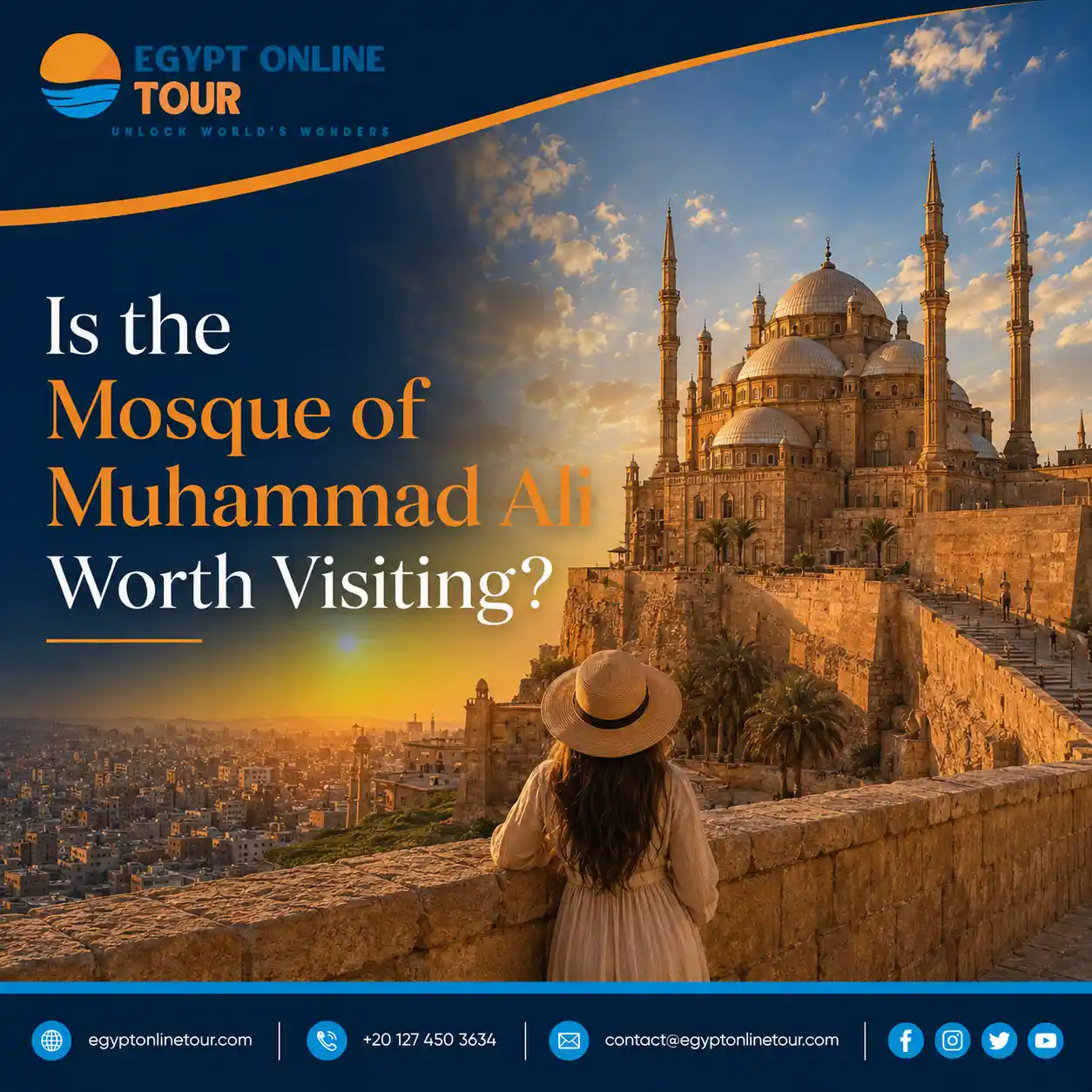
Yes, this mosque is worth visiting if you want history, Ottoman architecture, Islamic heritage, and wide Cairo views in one stop.
It works well for first-time visitors because the site is easy to follow. You can see the mosque from outside, walk through the courtyard, enter the prayer hall, then end with the Citadel views.
Who should visit?
Best for History Lovers
The mosque is best for visitors who want to understand Muhammad Ali Pasha and modern Egypt.
It stands inside the Cairo Citadel, a place linked to rule and state power for centuries. So, the visit is not only about beauty. It also explains how rulers used architecture to leave a public legacy.
Best for Architecture Lovers
Architecture lovers should visit because the mosque looks different from many older Cairo mosques.
Its Ottoman dome, slim minarets, alabaster walls, open prayer hall, and courtyard create a clear style. For a stronger comparison, visit Sultan Hassan Mosque nearby to see the contrast with Mamluk architecture.
Best for Islamic Cairo Tours
The Mosque of Muhammad Ali is one of the strongest stops on Islamic Cairo tours.
For Cairo routes, this order works well:
- Start with the Cairo Citadel
- Visit the Mosque of Muhammad Ali
- Continue to Sultan Hassan Mosque
- Add Al Rifai Mosque
- End at Khan El Khalili or Al Muizz Street
This route gives you history, architecture, city views, and local life without wasting time between far locations.
Visiting the Mosque of Muhammad Ali
Visiting this site is simple when you plan your time, ticket, clothes, and route.
Most visitors need 45 to 75 minutes for the mosque itself. Allow more time if you want photos, a guide, or a wider Citadel visit.
If you want to include this stop in a wider Cairo or Egypt itinerary, explore our Egypt Tours for guided routes that connect the Citadel with other major landmarks.
Quick visiting tips:
Opening Hours
- Opening hours usually follow the Cairo Citadel schedule.
- Times can change in summer, winter, Ramadan, public holidays, or during maintenance. So, check the latest official timing before your visit.
- Early morning is usually the best choice because the weather is cooler, the light is softer, and the site feels less crowded.
Tickets
- Entry to the Mosque of Muhammad Ali is usually included with the Cairo Citadel ticket.
- You normally buy one ticket for the Citadel, then visit the mosque inside the complex. Prices may change by visitor type, so check the latest official rate before you go.
- If you book a guided tour, ask whether the Citadel entry ticket is included. This helps you compare prices and avoid confusion at the gate.
If your Cairo plan also includes Giza, check the Grand Egyptian Museum Ticket Price before your visit so you can compare museum entry costs with your Citadel and Islamic Cairo sightseeing budget.
Dress Code
Dress modestly when visiting the mosque.
Cover shoulders and knees. Women may carry a light scarf, and men should avoid sleeveless shirts or very short shorts.
You may need to remove your shoes before entering the prayer area, so wearing socks is a good idea.
Quick dress tips:
Best Time to Visit
The best time to visit is early morning. You get cooler weather, softer light, and fewer crowds. This matters most in summer because the Citadel has open spaces and can feel hot by midday.
For seasonal planning, read our guide to the best times to travel to Egypt before choosing your travel dates.
Late afternoon can also work well for views, but check closing time before planning a late visit.
How Long Do You Need?
Most visitors need 45 to 75 minutes for the mosque itself.
This is enough time to see the courtyard, prayer hall, tomb, French clock, and Citadel views.
For a wider visit, use this guide:
What to Visit Nearby
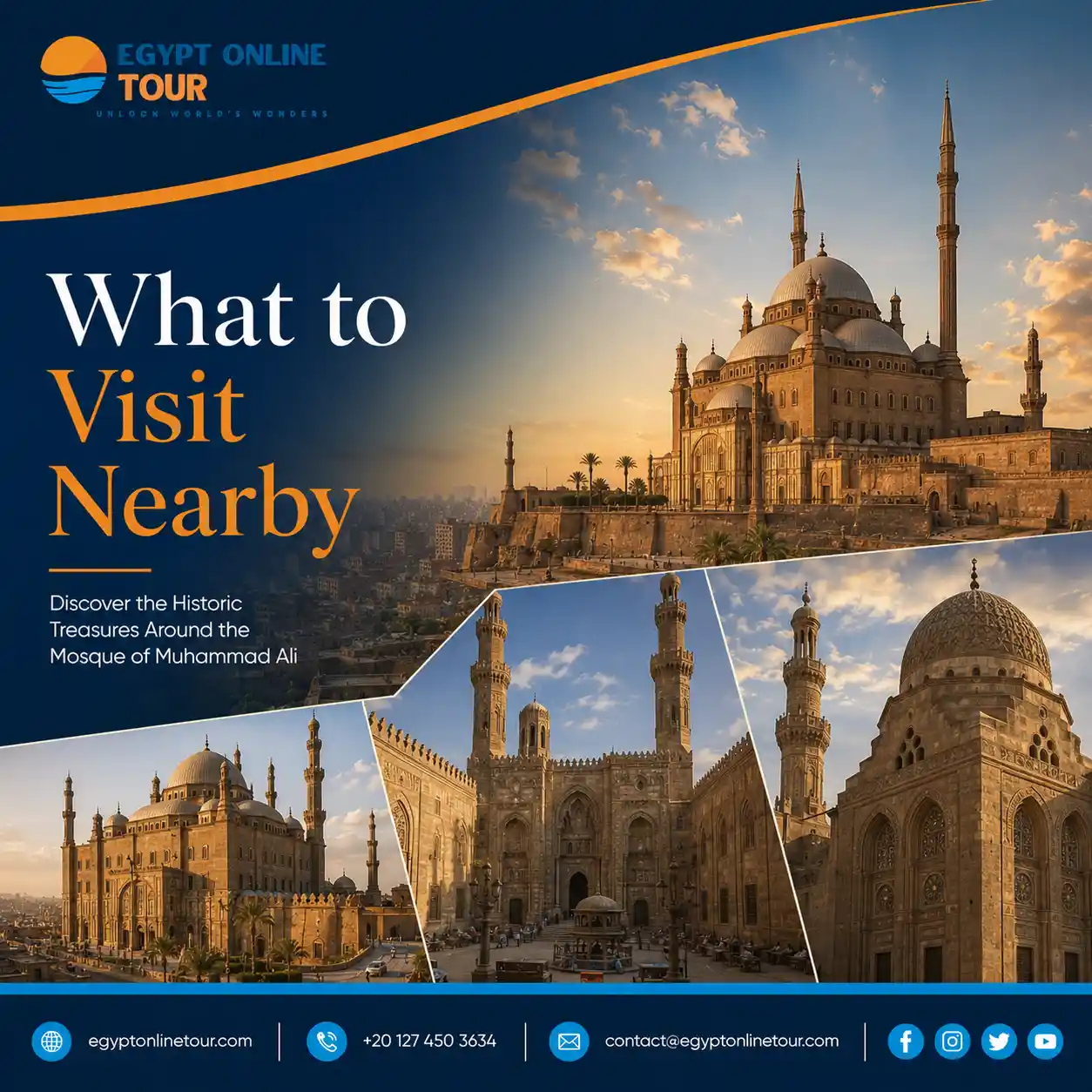
The area around the site includes some of Cairo’s strongest Islamic landmarks. So, it is better to visit the mosque as part of a wider Islamic Cairo route.
Best nearby places:
Cairo Citadel
The Cairo Citadel is the historic fortress that contains the Mosque of Muhammad Ali.
It is worth adding because:
- Salah al-Din founded it in the 12th century
- Its high position explains its role in rule and defense
- The viewpoints give some of the best views over Cairo
Sultan Hassan Mosque
Sultan Hassan Mosque stands near the Citadel and shows a different side of Islamic Cairo.
It is a strong stop because:
- Its large scale and detailed stonework clearly show the influence of Mamluk architectural style.
- The style contrasts well with the Ottoman design of the Alabaster Mosque
- Its deep interior helps visitors understand another period of Cairo’s history
Al Rifai Mosque
Al Rifai Mosque stands beside Sultan Hassan Mosque.
Visitors add it because:
- Royal burials give the site strong historical value
- Its large interior offers a different mood from the Citadel
- Together with Sultan Hassan, it creates one of the best historic scenes in Cairo
Khan El Khalili
Khan El Khalili is Cairo’s most famous historic market.
It works well at the end of the route because:
- The market adds local life after the mosque visits
- Old lanes, shops, and cafés make the day feel more complete
- A tea or coffee stop gives visitors a slower finish to the tour
Read: 10 Best Places to Visit in Egypt
Al Muizz Street
Al Muizz Street is one of Cairo’s richest Islamic heritage streets.
Add it if you want:
- Historic mosques, gates, houses, and schools
- A deeper walk through Islamic Cairo
- More context after visiting the Citadel and nearby mosques
For the smoothest route, start with the Cairo Citadel, then visit the mosque before continuing to Sultan Hassan Mosque and Al Rifai Mosque. End at Khan El Khalili or Al Muizz Street for markets, cafés, and local life.
This route also fits well within Egypt Classic Tours, especially for travelers who want to combine Cairo’s Islamic landmarks with the Pyramids, Luxor, Aswan, and a Nile Cruise.
Look at: Al Moez Ldin Allah Al Fatmi
Tips for Visiting the Mosque of Muhammad Ali
A better visit starts with simple planning. Go early, dress modestly, leave time for the courtyard, and combine the mosque with nearby Islamic Cairo landmarks.
Quick visiting tips:
Go With a Guide
A guide adds value if you want more than photos.
A good guide explains:
- Muhammad Ali Pasha
- Ottoman architecture
- The French clock
- The Citadel’s role in Cairo
- The difference between Ottoman and Mamluk mosques
Guided visitors usually leave with a clearer story, not just a set of photos.
Dress Modestly
Dress modestly so you can enter the mosque comfortably.
Best choices:
- Clothes that cover shoulders and knees
- A light scarf for women
- Easy shoes to remove before the prayer area
- Socks if you do not want to walk barefoot
This also helps if you visit Sultan Hassan Mosque, Al Rifai Mosque, or other religious sites on the same day.
If you are still planning your trip, read our guide on whether it is okay to travel to Egypt before finalizing your itinerary.
Visit Early
Early morning is usually the best time to visit.
The weather feels cooler, the light works better for photos, and the courtyard is less crowded. This matters most in summer because the Citadel has open spaces and can feel hot by midday.
Do Not Rush the Courtyard
The courtyard is one of the best parts of the visit.
Take a few minutes to see:
- The mosque façade
- The ablution fountain
- The French clock tower
- The minarets
- The Citadel views
This short pause helps visitors understand the scale of the building before entering the prayer hall.
Combine It With Islamic Cairo
The Mosque of Muhammad Ali works best as part of an Islamic Cairo route.
A strong half-day plan:
- Start at the Cairo Citadel
- Visit the Mosque of Muhammad Ali
- Continue to Sultan Hassan Mosque
- Add Al Rifai Mosque
- End at Khan El Khalili for tea, shopping, or a short walk
A full-day plan:
- Start with the Citadel and the Mosque of Muhammad Ali
- Visit Sultan Hassan Mosque
- Enter Al Rifai Mosque
- Have lunch near Islamic Cairo
- Walk along Al Muizz Street
- End at Khan El Khalili
This route gives visitors history, architecture, views, and local life without wasting time between far locations.
Common Mistakes to Avoid
Avoid these mistakes when visiting:
- Going at midday in summer
- Wearing clothes that make mosque entry difficult
- Skipping the courtyard
- Leaving before seeing the Citadel views
- Visiting only for photos
- Forgetting to check the latest opening hours
Small choices can make the visit smoother and more memorable.
This route works well because it moves naturally through different periods of Islamic history, from Ottoman design to Mamluk architecture and medieval Cairo streets.
Conclusion
The Mosque of Muhammad Ali often surprises travelers who expect only a quick Citadel stop. Many leave remembering the prayer hall, the courtyard, and the panoramic views.
This landmark is worth visiting because it brings Cairo’s history, Ottoman architecture, Islamic heritage, and Citadel views into one clear stop. Its alabaster walls, central dome, slim minarets, French clock, and Muhammad Ali Pasha’s tomb give the visit real depth.
For the best experience, visit early, dress modestly, and combine it with Sultan Hassan Mosque, Al Rifai Mosque, Khan El Khalili, and Al Muizz Street in one Islamic Cairo route.