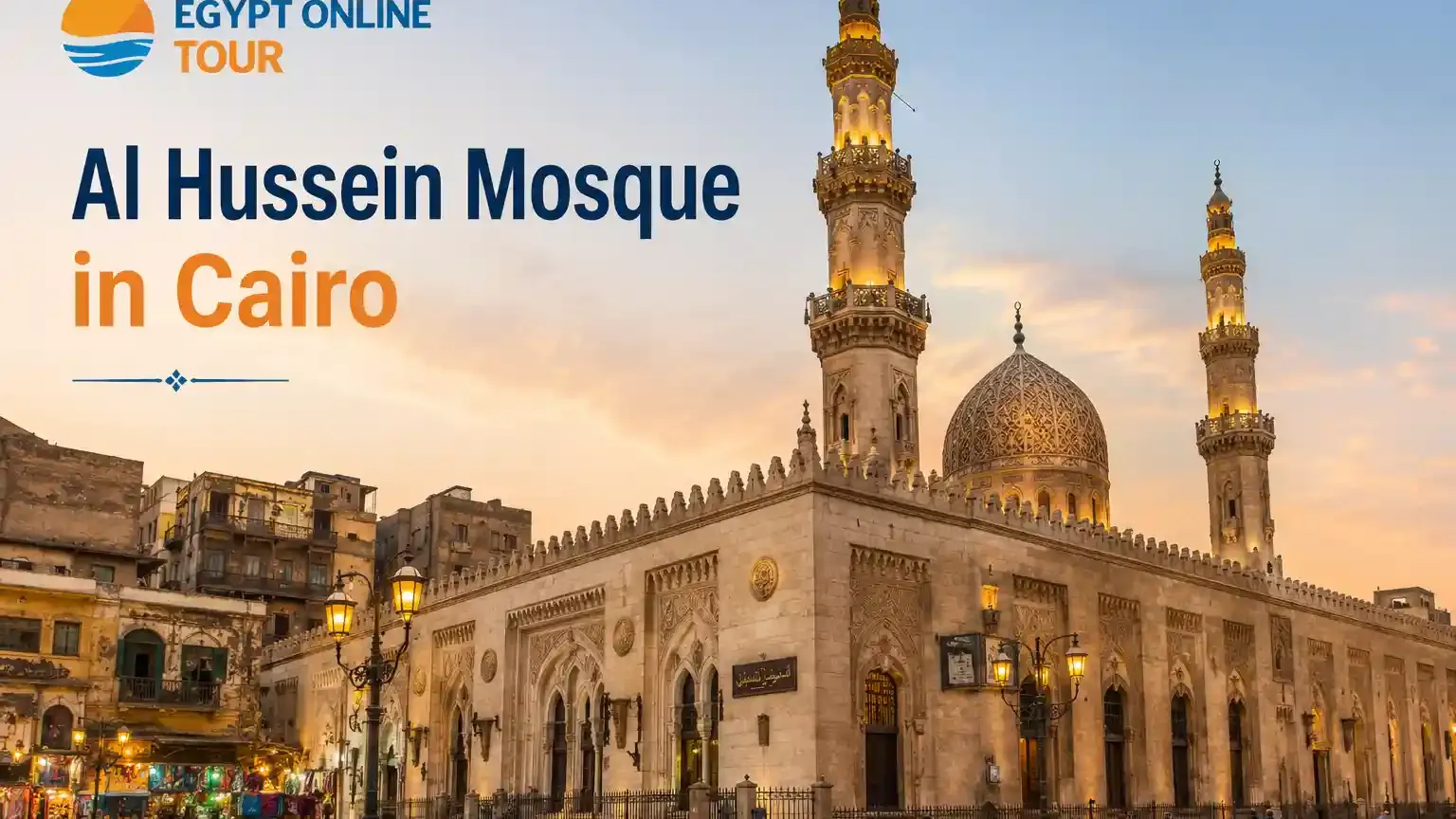
Al Hussein Mosque in Cairo is a historic mosque and active shrine in the heart of Islamic Cairo, beside Khan el-Khalili and near Al-Azhar Mosque. For visitors, it is more than a landmark beside the market. It is a living religious site where prayer, local life, cafés, shops, and Islamic heritage meet in one busy historic square. Plan your visit around prayer times, modest dress, respectful behavior, and nearby Islamic Cairo routes.
The mosque is an active Fatimid-era shrine in Islamic Cairo beside Khan el-Khalili and near Al-Azhar. Most visitors need 20 to 40 minutes for the mosque, or 2 to 3 hours with the surrounding area.
Quick facts
History of Al Hussein Mosque in Cairo
The mosque was first established during the Fatimid era, giving it deep roots in Islamic Cairo’s history. Egypt’s State Information Service records that it was built in 549 AH / 1154 AD under the supervision of the Fatimid minister Al-Salih Tala’i.
The mosque is linked to Imam Hussein ibn Ali, the grandson of Prophet Muhammad. Egyptian tradition connects the site with Imam Hussein, while historical accounts about the burial of the head differ. For this reason, visitors should understand the shrine’s religious meaning with respect and avoid treating sacred tradition as a simple museum fact.
From a practical Cairo tour-planning view, the mosque works best after Al-Azhar Mosque or before Khan el-Khalili. This route helps visitors understand how the area became both a spiritual center and a busy commercial district.
For a wider Islamic Cairo history route, visitors can also combine this area with Salah El Din Citadel on a longer cultural day.
Why Is Al Hussein Mosque Important?

Al Hussein Mosque in Cairo is important because it brings together faith, Islamic heritage, local life, and the identity of Historic Cairo in one place.
For many Egyptians, Al Hussein Mosque carries a strong spiritual meaning because of its connection to Ahl al-Bayt, the family of Prophet Muhammad. For travelers, it offers a rare chance to see a religious landmark that still shapes daily life around Khan el-Khalili.
Visitors include the mosque in a Cairo route because it:
- Connects Fatimid history with modern Egyptian religious life.
- Sits beside Khan el-Khalili, one of Cairo’s most famous markets.
- Adds useful context before visiting Al-Azhar Mosque, El Moez Street, or the Citadel.
- Shows how prayer, trade, cafés, and local family visits meet in one historic square.
- Feels especially atmospheric during Ramadan evenings and major religious occasions.
Learn more about: How many days do you need in Cairo
Who should visit?
This mosque is ideal for travelers interested in Islamic history, architecture, religious heritage, photography, and authentic local life beyond Cairo's pharaonic sites.
When Was the Al Hussein Mosque Built?
Al Hussein Mosque in Cairo was first built in 549 AH / 1154 AD during the Fatimid era. However, the mosque visitors see today includes later repairs, expansions, and restoration work. This is common in Cairo’s active historic mosques, where buildings continue to serve worshippers while preserving older layers.
This history helps visitors avoid a common mistake: expecting the mosque to look like one untouched medieval building. Many historic mosques in Cairo survived because people continued to use, repair, and renew them over time.
Architecture of Al Hussein Mosque in Cairo

The mosque combines Islamic Cairo character with later restoration work, so visitors should look at both the building and the square around it.
Official Egyptian sources describe three white marble doors overlooking Khan el-Khalili and another door beside the dome known as the Green Gate. These details help visitors understand how the mosque connects visually and historically with one of Cairo’s busiest heritage areas.
The experience starts before you enter. The square outside is part of the visit. You may see worshippers, families, perfume shops, cafés, bookshops, and visitors moving between the mosque and Khan el-Khalili.
Inside, the atmosphere feels quieter and more serious. Expect prayer rows, carpets, calm movement, and a stronger devotional mood near the shrine area.
From a visitor’s point of view, the mosque’s architecture is not only about doors, domes, and marble. Its real value appears when you see how the building, the square, and Khan el-Khalili work together in daily Cairo life.
Where Is Al Hussein Mosque Located?
Al Hussein Mosque in Cairo is located in Islamic Cairo, beside Khan el-Khalili and close to Al-Azhar Mosque. The area is commonly known as Al-Hussein or Midan Al-Hussein.
This location makes the mosque easy to combine with nearby Islamic Cairo landmarks. You can visit the mosque, walk through Khan el-Khalili, see Al-Azhar Mosque, or continue toward El Moez Street depending on your time and energy.
In busy Cairo routes, keeping these nearby sites together usually saves visitors time and keeps the visit more relaxed.
Learn more about: Famous Mosques in Cairo
Visiting Al Hussein Mosque in Cairo

Al Hussein Mosque in Cairo is an active religious site, so plan your visit around respect first and sightseeing second.
Most travelers need 20 to 40 minutes for the mosque itself. However, if you also want to explore Khan el-Khalili, drink tea in the square, or walk to Al-Azhar Mosque, allow 2 to 3 hours for the wider area.
If you are visiting Egypt for the first time, this area is easier to enjoy when you give it enough time instead of rushing it between distant Cairo attractions.
How Long Do You Need?
Use this table to choose the right visit style before planning the rest of your Cairo day.
Best Visit Order
For a smoother visit, follow this simple order:
- Start outside in Al-Hussein Square to understand the mosque’s setting.
- Check the entrance rules before moving closer to prayer areas.
- Remove your shoes if you enter permitted mosque spaces.
- Keep your voice low and avoid taking photos of worshippers.
- End with Khan el-Khalili or Al-Azhar Mosque if you have enough time.
Many visitors focus only on the mosque, but Al Hussein Mosque and Al-Hussein Square should be experienced together to understand the area’s full spiritual and cultural atmosphere. The mosque shows the spiritual side of the area, while Khan el-Khalili shows its social and commercial life. Visiting one without understanding the other makes the route feel incomplete.
What to Expect During Your Visit
Expect:
- Security or entry checks at busy times.
- Shoe removal before prayer areas.
- Possible limits around the shrine area.
- More crowds on Fridays, Ramadan evenings, and religious occasions.
- Changing photography rules depending on the area and crowd level.
From our local guiding experience, the area around the main entrances can become much busier after afternoon prayer and on Ramadan evenings. If Al-Hussein Square feels crowded, do not rush toward the entrance. Step aside, follow staff guidance, and wait a few minutes until the movement becomes easier.
This short pause often makes the visit calmer, especially for families, elderly travelers, and first-time visitors who may feel overwhelmed by the movement around the square.
Can Non-Muslims Visit Al Hussein Mosque?
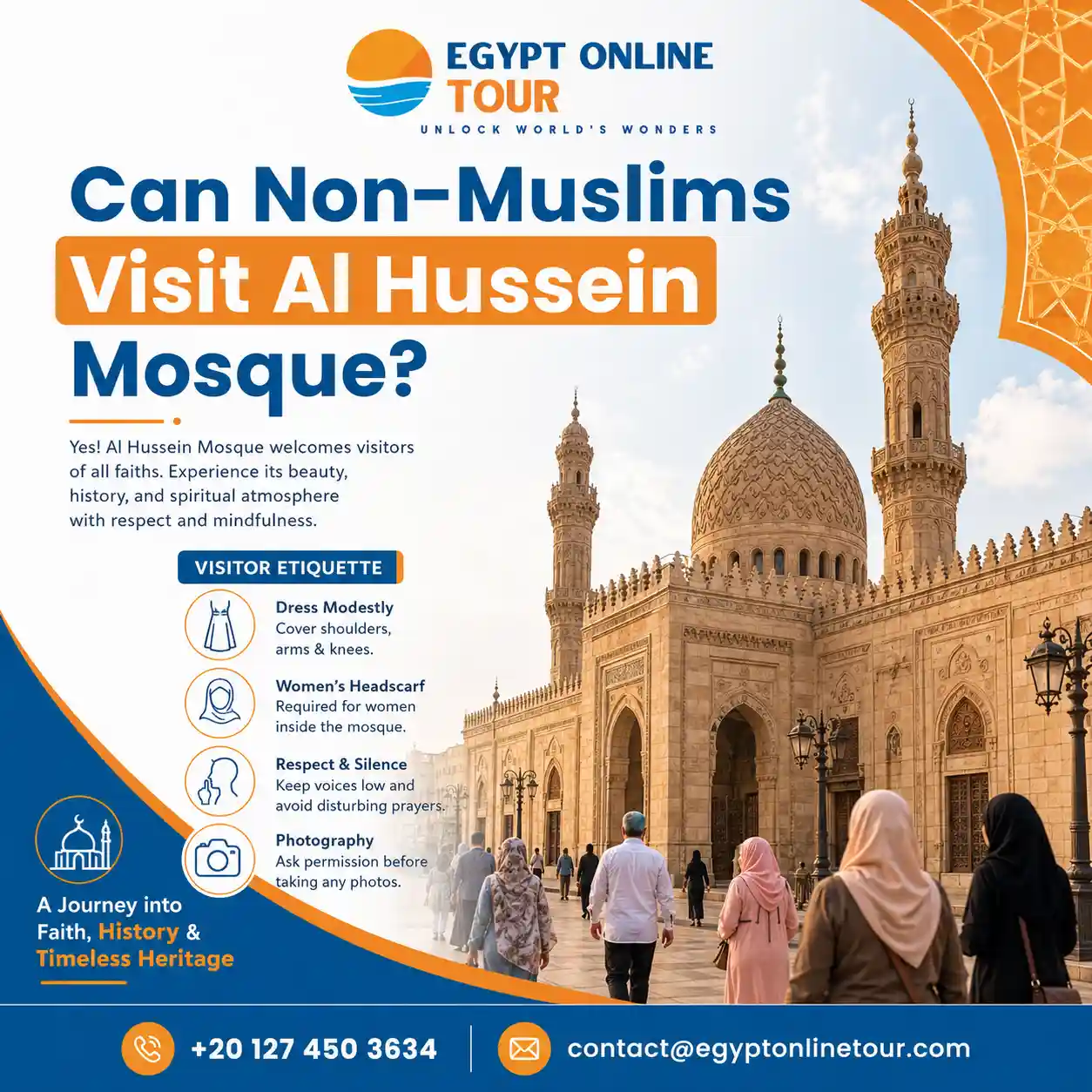
Non-Muslim visitors may be able to visit parts of Al Hussein Mosque in Cairo, but access depends on prayer times, crowd levels, staff guidance, and the sensitivity of the area.
This is a working mosque, not a normal tourist attraction. Therefore, the safest approach is to dress modestly, avoid Friday noon prayer, ask politely before entering sensitive areas, and follow staff instructions.
Do:
- Enter quietly.
- Remove your shoes where required.
- Keep your phone silent.
- Ask before taking photos.
- Avoid walking in front of people praying.
- Step back if the space becomes crowded.
Avoid:
- Visiting during Friday noon prayer for sightseeing.
- Taking close photos of worshippers.
- Entering the shrine area loudly.
- Wearing shorts, sleeveless tops, or revealing clothes.
- Treating the visit as a quick photo stop.
Religious Celebrations at Al Hussein Mosque
Al Hussein Mosque in Cairo becomes especially active during Ramadan, Friday prayer, Mawlid season, and religious gatherings linked to Imam Hussein.
Ramadan evenings can be beautiful but busy. Families gather after iftar, shops stay open late, lights fill the square, and the mosque becomes part of a wider social and spiritual scene.
From our Cairo guiding experience, travelers enjoy the area more when they choose the right timing for their goal. Ramadan gives a strong atmosphere, but a normal weekday morning is easier for a first visit.
For photos, calm movement, and easier access, choose a weekday morning. After sunset, the square feels more atmospheric with lights, cafés, and local energy, but crowds are more likely.
Planning a wider Egypt trip during the holy month? Read our guide: Is Ramadan a Good Time to Visit Egypt?
Best Time to Visit Al Hussein Mosque

The best time to visit Al Hussein Mosque in Cairo is a weekday morning if you want a calmer visit, or late afternoon if you want more atmosphere around Al-Hussein Square and Khan el-Khalili.
Seasonal advice:
- October to April: best walking weather.
- May to September: visit early or late because the lanes can be hot.
- Ramadan: visit with a guide if you want cultural context and smoother timing.
- Public holidays: expect more Egyptian visitors and slower movement.
Weekday mornings work best for a first visit because movement is easier, the area feels calmer, and visitors can continue to Khan el-Khalili or Al-Azhar without rushing.
Know more about the best Months to Visit Egypt
Dress Code and Visitor Etiquette
Al Hussein Mosque in Cairo requires modest clothing and calm behavior because it is an active place of worship, not a normal tourist attraction.
Women should wear loose clothing that covers the shoulders, arms, and legs. Carry a scarf in case you are asked to cover your hair. Men should wear long trousers and a shirt with sleeves.
Phone photography rules can change depending on crowd levels and staff guidance, especially near prayer areas. Ask first, avoid photographing worshippers, and stop immediately if security or mosque staff ask you to.
Do:
- Dress modestly before arriving.
- Keep your phone on silent.
- Move slowly near prayer areas.
- Follow staff guidance.
- Carry socks because you may need to remove your shoes before entering permitted prayer areas, and the mosque floor can feel cool during a longer visit.
Avoid:
- Shorts, sleeveless tops, or tight clothing.
- Loud talking inside the mosque.
- Blocking doorways or prayer rows.
- Taking photos of worshippers.
- Treating the visit like a normal photo stop.
How to Reach Al Hussein Mosque in Cairo
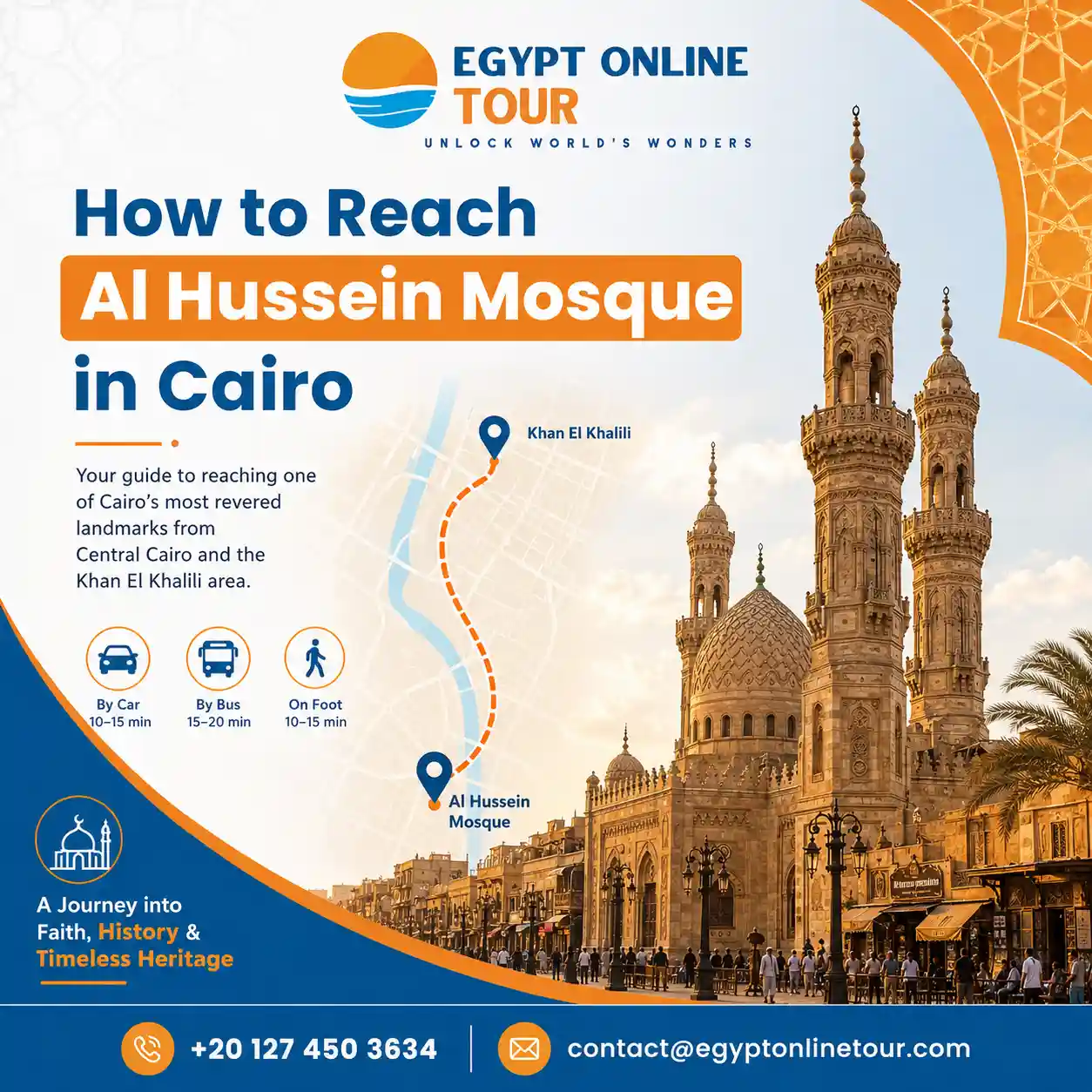
The easiest way to reach Al Hussein Mosque in Cairo is by private tour vehicle, ride-hailing car, taxi, or metro plus a short taxi ride, depending on your starting point and comfort level.
Traffic around Islamic Cairo can slow down in the afternoon. Drivers may not always drop you directly at the entrance, especially when Al-Hussein Square is crowded, so expect a short walk through busy streets.
Estimated travel times:
Private transport is usually the easiest choice for first-time visitors because pickup and drop-off can be tricky near Khan el-Khalili during busy hours.
Explore Al Hussein Mosque with a Local Guide
Al Hussein Mosque in Cairo is easier to understand with a local guide because the value of the visit is not only in the building. The real story is in the connection between the mosque, Al-Azhar, Khan el-Khalili, Fatimid Cairo, and daily religious life.
A good guide helps you:
- Understand the Fatimid background.
- Know where to stand without disturbing worshippers.
- Visit at a better time.
- Connect the mosque with Al-Azhar and El Moez Street.
- Avoid wasting time in traffic or crowded lanes.
- Respect local customs without feeling unsure.
Check our Old Cairo Tour Packages
Suggested Half-Day Route
This route works well for first-time visitors who want a calm Islamic Cairo visit without rushing between distant sites.
Best Tour Combinations
Choose the tour combination based on your time, energy, and interest in Islamic Cairo.
If your route includes the Citadel, you can also visit the Mosque of Muhammad Ali as part of a longer Islamic Cairo day.
Costs, Access, and Visitor Expectations

There is usually no standard sightseeing ticket for the mosque, but donation customs or access rules can change. Ask locally and follow staff guidance before entering sensitive areas.
Budget for the wider area, not only the mosque:
Visitor expectation: this is not a quiet museum route. The area can be noisy, crowded, spiritual, commercial, and beautiful at the same time. That contrast is part of the real Al-Hussein experience.
Unlike a museum visit with fixed routes and tickets, Al Hussein Mosque is a living religious site where your experience depends on prayer times, local activity, and respectful behavior.
May you need to read: How Much Does It Cost to Go to Egypt
Common Mistakes to Avoid
The biggest planning mistake is treating the mosque and Khan el-Khalili as a quick add-on after a full day at the Pyramids or museums. The area deserves energy, time, and respectful attention.
Final Planning Tips
Before visiting, decide what kind of experience you want: a short religious heritage stop, a mosque-and-market walk, or a deeper Islamic Cairo route.
If you prefer a planned route with transport and a guide, explore our Cairo Day Tours before choosing your visit time.
This choice affects your timing, clothing, transport, and need for a guide.
For most first-time visitors, the best order is:
- Start with Al-Azhar Mosque.
- Continue to Al-Hussein.
- Explore Khan el-Khalili.
- Add El Moez Street if you have more time and energy.
This route keeps the day logical, reduces backtracking, and helps visitors understand the religious and social layers of Islamic Cairo.
Learn about: 5 Days Cairo Tour package
Before You Visit
- Dress modestly.
- Carry socks if you plan to enter prayer areas.
- Avoid Friday noon if your goal is sightseeing.
- Keep enough time for Khan el-Khalili.
- Follow staff guidance if access rules change.
Conclusion
Al Hussein Mosque in Cairo is one of the most meaningful stops in Islamic Cairo for travelers who want more than a market visit. It brings together faith, history, architecture, local life, and easy access to Khan el-Khalili.
For the best experience, visit with modest clothing, choose your timing carefully, and leave enough time for the surrounding square. A good route usually combines the mosque with Al-Azhar Mosque, Khan el-Khalili, and, if time allows, El Moez Street. For many first-time visitors, this part of Islamic Cairo becomes one of Cairo’s most memorable walks because it combines living faith, history, and everyday Egyptian life.
If this is your first visit, go on a weekday morning for easier movement. If you want stronger atmosphere, choose late afternoon or evening, but expect more crowds.
Last updated: July 2026. Mosque access, photography rules, prayer-time restrictions, and crowd levels can change, especially on Fridays, during Ramadan, and around major religious celebrations.