
What is there to do in Luxor? Above all, see ancient Thebes: the temples of Karnak and Luxor on the East Bank, and on the West Bank the Valley of the Kings, the temple of Hatshepsut, Medinet Habu and the Colossi of Memnon. Add a hot-air balloon flight at sunrise, a felucca on the Nile at sunset and an evening at Luxor Temple when it is lit up, and you have the classic two days in Luxor.
Luxor holds a larger share of Egypt's great monuments than any other city, and our Egyptologists live and work here. Below are the 15 things we recommend, grouped by bank, with the official ticket prices, a 48-hour plan and practical advice for evenings, dress and safety.
Luxor in brief: East Bank and West Bank
The Nile divides Luxor in two. The East Bank, the side of the rising sun, is the modern city with the temples of the living gods: Karnak, Luxor Temple, the museums, the Corniche, the souq and most hotels. The West Bank, the side of the setting sun, was the land of the dead: royal tombs, memorial temples and the villages of farmers and alabaster carvers. A bridge south of town and public ferries in the centre connect the two.
Things to do on the East Bank
1. Karnak Temple
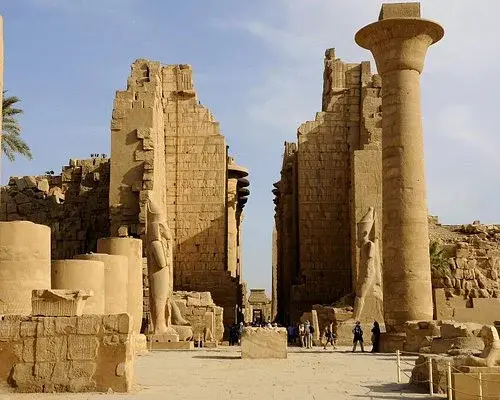
The largest temple complex of ancient Egypt, built and rebuilt over some 2,000 years. Walk through the Great Hypostyle Hall with its 134 columns, see Hatshepsut's standing obelisk and the sacred lake. Allow two to three hours and go at opening time. Read our facts about Karnak.
2. Luxor Temple, by day or by night
In the middle of town, Luxor Temple was built mainly by Amenhotep III and Ramesses II. It is open into the evening and lit after dark, which makes a visit around sunset the most atmospheric. One obelisk still stands at the entrance; its twin has been in the Place de la Concorde in Paris since 1836. See when Luxor Temple was built.
3. The Avenue of Sphinxes
The 2.7-kilometre processional road between Luxor Temple and Karnak, lined with sphinxes, was fully reopened in 2021. You see its start at Luxor Temple; walking a section at sunset is a pleasant way to connect the two temples.
4. Luxor Museum
A small, beautifully lit museum on the Corniche with some of the finest statues found in Luxor, including the Luxor Temple cachette, and two royal mummies. Allow an hour, ideally in the late afternoon.
5. Karnak sound and light show
An evening walk through Karnak with lights and a recorded narration, ending at the sacred lake. Shows run in several languages in rotation; check the language schedule before you book.
Things to do on the West Bank
6. The Valley of the Kings
The burial ground of the New Kingdom pharaohs. The general ticket includes three tombs of your choice from those open that day; Tutankhamun and Seti I need extra tickets. Our guide to the best tombs in the Valley of the Kings helps you choose.
7. The temple of Hatshepsut at Deir el-Bahari
The terraced memorial temple of Egypt's most famous female pharaoh, set against a curve of cliffs. Come early: by noon the terraces are very hot. See the mortuary temple of Hatshepsut.
8. Medinet Habu
The memorial temple of Ramesses III, with some of the best-preserved colours of any temple in Egypt and far fewer visitors than Karnak. Our guides' favourite. Read about Medinet Habu.
9. The Colossi of Memnon
Two 18-metre statues of Amenhotep III, all that stands of his vast memorial temple. A short free stop on the way to or from the valley. See the Colossi of Memnon.
10. Deir el-Medina and the Tombs of the Nobles
The village of the craftsmen who cut the royal tombs, with their own small, colourful family tombs, and the nearby tombs of officials, painted with scenes of daily life. Ideal for a second West Bank day. See Deir el-Medina.
11. The Ramesseum
The memorial temple of Ramesses II, with the toppled colossus that inspired Shelley's poem "Ozymandias".
Experiences beyond the monuments
12. A hot-air balloon flight at sunrise
Balloons take off from the West Bank at dawn and float for about 45 minutes over the temples, villages and fields. Flights depend on the wind and are cancelled when it is too strong. Read is a balloon ride in Luxor worth it?
13. A felucca at sunset
A traditional sailing boat for an hour or two on the Nile, often to Banana Island. Agree on the price and the duration before you board.
14. A bicycle or donkey ride through the West Bank villages
The roads between the sugarcane fields and mud-brick houses are flat and quiet in the early morning.
15. The souq and the Corniche
The tourist market behind Luxor Temple sells spices, scarves and alabaster; bargain with a smile. The Corniche promenade is lively in the evening with families and horse carriages.
Further afield, Dendera and Abydos make a long day trip north, and Edfu and Kom Ombo lie on the road south to Aswan. If you are staying in Aswan instead, our private Luxor day trip from Aswan covers the West Bank, Karnak and Luxor Temple. A 4-night cruise from Luxor on a deluxe-class ship such as Salima stops at both on Day 3. Read our Temple of Abydos guide.
Luxor ticket prices (official, 2026)
| Site | Foreign adult | Foreign student |
|---|---|---|
| Valley of the Kings (3 tombs) | EGP 750 | EGP 375 |
| Tomb of Tutankhamun (extra) | EGP 700 | EGP 350 |
| Tomb of Seti I (extra, when open) | Separate, high-priced ticket; not on the official list | |
| Karnak Temple | EGP 600 | EGP 300 |
| Luxor Temple | EGP 500 | EGP 250 |
| Temple of Hatshepsut | EGP 440 | EGP 220 |
| Luxor Museum | Separate ticket; check at the museum | |
| Medinet Habu, Ramesseum, Deir el-Medina | Separate ticket each; check at the West Bank ticket office | |
| Colossi of Memnon | Free (roadside site) | |
The prices shown are from the official monuments site of the Ministry of Tourism and Antiquities, which we last checked on 5 November 2026; it gives the Valley of the Kings, Karnak and Hatshepsut hours as 6:00 to 17:00 and Luxor Temple as 6:00 to 20:00. Sites without a figure have no current official price online, so we do not quote one. Most ticket offices take cards only. A multi-day Luxor Pass has been sold for long stays; ask your guide whether it is on sale and worth it for your plan. The tomb of Nefertari in the Valley of the Queens is often closed or sold at a high separate price; check before you go.
Can you see Luxor in one day?
You can see the highlights in one long day: West Bank in the morning (Valley of the Kings, Hatshepsut, Colossi), lunch, then Karnak in the afternoon and Luxor Temple at sunset. It is tiring, especially from May to September. Two days is much better, and three lets you add Medinet Habu, the nobles' tombs and the museum. See how many days you need in Luxor.
How to spend 48 hours in Luxor
| Time | Day 1: West Bank | Day 2: East Bank |
|---|---|---|
| Dawn | Balloon flight (optional) | Early walk or breakfast by the Nile |
| Morning | Valley of the Kings, then Hatshepsut | Karnak Temple at opening |
| Midday | Lunch on the West Bank; rest | Lunch and rest |
| Afternoon | Medinet Habu, Colossi of Memnon | Luxor Museum |
| Evening | Felucca at sunset | Luxor Temple lit up, then the souq or the sound and light show |
What to do in Luxor at night
- Visit Luxor Temple after dark.
- Watch the Karnak sound and light show.
- Walk the Corniche or take a short evening felucca.
- Have dinner on a Nile-view terrace or a rooftop facing Luxor Temple.
- Browse the souq, which stays open late.
Our article on how to spend a night in Luxor has more ideas.
Is it safe to walk around Luxor at night?
Yes, in the centre: the Corniche, the area around Luxor Temple and the souq are busy and well lit until late. The main nuisance is persistent touts offering carriages, boats and shops. A firm "la, shukran" (no, thank you) and walking on usually works. Agree on prices before any ride, use your hotel or a ride-hailing app for taxis, and keep valuables in a front pocket in crowds.
Where to stay in Luxor
- East Bank, on the Corniche: the most convenient, close to Luxor Temple, restaurants and the souq. Our packages use hotels such as the Sofitel Winter Palace, the Steigenberger Nile Palace and the Sonesta St. George Luxor.
- West Bank: quiet guesthouses among the fields, close to the tombs; good for a slower stay.
- A Nile cruise: most cruises between Luxor and Aswan moor in Luxor for one or two nights and include the main sights. On our 11-day Cairo and Oberoi Zahra Nile cruise, you board in Luxor and add Dendera, Deir el-Medina and the Tombs of the Nobles.
What to wear in Luxor
Shorts are acceptable at the sites and in tourist areas, but loose clothing that covers shoulders and knees is more comfortable in the sun and more respectful in town and in the villages. Wear a hat, sunglasses and closed shoes; carry water. In winter, mornings and evenings are cool, so bring a light jacket, especially for a balloon flight.
Are there pyramids in Luxor?
No large ones. The New Kingdom kings buried in Thebes chose hidden rock-cut tombs in the Valley of the Kings, below a natural pyramid-shaped peak called el-Qurn. The craftsmen of Deir el-Medina did build small mud-brick pyramids over their family tombs, which you can see there.
Where to eat in Luxor
Luxor's food is simple and good: grilled meat and pigeon, stuffed vegetables, molokhia, fresh bread and Nile fish. Where you eat depends on the bank:
- East Bank, around Luxor Temple and the souq: rooftop restaurants facing the temple, which is lit after dark, and traditional restaurants in old houses in the streets behind the souq. Good for dinner after an evening visit.
- The Corniche and the hotels: Nile-view terraces and the restaurants of the big hotels, the place for a quiet drink or a special dinner.
- West Bank: family-run restaurants among the fields and by the ferry landing, with set meals of Egyptian dishes; our guides' usual lunch stop between the tombs and Medinet Habu.
- Street food: ful and ta'meya for breakfast, koshary at lunch, fresh sugarcane juice in the souq.
Alcohol is served in hotels and in some tourist restaurants, not in local places. Ask your guide or hotel for current favourites: small restaurants change often.
Why do tourists go to Luxor?
Because nowhere else in Egypt has so many great monuments so close together. Thebes was the religious capital of Egypt for most of the New Kingdom, roughly 1550 to 1070 BC, when Egypt was at the height of its wealth, and its kings poured that wealth into temples for Amun and tombs for themselves. UNESCO lists Ancient Thebes with its necropolis as a World Heritage site. Within a radius of a few kilometres you find the largest temple complex of the ancient world, the royal tombs and the best-preserved memorial temples, and the town itself is small enough to feel relaxed.
Luxor with children
Luxor works well for families when the days are short. Start early, visit one big site in the morning, rest at the hotel pool at midday and go out again for the evening. Children usually love the balloon (check the operator's minimum age), the felucca to Banana Island, a donkey ride on the West Bank and the tomb of Tutankhamun, small as it is. Give them a mission: find the obelisk, count the columns of the hypostyle hall, spot the cartouche of Ramesses II.
Plan it with us
Our Luxor West Bank private day trip covers the Valley of the Kings, Hatshepsut and the Colossi with an Egyptologist, the hot-air balloon tour starts your day over the temples, and you find the rest among our Luxor day tours.
Luxor: quick answers
What is Luxor best known for?
The monuments of ancient Thebes: Karnak and Luxor Temple on the East Bank, the Valley of the Kings and the memorial temples on the West Bank.
How many days do you need in Luxor?
Two days for the main sights, three to add Medinet Habu, the nobles' tombs and the museum at a relaxed pace.
What is there to do in Luxor with children?
A balloon flight (for children old enough), a felucca to Banana Island, a donkey or bicycle ride on the West Bank, and short visits to Karnak and the Valley of the Kings.
Ahmed Samir writes and updates the Egypt travel guides of Egypt Online Tour, a licensed tour company based in Cairo (ETAA licence 1466). Our travel advisors review each guide before it is published.
All guides by Ahmed Samir