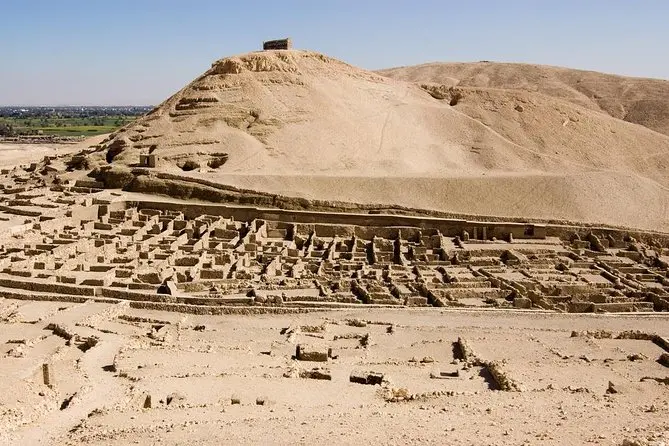
Deir el-Medina was home to the artisans who built Egypt’s royal tombs. But who were these people behind the beauty of the Valley of the Kings? This ancient village near Luxor still holds its homes, prayers, and writings, frozen in time. Walk its narrow paths, and you’ll see how real families lived, worked, and dreamed in the heart of ancient Egypt, a story more human than royal.
Deir el‑Medina (Valley of the Artisans): Where Ancient Egypt Speaks
Most ancient Egyptian sites show kings, gods, and grandeur. Deir el‑Medina shows people. It’s where real workers lived, worked, and died—those who built the royal tombs nearby.
This small village, hidden in the hills near Luxor, opens a window to daily life during Egypt’s New Kingdom. You walk where artists walked. You read their jokes, their pay slips, and their love notes.
This isn’t mythology. It’s real history, written by those who lived it.
Where Is Deir el‑Medina?
- Located on the west bank of the Nile, opposite Luxor
- Nestled between the Valley of the Kings and the Valley of the Queens
- Built near the tombs, the workers served
- Easily reached by car or part of any West Bank tour
- Surrounded by rocky cliffs, giving it both privacy and purpose
The site was chosen for function and secrecy. It let artisans work close to the kings’ tombs while keeping their tasks hidden from outsiders.
Read about: Siwa Oasis travel tips
Why Visit Deir el‑Medina?
1. See How Ancient Egyptians Lived
- The village had around 68 houses, arranged along a narrow street.
- Here, you find kitchens, tools, beds, and walls covered in notes. It’s one of the best-preserved examples of community life in ancient Egypt.
2. Step Inside Personal Tombs
- The workers made tombs for themselves, not just for pharaohs.
- These are smaller, more personal, and often better preserved.
- They show family scenes, dreams of the afterlife, and daily rituals in vivid colors.
3. Explore the Temple of Hathor
- This temple served the spiritual life of the village.
- Later, it became a Christian monastery, giving the place its modern Arabic name: Deir el‑Medina, or “Monastery of the City.
- Its walls reflect different chapters of Egyptian religious history.
4. Read Their Real Words
Thousands of ostraca, bits of pottery, and limestone carry records:
- Work schedules
- Wages
- Lawsuits
- Marriage arguments
- The world’s first recorded labor strike, under Ramesses III
These records are rare and deeply personal. They let you hear ancient voices, not just see monuments.
What Makes Deir el‑Medina Different?
| Feature | Why It Matters | What You’ll See |
| Daily Life Ruins | Real homes instead of temples | Kitchens, tools, and furniture remain |
| Private Tombs | Built by the artisans for themselves | Colorful wall scenes of family and worship |
| Written Records | Real thoughts and stories | Ostraca, graffiti, and personal notes |
| Temple of Hathor | Faith and art in one site | Blend of Pharaonic and Christian symbols |
| Quiet Setting | Peaceful and reflective visit | Calm paths between ancient homes |
Read about: How to Plan a Trip to Cairo Egypt
What You’ll Feel Here
You don’t just look at Deir el‑Medina. You connect with it.
- Stand where a man once argued over a loaf of bread.
- Read about a worker who was not paid on time.
- Follow narrow paths between mudbrick homes that still stand.
It’s not about grandeur. It’s about people.
That’s what makes Deir el‑Medina one of the most meaningful sites in all of Egypt.
Plan Your Visit
- Best combined with: Valley of the Kings, Valley of the Queens, Ramesseum
- Ideal for: History lovers, repeat visitors, those seeking depth beyond famous tombs
- Time needed: 1–2 hours
- Best time to visit: Early morning or late afternoon for cooler air and fewer visitors
Deir el‑Medina is where ancient Egypt becomes personal. Not through gold, but through handwriting. Not through gods, but through workers.
If you want more than a tourist site, if you want to meet real people from 3,000 years ago, this is where to go.
Choose Egypt Budget Tours for a journey of comfort, elegance, and unforgettable moments.
Tickets and Opening Hours
If you plan to visit Deir el-Medina, it helps to know the ticket prices and visiting times in advance. I will give you all the key details to plan your day well. Since the site is part of the Luxor West Bank route, timing your visit can help you enjoy more and avoid crowds.
Current Ticket Prices and Passes (2025)
Ticket rates depend on your visitor type and the season.
It’s best to confirm prices at the entrance or official tourism sites before you go.
| Ticket Type | Price (EGP) | Includes |
| General Admission | 220 | Entry to the Deir el-Medina site |
| Student Ticket | 110 | 50% discount with a valid student ID |
| Tomb of Pashedu Add-on | 120 (Adults) / 60 (Students) | Access to one of the best-preserved artisan tombs |
| Luxor Pass (Standard) | 2400 | Access to all major West Bank sites for 5 days |
| Luxor Pass (Premium) | 4400 | Includes Nefertari and Seti I tombs |
| Children (under 6) | Free | Must be with an adult guardian |
Tips:
- You can buy tickets at the entrance or through an approved guide.
- The Luxor Pass is ideal if you plan to visit multiple sites in one trip.
- Always carry cash, as some ticket booths may not accept cards.
The extra time allows you to explore hidden corners, meet locals, and rest under endless skies, just like you would when discovering coastal calm in how to spend a week in Dahab, Egypt .
Seasonal Opening Hours
The site opens daily, but the schedule changes slightly with the season.
Early morning visits are best to enjoy cooler air and soft light for photography.
| Season | Opening Time | Closing Time | Notes |
| Winter (Oct–Apr) | 6:00 AM | 5:00 PM | Comfortable weather for walking |
| Summer (May–Sep) | 6:00 AM | 6:00 PM | Hottest hours between 12–3 PM |
| Ramadan | 9:00 AM | 3:00 PM | Shorter hours; plan ahead |
| Last Entry | — | 1 hour before closing | Strictly enforced |
Additional Advice:
- Fridays and holidays may be busier; arrive early.
- Always check the latest timing updates from the Ministry of Tourism.
- Carry water, sunscreen, and a hat—shade is limited inside the site.
Visiting Deir el-Medina early ensures a calm experience and better light for photos. With these simple details in mind, you can plan your visit smoothly and enjoy one of Egypt’s most historic and fascinating sites.
Explore Egypt’s treasures with our Egypt Classic Tours , featuring tailored options for memorable and unique experiences. Reserve your Egypt tour package today and begin your adventure!
How to Get to Deir el-Medina: Your Simple 2025 Guide
Getting to Deir el-Medina is easy and enjoyable when you plan ahead. This site lies on Luxor’s West Bank, near the Valley of the Kings.
You can reach it by taxi, minibus, or private tour. Some travelers even rent bikes for the short ride from the ferry dock. Below are the best ways to reach the site and whether to go alone or with a guide. A little preparation helps you save time and enjoy your visit more.
From Luxor: West Bank Logistics
You’ll start your journey by crossing the Nile. There are two main ways to reach the West Bank—both simple and scenic.
Crossing the Nile
- Public Ferry: Costs around EGP 5 per person and takes about 10 minutes. It’s the cheapest and most authentic way to cross.
- Taxi via Bridge: The bridge is south of Luxor city. The drive takes around 30–40 minutes. It’s comfortable and ideal if you prefer door-to-door travel.
Reaching the Site
Once on the West Bank, Deir el-Medina is only a short ride away.
You can pick from several easy options:
| Mode of Transport | Time (One Way) | Approx. Cost (EGP) | Notes |
| Local Minibus | 20–30 minutes | 10–20 | Cheapest option, few stops, ask locals for directions |
| Taxi | 15–25 minutes | 100–150 | Fastest and most direct route |
| Private Tour Car | 15–20 minutes | Part of the tour | Air-conditioned, includes a guide |
| Rented Bicycle | 40–50 minutes | 50–100 | Best in winter, tiring in summer |
Tips:
- Always agree on the fare before starting your trip.
- Carry small cash for ferries or minibuses.
- Bring water, sunscreen, and a hat—shade is limited on the West Bank.
Read about: Is Cairo safe for American tourists
Guided Tours vs. Self-Guided Visits
Choosing how to explore Deir el-Medina depends on your travel style.
Both guided and self-guided visits offer something different.
| Feature | Guided Tour | Self-Guided Visit |
| Convenience | Everything is arranged for you | You manage your own transport |
| Knowledge | Expert guide shares stories and history | You rely on signs or research |
| Cost | Higher but includes extras | Budget-friendly and flexible |
| Flexibility | Fixed schedule | Total control of your time |
| Experience | Social and structured | Quiet and personal |
If you prefer learning from experts and skipping the logistics, a guided tour is ideal.
However, if you enjoy independence and exploring at your own rhythm, a self-guided visit fits better.
Final Travel Advice
- Visit early morning to avoid heat and crowds.
- Combine your trip with nearby sites like the Valley of the Kings or Medinet Habu.
- Keep your camera ready, the road from Luxor offers great Nile views.
Deir el-Medina is easy to reach, well-connected, and full of stories worth discovering. Whether you go with a guide or on your own, the journey is simple, and the reward unforgettable. Planning another trip? Discover the cheapest time to visit Egypt and enjoy more for less.
Let our local travel experts help you design the perfect itinerary. Whether you're seeking adventure, culture, or relaxation, we've got you covered!
Top Things to See at Deir el-Medina: A 2025 Visitor’s Guide
Deir el-Medina is not just another ancient site. It’s where Egypt’s royal tomb builders once lived, prayed, and painted their own dreams of eternity.
I help you explore its most fascinating spots and truly see how these artisans shaped both art and life.
The Village Ruins and Street Plan
- Walk along narrow alleys lined with mudbrick houses.
- The streets form a rare grid layout, showing early urban planning.
- You can still spot traces of plastered walls and ovens.
- Every corner reflects real daily life, cooking, working, and resting.
- Visit early morning for cooler air and fewer crowds.
Tomb of Sennedjem (TT1)
- One of Egypt’s most vividly painted tombs.
- The walls show family life and farming scenes under a bright blue sky.
- Colors remain strong despite being over 3,000 years old.
- It gives a personal glimpse into the hopes of the afterlife.
- Entry requires a separate ticket, but it’s worth every moment.
Tomb of Inherkhau (TT359)
- Known for fine brushwork and multi-room design.
- Inherkhau was a foreman of the royal necropolis, a respected title.
- Murals show gods like Osiris and Anubis, surrounded by prayers and tools.
- Don’t miss the painted ceiling, one of the finest examples of artisan art.
Tomb of Pashedu (TT3)
- Smaller in size, rich in religious meaning and symbols.
- Walls show Pashedu kneeling before the gods, asking for protection.
- Often quieter than other tombs, perfect for peaceful visits.
- Entry is sometimes included in combo tickets for the West Bank sites.
Temple of Hathor at Deir el-Medina
- Dedicated to Hathor, goddess of love and music.
- Built during the Ptolemaic period, later turned into a Christian monastery.
- Offers shade and rest in the afternoon heat.
- The carvings show priests, offerings, and rituals, capturing layers of faith.
Chapels and Household Shrines
- Each family built small chapels beside their homes.
- You’ll find altars and stelae used for private prayers and rituals.
- These spaces reflect the artisans’ personal devotion to gods and ancestors.
- Most are roofless now, but carvings still whisper stories of family worship.
Deir el-Medina Highlights at a Glance
| Site | Type | Key Features | Visit Tip |
| Village Street Plan | Ruins | Grid layout, preserved homes | Go early to avoid the heat |
| Tomb of Sennedjem (TT1) | Tomb | Bright family scenes, paradise art | Extra ticket required |
| Tomb of Inherkhau (TT359) | Tomb | Multi-room, fine ceiling art | Bring a small flashlight |
| Tomb of Pashedu (TT3) | Tomb | Peaceful, symbolic murals | Less crowded, quiet |
| Temple of Hathor | Temple | Mixed Pharaonic & Christian art | Rest stop at midday |
| Family Chapels | Shrines | Personal prayer altars | Look closely for carved symbols |
Deir el-Medina is more than ruins; it’s a living story carved by the hands of real people. Take your time as you walk through the streets, look at the walls, and listen to the silence.
Every painting, every stone, carries the voice of Egypt’s artisans, ordinary men who built eternal beauty.
Explore our Luxury Egypt Tours
History and Significance of Deir el-Medina
Deir el-Medina is more than an ancient settlement. It is the living record of Egypt’s artisans who built royal tombs and recorded their world with unmatched honesty.
Every wall and shard found here tells the story of real people behind the glory of the pharaohs.
Set-Maat The Place of Truth
- The village’s ancient name, Set-Maat, meant The Place of Truth.
- It was home to craftsmen who built and decorated the royal tombs in the Valley of the Kings and Queens.
- These workers called themselves Servants in the Place of Truth, showing devotion to both duty and faith.
- Because they worked on secret royal projects, the site remained isolated and protected.
- Over the centuries, the temple here was reused and became a Christian monastery, the origin of the name Deir el-Medina.
Life of the Artisans and Ostraca Records
- The artisans lived with their families in small stone and mudbrick homes.
- Their daily life was well-organized — work took place in two main shifts.
- Instead of coins, workers were paid with food, beer, and linen.
- They left behind thousands of ostraca, pottery shards covered in notes, sketches, and letters.
- These writings reveal family arguments, illness reports, wage records, and prayers.
- They even documented the first recorded labor strike during the reign of Ramesses III.
- The ostraca show an intelligent, literate community where art met personal expression.
New Kingdom to Ramesside Era Timeline
| Period | Years (BCE) | Major Rulers | Events at Deir el-Medina |
| 18th Dynasty | c. 1550 – 1292 | Thutmose I – Akhenaten | Village founded; tomb construction began |
| 19th Dynasty | c. 1292 – 1189 | Seti I – Ramesses II | Peak activity; most private tombs built |
| 20th Dynasty | c. 1189 – 1077 | Ramesses III – XI | Strikes, social tension, gradual decline |
To discover the best activities in Luxor, read this guide: Top Things to Do in Luxor.
Why It Matters
Through every dynasty, Deir el-Medina stayed unique, a true community of builders, thinkers, and writers. It preserves the human side of ancient Egypt, from devotion and labor to protest and creativity.
Today, its tombs, records, and homes still speak clearly of a world once alive with skill and belief.
For a deeper experience, take the Grand Egyptian Museum Tour and dive into its remarkable history.
Best Time to Visit Deir el-Medina
Deir el-Medina is a site that rewards good timing. The season, light, and crowd level can shape your whole experience.
Here’s a practical guide to help you plan your visit for comfort, clear photos, and calm exploration.
Best Time to Visit
- The ideal months to visit Deir el-Medina are October to April. The weather stays mild, the skies are clear, and walking through the site feels pleasant.
- March–April and October–November strike the perfect balance — warm enough for light travel yet free from heavy crowds.
- Avoid June to August. Temperatures rise above 40°C (104°F) and shade is limited. Even locals avoid exploring during midday hours.
- If you prefer quiet visits, come during shoulder months like September or May. You’ll find fewer tourists and lower accommodation prices.
- Plan to spend 1–2 hours inside the site to explore the village, tombs, and the Temple of Hathor without rushing.
To explore Egypt’s rich religious heritage, join the 15-Day Egypt Holy Family Tour.
Weather and Crowd Tips
- Early mornings are cooler and perfect for peaceful walks.
- Afternoons bring more visitors and stronger heat.
- Weekdays are calmer; weekends attract more local tourists.
- Rain is rare, expect dry, sunny weather year-round.
- Arrive before 9 AM to enjoy quiet time inside the tombs.
Many travelers combine Deir el-Medina with the nearby Valley of the Kings or Medinet Habu, so visiting early helps you avoid queues and crowds.
Photography Light and Heat Avoidance
- The best light comes between 6:00 AM and 9:00 AM, and again after 4:00 PM. Soft sunlight brings out the warm tones of the murals and carvings.
- Avoid shooting under the midday sun; harsh glare hides detail.
- Use shaded walls and narrow alleys to reduce contrast in photos.
- Bring a hat, sunscreen, and water; there’s little shelter on-site.
- A small reflector or lens hood helps control reflections inside tombs.
- For detailed shots, a tripod or phone stabilizer adds clarity.
Read about: How to Enjoy a Classic Holiday in Egypt
Best Visiting Times and Photography Tips
| Aspect | Best Time | Key Tips |
| Weather | October to April | Cool and clear days, perfect for walking |
| Crowd Levels | Early morning, weekdays | Avoid weekends and midday peak hours |
| Lighting for Photos | Early morning, late afternoon | Soft golden light enhances mural colors |
| Heat Protection | Always | Bring a hat, water, and sunscreen; shade is limited |
| Visit Duration | 1–2 hours | Enough time to see tombs, temples, and village ruins |
Quick Travel Advice
- Wear comfortable shoes; paths are uneven.
- Bring cash for entry tickets and small purchases.
- Combine your trip with the nearby Valley of the Queens for a full West Bank day.
- Local guides can share stories about the workers’ lives and the meanings behind the art.
Deir el-Medina is best enjoyed when the air is cool and the light is soft. Choose your time wisely, arrive early, and you’ll see the ancient colors still glowing after 3,000 years. A morning at Deir el-Medina feels like stepping into the heart of Egypt’s true working world, quiet, skillful, and full of life.
Read about: How many days do you need in Cairo
Let our local travel experts help you design the perfect itinerary. Whether you're seeking adventure, culture, or relaxation, we've got you covered!
Visit Duration and Routes: Your Complete Guide to Deir el-Medina
Your time at Deir el-Medina can be short and focused or long and immersive. Whether you prefer a quick tour or a deeper walk through history, the routes below suit both.
Each path helps you explore the most important sites while keeping your visit comfortable and memorable. The duration depends on your pace, curiosity, and how long you wish to reflect among the ruins.
Read: Is Egypt a Popular Destination in 2025 ? Top 7 Reasons! to learn more.
60–90 Minutes Essentials Route
Perfect for visitors who want to experience the heart of Deir el-Medina without rushing.
This route highlights the key spots and fits easily into a morning schedule.
It’s simple, rewarding, and full of history.
- Arrive early to enjoy cooler weather and quiet paths.
- Start at the artisans’ village and walk through the main street lined with mudbrick homes.
- Pause at the Tomb of Sennedjem (TT1) to see bright wall paintings showing family and farm life.
- Continue to the Tomb of Pashedu (TT3) for peaceful art and prayers to the gods.
- Visit the Temple of Hathor, the village’s spiritual center, later turned into a Christian monastery.
End at the family chapels, where personal worship once took place. - Allow around 60–90 minutes to explore fully and take photos.
| Stop | What to See | Suggested Time |
| Village Ruins | Narrow streets, preserved homes | 20 min |
| Tomb of Sennedjem | Bright, detailed murals | 20 min |
| Tomb of Pashedu | Calm tomb with personal prayers | 15 min |
| Temple of Hathor | Carvings and mixed beliefs | 20 min |
| Family Chapels | Private shrines for devotion | 10 min |
This short route covers the essentials while keeping your visit relaxed.
You’ll see how the artisans lived, prayed, and left their mark on history.
Book your Egypt Vacation Packages today and get ready for an unforgettable journey filled with discovery and joy.
Half-Day Deep-Dive Route
This route is for travelers who wish to understand Deir el-Medina beyond its walls. It offers time to walk slowly, observe details, and connect with the workers’ world.
- Start early in the morning for soft light and fewer crowds.
- Explore the full village layout, noticing workshops, ovens, and remains of daily life.
- Enter the Tomb of Inherkhau (TT359) to admire its fine brushwork and ceiling art.
- Read the ostraca records, pottery shards showing wages, prayers, and disputes.
- Spend extra time at the Temple of Hathor, observing carvings from both Egyptian and Christian times.
- Finish your route along the outer paths for open views of Luxor’s West Bank.
- Expect to spend 3–4 hours, including breaks for rest and photos.
| Stop | Highlights | What Makes It Special |
| Full Village Tour | Homes, streets, workshops | Reveals everyday ancient life |
| Tomb of Inherkhau | Multi-room art and scenes | Shows devotion and craftsmanship |
| Ostraca Records | Notes, drawings, daily logs | Connects ancient words to real life |
| Temple of Hathor | Detailed carvings and layers | Reflects faith across centuries |
| Hilltop Path | Open West Bank views | Peaceful end to your visit |
The half-day route turns your visit into a personal journey through history.
You’ll see art, read real words, and stand where Egypt’s finest builders once worked and dreamed.
Whether you choose a short visit or a full morning, Deir el-Medina rewards every step with quiet beauty and deep meaning. Walk slowly, stay hydrated, and let the site tell its story, one stone, one wall, one life at a time.
Explore the Khan el-Khalili Cairo Egypt blog to discover its rich history, top shops, and what awaits you during your visit.
Practical Tips for Visiting Deir el-Medina
Planning helps you enjoy Deir el-Medina without stress. The site is hot, open, and has uneven paths. Shade is rare. No shops inside. Your comfort depends on what you bring.
Experience it for yourself by booking with Egypt Adventure Tours today.
Dress, Sun Protection, and Footwear
The sun is intense most of the year. You’ll walk long distances under direct sunlight.
Your clothes and gear matter
- Wear light cotton or linen clothing
- Choose beige, white, or light colors
- Bring a wide-brimmed hat or scarf
- Use sunscreen with SPF 50
- Reapply every two hours
- Wear sunglasses for eye protection
- Carry a full water bottle
- Choose closed-toe walking shoes or sturdy sandals
Avoid heels or flip-flops
| Item | Why You Need It | Quick Tip |
| Cotton clothing | Keeps your body cool | Loose fit works best |
| Hat or scarf | Protects from direct sunlight | A wide brim gives more shade |
| Sunscreen | Prevents sunburn | Apply before entering the site |
| Water bottle | Prevents dehydration | Bring 1.5 liters or more |
| Good shoes | Safer on rough terrain | Closed-toe is best |
On-Site Facilities and Rest Areas
Facilities are basic. No food or drinks for sale. Shade is limited
You’ll need to come prepared
- Restrooms are near the gate
- Use them before entering the site
- Bring water and snacks
- Sit in shaded corners near tombs or walls
- Carry small cash for tips or entry fees
- Hire a guide if you want local insights
- Follow signs; flash photography is not allowed inside tombs
- Tombs have low, narrow entrances
| Facility | What to Expect | Visitor Tip |
| Toilets | Located near the entrance gate | Use before starting your visit |
| Shade | Limited across the site | Rest near walls or temple corners |
| Food & Water | Not sold inside the site | Bring your own from outside |
| Guides | Available at the entrance | Confirm price and language |
| Photography | Restricted inside tombs | Use natural light only |
Final Checklist Before You Go
| Need | What to Bring | Why It Matters |
| Sun Safety | Hat, cotton clothes, sunscreen | To stay cool and avoid sunburn |
| Hydration | At least 1.5 liters of water | No access to water inside |
| Comfort | Walking shoes | Uneven and steep paths |
| Entry | Cash (small bills) | Cards are not always accepted |
| Navigation | Simple route plan or offline map | No directional signs on site |
Deir el-Medina rewards simple planning. Start early, dress smart, stay hydrated, walk slowly, and take it all in.
The site is silent, but the walls tell stories. You just need time and the right gear
Are you visiting in the morning or before sunset? Both are quiet and cooler
Perfect for photos and focus
Book your Egypt tour package today and get ready for an unforgettable journey filled with discovery and joy.
Responsible Tourism at Deir el-Medina
Deir el-Medina is a living story, not just an ancient site. Every wall, color, and carving reflects the hands of Egypt’s royal artisans.
When you visit, your behavior shapes how long this heritage survives. With care, you help protect a history painted more than 3,000 years ago.
Respect for Tomb Paintings and Rules
Ancient tombs in Deir el-Medina are fragile museums.
Even one careless touch can cause centuries of art to fade.
Small actions make a lasting difference, so follow these points carefully:
- Keep a distance from walls and ceilings. Paint pigments react to touch and vibration.
- Avoid leaning or resting your hands while reading inscriptions or taking photos.
- Follow the marked paths. They protect ancient flooring and prevent surface cracks.
- Listen to the site staff. Guards and guides know which areas are stable and which are not.
- Speak softly. Loud sounds create vibrations that loosen dust on painted walls.
- Do not eat or drink inside. Food moisture attracts insects that harm pigments.
- Never scratch or write names. Even a small mark causes permanent loss.
- Report vandalism immediately. Quick action prevents further damage.
| Action | Reason | Visitor Tip |
| Stay back from the walls | Touch destroys pigment layers | Use Zoom for close details |
| Follow marked paths | Preserves ancient flooring | Walk slowly and watch your step |
| Avoid loud noise | Vibrations loosen paint dust | Keep your voice low inside tombs |
| No food or drink | Moisture damages ancient artwork | Eat or drink before entry |
No-Touch and No-Flash Guidance
Light and touch are the two greatest threats to Deir el-Medina’s beauty.
Respect these simple yet vital rules to keep its colors alive:
- Turn off the camera flash. Flashlight bursts fade pigments over time.
- Use natural light or low-light settings when photographing.
- Never touch statues or reliefs. Skin oils stain surfaces instantly.
- Hold cameras and phones carefully to avoid bumping walls or ceilings.
- Follow photo restriction signs. Some tombs forbid photography to prevent harm.
- Avoid resting against decorated pillars or ledges. Even light pressure cracks the paint.
- Remind others kindly. Your example helps protect the site for future visitors.
| Do | Don’t | Why It Matters |
| Use natural light | Use flash | Flash fades ancient colors and weakens paint over time |
| Keep distance | Touch artwork | Oils from skin damage and stain fragile surfaces |
| Follow photo rules | Ignore restrictions | Protects sensitive wall paintings and sacred spaces |
| Handle devices with care | Rest on surfaces | Prevents accidental scratches and surface cracks |
Responsible tourism at Deir el-Medina is simple: enjoy, learn, and leave no trace. Every careful visitor helps preserve the colors, carvings, and stories that define Egypt’s heart.
Walk gently, look closely, and remember: history survives because someone cared enough to protect it.
Read about: How to Enjoy a Classic Holiday in Egypt
Let our local travel experts help you design the perfect itinerary. Whether you're seeking adventure, culture, or relaxation, we've got you covered!
Summary
Visiting Deir el-Medina is more than a walk through ancient ruins; it’s a journey into real Egyptian life. Every wall tells a story, and every color still speaks. Don’t just read about history, see it, feel it, and walk where Egypt’s finest artisans once lived. Plan your trip today with Egypt Online Tour , and let their expert team guide you through the true heart of Luxor’s timeless treasures.