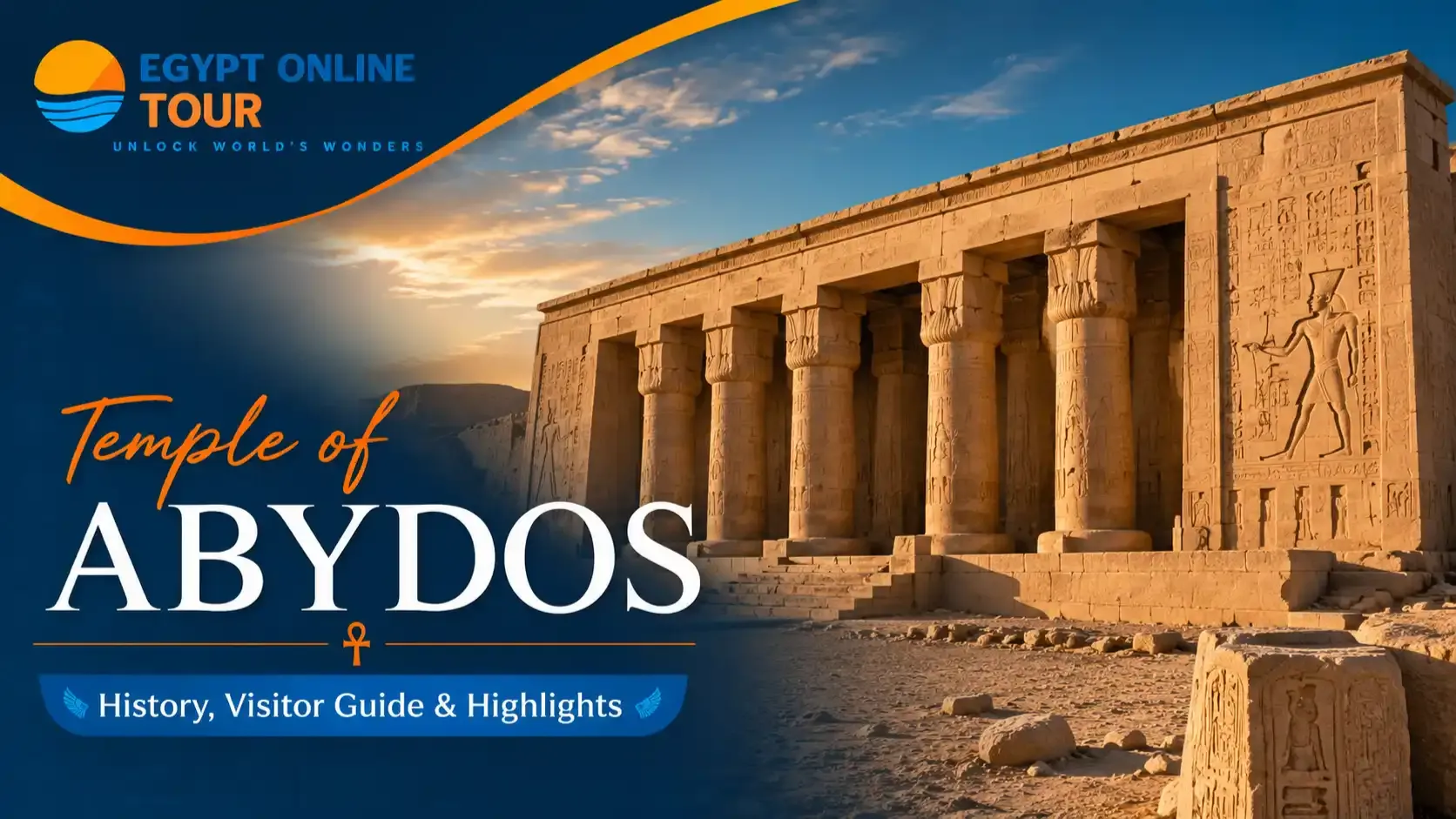
The Temple of Abydos is Seti I’s well-preserved 19th Dynasty memorial temple in Sohag, Upper Egypt, about 170 km north of Luxor. The site is famous for the Abydos King List, seven chapels, refined New Kingdom reliefs, the Osireion, and its sacred link to Osiris, rebirth, and royal memory. Most travelers visit Abydos on a private full-day trip from Luxor, often combined with Dendera Temple. It suits visitors seeking history, fewer crowds, and deeper context.
This guide is based on our experience planning Abydos and Dendera trips from Luxor, so you can plan the day with clearer timing, safer transport, and better expectations.
What Is the Temple of Abydos?
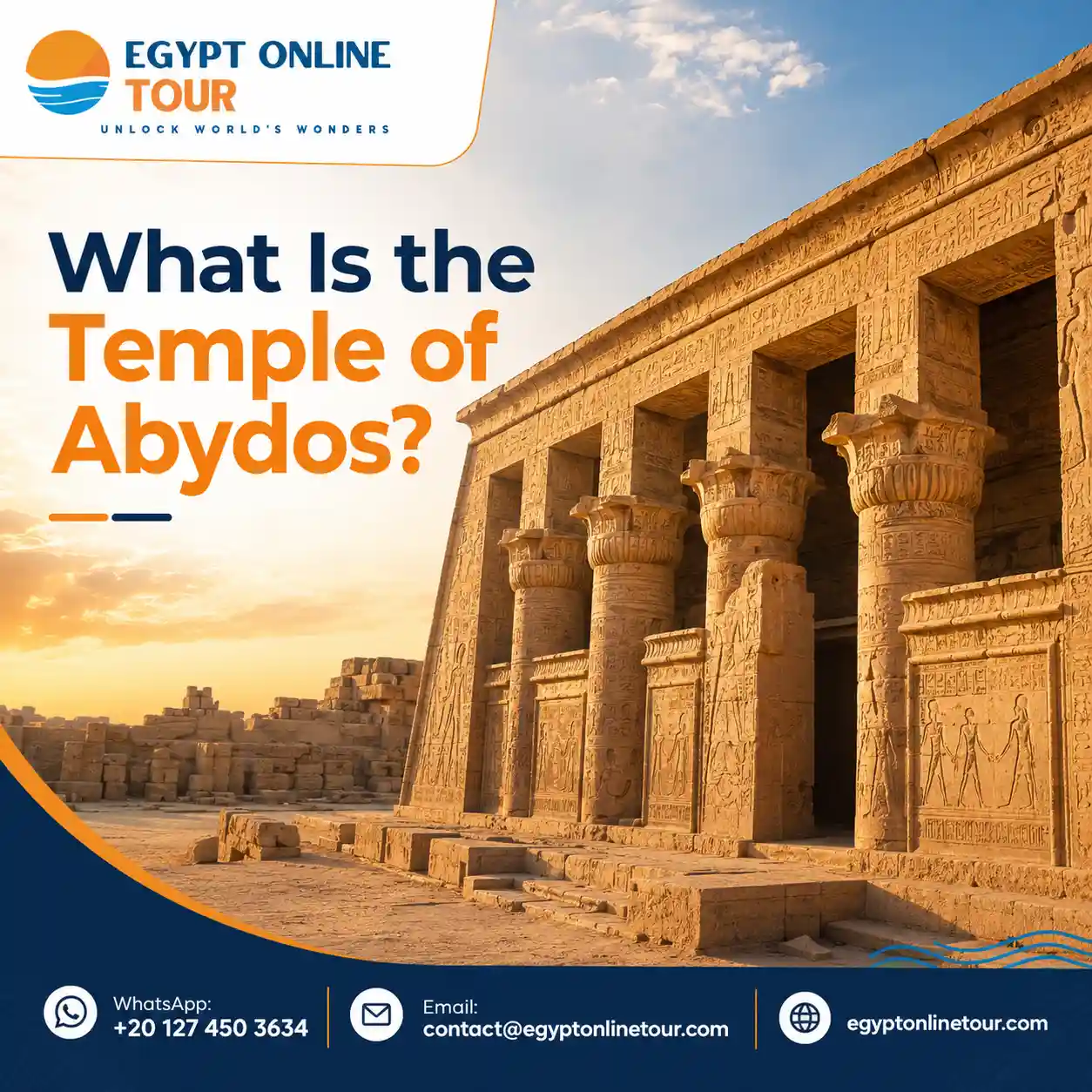
The Temple of Abydos is Seti I’s well-preserved 19th Dynasty memorial temple in Sohag, Upper Egypt. It is one of the most important sacred sites linked to Osiris, royal memory, and ancient Egyptian beliefs about rebirth.
Most visitors come here for four main reasons:
- Religion: Abydos was a major center for Osiris worship.
- Kingship: Seti I used the temple to connect his rule with Egypt’s royal past.
- Art: The walls show some of the finest New Kingdom reliefs in Egypt.
- History: The Abydos King List preserves 76 royal names in cartouches.
Abydos is different from Egypt’s larger temples. Karnak impresses with scale. Abu Simbel impresses with drama. Abydos impresses with detail, quiet halls, seven chapels, and carefully carved walls.
Visit this temple if you want a deeper Luxor day trip with fewer crowds and stronger historical meaning.
If this is your first trip, read Visiting Egypt for the First Time before building your full route.
Temple of Abydos or Temple of Seti I?
Both names are correct, but they are not exactly the same.
The wider Abydos area also includes the Osireion and the nearby temple of Ramesses II. This matters when booking a tour because some trips only include Seti I’s temple.
Better private tours may also include:
- The Osireion viewpoint
- The temple of Ramesses II
- Extra time for the King List and seven chapels
- A combined Abydos and Dendera route from Luxor
Before you book, ask one direct question:
Does the tour include only Seti I’s temple, or the wider Abydos area too?
Look at: King Seti I Facts
The History of the Temple of Abydos
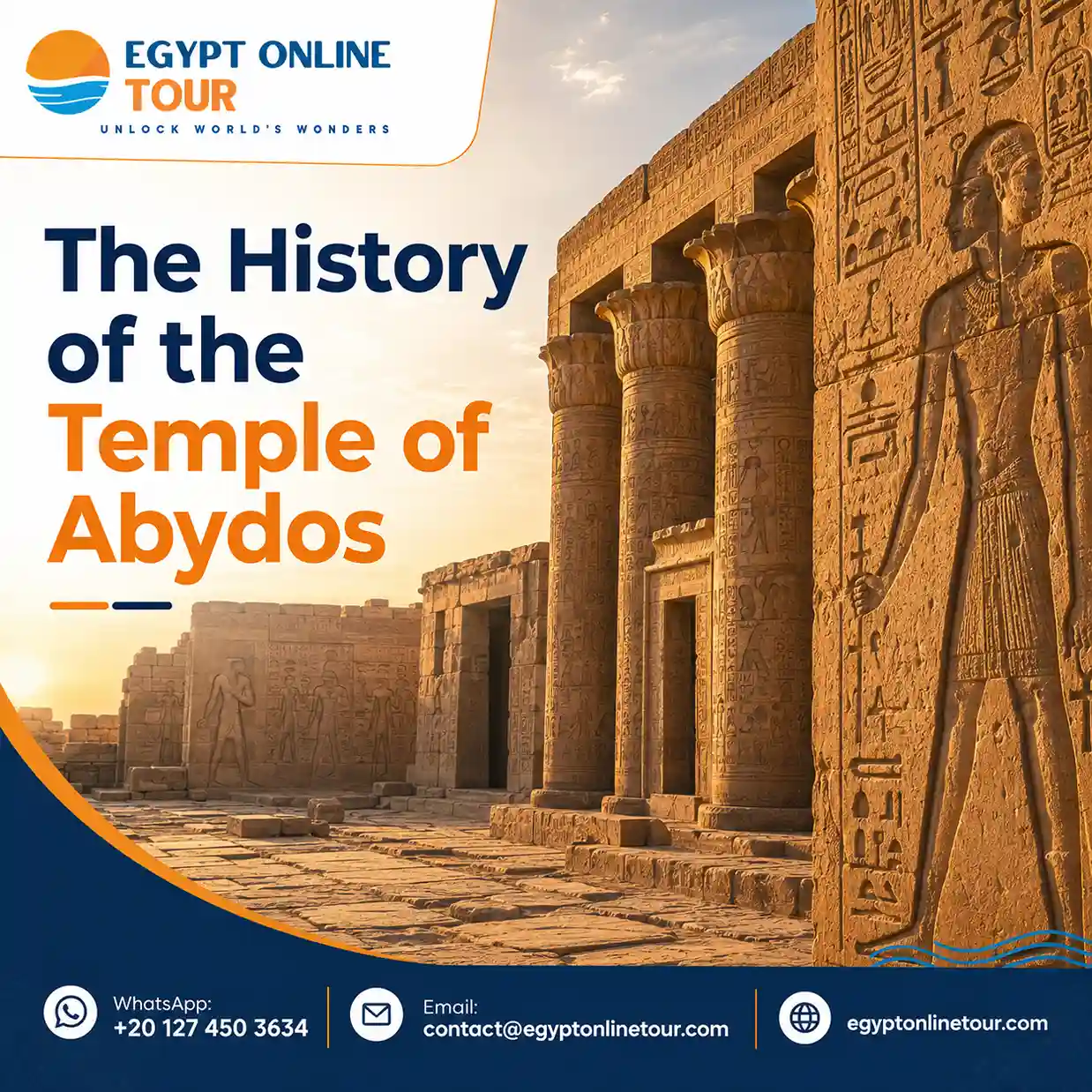
Abydos stands in one of ancient Egypt’s oldest sacred landscapes.
Long before Seti I built his monument, early kings used the region for royal burial. Later Egyptians linked Abydos with Osiris, the god of the afterlife, rebirth, and eternal renewal.
Abydos became important for three main reasons:
- Early royal burials gave the region deep historical weight.
- Osiris worship turned Abydos into one of Egypt’s major sacred centers.
- Later kings used the site to connect their rule with Egypt’s older past.
By the New Kingdom, Abydos was more than a holy site. It was a place of memory. Pilgrims came to honor Osiris and seek symbolic rebirth. Kings used the site to show that their rule belonged to a respected royal line.
Seti I understood that message. His temple honored the gods, but it also helped restore royal authority after years of religious and political change.
The Abydos King List shows this clearly. Seti I did not record every ruler. He selected the kings he wanted Egypt to remember. For visitors, this makes the Temple of Abydos more than a beautiful monument. It becomes a record of how ancient Egypt shaped history, memory, and power.
The Construction of the Temple of Abydos
Seti I’s temple was built with a layout and carving style that make it different from many Egyptian temples.
Seti I began the main work in the 19th Dynasty, and Ramesses II completed several sections after his father’s death.
This difference in style gives visitors something practical to look for. Do not only photograph the walls. Compare the details.
Look closely at:
- Hands holding offerings
- Crowns and royal names
- Offering tables
- Carved hieroglyphs
- The depth of the reliefs
- The finish around faces and clothing
This is where the site rewards slow looking. You can see two royal building phases on the same walls, which makes Abydos one of the best places to study Seti I and Ramesses II together.
Join to our Luxor Day Tour from Aswan
Who Built the Temple of Abydos?
Seti I began building the main monument during the 19th Dynasty. His son, Ramesses II, completed several sections after Seti I’s death.
This father-and-son link matters because visitors can compare two royal styles in one site.
Seti I used the temple to restore royal authority and traditional worship. Abydos gave him the right setting because the site linked kingship with Osiris, ancestors, and sacred memory.
Ramesses II added another layer by finishing his father’s work. This made him appear as a loyal son, rightful heir, builder, and king.
Why Is the Temple of Abydos Famous?
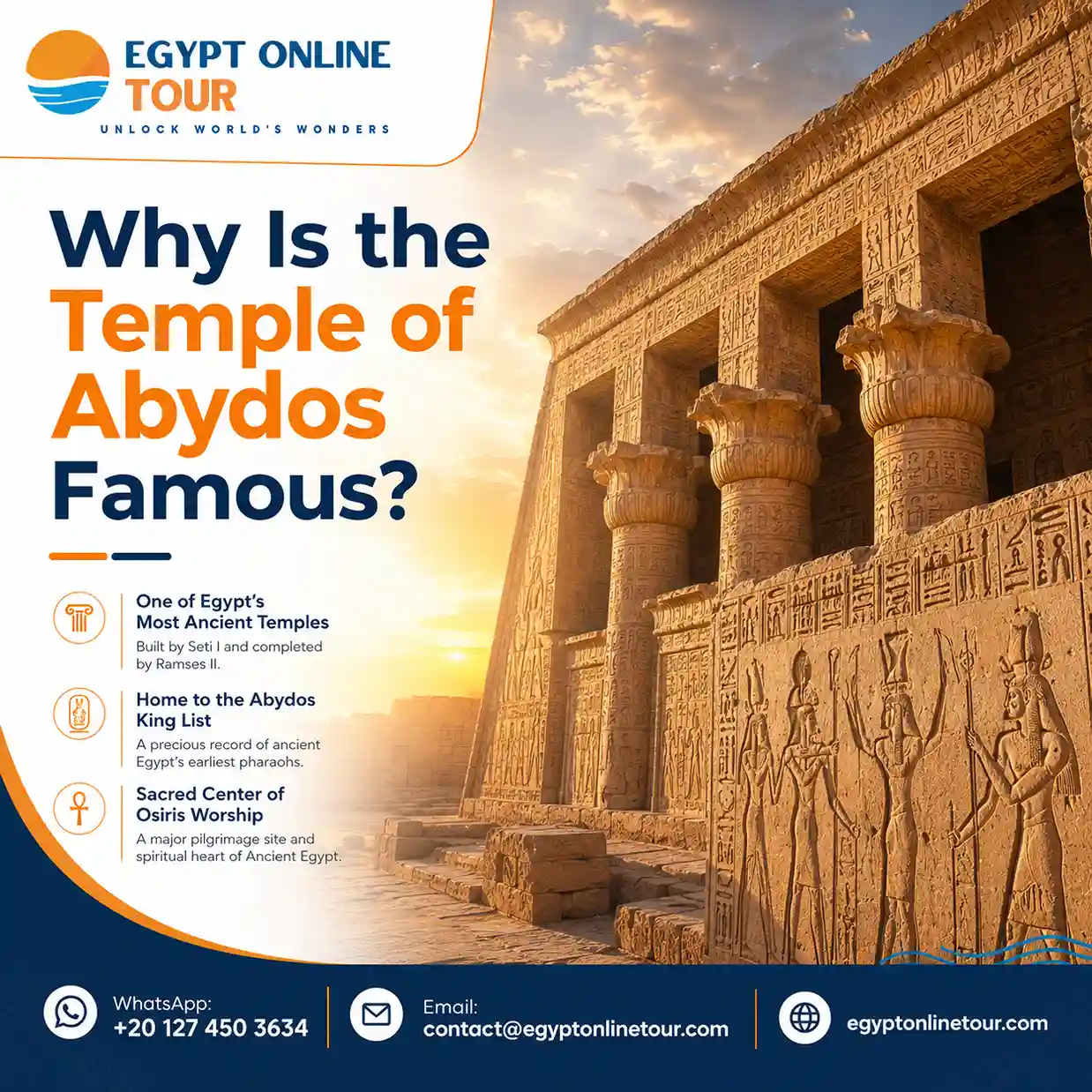
Abydos is famous for the King List, seven chapels, the Osireion, and some of the finest carved reliefs in Upper Egypt.
Some visitors also ask about the “helicopter” hieroglyphs. See them, but do not make them the focus of your visit.
The real value of Abydos is the art, royal history, Osiris connection, and quiet chance to study the walls without heavy crowds.
Abydos Temple Location
Abydos is in Sohag Governorate, near El Balyana, north of Luxor and west of the Nile. Most international travelers visit from Luxor because it is the nearest major tourism base with hotels, guides, private drivers, and Nile cruises.
The drive matters when planning your day. Do not judge the trip by distance only. Road checks, local traffic, and the order of stops can change the timing.
Local tip: if your driver says the timing depends on the day, believe him. This route can feel smooth one day and slower the next.
If you are based in Luxor, compare this route with our Luxor Day Tours before choosing your final plan.
Abydos Temple Facts
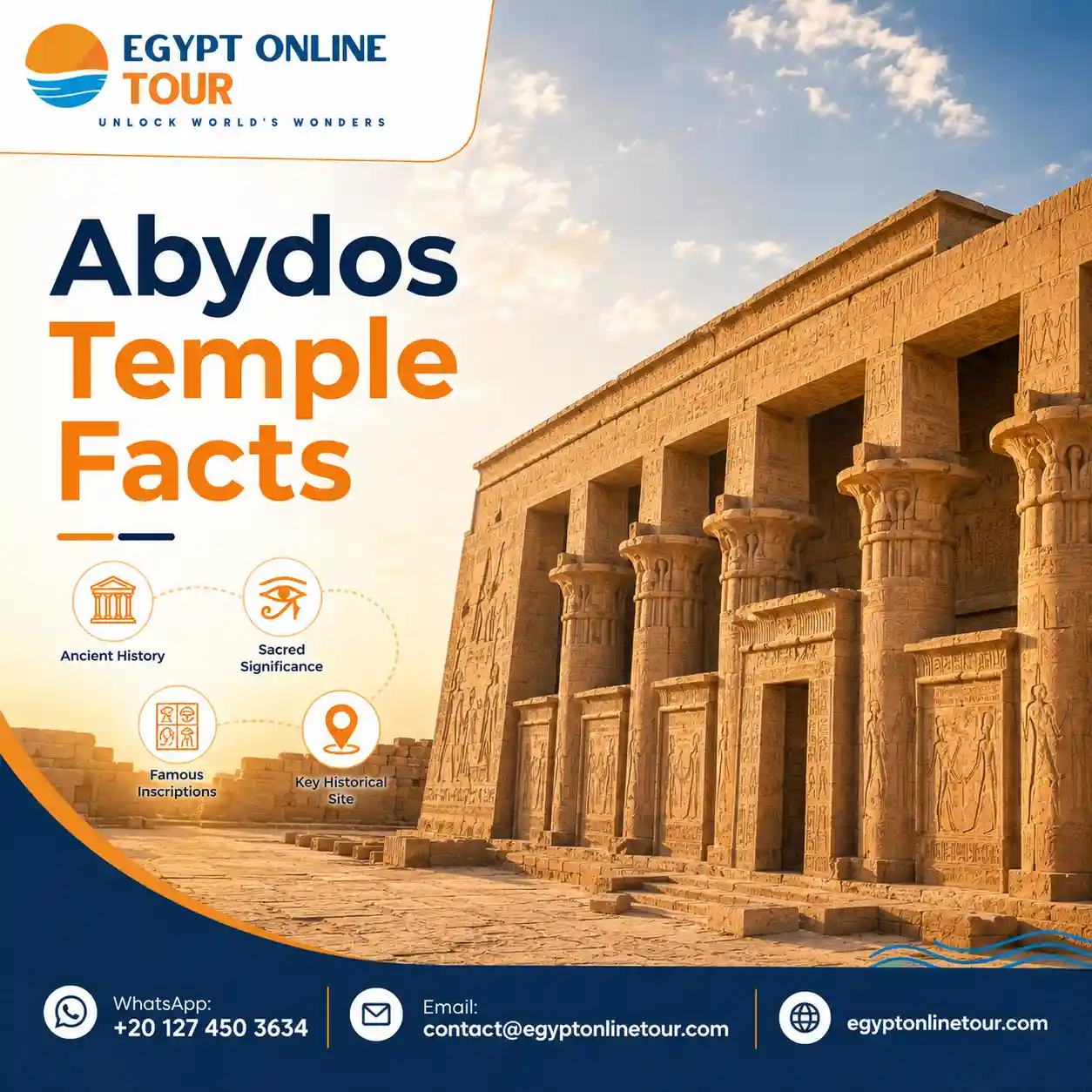
Here are the key facts to know before you plan your visit.
These facts help with planning, but they do not replace a guide. The site works best when someone explains how the chapels, King List, Osiris rooms, and reliefs connect.
Inside the Temple of Abydos
Inside the temple of Abydos, the visit moves from broad halls into more sacred rooms. The light changes as you walk in. The walls become more detailed. The scenes begin to feel less like decoration and more like a ritual story.
Start with the halls before rushing to the King List. This helps you understand why the chapels and ancestor corridor matter.
Many visitors run straight to the King List for a photo. Take the slower route. Let the halls prepare you for it.
Architecture of the Temple of Abydos
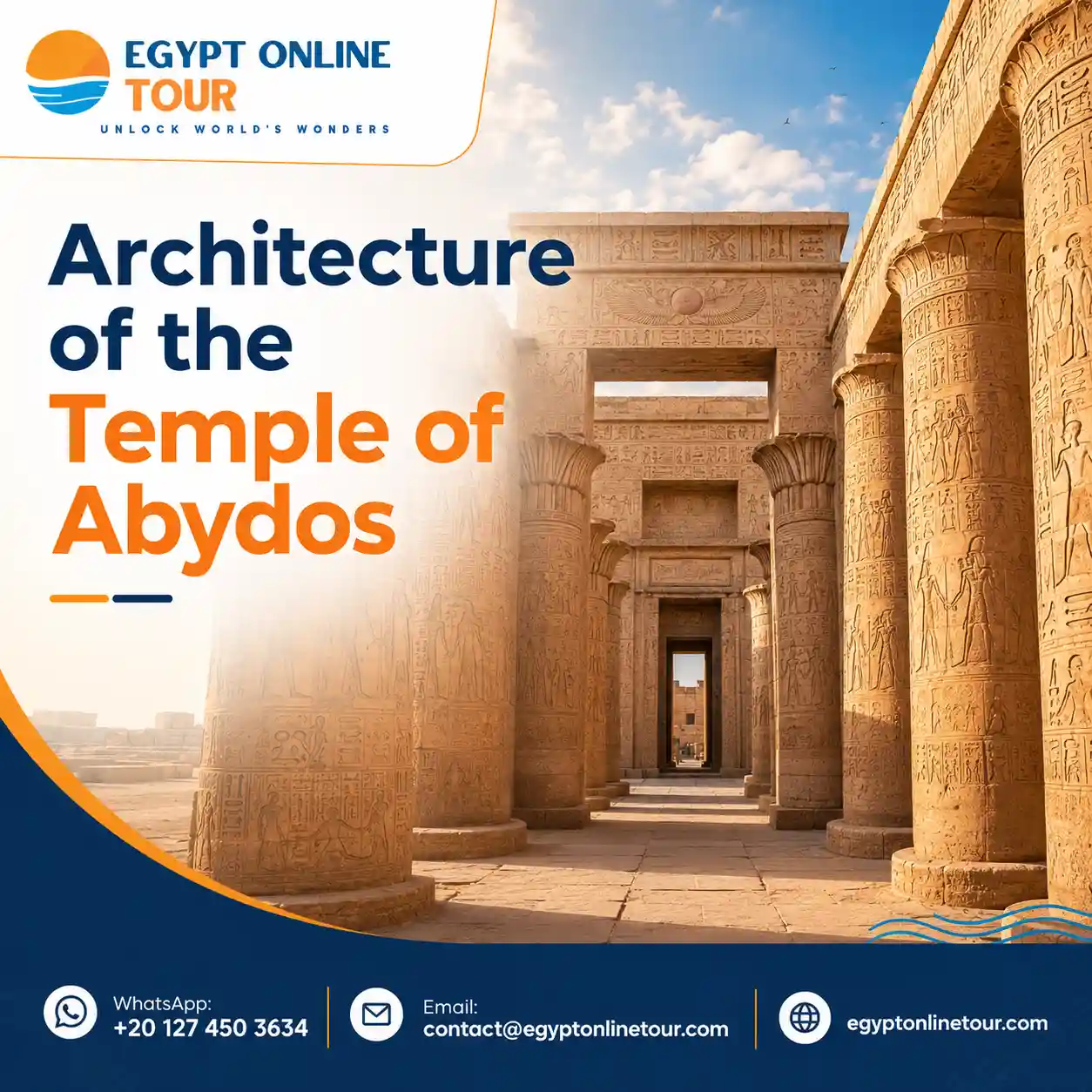
The temple’s architecture feels different from many Egyptian temples. It does not lead you through one straight route from entrance to sanctuary. Instead, the building uses turns, side chambers, chapels, and ritual spaces that make the visit feel layered.
The main structure includes:
- Damaged outer courts
- Two hypostyle halls
- Seven chapels
- Osiris rooms
- Gallery of the Ancestors
- Hall of Barques
- Service rooms
This design was not random. Priests moved through these spaces during rituals. They carried sacred images, made offerings, entered restricted rooms, and kept the divine order of the temple alive.
For visitors, the layout creates a slow reveal. Each doorway adds a new part of the story.
The Seven Chapels of the Temple of Abydos
The seven chapels sit behind the second hypostyle hall. They are one of the clearest parts of the temple’s religious plan because each chapel honors a specific god or royal figure.
Do not rush this section. These chapels were not small display rooms. Priests used them for offerings, divine images, and temple ceremonies.
Stand still before taking photos. The reliefs become clearer once your eyes adjust to the low light.
The Abydos King List
The Abydos King List is the site’s most famous historical scene. It shows Seti I and the young Ramesses II honoring earlier kings of Egypt. The list contains 76 royal names arranged in cartouches.
A cartouche is the oval frame used around royal names in ancient Egyptian writing.
The list is not a neutral history record. It leaves out rulers connected with periods that later kings did not want to honor. That makes it more useful, not less. It shows how Seti I wanted Egypt’s past to be remembered.
Why this scene matters:
- Historians use it to study royal order.
- Ancient kings used it to shape official memory.
- Seti I appears as part of a long royal line.
- Visitors see one of Egypt’s clearest royal records.
The corridor can feel narrow. Wait until people move away, then photograph it slowly from different angles.
Reliefs and Wall Carvings Inside the Temple
The reliefs inside Seti I’s temple are among the finest you can see on a Luxor day trip. Seti I’s artists carved calm figures, clean hieroglyphs, balanced bodies, and fine ritual details.
You will see the king offering incense, wine, food, flowers, and sacred objects to the gods. These scenes were not simple decorations. Ancient Egyptians believed temple images helped maintain order between people, kings, and the divine world.
Look closely at:
- Fine fingers and hands
- Calm royal faces
- Clean crown outlines
- Clear hieroglyphic signs
- Remaining paint in protected corners
- Different carving depth in later areas
Do not stop only at the famous panels. Some of the best details sit on side walls where fewer visitors look.
Book our Kalabsha Temple and Nubian Museum Tour
Helicopter of Abydos Hieroglyphs
The “helicopter” hieroglyphs are one of the most talked-about details at Abydos. Some shapes appear to show modern machines, including a form that looks like a helicopter.
You can find the famous “helicopter” shapes on a high architrave in the First Hypostyle Hall of Seti I’s temple. Ask your guide to point them out before you leave the hall, because many visitors miss them while looking at the main wall scenes.
The accepted explanation is simpler. The panel appears to be a palimpsest, where an older inscription was changed and later surface loss exposed overlapping signs. Modern eyes then read the mixed shapes as aircraft.
Keep this detail in balance:
- See it because many visitors ask about it.
- Do not make it the main reason for your visit.
- Ask your guide to explain it after the main temple story.
- Spend more time on the King List, chapels, Osiris link, and relief quality.
Abydos does not need mystery claims to feel impressive. Its real history is stronger.
The Osireion at Abydos
The Osireion sits behind Seti I’s temple. It feels different from the decorated halls because of its sunken layout, massive stone blocks, and strong link to Osiris.
Many scholars connect it with symbolic tomb architecture, water, death, and rebirth. This makes it one of the most important spaces in the wider Abydos area.
Access can vary.
The Osireion sits at a lower level than Seti I’s temple, and its water channel is linked with underground water. Because of this, the area can look partly flooded at times. If inspectors block access to the lower level, ask whether you can view it from the rear area of Seti I’s temple instead.
Plan your visit around Seti I’s temple first. Treat the Osireion as a valuable extra, not the only reason to go.
The Temple of Ramesses II at Abydos
The Temple of Ramesses II at Abydos stands near Seti I’s monument. It is smaller and more ruined, but it adds useful context if your schedule allows.
This nearby temple helps you compare two royal styles in the same sacred area. Seti I’s temple often feels refined, quiet, and detailed. Ramesses II’s monuments often feel bolder, more public, and more focused on royal display.
Visit it if:
- Your schedule has enough time.
- New Kingdom royal history interests you.
- A guide can explain the wider Abydos area.
- Comparing Seti I and Ramesses II matters to your visit.
Skip it if the day is hot, your group feels tired, or you still need to reach Dendera. A focused visit to Seti I’s temple is better than a rushed checklist.
Read our full guide: Ramesses II
How to Visit the Temple of Abydos
The easiest way to visit Abydos is by private car from Luxor with a licensed guide. Travelers who want Abydos as part of a wider sacred route can also consider the 6 Days Spiritual Tour to Pyramids, Cairo and Luxor. The distance, checkpoints, and route planning make public transport difficult for most travelers.
Best day plan:
- Leave Luxor between 6:00 and 7:00 am.
- Carry water and a light breakfast.
- Visit Abydos with a guide.
- Add Dendera if you want the strongest full-day route.
- Keep lunch short.
- Return to Luxor before evening when possible.
Before booking, confirm these details:
- Licensed guide
- Private air-conditioned car
- Entrance tickets
- Lunch or snack stop
- Pickup location
- Dendera add-on
- Return time
- Time allowed inside the temple
This is not a site to rush. The site works best when your guide gives you enough time to read the walls, not just photograph them.
Abydos Temple Ticket
According to the official Egyptian e-ticketing platform, Abydos Temple tickets are currently EGP 260 for foreign adults and EGP 130 for foreign students. Egyptian adult tickets are EGP 10, and Egyptian student tickets are EGP 5.
When our guides help with tickets at the gate, student discounts usually require a valid student ID, and an ISIC card is the safest option for international students. We also remind guests to carry a backup bank card, as many Egyptian archaeological sites now prefer card payments.
Ticket prices can change, so check the official Egyptian e-ticketing platform before your visit.
Temple of Abydos Opening Hours
The current official listing shows the site opening at 7:00 am, with last entry at 4:00 pm in summer and winter. During Ramadan, it opens at 9:00 am, with last entry at 3:00 pm.
Best timing:
- Arrive before midday.
- Avoid late arrival after the long drive.
- Plan around last entry, not only closing time.
- Confirm Ramadan hours before booking.
If your trip falls in Ramadan, read Visiting Egypt during Ramadan before confirming your daily schedule. Some printed lists may show later closing times. Trust the current ticket office or official ticket page first.
How to Reach Abydos from Luxor
Based on our route planning experience, the smoothest way to reach Abydos from Luxor is by private, tourist-licensed air-conditioned vehicle. This helps reduce possible delays at rural checkpoints and gives your guide better control over timing, rest stops, and the Dendera add-on.
You can start from an East Bank hotel, West Bank hotel, or Nile cruise. If your trip includes a cruise route, the 8 Day Nile Cruise from Luxor to Aswan may fit better than a single day plan.
Use this booking check before you confirm:
- Confirm your pickup point.
- Ask if the car is private and air-conditioned.
- Check if the guide is licensed.
- Ask how long the drive usually takes that week.
- Confirm whether Dendera is included.
- Ask how much time you will spend inside the site.
Do not rely only on map timing. Checkpoints, local traffic, and the Dendera route can change the day.
During the drive, our drivers may stop at trusted rest stops on the Qena route when they fit the day’s timing. We still recommend keeping food simple and avoiding unknown roadside cafeterias for food safety.
Abydos and Dendera Day Trip
An Abydos and Dendera day trip is one of the best full-day routes from Luxor. The two temples balance each other well.
Dendera gives you color, Hathor scenes, crypts, zodiac-related interest, and rooftop views when access allows. Abydos gives you Seti I’s reliefs, the King List, Osiris theology, and a calmer atmosphere.
Choose the combined trip if you have one open day in Luxor and enough energy. Choose Dendera only if you want a shorter, easier day.
Best Time to Visit the Temple of Abydos
The best time to visit Abydos is from October to April. The weather is milder, the drive feels easier, and you can spend more time inside the temple without getting tired from the heat.
Summer visits are possible, but they need better planning. Leave Luxor very early, bring extra water, wear breathable clothes, and keep lunch light before the return drive.
Crowds are not the main issue here. Heat and timing matter more.
How Long Do You Need at the Temple of Abydos?
Most travelers need 1.5 to 2.5 hours at the site. History-focused visitors may want three hours, especially if they add the Osireion and the Temple of Ramesses II.
Plan your time like this:
- 60 to 90 minutes: quick highlights visit.
- 1.5 to 2 hours: standard guided visit.
- 2 to 3 hours: deeper history visit.
- 2+ hours: better for detailed photography.
Do not plan a 20-minute stop. Abydos rewards slow looking. The details are small, and the meaning builds from one room to the next.
Read more about How Much Does It Cost to Go to Egypt
Tips for Visiting the Temple of Abydos
Use these tips to make the day easier:
- Leave Luxor early.
- Book a guide who knows Abydos well.
- Confirm whether Dendera is included.
For some private trips, our team may ask for passport details before travel to help prepare road permissions and keep the journey smoother.
- Bring water, sunglasses, and a hat.
- Wear shoes with good grip.
- Keep your ticket with you.
- Ask about Osireion access on arrival.
- Use the restroom before the long return drive.
- Carry small cash for tips.
- Do not rush the King List corridor.
Common mistakes to avoid:
Local planning tip: ask your guide to explain the main story before entering. A five-minute overview will make every room easier to understand.
Is Abydos Worth Visiting?
Yes, Abydos is worth visiting if you enjoy ancient Egyptian history, temple art, royal lists, Osiris, and quiet archaeological sites. It works best after you have already seen Luxor’s main monuments, such as Karnak, Luxor Temple, the Valley of the Kings, and Hatshepsut Temple.
It may not suit every traveler. If you only have one full day in Luxor, focus on the classic Luxor sites first. Travelers coming from Aswan can start with the Luxor Day Tour from Aswan before planning deeper temple trips.
Visit Abydos if you:
- Have three or more days in Luxor.
- Want a deeper Upper Egypt itinerary.
- Enjoy carved reliefs and royal history.
- Prefer quieter sites.
- Plan to visit Dendera too.
Skip or delay it if you:
- Dislike long drives.
- Only want famous postcard sites.
- Have not seen Luxor’s main temples yet.
- Travel with young children who tire fast.
- Need a short and easy sightseeing day.
If you are still comparing ideas, Things to Do in Egypt can help you decide where Abydos fits. Abydos is not the easiest trip from Luxor. It is the right choice when you want meaning, detail, and fewer crowds.
Suggested One-Day Itinerary from Luxor
This route works well for most travelers who want to combine Abydos with Dendera in one day.
This is a long day, so protect your energy. Keep the schedule focused and avoid extra stops unless your guide confirms there is enough time.
If you have not visited the West Bank yet, book the Luxor West Bank Tour before adding Abydos to your plan.
Budget Planning for Your Visit
Your final cost depends on transport, guide, tickets, lunch, pickup location, and whether you add Dendera.
Check these points before you book:
- Entry ticket: confirm the current official price before travel.
- Private vehicle: ask about air-conditioning and vehicle size.
- Guide: confirm you are booking a licensed guide, not only a driver.
- Dendera ticket: check whether it is included if you combine both sites.
- Lunch: ask if it is included, optional, or self-paid.
- Tips: carry small Egyptian pound notes.
- Pickup: confirm East Bank, West Bank, or Nile cruise pickup.
The cheapest offer is not always the best value. For this route, a knowledgeable guide and reliable car matter more than saving a small amount.
Final Planning Advice
Abydos works best for travelers who want depth. It is not the easiest day trip from Luxor, but it can become one of the most memorable parts of an Upper Egypt itinerary.
Book it when you have enough time. Start early. Pair it with Dendera if possible. Choose a guide who can explain the scenes, not just name them. Give the King List, chapels, Osiris rooms, and reliefs enough time.
A rushed visit will feel like a long drive for a few photos. A well-planned visit will help you understand how ancient Egypt used art, ritual, and royal memory to tell its story.
If you want our team to build the full route for you, browse Egypt Vacation Packages before choosing your dates.
When planned well, Abydos gives travelers a rare mix of expert-level temple art, low crowds, and enough time to study the walls properly.
Conclusion
The Temple of Abydos deserves a place on any serious Upper Egypt itinerary. Seti I’s refined reliefs, the King List, the seven chapels, Osiris-linked spaces, and the quieter atmosphere make Abydos one of Egypt’s richest temple visits.
More than another ancient monument, the site shows how ancient Egypt used art, ritual, and royal memory to shape history.
Plan the visit well. Leave Luxor early, use a qualified guide, and combine it with Dendera if your schedule allows. You will leave with a clearer understanding of Egyptian kingship, temple art, and sacred memory.
At EgyptOnlineTour, we aim to keep our Abydos travel advice practical, updated, and based on real route planning. Contact our team if you want help building the right Luxor, Abydos, and Dendera itinerary.