Pricing policy
All prices are per person in US dollars and depend on the size of your group. Your quote lists the final price and what it covers. After the deposit, changes to your plan cost US$25 per request, plus any third-party fees.

A 4.5-hour private morning on Luxor's East Bank with an Egyptologist: the temple of Amun at Karnak with its Hypostyle Hall, then Luxor Temple at the end of the Avenue of Sphinxes. Pickup from your hotel or Nile cruise, a private car with driver and entrance tickets are included.
The East Bank of Luxor was the city of the living in ancient Thebes, and its two great temples were the heart of the cult of Amun, king of the gods. Karnak, on the northern edge of the modern town, grew for about 2,000 years as pharaoh after pharaoh added pylons, halls, obelisks and chapels, until it became the largest temple complex in Egypt. Three kilometres south, Luxor Temple stands by the Nile in the centre of town. Once a year, during the Opet Festival, the statue of Amun was carried from Karnak to Luxor Temple along the Avenue of Sphinxes that still links them.
This private half-day tour visits both temples with your own Egyptologist. Your guide and driver collect you from your hotel or Nile cruise in Luxor in the morning and take you first to Karnak, where you spend about two hours, and then to Luxor Temple. You are back at your hotel or ship around midday, with the afternoon free for a felucca sail, the souk or a rest. The tour can also run in the afternoon, ending at Luxor Temple as the lights come on at dusk.
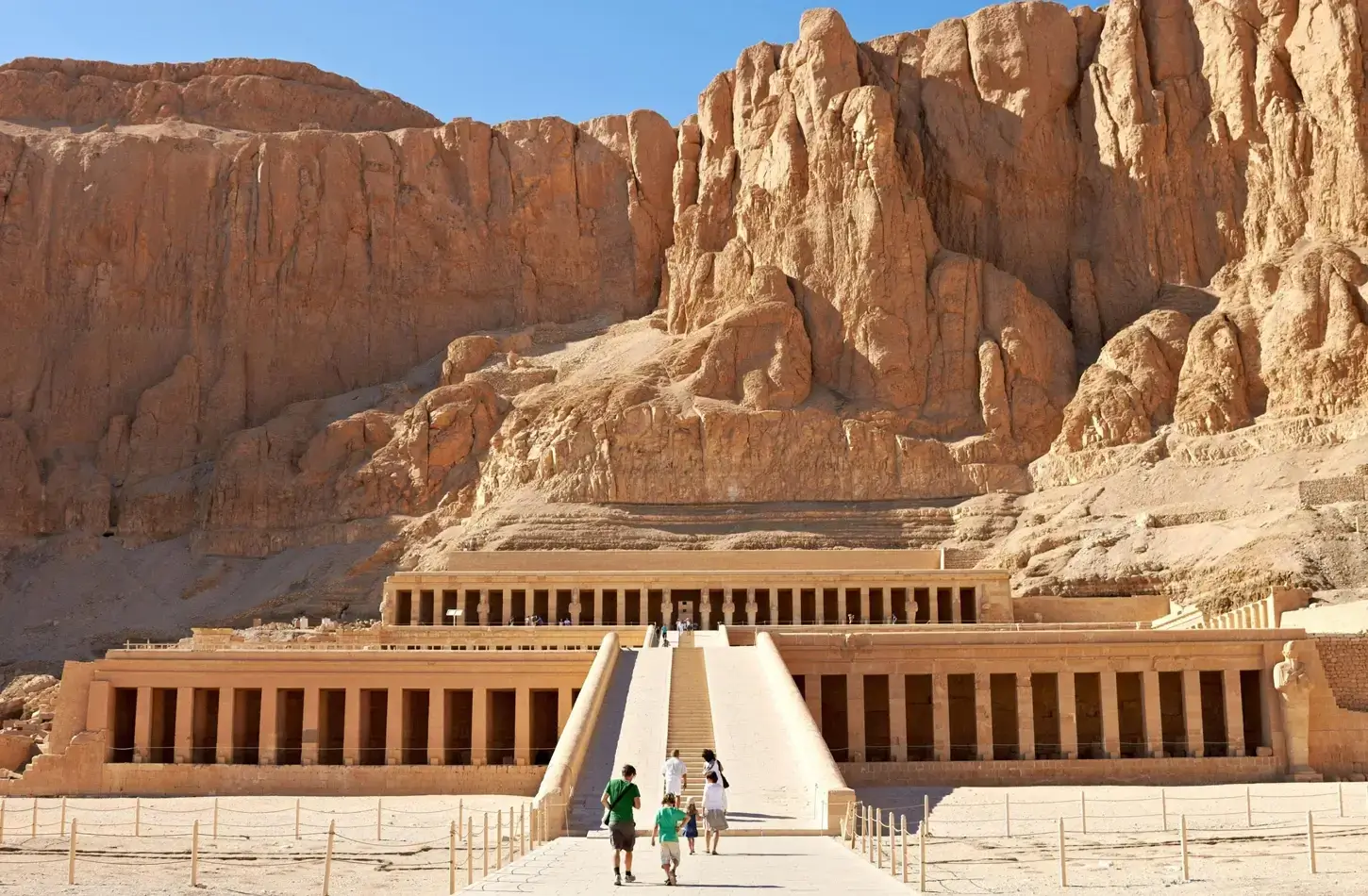
It covers the East Bank only. For the Valley of the Kings and the Temple of Hatshepsut, book our Luxor West Bank tour; for a dawn view of both banks, the hot air balloon flight starts before sunrise and leaves the morning free.
Karnak is a maze of courts, gateways and fallen blocks, built and rebuilt over two millennia. Your Egyptologist gives it a clear order: who built what, why each pharaoh added a pylon, how the reliefs on the walls were meant to be read and how the temple worked as a place of ritual. At Luxor Temple the guide shows you layers from four periods in one building: pharaonic, Roman, Christian and the mosque of Abu el-Haggag, which still stands on top of the old courtyard.
Times are for the morning tour with an 08:00 pickup on the East Bank; the afternoon tour follows the same order from about 15:00. Your guide adapts the route to the crowds.
Your Egyptologist and driver meet you at the hotel lobby or cruise reception for the short drive to Karnak.
You enter between rows of ram-headed sphinxes, the animal of Amun, and pass through the first pylon into the Great Court. Your guide explains how the temple grew from a small Middle Kingdom shrine to the complex you see.
A forest of 134 sandstone columns, the tallest about 21 metres high, carved with scenes of Seti I and Ramesses II making offerings to the gods. Your guide shows you how to read the reliefs and where traces of the original paint survive.
Beyond the hall stand the obelisks of Thutmose I and Hatshepsut, then the inner sanctuaries and the festival hall of Thutmose III. You end at the sacred lake, where the priests purified themselves, and the giant stone scarab beside it.
A short drive south to Luxor Temple. You walk in past the obelisk and the colossal statues of Ramesses II, through his courtyard with the mosque of Abu el-Haggag above it, and into the colonnade and sun court of Amenhotep III. Your guide points out the Roman paintings and the chapel of Alexander the Great at the back of the temple.
From the front of Luxor Temple you look along the Avenue of Sphinxes, the processional road of the Opet Festival that runs about 2.7 kilometres north to Karnak.
You are back at your hotel or ship at about 12:15. Your guide can drop you at the souk or a restaurant in town instead.
Prices are per person in US dollars. Children pay less, see the children policy below.
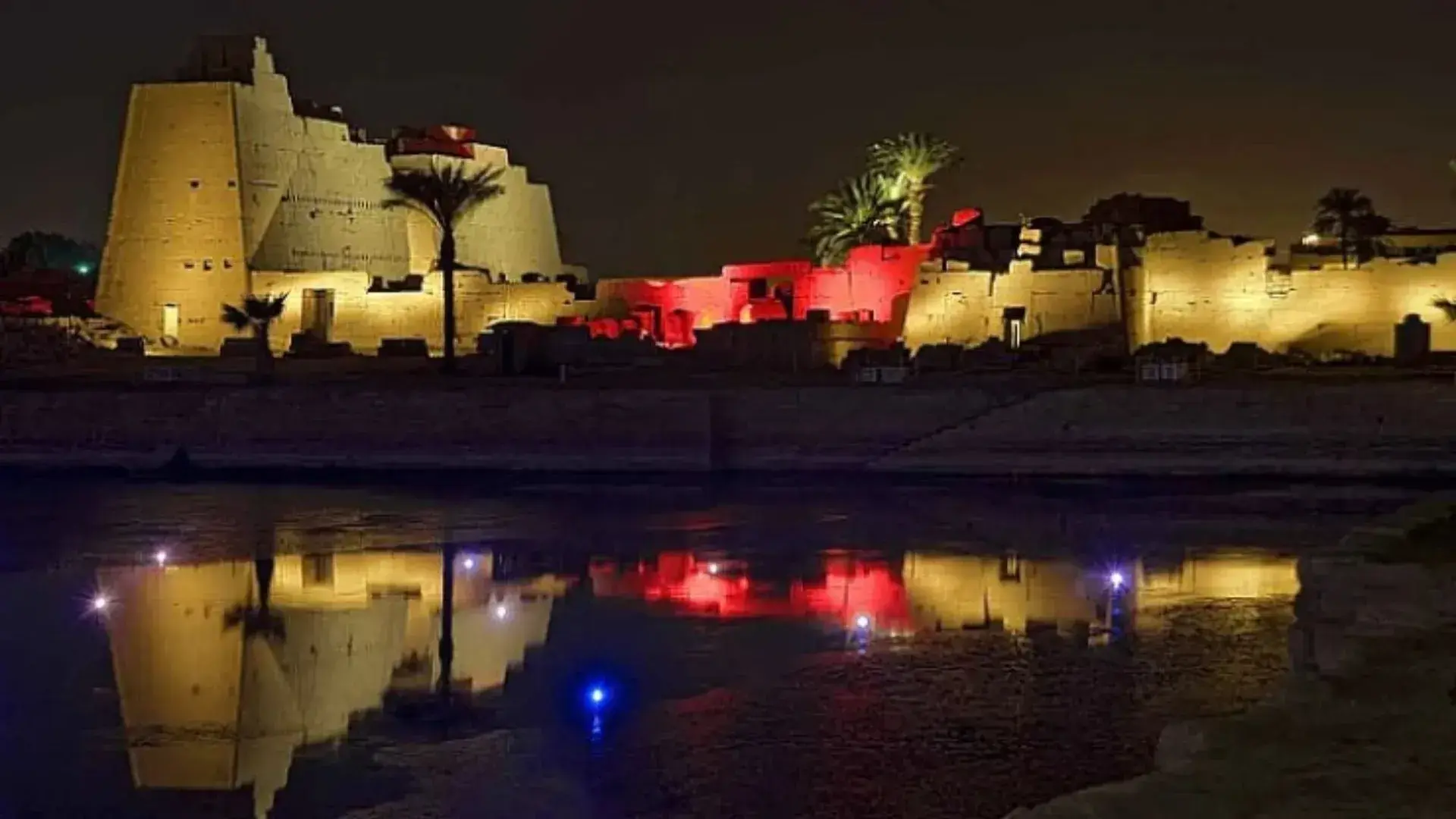
Get a quoteKarnak is open daily from 06:00 to 17:00 and Luxor Temple from 06:00 to 20:00, at the time of writing. The morning tour starts at 08:00 to beat most of the heat; cruise groups usually arrive at Karnak in the mid-morning. From May to September an earlier start, at 07:00, is more comfortable. The afternoon version starts at about 15:00 in winter and ends at Luxor Temple after sunset, when it is lit.
Your entrance tickets for Karnak (including the Open Air Museum) and Luxor Temple are included. The separate temple of Mut, south of the main Karnak complex, needs its own ticket and can be added. The Karnak Sound and Light Show in the evening is a separate tour.
Personal photos with a phone or camera are allowed in both temples. Flash is not allowed in closed rooms, and tripods need a permit. The Hypostyle Hall photographs best in the morning, when the sun falls in shafts between the columns.
Pickup is from any hotel on the East Bank of Luxor or any Nile cruise ship moored in Luxor. Karnak is 5 to 15 minutes by car from most hotels. Hotels on the West Bank add a short crossing by the Luxor bridge; tell us where you stay.
Children are welcome; the giant columns and statues are easy to enjoy. The temples are on level ground with some steps and uneven paving, and much of Luxor Temple can be seen from the main path. There are cafés and toilets near the entrance of Karnak.
All prices are per person in US dollars and depend on the size of your group. Your quote lists the final price and what it covers. After the deposit, changes to your plan cost US$25 per request, plus any third-party fees.
A deposit of 30% of the total tour cost confirms your booking. We send you a secure payment link for the deposit; the balance is paid in cash or by card on arrival in Egypt, unless your written offer gives another date. We never ask for card details by email, chat or WhatsApp. We confirm every booking by email.
No-show travelers are charged 100%. During peak events in Egypt, hotels and Nile cruises do not refund deposits. Groups of more than 10 people may have different terms.
Add each child and their age in the enquiry form so the quote is exact.
Add a lunch stop, a longer visit or a second site to your day. Tell us what you want and we add it to your quote with its cost.
Not included in the price: Extras not mentioned in the program; Meals and drinks (optional upgrades available); Tipping and personal expenses.
Tipping is customary in Egypt and is not included in the price. A usual amount for a private day tour is US$5 to 10 per person for your guide and US$3 to 5 for your driver.
About four and a half hours from pickup to drop-off: around two hours at Karnak and one hour at Luxor Temple, plus the short drives.
No. The tour ends around midday; your guide can drop you at a restaurant in town, and you pay locally.
Yes. The afternoon tour starts at about 15:00 in winter and ends at Luxor Temple after sunset, when the temple is lit. In summer it starts later.
Yes, from any cruise ship moored in Luxor, as well as from hotels on the East Bank and the West Bank.
Yes. Many travellers take the West Bank tour in the morning and the East Bank in the afternoon, or on two days. Ask us and we will plan both.
Yes. Your guide and car are for your group only. The temples are shared with other visitors, and Karnak is busiest in the mid-morning.
Independent reviews on the platforms travelers already trust.
Amazing Egyptian vacation! We did an 11 day private tour of Cairo, cruise on the Nile between Aswan and Luxor and a 4 day stay in Hurghada. The guided tours were very interesting, with extremely knowledgeable guides, attentive and helpful.
Egypt package to the Pyramids of Giza and Saqqara was a fascinating journey through Egypt's ancient past ,guide knowledge, the majesty of the pyramids, and the historical depth of Saqqara made this tour truly enriching!
our honeymoon to Egypt ,Giza and Saqqara was a magical escape into history The pyramids looming in the distance, the quiet serenity of the desert, and the ancient wonders of Saqqara created moments that will be with me forever!
From the same category, with the same private service.

Answers to the questions travelers ask before they book.
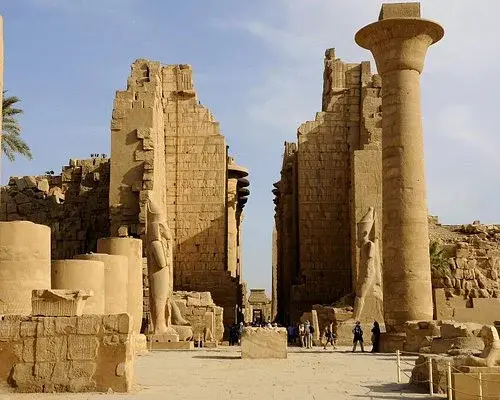
The most important facts about the Karnak Temple are that it is the largest religious building ever and the largest temple built in the world
Read the guide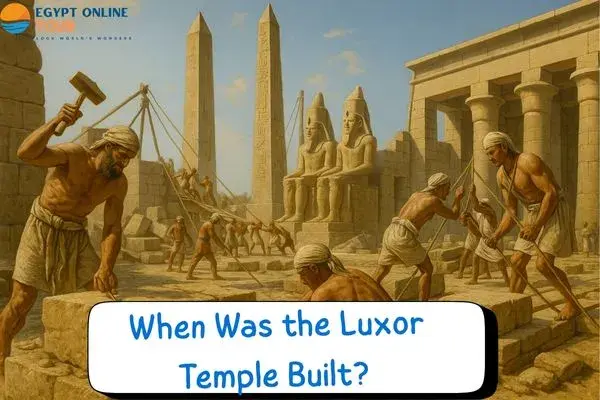
Luxor Temple was built mainly by Amenhotep III around 1390 to 1352 BC, on the site of an older shrine of Hatshepsut, and enlarged by Ramesses II a century later. Romans, Christians and Muslims then used it for another 1,700 years. Here is the timeline, what each king added and how to visit today.
Read the guide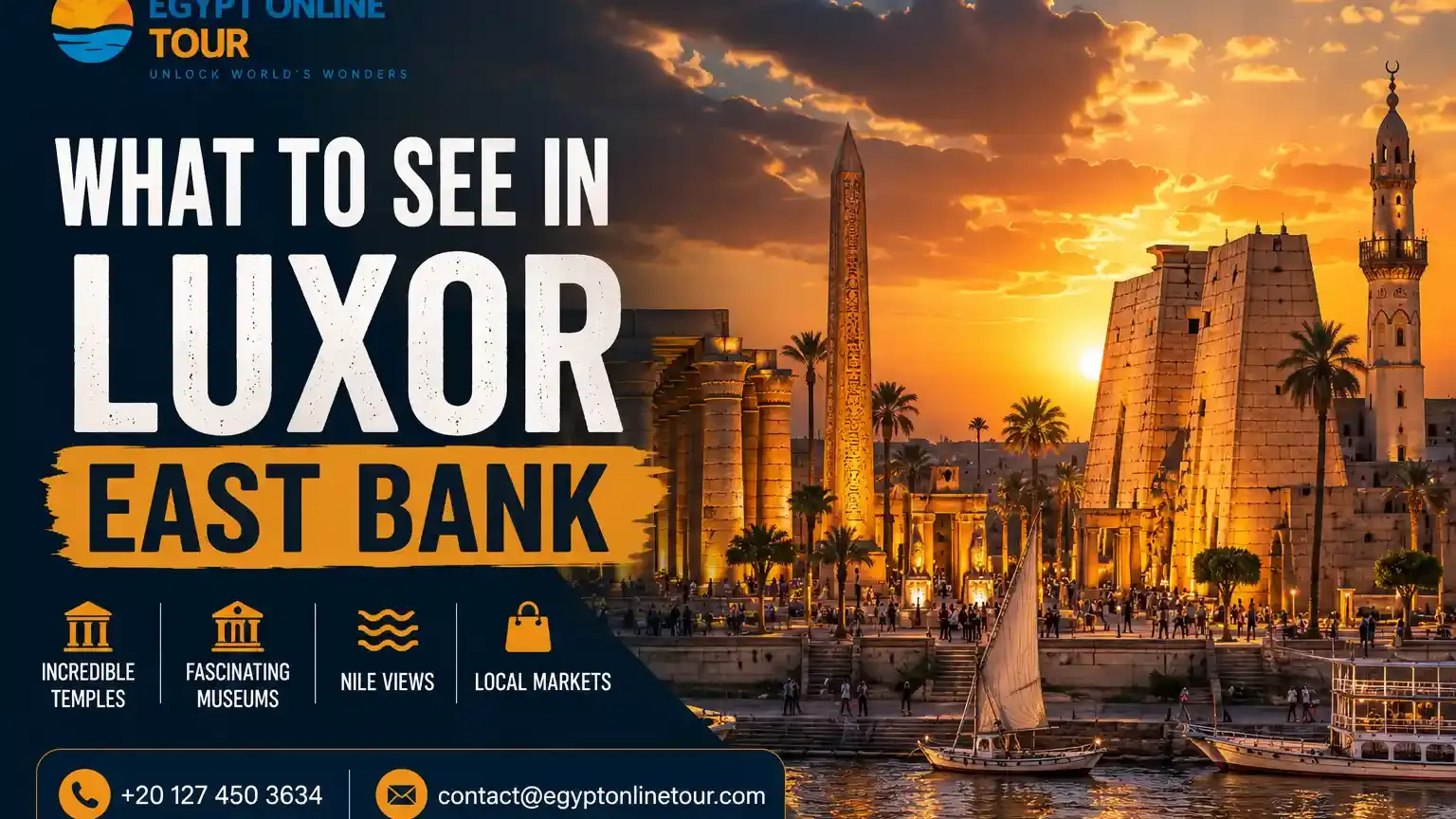
What to see in Luxor East Bank? Start with Karnak Temple in the morning and Luxor Temple at sunset, then add Luxor Museum or the Mummification Museum, the Corniche and the souq. Ticket prices, opening hours, how long each stop takes and a one-day plan from our Luxor guides.
Read the guideWe always use the cookies this site needs to work. With your permission we also use the optional ones listed under Settings. You can change your choice at any time. Privacy policy