
What to do in Aswan, Egypt: visit Philae Temple on its island, sail a felucca around Elephantine and Kitchener's Island at sunset, spend an afternoon in a Nubian village on the west bank, see the Unfinished Obelisk and the Nubia Museum, and take a day trip to Abu Simbel. Two full days cover the highlights; three let you add Abu Simbel without rushing.
Aswan is the slowest, greenest and most relaxing stop on a classic Egypt itinerary, and the place where a busy trip usually slows down. Below is what our guides recommend, with the official ticket prices we checked on 4 November 2026, how long each visit takes and a simple plan for your days.
Aswan's top sights and tickets at a glance
| Sight | Foreign adult ticket | Time needed |
|---|---|---|
| Philae Temple (plus boat to the island) | EGP 550 (student EGP 275) | 1.5 to 2 hours |
| Unfinished Obelisk | EGP 220 | 30 to 45 minutes |
| Nubia Museum | EGP 400 | 1.5 hours |
| Elephantine Island archaeological site | EGP 200 | 1 hour |
| Kom Ombo Temple and Crocodile Museum | EGP 450 | 1 to 1.5 hours |
| Abu Simbel temples | EGP 750 (EGP 1,200 on 22 February and 22 October) | Full day trip |
Students pay half. Prices are set by the Ministry of Tourism and Antiquities and change from time to time; the boat to Philae and the feluccas are paid separately.
Interesting facts about Aswan
- The southern frontier: the ancient Egyptians called the town Swenett and the Greeks called it Syene. It was the last town of Egypt before Nubia, the place where trade caravans and expeditions to the south began.
- A measure of the Earth: around 240 BC the scholar Eratosthenes used the fact that the sun stood almost straight above Syene at the summer solstice to calculate the circumference of the Earth.
- A World Heritage city: the Tombs of the Nobles, Elephantine, the granite quarries with the Unfinished Obelisk, the Monastery of Saint Simeon and the Fatimid Cemetery are part of the UNESCO site "Nubian Monuments from Abu Simbel to Philae", listed in 1979.
- Nubian heart of Egypt: Nubians call the city Dib, and Nubian villages such as Gharb Soheil keep their language, music and painted houses. Many families were moved here when Lake Nasser flooded their old villages.
- A royal tomb on the dunes: the domed mausoleum on the west bank is the tomb of Aga Khan III, who died in 1957 and loved Aswan's winters; his successor Aga Khan IV is buried there too.
The best things to do in Aswan
1. Philae Temple
The Temple of Isis at Philae is the most beautiful temple in Aswan and one of the last places where the old Egyptian religion was practised, into the 6th century AD. When the old Aswan Dam left it half under water for most of the year, it was dismantled and rebuilt on the higher island of Agilkia during the UNESCO Nubian campaign. You reach it by motorboat from the Shellal landing in about ten minutes. Go early in the morning or late in the afternoon, and come back after dark if you want the sound and light show. Read our guide to visiting Philae Temple.
2. A felucca sail around the islands
A felucca, the traditional Nile sailboat, is the best way to see Aswan. A one to two hour sail in the late afternoon takes you past Elephantine Island, the granite boulders of the First Cataract, Kitchener's Island and the Aga Khan Mausoleum on the west bank, and ends with the sunset over the desert dunes. Agree the price and duration with the captain before you sail, or let your guide arrange it.
3. A Nubian village
The Nubian villages on the west bank, such as Gharb Soheil, are reached by motorboat in about 30 to 45 minutes. Brightly painted houses, a visit to a family home for tea, henna and Nubian food, and the chance to buy spices and handicrafts make it the most colourful afternoon in Aswan. Our Nubian village tour by boat includes the boat and a local host.
4. The Unfinished Obelisk
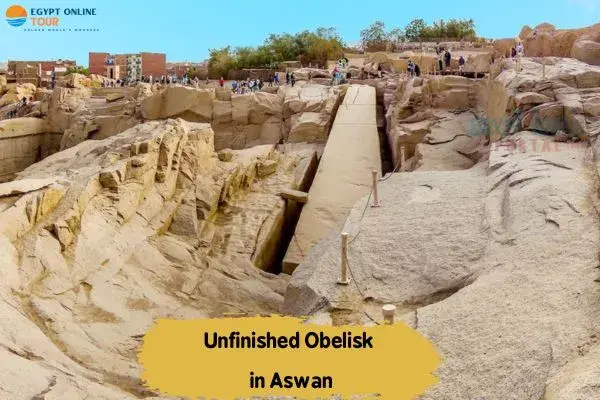
In the ancient granite quarries of Aswan lies an obelisk about 42 metres long that cracked while it was being cut out of the bedrock, probably in the 18th Dynasty, and was abandoned where it lay. It is the best place in Egypt to understand how the ancient Egyptians worked hard stone with simple tools. See the Unfinished Obelisk.
5. The Aswan High Dam
The High Dam, finished in 1970, created Lake Nasser, one of the largest man-made lakes in the world, and ended the annual Nile flood. The stop on the dam is short: a viewpoint over the lake on one side and the river on the other. Read where the Aswan High Dam is.
6. The Nubia Museum
Opened in 1997, the Nubia Museum tells the story of Nubia from prehistory to the villages flooded by Lake Nasser, with statues, a reconstructed Nubian house and the story of the international rescue of the temples. It is open daily from 9:00 to 17:00, with extra evening hours on Thursdays and Fridays at the time of writing, which makes it a good choice for the hot hours or after sunset.
7. Elephantine Island
The island opposite the Corniche was the ancient frontier town of Abu, the starting point of expeditions south. Its archaeological site has the remains of temples of Khnum and Satet and the Nilometer that measured the height of the flood. Walk through the two Nubian villages in the middle of the island as well. See our Elephantine guide.
8. Kitchener's Island (Aswan Botanical Garden)
The island given to Lord Kitchener in the 1890s is now a botanical garden with palms, tropical trees and birds, reached by felucca or motorboat. It is a quiet hour away from the city. Read about the Aswan Botanical Gardens.
9. The Tombs of the Nobles and the Monastery of Saint Simeon
On the west bank, the rock-cut tombs of Qubbet el-Hawa belonged to the governors of Aswan in the Old and Middle Kingdoms; the climb up is steep but the view over the river is the best in the city. Further into the desert stand the ruins of the Monastery of Saint Simeon, reached on foot or by camel from the river.
10. The Aswan souq and the Corniche
The market street parallel to the Corniche is calmer than the bazaars of Luxor and Cairo, with spices, hibiscus, dates, Nubian baskets and scarves. In the evening, walk the Corniche and have a drink with a view of the islands; the terrace of the Old Cataract hotel, where Agatha Christie stayed, is a famous spot for sunset if you book ahead.
Other ways to see Aswan
Beyond the main sights, a few slower activities show a different side of the city:
- Bird watching by boat: the islands of the First Cataract are a good place to see herons, egrets, kingfishers and other Nile birds. Early morning, with a boatman who knows the channels around Kitchener's Island and the granite islets, is the best time.
- A horse-drawn carriage ride: a carriage along the Corniche and through the centre passes the Coptic Cathedral of the Archangel Michael, consecrated in 2006 and one of the largest Coptic cathedrals in Egypt, and the El-Tabia Mosque on its hill, built on the site of a 19th-century fort. Agree the route and price before you start.
- A walk through the souq with a guide: a local guide helps you tell good spices, hibiscus and Nubian crafts from souvenirs, and explains the prices.
- Sehel Island: a short boat ride north of the dam, with rock inscriptions left by expeditions and the Famine Stela. See our Sehel Island guide.
Where to eat in Aswan
Aswan's food is a mix of Egyptian and Nubian cooking. Try Nubian dishes such as slow-cooked meat or fish with okra and bread baked in a clay oven, ideally in a Nubian village or a family-run place on the west bank. Restaurants with Nile views line the Corniche and the island hotels; the souq area has simple, cheap places for falafel, koshari and fresh juice. Hibiscus (karkade) served cold is the drink of the city. Read more about the history of ancient Nubia before your visit.
Day trips from Aswan
Abu Simbel
The two temples of Ramesses II and Nefertari at Abu Simbel are about 280 km south of Aswan, three to three and a half hours each way by road through the desert. Most visitors leave at about 4:00 to arrive in the cool of the morning; you can also fly. On 22 February and 22 October the rising sun lights the statues in the sanctuary, and the ticket costs more on those days. Read our facts about Abu Simbel and the guide to the Abu Simbel sun festival.
Kom Ombo and Edfu
North of Aswan, the double temple of Kom Ombo, dedicated to Sobek and Horus, is about an hour away, and the Temple of Horus at Edfu about two hours. Both are on the road to Luxor and are visited by every Nile cruise. See Kom Ombo Temple history.
Kalabsha
Beside the High Dam, the rescued temples of Kalabsha and Beit El-Wali stand on a peninsula of Lake Nasser, usually reached by boat. They are among the quietest temples in Egypt.
How many days do you need in Aswan?
- One day: High Dam, Unfinished Obelisk and Philae in the morning; felucca and a Nubian village in the afternoon. This is what most Nile cruises do.
- Two days: add the Nubia Museum, Elephantine and the west bank tombs, at a slower pace.
- Three days: add the day trip to Abu Simbel.
Best time to visit Aswan
From November to February days are sunny and pleasant, with average highs of 23 to 30 °C, and nights are cool (around 10 °C in January). March and October are warm. From May to September Aswan is one of the hottest places in Egypt, with average highs of 39 to 42 °C; sightseeing is still possible from dawn to late morning and again at sunset, with the museum and the hotel pool in between.
Getting to Aswan
- By air: flights from Cairo to Aswan take about 1 hour 25 minutes.
- By Nile cruise: the classic way, three or four nights between Luxor and Aswan. See Luxor to Aswan or Aswan to Luxor.
- By train: day trains and the overnight sleeper train run from Cairo along the Nile valley.
- By road from Luxor: about three hours, with stops at Edfu and Kom Ombo on the way.
Practical tips from our guides
- Aswan is walkable along the Corniche, but the sights are spread across islands and both banks; budget for boats.
- Carry small notes for boatmen and tips; feluccas and motorboats are paid in cash.
- Dress modestly in the souq and the villages; a scarf and a hat are useful for sun and wind on the boats.
- Stay on the Corniche or on one of the islands. Island hotels are quiet but depend on the hotel ferry; the Corniche is easier for walking to restaurants and the souq.
Plan it with us
Our Philae Temple, High Dam and Obelisk private tour covers the classic Aswan morning, and the private tour to Abu Simbel by car takes care of the early start. Browse all our Aswan day tours.
Aswan: quick answers
Is Aswan worth visiting?
Yes. It has Philae Temple, the Nubian villages, the most beautiful stretch of the Nile and the base for Abu Simbel, at a slower pace than Luxor or Cairo.
How many days in Aswan are enough?
Two days for the city sights; three if you add the day trip to Abu Simbel.
Luxor or Aswan, which is better?
Luxor has more temples and tombs; Aswan is calmer and greener, with Nubian culture and the islands. Most itineraries include both.
How far is Abu Simbel from Aswan?
About 280 km, three to three and a half hours each way by road, or a short flight.
Ahmed Samir writes and updates the Egypt travel guides of Egypt Online Tour, a licensed tour company based in Cairo (ETAA licence 1466). Our travel advisors review each guide before it is published.
All guides by Ahmed Samir