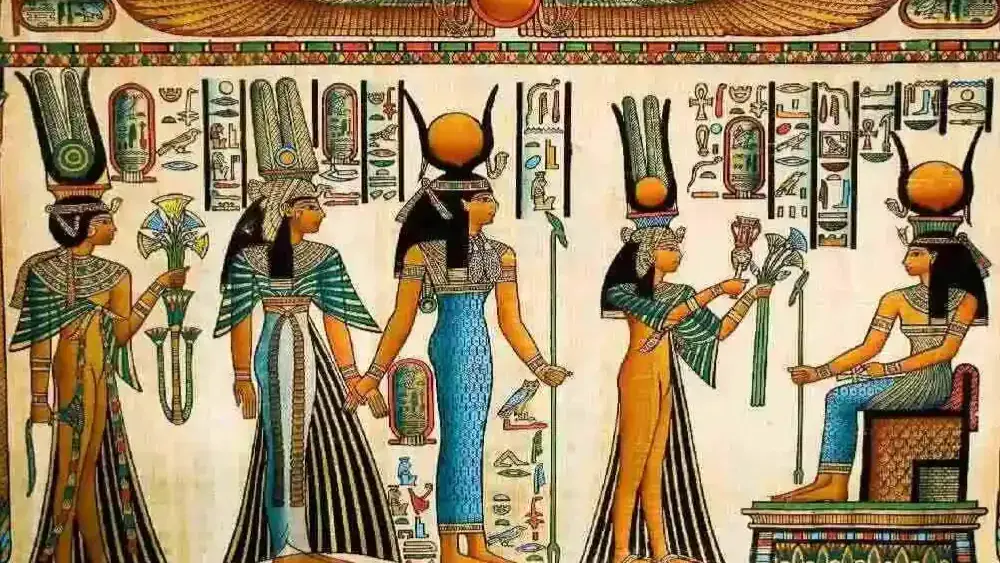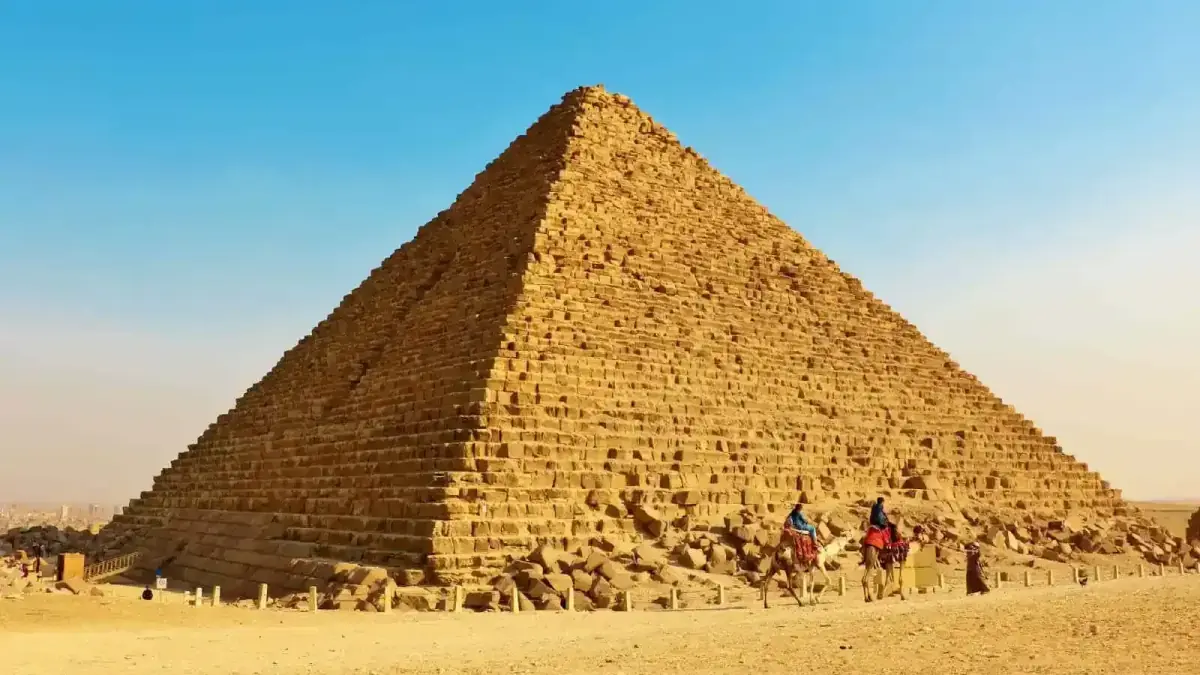
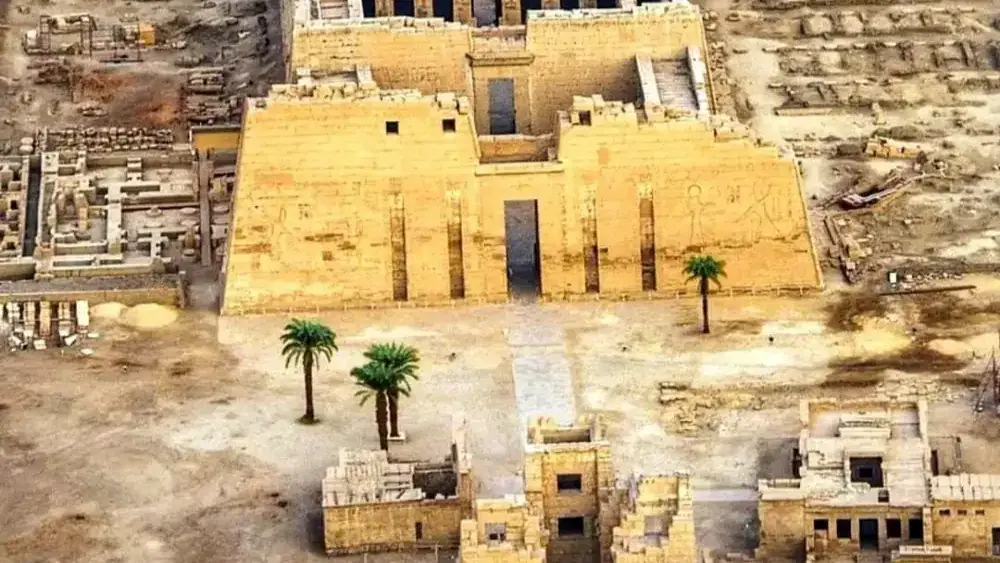
Hidden on Luxor’s West Bank, the Temple of Medinet Habu is a masterpiece often missed by travelers. Built as the mortuary temple of Ramses III, it holds vibrant reliefs, epic battle scenes, and secrets of ancient Egyptian life. Today, consider me your personal guide, revealing the hidden stories and details that most visitors overlook. Explore the Temple of Medinet Habu the right way and experience the history, mystery, and beauty that make it truly unforgettable.
What Is the Temple of Medinet Habu?
Discover the Temple of Medinet Habu, one of the most impressive ancient sites on Luxor’s West Bank. Known as the Mortuary Temple of Ramesses III, this massive complex reflects the power and legacy of one of Egypt’s last great pharaohs. The entire area is also called Medinet Habu, which is why many travelers refer to it by the same name.
Built during the New Kingdom, the temple stands out for its well-preserved reliefs, detailed wall carvings, and towering statues of Ramesses III. As you explore the site, you’ll notice how every wall tells a story—battles, rituals, and daily life in ancient Egypt.
If you're planning a trip to Luxor, Medinet Habu is a must-see destination for anyone interested in history, architecture, and unforgettable cultural experiences. For a full experience, consider joining a Luxor West Bank Tour, which takes you to Medinet Habu along with other iconic temples.
Why is Medinet Habu famous?
Medinet Habu is famous for its majestic mortuary temple of Ramesses III, showcasing his power, heritage, and beautifully preserved reliefs that transport visitors straight into ancient Egyptian history.
Who built the Temple of Medinet Habu?
Medinet Habu was built during the New Kingdom by Ramesses III, the second Pharaoh of the 20th Dynasty. It later grew from earlier structures by Thutmose III and Hatshepsut, honoring Amon and the Primeval Ogdoad.
Why is it linked to Ramses III?
Medinet Habu is directly linked to Ramses III as his mortuary temple, showcasing his power, colorful reliefs, and detailed inscriptions that honor his reign.
Read about: When Was the Luxor Temple Built
Where is Medinet Habu located?
The Temple of Medinet Habu is located in Western Thebes, the vast area of present-day Luxor along the Nile’s west bank. It’s near major attractions like the Valley of the Kings, Hatshepsut’s funerary temple, and the Ramesseum. These sites, including the Temple of Medinet Habu, share a funerary and religious significance, as this western area aligns with the setting sun, symbolically important in ancient Egyptian religion.
Medinet Habu on Luxor’s West Bank
Medinet Habu is located on Luxor’s West Bank, surrounded by other key historical sites like the Colossi of Memnon and the Valley of the Kings. Its western position reflects ancient Egyptian beliefs, as the west was considered the land of the dead, making it the ideal location for mortuary temples. Visiting Medinet Habu gives travelers a unique glimpse into the funerary and religious traditions of ancient Egypt.
How far is Medinet Habu from central Luxor?
The Temple of Medinet Habu sits on Luxor’s West Bank, about 4 km (2.5 miles) from the pedestrian ferry landing in central Luxor. It’s conveniently close to the Colossi of Memnon, making it easy for visitors to combine multiple historical sites in one trip.
How to get to the temple
Travelers have several ways to reach the temple depending on their preferences and budget:
Public buses
A low-cost option, though they can be crowded, and stops may be tricky for first-time visitors.
Taxis
Comfortable, but tourist prices may apply unless you negotiate a fixed rate beforehand. You can ask the driver to wait and return you to the East Bank for an extra fee.
Official tours
Convenient pickup and drop-off from your accommodation, often including multiple landmarks in a full-day itinerary.
Rental cars
Offer flexibility to explore multiple sites, but driving in Egypt can be challenging for foreigners.
Bicycles
Many West Bank hotels offer bicycles, perfect for scenic rides to Medinet Habu and nearby temples, best during cooler months.
With these options, planning your trip to Medinet Habu is simple, giving you more time to enjoy its stunning history and remarkable architecture.
Learn about: How many days in Luxor
Medinet Habu Temple History
Medinet Habu was constructed during Egypt’s New Kingdom period (1570 – 1050 BC) by Pharaoh Ramses III (1184 – 1153 BC), the second ruler of the 20th Dynasty. For centuries, Medinet Habu served as the economic and cultural center of Thebes. The site’s oldest structure dates back to the Eleventh Dynasty (2081 – 1938 BC), starting as a small shrine. Later, Pharaohs Thutmose III and Hatshepsut expanded the area to honor the creator god Amon and the Primeval Ogdoad, the eight deities of the Middle Kingdom. Today, Medinet Habu remains one of the most fascinating historical sites in Luxor, offering visitors a glimpse into centuries of ancient Egyptian history.
Read about: Ancient Egyptian Mummies
The role of Ramses III in building the temple
Ramses III, the second ruler of Egypt’s Twentieth Dynasty, played a central role in the construction of his mortuary temple at Medinet Habu. Beyond serving as a place of worship, the temple reflects his power, achievements, and vision for Egypt during turbulent times. Medinet Habu showcases inscriptions and artistic depictions of Ramses III’s victories, including his defense against the Sea Peoples, highlighting his military skill and leadership. The temple also records his domestic programs, such as land donations to major temples and efforts to maintain law and order. By commissioning Medinet Habu, Ramses III ensured that his legacy and Egypt’s grandeur would be preserved for future generations, making it a vital historical and cultural landmark in Luxor today.
The temple’s religious purpose
Medinet Habu served as a major religious center in Western Thebes, dedicated to the god Amun. Its walls and halls were designed to honor divine power and pharaonic authority, while also reflecting Egypt’s military victories. Beyond worship, the temple provided spiritual support to nearby communities, including the Dayr al-Madinah women’s village, and remained a sacred and fortified site even in the 9th century AD when Coptic Christians inhabited the complex.
Medinet Habu and the worship of Amun
Medinet Habu, the mortuary temple of Ramesses III on Luxor’s West Bank, was a vital religious site dedicated to Amun. The temple’s rituals and ceremonies reinforced the pharaoh’s divine authority, linking Ramesses III’s resurrection to the primeval creator god. Through its grand halls and reliefs, Medinet Habu not only honored Amun but also showcased the spiritual connection between the king and the divine, making it a central place of worship in ancient Thebes.
What is the tomb of Medinet Habu?
The Tomb of Medinet Habu is the grand Mortuary Temple of Ramesses III, located on Luxor’s West Bank. Famous for its massive size and remarkably well-preserved condition, the site served as a central place to honor the pharaoh after death. Its walls, statues, and reliefs provide a vivid glimpse into ancient Egyptian funerary practices and the power of Ramesses III, making it a must-see destination for anyone exploring Luxor’s historic West Bank.
Architecture of the Temple of Medinet Habu
The Temple of Medinet Habu showcases the grandeur of New Kingdom architecture through its massive scale and intricate design:
First Pylon
The grand entrance with towering walls covered in reliefs of Ramesses III’s military victories, including battles against the Sea Peoples.
Courtyards
Expansive open spaces once lined with colonnades and statues, leading deeper into the temple complex.
Hypostyle Halls
Rows of columns supporting the roof, with walls and pillars carved with scenes of religious rituals and the pharaoh’s interactions with the gods.
Sanctuary
The innermost area dedicated to the god Amun, where priests performed daily rituals.
Fortified Walls
Designed to combine spiritual purpose with defensive strength, making the temple both a place of worship and a protective stronghold.
Medinet Habu remains a striking example of ancient Egyptian architecture, blending artistry, spirituality, and strength in one remarkable complex.
The fortified entrance and first pylon
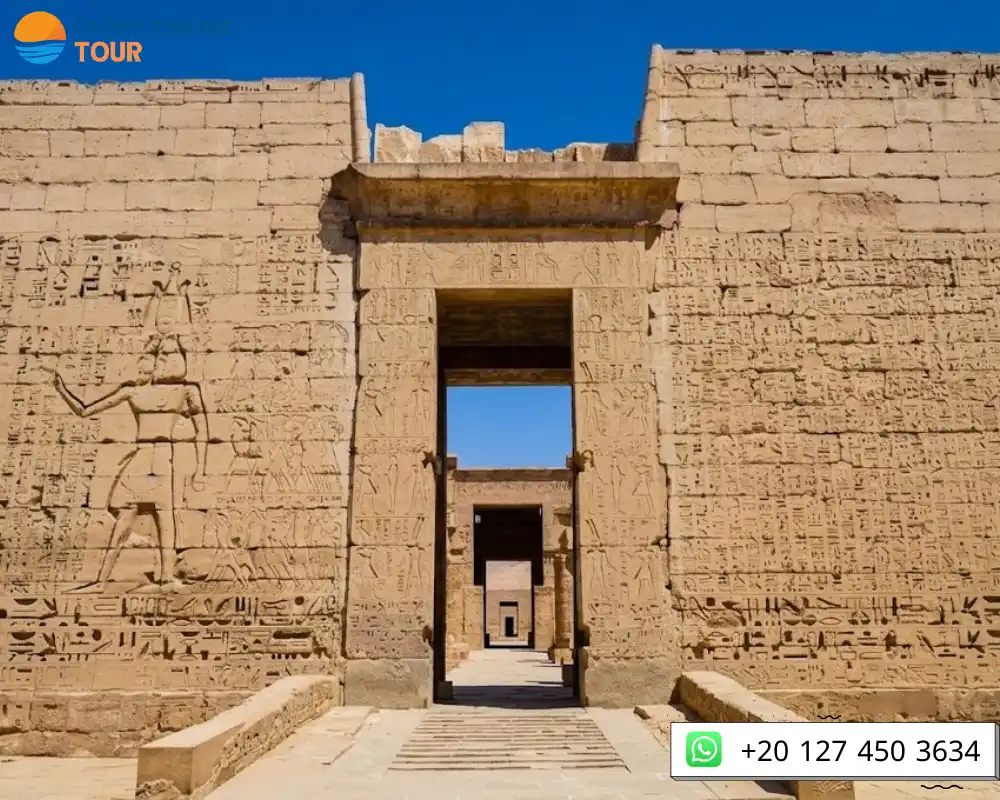
The Temple of Medinet Habu begins with a massive fortified gate designed like a Syrian stronghold, decorated with detailed battle scenes showing Ramses III’s war with the Syrians. Behind this entrance stands an ancient shrine dating back to the 18th dynasty, adding depth to the site’s history. The path then leads to the first pylon, where both towers are covered with powerful carvings of the king defeating his enemies in the presence of gods like Amun-Ra and Re-Horakhty. These scenes highlight the strength of Ramses III and set the tone for the rest of the temple’s design.
The temple layout, courts, and sanctuary
The layout of the Temple of Medinet Habu is built around a series of open courts and sacred spaces that guide visitors deeper into the complex. The first courtyard is wide and filled with battle scenes between the Egyptians and their enemies, while the second courtyard includes a small lake and later became a basilica during the early Christian period, featuring scenes of religious ceremonies and offerings. The temple continues with hypostyle halls supported by rows of columns, leading to several chapels dedicated to different gods and royal figures. At the center lies the sanctuary, where the sacred boat of Amun-Ra was kept, making it the spiritual heart of the temple.
Who built Medinet Habu?
The Temple of Medinet Habu in Luxor was built by Ramses III, one of the most powerful rulers of ancient Egypt.
Wall reliefs, inscriptions, and artistic details
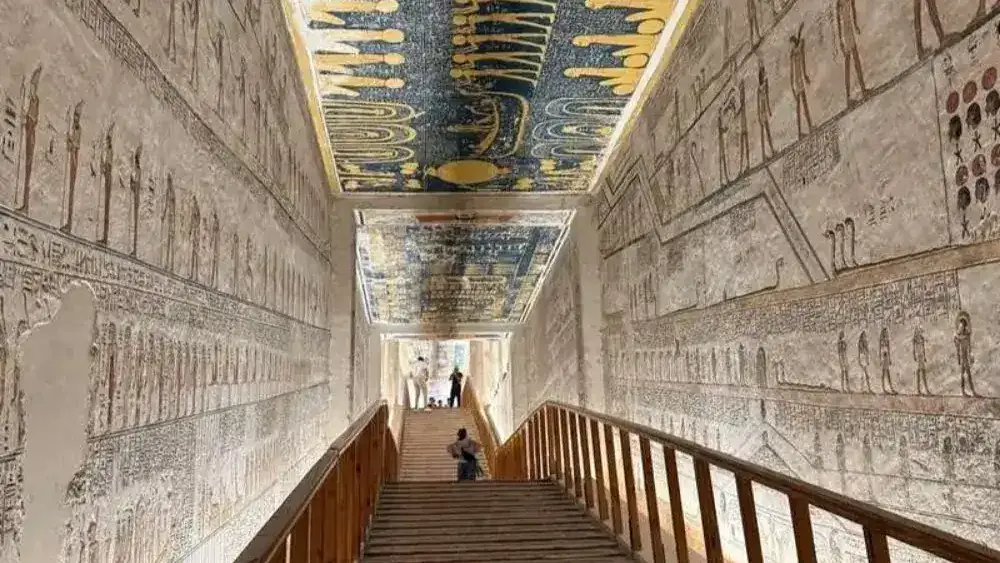
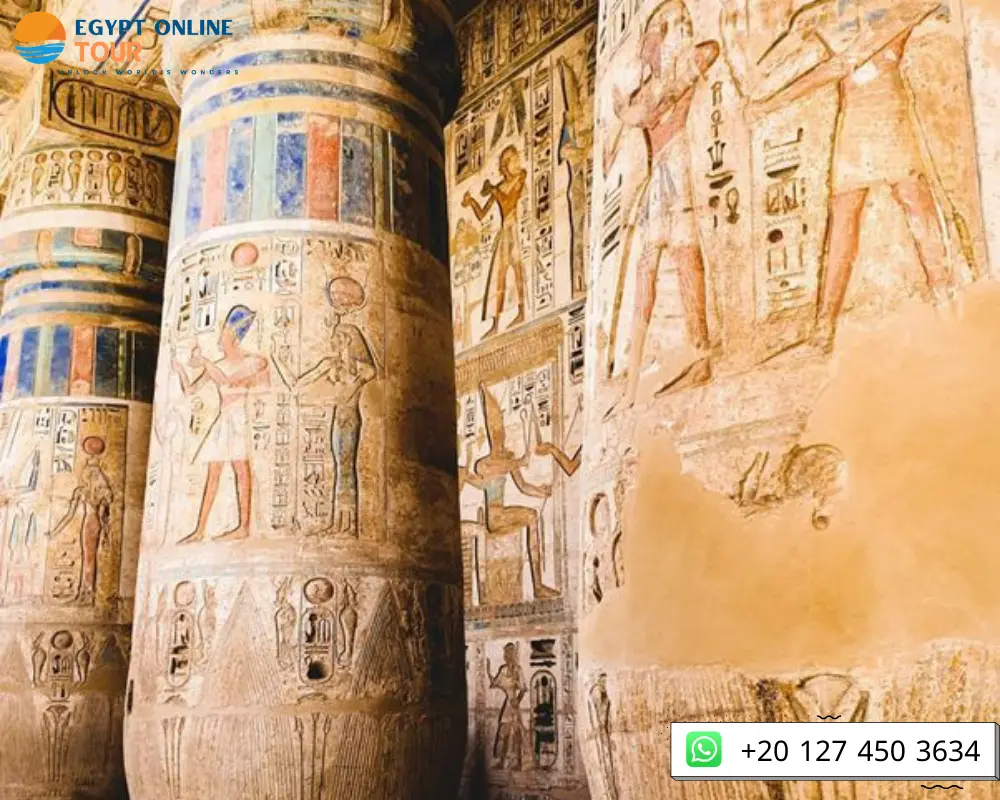
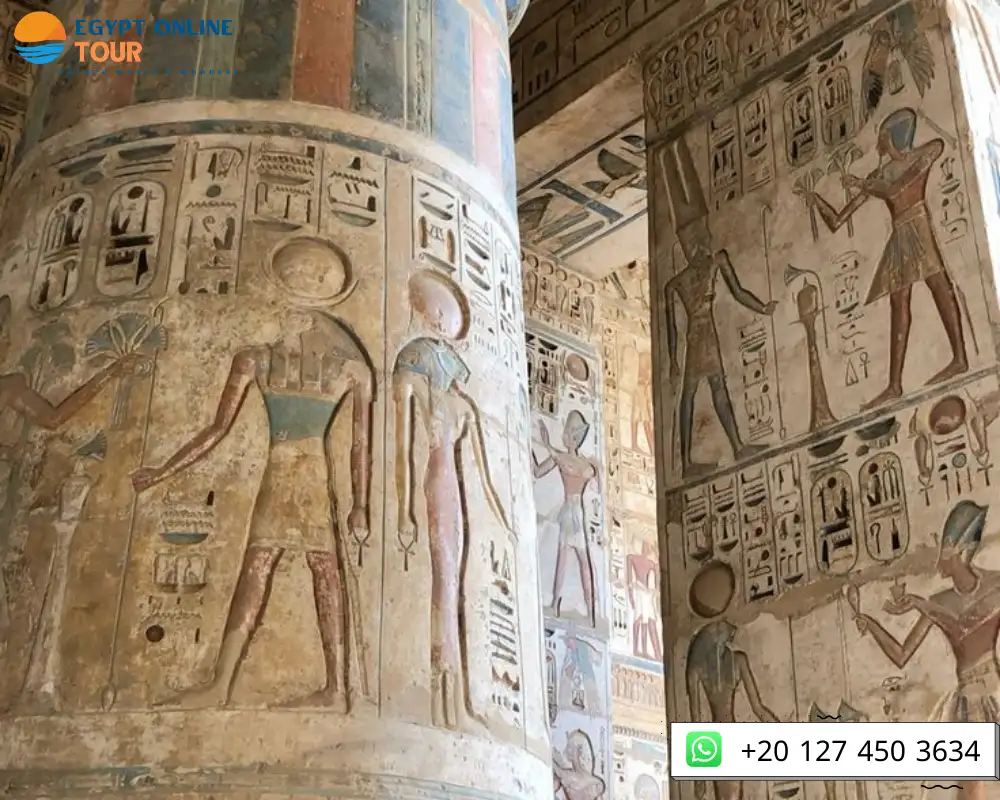
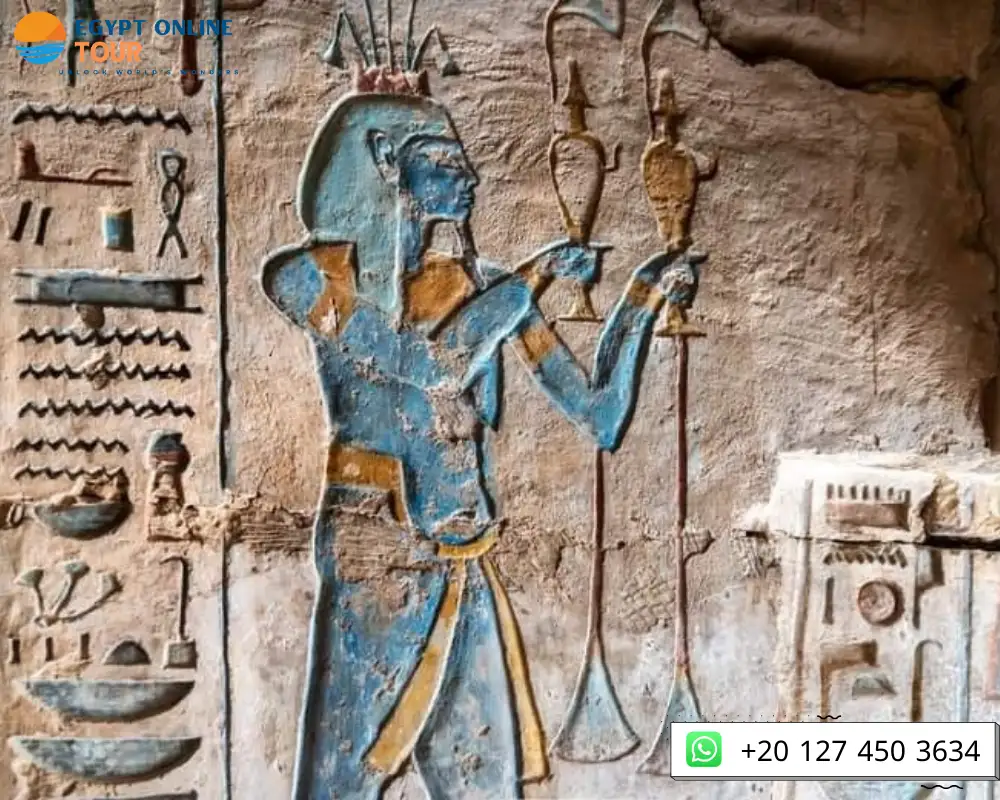
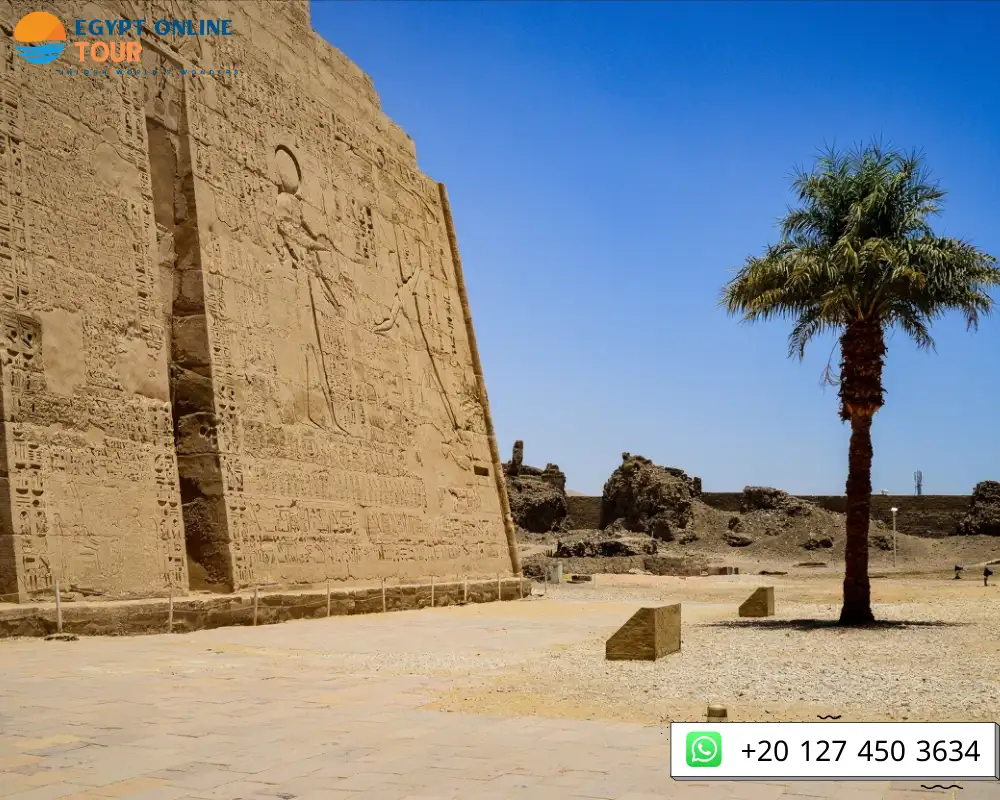
The walls of Medinet Habu are covered with stunning reliefs, inscriptions, and artistic details that bring ancient Egypt to life. These carvings capture majestic scenes of daily life, military campaigns, and religious ceremonies, highlighting the reign of Ramesses III and the devotion of his people. Among the most famous depictions is the Battle of the Delta, showing how Ramesses III defeated the Sea Peoples. Other reliefs illustrate the king’s titulary, offerings, prayers, and religious rituals, providing a vivid insight into the spiritual and cultural practices of the New Kingdom. Today, the temple stands as an open-air museum, where every wall, pillar, and hieratic graffiti tells a story of ancient Egyptian history, art, and religion.
Medinet Habu inscription
The inscriptions at Medinet Habu are more than just carvings on the walls. They help us understand what life was like in ancient Egypt during the New Kingdom. These writings show important events, royal achievements, and religious beliefs in a simple and clear way. Because of this, many Egyptologists study these inscriptions to learn more about ancient Egyptian history, making Medinet Habu an important source of information, not just a visual experience.
What to See at the Temple of Medinet Habu
At the Temple of Medinet Habu, visitors can explore a wide range of historical and architectural highlights:
The Syrian Gate
A unique fortress-like entrance with views over the surrounding village and fields.
First Pylon
Massive walls decorated with detailed reliefs of Ramses III and his military victories.
First Courtyard
Includes parts of the pharaoh’s palace and the famous Window of Appearances.
Second Court
Surrounded by colonnades and carvings showing religious ceremonies and offerings to Amun and Mut.
Temple Complex
Features temples, workshops, storage rooms, and living spaces for priests and officials.
Additional Sites
Includes a chapel from the time of Hatshepsut, tomb chapels of priestesses, a sacred lake, and remains of an early Christian basilica.
Atmosphere
Best visited in the late afternoon when the light enhances the temple’s details and creates a memorable experience.
The temple complex also includes workshops, storage rooms, living spaces for priests, and additional sites like a Hatshepsut chapel and early Christian basilica remains. For more information and to plan your visit, you can check Egypt Tour Packages.
The battle scenes of Ramses III
The battle scenes of Ramses III at Medinet Habu focus on the power and authority of the pharaoh during times of conflict. These scenes highlight his victories over enemies such as the Libyans and the Sea Peoples, showing him as a strong and dominant ruler. The detailed carvings were not only meant to record history but also to present Ramses III as a protector of Egypt, reinforcing his image and influence through powerful visual storytelling.
The famous Sea Peoples reliefs
The famous Sea Peoples reliefs at Medinet Habu show one of the most important historical events of the ancient world. These carvings present a group of seafaring warriors known as the Sea Peoples, who attacked many coastal cities across the Mediterranean between 1276–1178 BCE. Their invasions were a major reason behind the collapse of the Late Bronze Age, and many of their attacks were directed toward Egypt. Because of this, most of what we know about the Sea Peoples comes from Egyptian sources, making the reliefs at Medinet Habu an important visual record of these events.
The best-preserved carvings and colors
The Temple of Medinet Habu is known for having some of the best-preserved carvings and colors in ancient Egypt. Many of its walls still show vibrant colors that give visitors a clear picture of how the temple once looked. The deep carvings, detailed hieroglyphics, and dramatic battle scenes highlight the artistic skill of the New Kingdom, making Medinet Habu a true masterpiece of ancient Egyptian art.
Learn about: How to Enjoy a Classic Holiday in Egypt
Why Visit the Temple of Medinet Habu?
The Temple of Medinet Habu is often overlooked by visitors on Luxor’s West Bank, but it offers a unique and rewarding experience for those who choose to explore it:
A Peaceful Atmosphere
Located off the main tourist path, the temple is less crowded, giving visitors a calm and relaxing experience.
Vibrant Colors
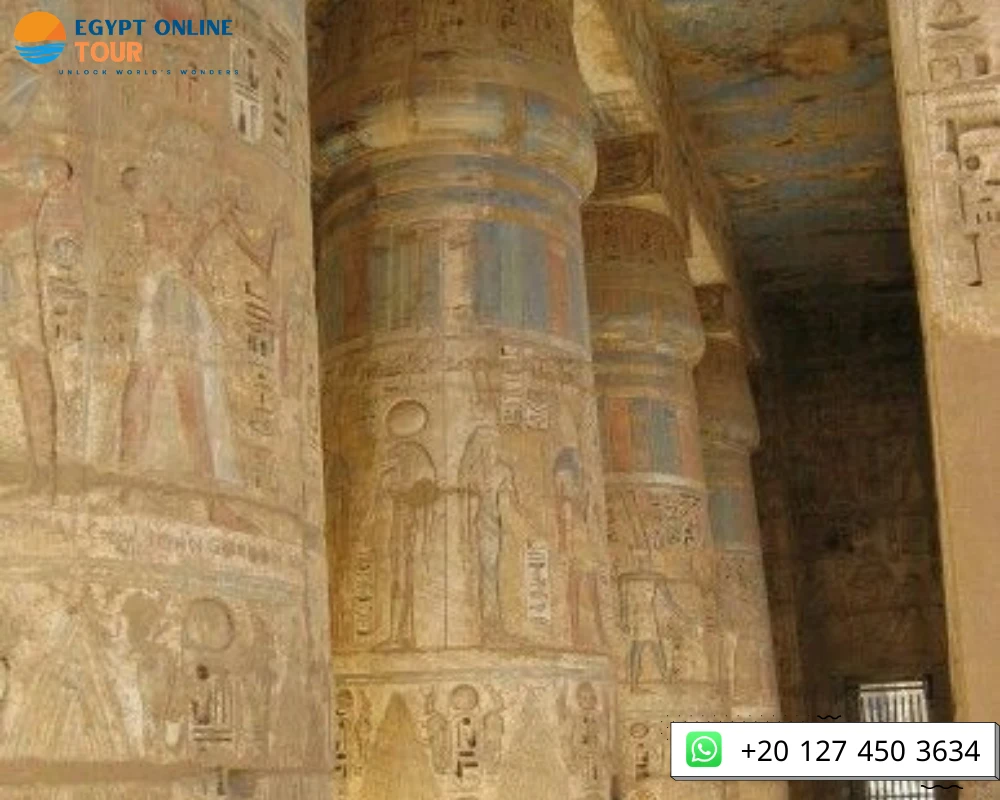
The temple features some of the most colorful and well-preserved hieroglyphics in Luxor, with columns that still look impressive after thousands of years.
History Through Art
The detailed carvings on the pylons tell the story of Ramses III’s reign, allowing visitors to understand history visually.
Well-Preserved Structure
Compared to other sites, Medinet Habu remains in excellent condition, with less visible damage.
Easy to Combine with Other Sites
The temple is located along the route to other West Bank landmarks, making it a convenient and worthwhile stop.
Medinet Habu offers a quieter, richer, and more immersive experience—perfect for travelers who want to discover a different side of Luxor beyond the usual tourist spots.
Know about: Best Months to Visit Egypt
What makes it different from other Luxor temples?
The Temple of Medinet Habu stands out from other Luxor temples because of its massive size and unique design. Covering nearly 10 hectares, it represents one of the finest examples of New Kingdom architecture, combining sacred spaces with strong defensive features. What truly makes Medinet Habu different is how well it has been preserved over time. While many ancient Egyptian sites have been damaged, this temple still keeps much of its original beauty, including colorful reliefs and detailed architectural elements that give visitors a real sense of life in ancient Egypt.
Fewer crowds and better-preserved reliefs
Medinet Habu is known as one of Luxor’s best-kept secrets, offering a quieter experience compared to other popular temples. With fewer visitors than sites like Karnak or the Temple of Hatshepsut, it allows you to explore the temple at your own pace. What makes it even more special is the quality of its reliefs, which remain exceptionally well-preserved and full of vibrant colors from the time of Ramses III. The deep carvings and massive fortified walls make Medinet Habu a true highlight of Luxor’s West Bank.
Why history lovers should not skip it
Medinet Habu is a must-visit for anyone fascinated by ancient Egypt. The temple offers a rare glimpse into the life and reign of Ramses III, with walls covered in detailed reliefs depicting battles, religious ceremonies, and daily life in Thebes. History enthusiasts can explore the mortuary temple, see the depictions of the Sea Peoples, and study inscriptions that have survived thousands of years. With its remarkable preservation and fewer crowds, Medinet Habu allows visitors to fully immerse themselves in Egypt’s past, making it a unique experience that history lovers will truly appreciate.
How to Visit the Temple of Medinet Habu
Visiting the Temple of Medinet Habu is a must for anyone exploring Luxor’s West Bank. To make the most of your experience, plan to arrive early in the morning or late afternoon to avoid the heat and enjoy softer lighting that highlights the carvings.
Planning your visit is simple when you know your options. For those traveling from Aswan or nearby cities, the Luxor Day Tour from Aswan is an ideal way to see Medinet Habu without stress.
Opening hours
Medinet Habu is open to visitors year-round, with slightly different hours depending on the season. Here's a quick guide to plan your visit:
Visiting during these recommended times helps you enjoy the temple's reliefs and architecture without the large crowds and harsh sunlight.
Medinet Habu Ticket Price
Ticket prices for visiting the Temple of Medinet Habu vary for Egyptian residents and international visitors. Here’s a clear guide to help you plan your visit:
Note: Prices are subject to change, so it’s always a good idea to check the latest fees before your visit. For a smoother experience, consider purchasing tickets in advance or as part of an official tour, which can save time and help you make the most of your visit to this historic site.
Best time to visit
Within the day, early morning or late afternoon are the most pleasant times, with softer light and fewer crowds — perfect for photography and enjoying the temple’s details without rushing.
Look at: Best time to travel to Egypt
How long to spend at Medinet Habu
Most travelers spend about 1–2 hours exploring Medinet Habu, which is usually sufficient to see the main areas like the mortuary temple of Ramses III, the vibrant reliefs, the sacred lake, and the surrounding grounds.
If you’re especially interested in ancient Egyptian history or art, planning 2–3 hours allows you to take your time with every detail and fully absorb the significance of the site.
Medinet Habu Tours and Nearby Attractions
Medinet Habu is often included in full-day tours of Luxor’s West Bank because of its historic significance and proximity to several key archaeological sites. Many travelers combine the temple with other nearby attractions for a richer experience of ancient Egyptian history.
Ideal for travelers who value refinement and ease, Luxury Egypt Tours provides expertly guided experiences to Medinet Habu and nearby West Bank landmarks in a more peaceful setting. Reserve your tour today and discover the timeless beauty of Medinet Habu in a truly exceptional way.
Visiting Medinet Habu with the Valley of the Queens
When visiting Medinet Habu, many tours naturally continue on to the Valley of the Queens, which lies on the same West Bank route. The Valley of the Queens served as the burial place for royal wives and children, and walking through its tombs adds another layer of insight into the burial traditions and daily life of ancient Egyptian royalty. Tours that include both Medinet Habu and the Valley of the Queens allow you to see two very different but equally fascinating sides of Theban history in one day.
Combining Medinet Habu with Deir el-Medina
Pairing a visit to Medinet Habu, the mortuary temple of Ramesses III, with Deir el-Medina, the village of tomb workers, creates a rich and immersive West Bank experience in Luxor. This combination allows visitors to see both the grand architectural achievements of the pharaoh and the daily life of the artisans who built and decorated the royal tombs. With both sites located close together, you gain a deeper understanding of how ancient Egyptian society functioned—from monumental religious structures to the communities that supported them.
Adding Hatshepsut Temple or the Ramesseum
After exploring Medinet Habu, you can easily extend your West Bank tour by visiting the Mortuary Temple of Hatshepsut or the Ramesseum. Both temples are close by, making it simple to see multiple highlights in one day. Hatshepsut’s temple shows a unique architectural style and tells the story of one of Egypt’s most famous queens. The Ramesseum, dedicated to Ramses II, offers grand statues and reliefs that give you a sense of pharaonic power. Combining these sites with Medinet Habu helps you compare different rulers and styles while making the most of your Luxor visit.
Practical Tips for Visiting Medinet Habu
When exploring the Mortuary Temple of Ramses III, it’s highly recommended to have an archaeologist or official guide to make the visit more insightful. Here are some practical tips to make your trip comfortable and enjoyable:
- Carry extra water and snacks, especially in summer, and aim to drink at least five small bottles of mineral water to stay hydrated.
- Bring small change for the restroom facilities.
- Don’t forget sun protection: a hat, sunglasses, and sunscreen are essential.
- Wear light cotton clothing during hot months.
- There are several cafés facing the temple if you want a drink or a refreshing ice cream.
From timing your visit to navigating the temple grounds, planning ahead enhances your experience. For practical travel planning and organized trips, explore Egypt Classic Tours.
Read about: Tips on traveling to Egypt
What to wear and bring
Visiting Medinet Habu? Make sure you’re fully prepared for a comfortable and enjoyable experience under the Luxor sun. Here are a few things you should follow for a better experience:
- Light, breathable clothing – Cotton or linen is ideal; cover shoulders and knees to respect local customs.
- Comfortable walking shoes – The terrain is sandy and uneven, so good shoes are essential.
- Sun protection – Bring a hat, sunglasses, and sunscreen to handle the strong sunlight.
- Water – Carry several bottles, especially in the summer, to stay hydrated while exploring.
- Optional snacks – Light snacks can help keep your energy up during your visit.
With the right preparation, you’ll be able to explore Medinet Habu comfortably and fully enjoy its incredible history and atmosphere.
Should you visit with a guide?
Yes, it’s highly recommended to visit Medinet Habu with a guide or at least a very detailed guidebook. Having a guide can help you better understand the details and meaning behind what you’re seeing, making your visit more enjoyable and easier to follow.
Photography and sightseeing tips
Medinet Habu is a remarkably preserved, less-crowded temple complex on Luxor’s West Bank, famous for its vibrant, deep-cut reliefs, stunning color remnants, and towering columns. Arrive at 6 AM for the best light (early morning/late afternoon) and to avoid midday crowds and heat, ensuring a peaceful experience.
Explore the Temple of Medinet Habu in Luxor with Egypt Online Tour
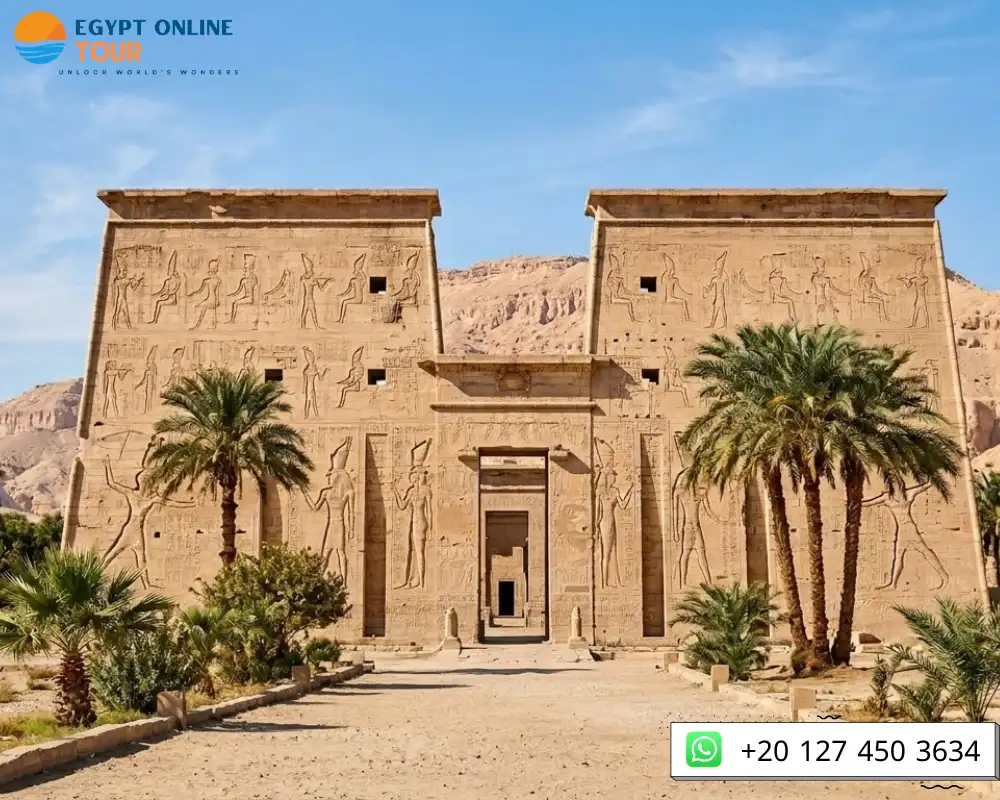
Discover the Temple of Medinet Habu like never before with Egypt Online Tour. This iconic Luxor site, built as the mortuary temple of Ramses III, is famous for its vibrant reliefs, monumental pylons, and intricate hieroglyphs that tell stories of epic battles, religious ceremonies, and ancient Egyptian life. Egypt Online Tour provides detailed guides, expert insights, and virtual experiences to help you plan every step of your visit. From the serene first courtyards to the hypostyle halls filled with history, explore the secrets and grandeur of Medinet Habu with confidence. Plan your ultimate Luxor adventure here: Egypt Tours.
If you’re looking for a place that combines history, beauty, and a calm atmosphere, the Temple of Medinet Habu is a perfect choice. It’s less crowded than other temples in Luxor, but still offers stunning reliefs and a powerful story from the time of Ramses III. This hidden gem on Luxor’s West Bank gives you a more authentic and relaxed experience that many travelers miss. Adding the Temple of Medinet Habu to your itinerary means discovering one of the most impressive and underrated sites in Egypt.