The Egyptian Empire time period, counted as the whole pharaonic state, lasted about 3,000 years: from the unification of Upper and Lower Egypt around 3100 BCE to the death of Cleopatra VII and the Roman conquest in 30 BCE. The empire in the strict sense, when Egypt ruled foreign lands from Nubia to Syria, was the New Kingdom, and it lasted about 500 years, from about 1550 to 1069 BCE. The detailed timeline below gives every period with its dates.
Both answers are correct; they measure different things. Historians use "ancient Egypt" for the three millennia of kings, and "the Egyptian Empire" more narrowly for the New Kingdom, when the pharaohs built the temples of Karnak, Luxor and Abu Simbel that our guides show travellers every day. This guide gives the full timeline in order, then explains the empire years, why Egypt lasted so long, why it fell and where you can still see each period.
How long did the Egyptian Empire last? The short answer
| What you measure | From | To | Length |
|---|---|---|---|
| Ancient Egypt under the pharaohs (Early Dynastic to Ptolemaic) | c. 3100 BCE | 30 BCE | about 3,000 years |
| Native Egyptian rule (until Alexander the Great) | c. 3100 BCE | 332 BCE | about 2,750 years |
| The imperial New Kingdom | c. 1550 BCE | c. 1069 BCE | about 480 years |
| Last known hieroglyphic inscription (Philae) | 394 CE | the old script outlived the state by four centuries | |
All early dates are approximate. Egyptologists date the kings from king lists, astronomical records and radiocarbon results, and the main chronologies differ by a few decades before about 700 BCE. The figures here follow the standard dates used by most museums.
The Egyptian Empire time period in order
Egyptologists divide the 3,000 years into "kingdoms", when one king ruled the whole country, and "intermediate periods", when power split. The 30 dynasties come from the lists of the Egyptian priest Manetho, who wrote in the 3rd century BCE.
| Period | Dates (approx.) | Dynasties | What defines it |
|---|---|---|---|
| Predynastic | before 3100 BCE | none | Farming villages along the Nile, the Naqada cultures, early kingdoms in the south |
| Early Dynastic | 3100 to 2686 BCE | 1 and 2 | Unification under Narmer (Menes), capital at Memphis, first hieroglyphic writing |
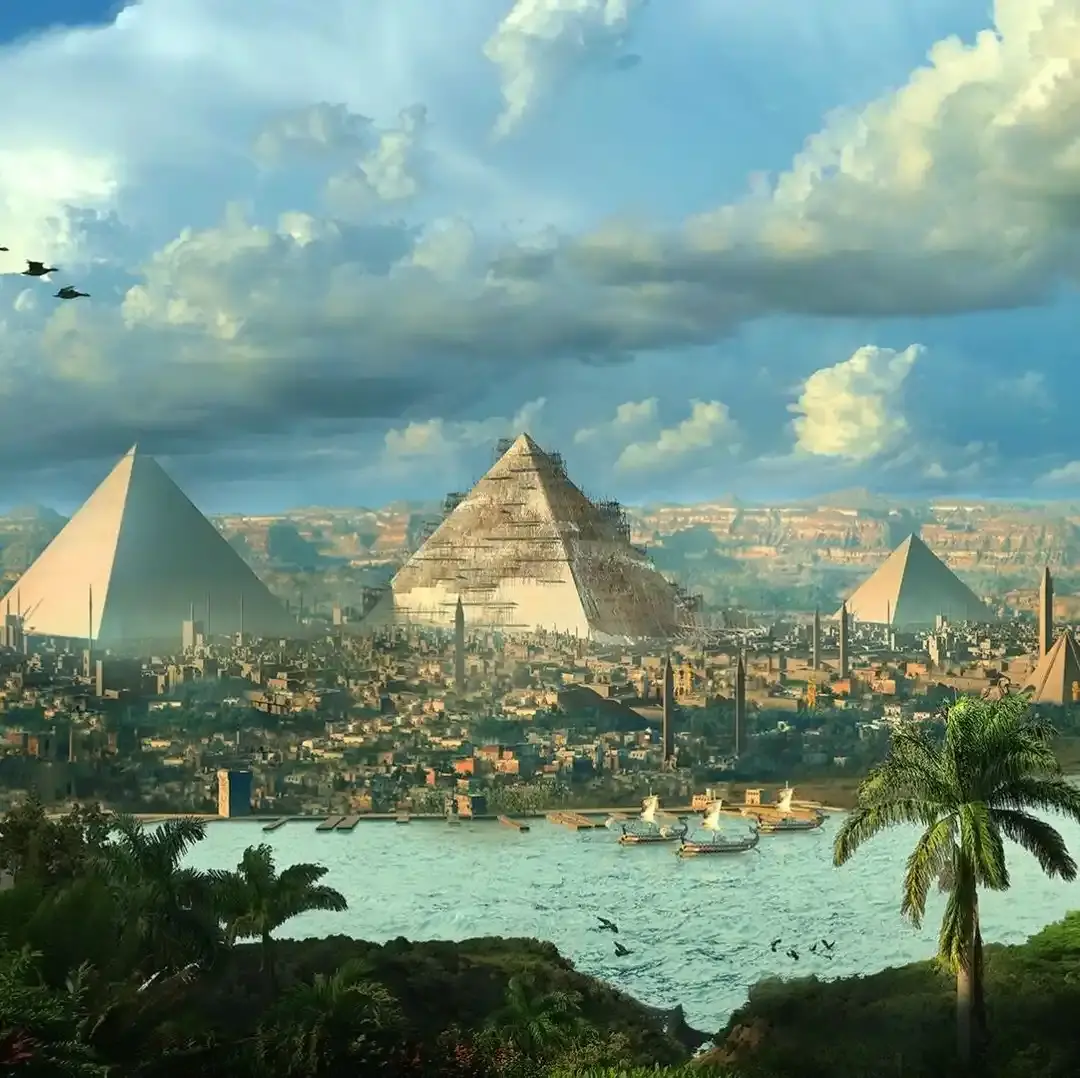
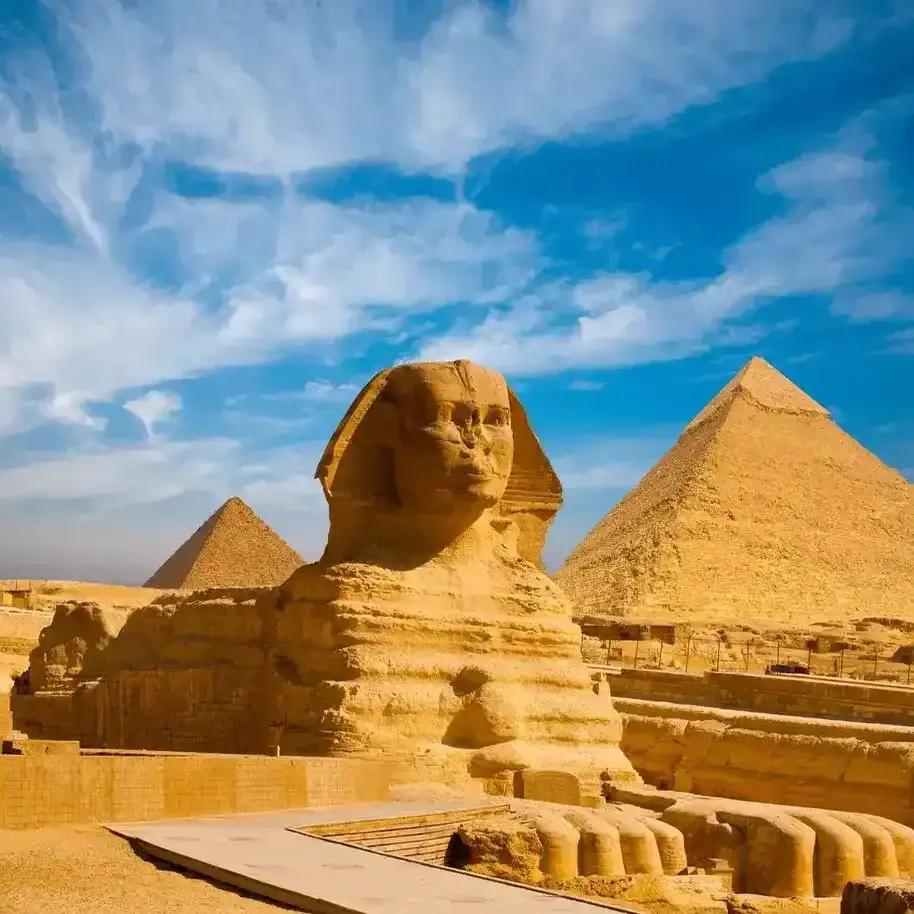
| Old Kingdom | 2686 to 2181 BCE | 3 to 6 | The age of the pyramids: Djoser at Saqqara, Sneferu at Dahshur, Khufu, Khafre and Menkaure at Giza |
| First Intermediate Period | 2181 to 2055 BCE | 7 to 11 | Central power breaks down; provincial governors (nomarchs) rule their own regions |
| Middle Kingdom | 2055 to 1650 BCE | 11 to 13 | Reunification by Mentuhotep II of Thebes; classic literature, forts in Nubia, irrigation in the Fayoum |
| Second Intermediate Period | 1650 to 1550 BCE | 14 to 17 | The Hyksos rule the north from Avaris; horse and chariot arrive in Egypt |
| New Kingdom | 1550 to 1069 BCE | 18 to 20 | The empire: Hatshepsut, Thutmose III, Akhenaten, Tutankhamun, Ramesses II |
| Third Intermediate Period | 1069 to 664 BCE | 21 to 25 | Divided rule from Tanis and Thebes, Libyan kings, then the Kushite kings from Nubia |
| Late Period | 664 to 332 BCE | 26 to 31 | Saite revival, two Persian occupations, the last native pharaoh Nectanebo II |
| Ptolemaic (Macedonian) Period | 332 to 30 BCE | Ptolemies | Alexander the Great, then the Greek dynasty of Ptolemy; Alexandria becomes the capital |
| Roman Egypt | 30 BCE onwards | Roman emperors | Egypt becomes a province of Rome after Cleopatra VII and Mark Antony are defeated by Octavian |
If you want the wider story of the beginning and the end, including what came before the first kings, read our guide on when ancient Egypt started and ended.
The periods one by one
Early Dynastic Period (c. 3100 to 2686 BCE)
Egyptian tradition credits a southern king, Narmer or Menes, with joining Upper Egypt (the Nile Valley) and Lower Egypt (the Delta). The Narmer Palette, now in the Egyptian Museum in Tahrir, shows the king wearing the white crown of the south on one side and the red crown of the north on the other. The capital moved to Memphis, south of modern Cairo, and the first kings were buried at Abydos and Saqqara.
Old Kingdom (c. 2686 to 2181 BCE)
Strong central government, large royal workshops and a rich state turned the tomb into a pyramid. Djoser's Step Pyramid at Saqqara came first, then Sneferu's experiments at Dahshur and the three pyramids of Giza. Our article on how long it took to build the pyramids explains the workforce behind them. Toward the end of the 6th Dynasty the very long reign of Pepi II, weaker kings and low Nile floods loosened royal control.
First Intermediate Period (c. 2181 to 2055 BCE)
Rival centres at Herakleopolis in the north and Thebes in the south competed for the throne. Provincial tombs grew richer while royal building almost stopped. Later Egyptian literature remembered these years as a time of disorder.
Middle Kingdom (c. 2055 to 1650 BCE)
Mentuhotep II of Thebes reunited the country. His successors of the 12th Dynasty built forts at the Second Cataract in Nubia, reclaimed land in the Fayoum and produced the texts that scribes copied for centuries, such as the Story of Sinuhe. Read why historians call it a golden age for Egypt.
Second Intermediate Period (c. 1650 to 1550 BCE)
Settlers from the Levant, the Hyksos ("rulers of foreign lands"), took power in the Delta and ruled from Avaris. They brought the horse-drawn chariot and the composite bow. A Theban family led the war against them, and Ahmose I finished it around 1550 BCE.
New Kingdom (c. 1550 to 1069 BCE)
The period of the empire, explained in the next section.
Third Intermediate Period (c. 1069 to 664 BCE)
After Ramesses XI, kings at Tanis in the Delta shared the country with the high priests of Amun at Thebes. Libyan families then ruled, and in the 8th century BCE the kings of Kush (in modern Sudan) conquered Egypt and ruled as the 25th Dynasty.
Late Period (664 to 332 BCE)
The Saite kings of the 26th Dynasty restored a unified Egypt and copied the art of the Old Kingdom. Persia conquered Egypt in 525 BCE, Egyptian kings won it back for about 60 years, and a second Persian conquest in 343 BCE ended the reign of Nectanebo II, the last native pharaoh.
Ptolemaic Period (332 to 30 BCE)
Alexander the Great took Egypt from the Persians in 332 BCE and founded Alexandria. After his death his general Ptolemy became king, and his family ruled for almost three centuries as pharaohs, building the temples of Edfu, Dendera, Kom Ombo and Philae in the Egyptian style. Cleopatra VII, the last of them, died in 30 BCE, and Egypt became a Roman province.
The New Kingdom: the true Egyptian Empire
Before 1550 BCE Egypt defended its borders and traded abroad, but it did not hold foreign lands for long. After the Hyksos war the kings of the 18th Dynasty kept a permanent army and pushed outwards in both directions.
- Thutmose I (c. 1504 to 1492 BCE) led an army to the Euphrates in Syria and deep into Nubia.
- Hatshepsut ruled as king and sent the famous trading expedition to Punt; see what Hatshepsut did.
- Thutmose III fought seventeen known campaigns, won the battle of Megiddo in the 15th century BCE and controlled the land from the Euphrates to Nubia. This was Egypt's greatest territorial extent.
- Amenhotep III ruled at the peak of wealth, with gold from Nubia and diplomatic letters exchanged with Babylon, Mitanni and the Hittites.
- Akhenaten moved the capital to Amarna and promoted the sun disc Aten; his reign weakened Egypt's hold on the Levant. Our facts about Akhenaten cover the Amarna years.
- Ramesses II fought the Hittites at Kadesh in May 1274 BCE and, about 15 years later (1258 BCE), signed one of the earliest written peace treaties known.
- Ramesses III defeated the "Sea Peoples" in his 8th year; the battle reliefs survive on his temple at Medinet Habu in Luxor.
The empire faded under the later Ramesside kings. Egypt lost its Levantine territories, tomb robbery and strikes by the royal workmen are recorded at Thebes, and after Ramesses XI died around 1069 BCE the country split. So the imperial phase lasted roughly 480 years, from Ahmose I to Ramesses XI.
Why did ancient Egypt last so long?
- The Nile: the yearly flood watered and fertilised the fields, so the state could feed a large population and store grain for bad years.
- Natural borders: deserts on both sides, the sea in the north and the cataracts in the south protected the valley from most invaders for centuries.
- Kingship and religion: the king was the link between people and gods and the keeper of maat, cosmic order. Every new ruler, even a foreign one, took the same titles, which gave the state continuity.
- A trained administration: scribes, tax records and a calendar based on the flood kept the country running between strong reigns.
- The power to recover: three times the country split and three times a new dynasty reunited it.
Why did the Egyptian Empire fall?
There was no single collapse. Egypt declined in stages:
- End of the empire (c. 1069 BCE): the loss of the Levant, the general crisis of the Late Bronze Age around the eastern Mediterranean, weak kings and a split between the Delta and Thebes.
- Foreign dynasties (from the 10th century BCE): Libyan, then Kushite kings ruled Egypt, while Assyria invaded and sacked Thebes in the 7th century BCE.
- End of native rule (343 and 332 BCE): the second Persian conquest, then Alexander the Great.
- End of independence (30 BCE): Octavian, later the emperor Augustus, defeated Cleopatra VII and Mark Antony, and Egypt became a province of Rome, its grain feeding the city of Rome.
The culture continued under Rome. Temples kept working, and the last dated hieroglyphic inscription was carved at Philae in 394 CE. The temple of Isis at Philae was closed between 535 and 537 CE on the orders of the emperor Justinian, which many historians treat as the end of the ancient religion. You can see the temple of Isis on Day 1 of the 3-night program of the Sonesta Star Goddess, a luxury-class, all-suite ship that embarks in Aswan and sails to Luxor.
Where to see each period in Egypt today
A trip along the Nile is a walk through this timeline. This is how our guides match the periods to the sites:
| Period | Sites to visit |
|---|---|
| Early Dynastic | The Narmer Palette in the Egyptian Museum, Tahrir; early tombs at Saqqara |
| Old Kingdom | Giza pyramids and Sphinx, Saqqara, Dahshur |
| Middle Kingdom | The statues and jewellery of the Egyptian Museum and the Grand Egyptian Museum; the rock tombs of Beni Hasan |
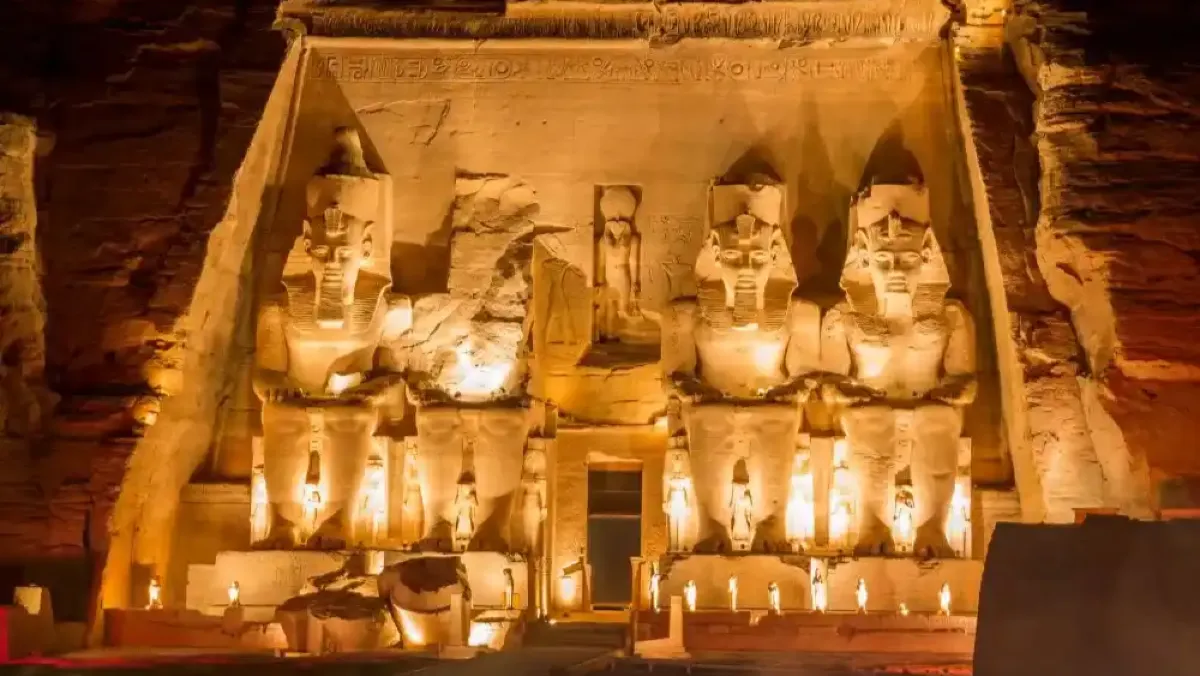
| New Kingdom | Karnak and Luxor temples, the Valley of the Kings, Hatshepsut's temple, Medinet Habu, Abu Simbel; the treasure of Tutankhamun at the Grand Egyptian Museum |
| Late Period | The Serapeum at Saqqara; the royal treasures of Tanis in the Egyptian Museum |
| Ptolemaic | The temples of Edfu, Kom Ombo, Dendera and Philae |
| Roman | The catacombs of Kom el Shoqafa and Pompey's Pillar in Alexandria |
Our tip: see the periods in order if you can. Start in Cairo with the pyramids, fly to Luxor for the empire, and sail south to Edfu, Kom Ombo and Philae for the Ptolemies. On the deluxe-class Salima, the 4-night program from Luxor follows that order, with Edfu and Kom Ombo on Day 3 and Philae on Day 4 in Aswan. Read our facts about the Temple of Karnak before Luxor: it was built and extended over about 2,000 years, so one visit shows almost the whole story.
Plan it with us
Our Egypt classic tours follow the timeline from the pyramids to the temples of the south with an Egyptologist guide. The 8-day luxury Cairo and Nile cruise tour covers Giza, the Grand Egyptian Museum, Luxor, a Nile cruise and Aswan in one trip.
Egyptian Empire time period: quick answers
How long did the Egyptian Empire last?
Ancient Egypt under the pharaohs lasted about 3,000 years, from about 3100 BCE to 30 BCE. The empire in the strict sense, the New Kingdom, lasted about 480 years, from about 1550 to 1069 BCE.
Is ancient Egypt 7,000 years old?
Farming villages along the Nile go back about 7,000 years, but the unified state began around 3100 BCE, so the civilization of the pharaohs is about 5,000 years old.
When was the Egyptian Empire at its largest?
Under Thutmose III in the 15th century BCE, when Egypt controlled the land from the Euphrates in Syria to Nubia in the south.
Who was the last pharaoh of Egypt?
Cleopatra VII, of the Greek Ptolemaic dynasty, who died in 30 BCE. The last native Egyptian pharaoh was Nectanebo II, who lost the throne to Persia in 343 BCE.
What ended the Egyptian Empire?
A long decline: loss of the foreign territories after about 1069 BCE, foreign dynasties, Assyrian and Persian invasions, Alexander the Great in 332 BCE and finally the Roman conquest in 30 BCE.
Ahmed Samir writes and updates the Egypt travel guides of Egypt Online Tour, a licensed tour company based in Cairo (ETAA licence 1466). Our travel advisors review each guide before it is published.
All guides by Ahmed Samir