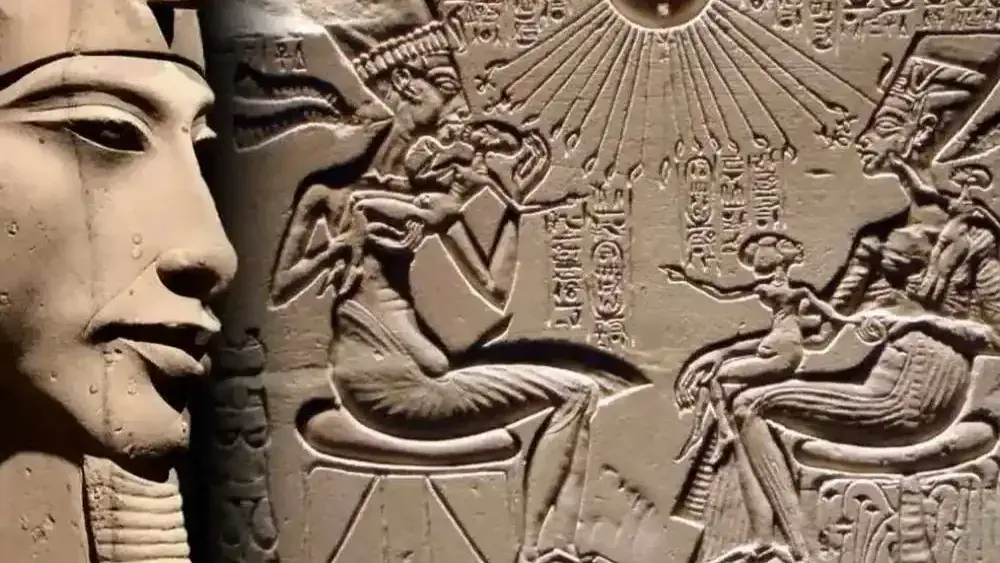
When you explore the key Facts About Pharaoh Akhenaten, it’s clear he was no ordinary king. He boldly challenged centuries of tradition, reshaped religion, and introduced ideas far ahead of his time. From promoting the worship of a single god, Aten, to transforming Egyptian art into a completely new style, his reign changed everything. Yet what makes Akhenaten truly fascinating is what happened after his death—his history was almost completely erased from records, as if he had never existed. Discover the truth behind one of ancient Egypt’s most mysterious and controversial rulers.
Who Was Pharaoh Akhenaten?
When exploring Facts About Pharaoh Akhenaten, you’ll find that Akhenaten was a king of ancient Egypt’s 18th Dynasty who ruled around 1353–1336 BCE. He established a new religious cult dedicated to Aton, the sun’s disk—an idea that shaped even his name, which means “beneficial to Aton.” He is also known by several other names, including Akhenaton, Akhnaton, Amenhotep IV, Amenophis IV, and Ikhnaton.
Akhenaten’s original name and royal background
Akhenaten’s original name was Amenhotep IV, and he came from a royal lineage as the son of Pharaoh Amenhotep III of Egypt’s 18th Dynasty. Some scholars suggest that his father may have associated him on the throne for a few years of coregency, but it is generally accepted that Amenhotep III passed away before his son took full power. Around the time he became pharaoh, Amenhotep IV married his chief queen, Nefertiti, and initially continued the traditional worship of Egyptian deities, though he began highlighting the sun god Aten more prominently.
Why Akhenaten became one of Egypt’s most unusual pharaohs
Akhenaten didn’t play by the usual rules. He flipped Egypt’s religion upside down, worshipping only Aten instead of all the old gods. He even built a brand-new city, Amarna, just for this new religion. On top of that, he changed Egyptian art—showing himself and his family in real, intimate moments instead of stiff, perfect poses. All of this made him one of the most unusual and talked-about pharaohs ever.
Interesting Facts About Akhenaten’s Early Life
Before he became Egypt's most controversial pharaoh, Akhenaten's early life was already full of remarkable moments that shaped the ruler — and the revolution — he would become:
- Pharaoh Akhenaten was born as Amenhotep IV into one of Egypt's most powerful and influential royal families.
- Some scholars believe he may have shared the throne with his father, Amenhotep III, for a period of co-regency, though most agree his father passed away before Akhenaten ruled fully on his own.
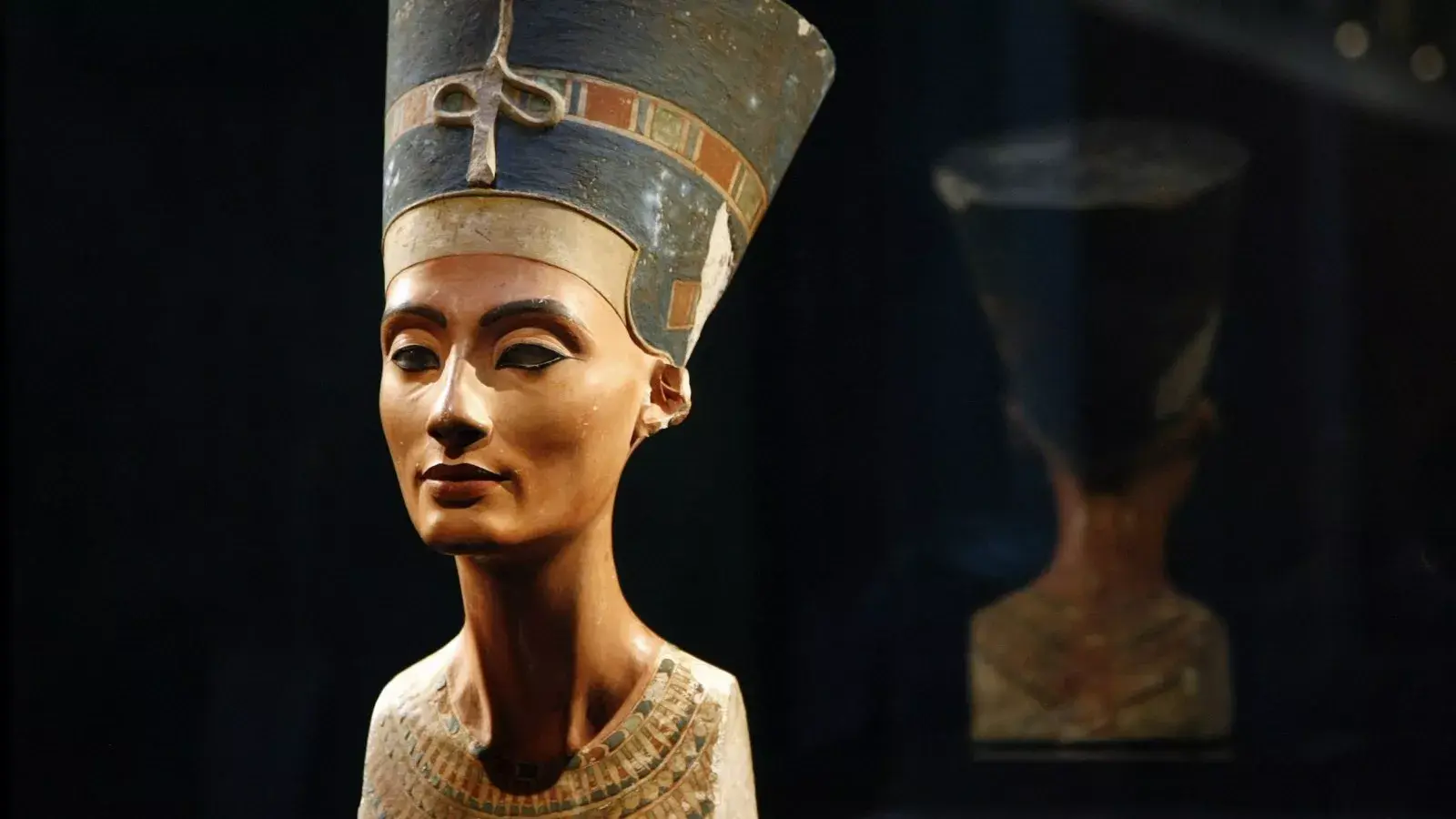
- Around the time he rose to power, he married Nefertiti, who later became one of the most famous and admired queens in ancient Egyptian history.
- Even in his early reign, Akhenaten showed signs of bold religious thinking, giving special devotion to the god Re-Harakhte while still following traditional worship.
- He reimagined divine art in a revolutionary way — Aton was depicted as a sun disk, its rays stretching down toward the royal family, each ray ending in a tiny hand offering life or gently touching the king and queen.
- These early moves were more than artistic choices — they were the first signals of the religious, artistic, and architectural revolution that would define and forever mark his extraordinary reign.
The story of Akhenaten is not just for historians — it is one the whole family can discover together. Our Egyptian Family Holiday brings ancient Egypt to life for all ages, with visits to the pyramids and temples where this extraordinary legacy was born, guided by expert Egyptologists who make history feel like an adventure. You simply need to arrive and relax while enjoying the experience.
Read about: Facts About King Tut
Akhenaten was born as Amenhotep IV
Akhenaten was originally born as Amenhotep IV, into one of Egypt’s most powerful royal families. Being the son of Pharaoh Amenhotep III, he grew up surrounded by luxury, royal traditions, and training that would prepare him for the throne. His birth name reflects his roots in the 18th Dynasty before he changed it to honor the sun god Aten later in life.
He was the son of Amenhotep III and Queen Tiye
Akhenaten was born to Pharaoh Amenhotep III and Queen Tiye, growing up in one of Egypt’s most powerful royal families. This royal lineage gave him the foundation and influence to later reshape Egypt’s religion and art.
Facts About Akhenaten’s Rise to Power
Facts about Pharaoh Akhenaten show that his rise to power was anything but ordinary, as reflected in the following:
- He became pharaoh as Amenhotep IV, following his father Amenhotep III.
- Around year five of his reign, he changed his name to Akhenaten, meaning “Devoted to Aten.”
- He made a bold move by relocating the capital to Akhetaten (Amarna), starting from an empty desert.
- The new city quickly grew into a major center with thousands of people and massive structures.
- Temples like the Great Aten Temple were built on a huge scale in a short time.
- Builders used small limestone blocks (talatat), which made construction faster and easier.
- He didn’t just change politics—he transformed Egyptian art, allowing more freedom and natural expression.
These changes clearly show that Akhenaten's rise to power wasn't just about becoming king—it was the beginning of a bold transformation that reshaped religion, art, and daily life in ancient Egypt. To explore the magnificent temples that stood both before and after Akhenaten's revolutionary era, discover our Tour of the East Bank in Luxor | Private Trip. Step into the golden age of the pharaohs with visits to Karnak Temple Complex and Luxor Temple—where the traditional religious world of Akhenaten challenged comes to life through expert guidance and personalized exploration.
Read more: Facts About Ancient Pyramids in Egypt
How Akhenaten became pharaoh
Facts About Pharaoh Akhenaten show that he rose to power as Amenhotep IV, taking the throne around 1353 or 1351 BCE, either after the death of his father or possibly following a short co-regency with Amenhotep III. He ruled for about 17 years during Egypt’s 18th Dynasty, but what made his rise truly different wasn’t just inheriting the throne—it was what he did next.
A few years into his reign, he began shifting his beliefs and introduced a new religious vision centered on Aten, the sun disk. By his fifth year, he changed his name to Akhenaten to reflect this transformation (Amenhotep = “Amun is satisfied,” Akhenaten = “Effective for Aten”). This moment marked a major turning point, redefining his identity and setting him apart as one of the most unique and controversial pharaohs in history.
Why did his reign mark a turning point in ancient Egypt
Facts About Akhenaten show that his reign was a true turning point in ancient Egypt. Unlike the pharaohs before and after him, he focused on a single god—Aten, the sun disk—moving away from the traditional system of multiple gods. This shift wasn’t just religious; it also changed the balance of power.
Because of his strong beliefs and bold decisions, some historians even describe him as the “first documented monotheist in history.” His ideas challenged centuries of tradition, making his reign one of the most unusual and transformative periods in ancient Egypt.
Akhenaten’s Religious Revolution
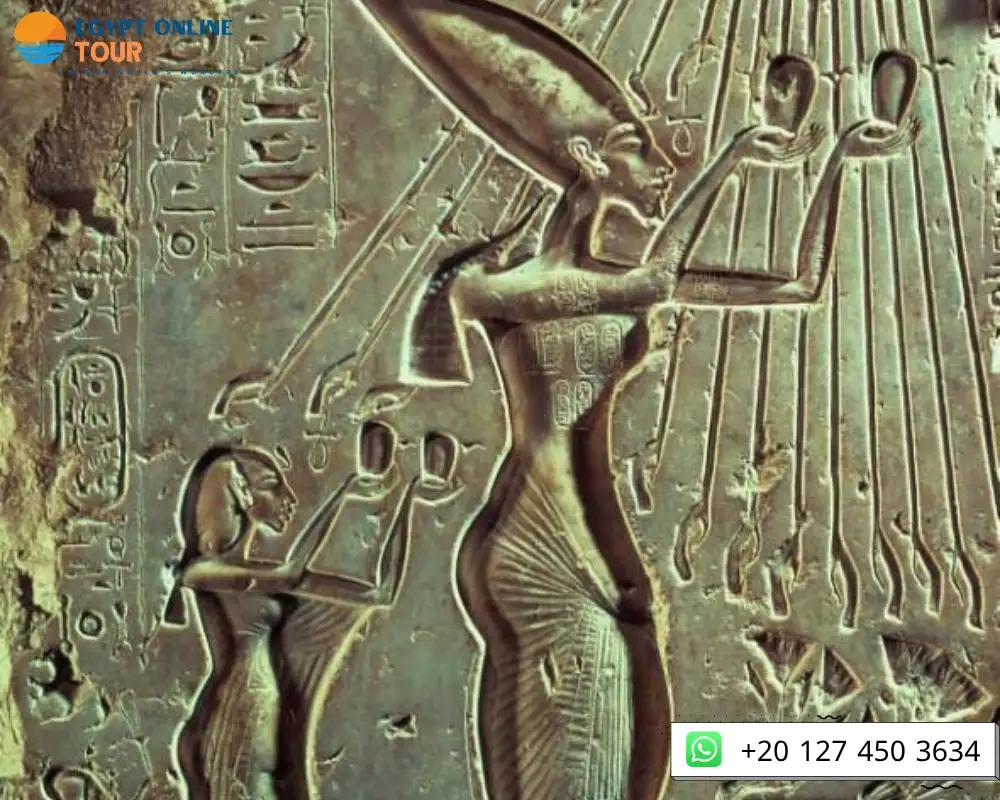
Facts About Pharaoh Akhenaten show that his reign wasn’t just political—it was deeply religious. Ruling Egypt from around 1353 BCE to 1335 BCE, he introduced one of the most dramatic changes in the country’s history. Instead of worshipping many gods and goddesses, he shifted the focus to a single deity—Aten, the sun disk. This wasn’t a small adjustment. Akhenaten completely reshaped the religious system, replacing long-established beliefs with a new vision centered on Aten alone. His bold move marked a clear break from tradition and turned his reign into one of the most unique periods in ancient Egypt.
To witness the temples that flourished both before Akhenaten's revolutionary changes and after Egypt returned to traditional worship, explore our 8 Days Cairo, Luxor, Aswan Classic Tours. Visit Karnak Temple—the grand complex dedicated to Amun-Ra—cruise the Nile, and explore the Valley of the Kings where later pharaohs rest, discovering how Egyptian spirituality evolved through the ages.
Why did Akhenaten promote the worship of Aten?
Facts about Pharaoh Akhenaten show that his religious reforms were both bold and strategic, reshaping Egypt in ways no pharaoh had before, as seen in the following:
- Akhenaten believed Aten, the sun disk, represented the ultimate divine power.
- He aimed to simplify Egypt’s complex pantheon into one all-encompassing god, moving away from traditional polytheism.
- Focusing on Aten reduced the influence of powerful priests, especially those of Amun, giving the pharaoh greater control over both religious and political life.
- His reforms transformed art and architecture, with Aten depicted in new ways and temples built specifically for him.
These changes clearly highlight why Akhenaten’s reign was revolutionary, leaving a lasting impact on Egypt’s religion, culture, and governance.
How he challenged Egypt’s traditional gods
Facts About Pharaoh Akhenaten show that he boldly confronted centuries of Egyptian religious tradition, such as:
- Akhenaten and his wife Nefertiti worshipped only Aten, the sun god, removing the names of other gods and goddesses from monuments and temples.
- The funerary religion of Osiris was largely abandoned, shifting the source of blessings after death to the pharaoh himself.
- He founded a new monotheistic religion centered around Aten, changing his name from Amenhotep IV to Akhenaten to reflect his devotion.
- Acknowledgment of all other deities was banned, marking a dramatic departure from traditional polytheism.
By challenging Egypt’s traditional gods, Akhenaten not only redefined religious life but also asserted unprecedented control over spiritual and political power, leaving a legacy that still fascinates historians today.
Why is he called the Heretic Pharaoh?
Facts About Pharaoh Akhenaten reveal why historians often refer to him as the “Heretic Pharaoh”:
- Akhenaten uprooted traditional Egyptian religion, discarding the established pantheon of gods in favor of worshiping Aten, the sun disk.
- He built a completely new capital, Akhetaten (modern Amarna), changing not only the cityscape but also how monuments were designed and constructed.
- His reign introduced a unique artistic style, breaking centuries of conventional representation in sculpture and painting.
- Historians describe him with contrasting labels: heretic, revolutionary, despot, and the world’s first “individual”, reflecting the radical nature of his rule.
Through these bold actions, Akhenaten earned the title “Heretic Pharaoh,” marking his reign as one of the most extraordinary and debated periods in ancient Egyptian history.
Read about: Facts About Pharaohs
Facts About Pharaoh Akhenaten and Nefertiti
Facts About Pharaoh Akhenaten and his queen Nefertiti reveal their unique partnership in both life and rule, as follows:
- Nefertiti was Akhenaten’s chief queen, playing a central role in supporting his religious reforms and promoting the worship of Aten.
- The couple had at least six daughters, who are often depicted alongside them in temples and monuments.
- Akhenaten and Nefertiti often appeared together in art and ceremonial reliefs, showing equal prominence in religious rituals and public life.
- Their reign is noted for the Amarna artistic style, where they were depicted more realistically and intimately than previous pharaohs and queens.
Through their partnership, Akhenaten and Nefertiti left a legacy carved into the very stones of Egypt — from the temple walls of Luxor that still bear their portraits, to the artifacts preserved in Cairo's museums that tell the story of their revolutionary reign. Our 15 Days Adventure Egypt Tour walks you through it all — the Pyramids of Giza, the ancient ruins of Saqqara and Memphis, the bustling soul of Khan El Khalili, and the treasures of the National Museum of Egyptian Civilization — where every monument, every carving, and every artifact has a story waiting to be heard.
Read: Queen Nefertari
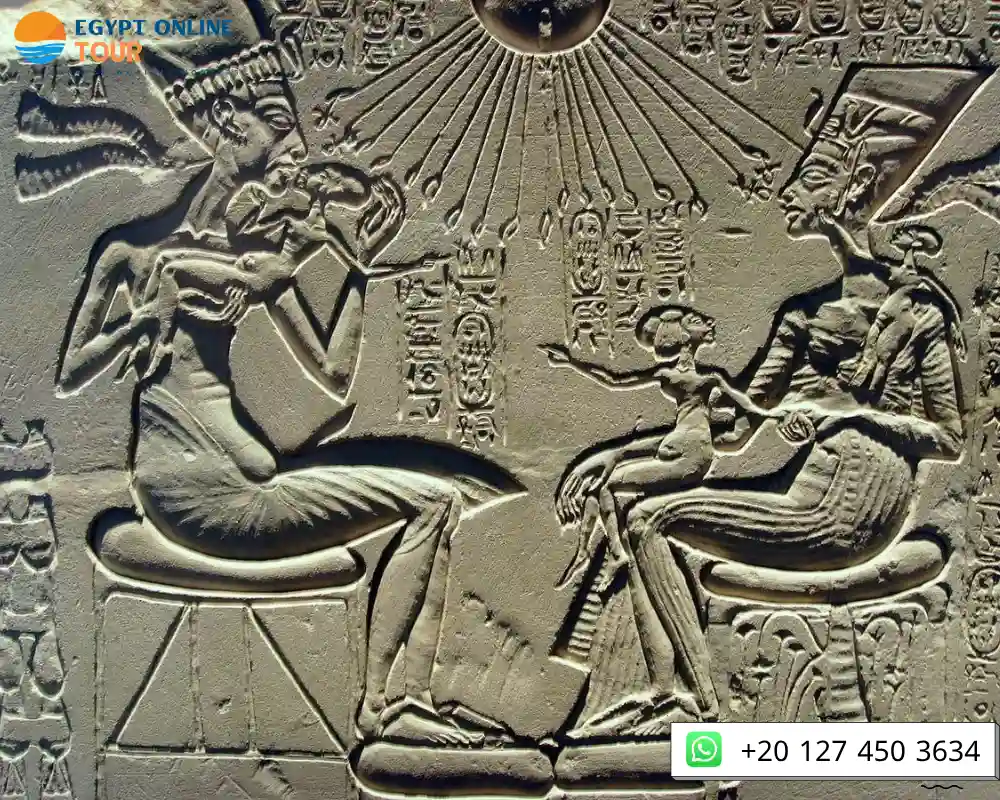
Akhenaten’s marriage to Nefertiti
Facts about Akhenaten and Nefertiti reveal a marriage that blended personal connection with political power, strengthening his religious revolution, such as:
- Nefertiti played a central role in the Aten cult, often depicted alongside Akhenaten and their daughters in temples and monuments.
- The royal couple formed a divine triad with Aten, linking themselves directly to Egypt’s creation myths and reinforcing their semi-divine status.
- Royal women, especially Nefertiti, helped legitimize the Aten cult by standing in for goddesses where female divine power was necessary.
- Their marriage symbolized both political partnership and religious authority, making Nefertiti almost equal to Akhenaten in ceremonial and artistic depictions.
Through this partnership, Akhenaten and Nefertiti not only led Egypt religiously but also reshaped the role of queenship, showing that royal women could wield both spiritual and political influence.
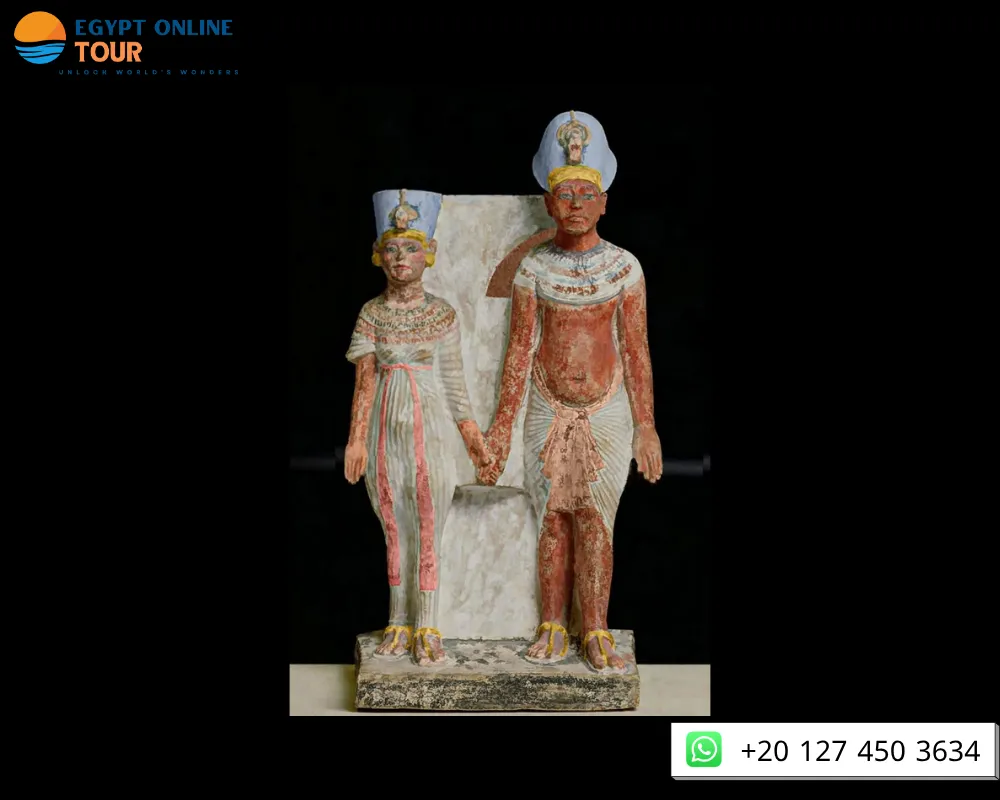
Why did Nefertiti play an important role in his reign
Facts About Pharaoh Akhenaten and Queen Nefertiti show that Nefertiti was far more than a ceremonial figure; she was a true partner in both religion and governance, as demonstrated by:
- Nefertiti actively spread the new Aten faith, participating in religious ceremonies alongside Akhenaten as his equal.
- She replicated the king’s gestures and offerings, showing her involvement in daily worship and religious life, which was uncommon for Egyptian queens.
- With Akhenaten focused on artistic innovations and poetry, Nefertiti often acted as a coregent, taking part in diplomacy, rituals, and state matters, even though this was never formally declared.
- Reliefs and inscriptions depict the couple as inseparable and equal, riding chariots together, sharing public moments, and showing a rare, genuine romantic connection.
Through her active participation and influence, Nefertiti became a powerful and semi-divine figure, helping to legitimize Akhenaten’s revolutionary reign and leaving a legacy of female authority rarely seen in ancient Egypt.
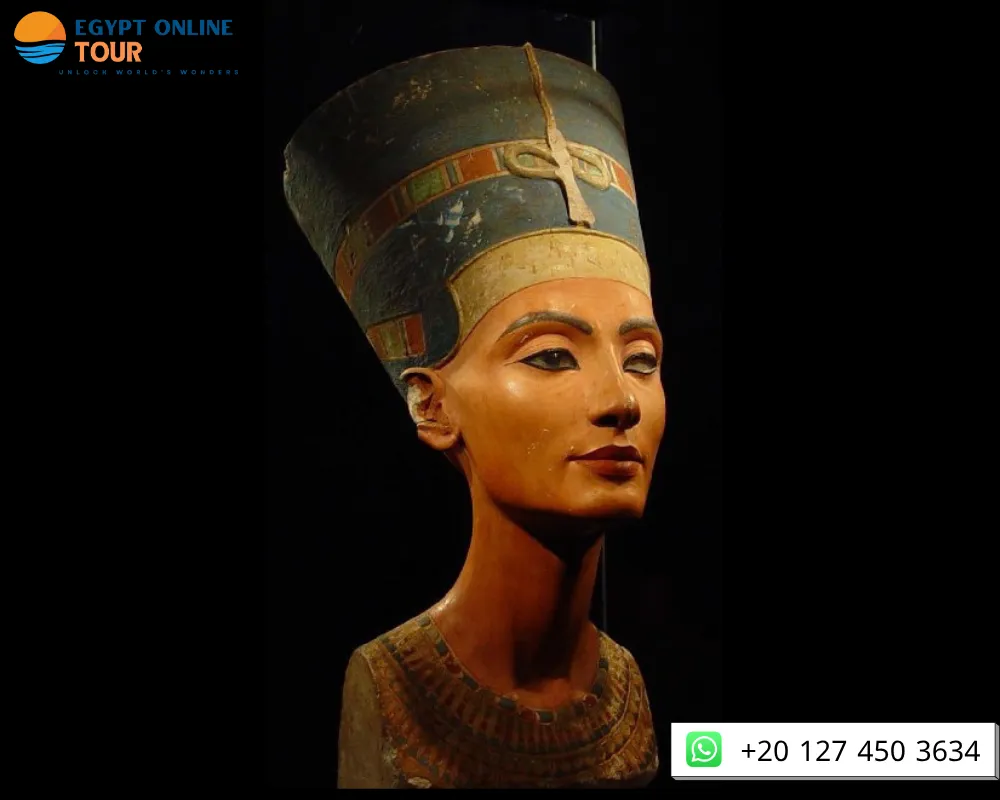
Akhenaten and the City of Amarna
Few ancient cities carry as much mystery and meaning as Amarna — here is what makes it truly unforgettable:
- The ancient city of Akhetaten, known today as Amarna, was built by Pharaoh Akhenaten as his bold new capital, designed from the ground up to reflect his revolutionary vision.
- The city was abandoned shortly after his death around 1332 BCE, leaving it frozen in time like no other ancient Egyptian site.
- Akhenaten didn't build Amarna just for politics — he created it as a spiritual statement, a society devoted entirely to one god, Aten, the power of the sun.
- What makes Amarna truly remarkable is how well it is preserved, giving us a rare and vivid window into daily life during one of Egypt's most unusual religious periods.
- Unlike many other ancient Egyptian cities, Amarna still tells the story of ordinary people who lived through an extraordinary moment in history.
- Today, ongoing excavations and preservation efforts continue to protect the site and deepen our understanding of Akhenaten, his vision, and the civilization he built.
Amarna is just one chapter in Egypt's extraordinary story — and the best way to read that story is to live it. Our 11 Days of Classic Egypt, Cairo, Nile Cruise & Red Sea takes you from the vibrant streets of Cairo, past the Pyramids of Giza and the Sphinx, along the timeless Nile where temples like Karnak and Philae still stand in ancient mystery, all the way to the golden shores of the Red Sea — culture, history, and relaxation perfectly balanced in one unforgettable journey.
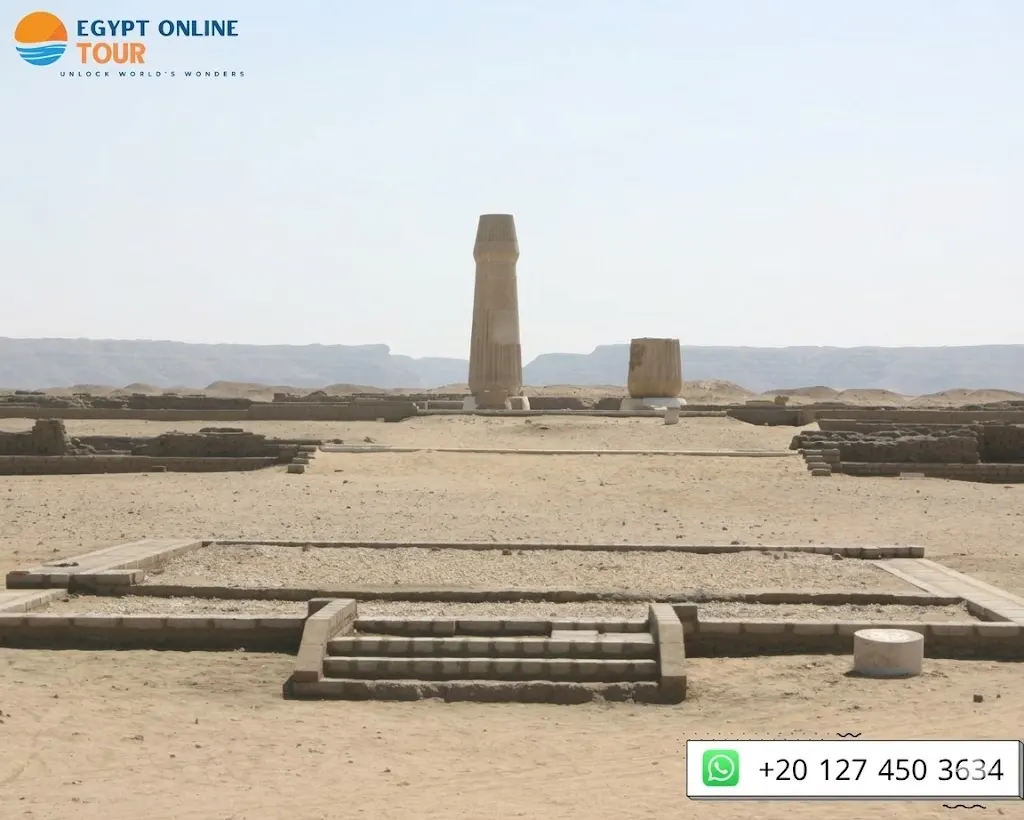
Why did Akhenaten build a new capital city?
Akhenaten’s decision to build a new capital was part of a much bigger cultural shift. He moved Egypt’s capital from Thebes to a completely new and untouched location he called Akhetaten (modern-day Amarna), which means “the place where Aten becomes effective.”
In the fifth year of his reign, Akhenaten claimed that he had “discovered” this site. He believed that Aten had revealed itself there for the first time and had chosen this place specifically for him. The location itself also seemed symbolic, as the surrounding cliffs resembled the Axt symbol, meaning “horizon.”
To build the city quickly, smaller stone blocks known as talatat were used, making construction easier and faster even for less skilled workers. Because of this, most of the city’s main buildings and administrative areas were completed in about three years.
What made Amarna different from other Egyptian cities
Amarna wasn’t like any other city in ancient Egypt—it was built mainly for a god, not for the people. After Akhenaten’s reforms, temples dedicated to other gods were closed, and religious practices outside the worship of Aten were either banned or strongly limited. This made the entire city centered around one belief system only.
The city itself reflected Akhenaten’s priorities. After establishing his new religious system, he withdrew to Akhetaten and focused almost entirely on worshipping Aten, even presenting himself as a divine figure. Because of that, everyday matters like foreign relations, trade, and even maintaining infrastructure and the military became less important.
What also makes Amarna different is how short-lived it was. After Akhenaten’s death, his religious system quickly collapsed. His son, Tutankhamun, restored the traditional gods, and later rulers went even further—destroying the city and removing Akhenaten’s name from history.
Akhenaten Changed Ancient Egyptian Art
Akhenaten’s reign didn’t just change religion—it also completely transformed Egyptian art. The Amarna style broke from traditional Egyptian norms and introduced a more natural, intimate approach. Here’s what made it unique:
- Intimate depictions of the royal family: Art began showing Akhenaten and his family in relaxed, domestic moments rather than stiff, formal poses.
- Exaggerated physical features: The pharaoh and his family were portrayed with elongated heads, full lips, slender bodies, protruding bellies, and sloping shoulders.
- Androgynous representations: Figures often included feminine traits, such as curved breasts and wide hips, symbolizing life and fertility.
- Possible medical influences: Some scholars suggest Akhenaten’s unusual appearance may have been due to a congenital disorder or pituitary tumor.
- Symbolic meaning: The androgynous and exaggerated features could also reflect the divine role of Aten as “father and mother of all,” linking the pharaoh to creation and fertility.
These changes in art highlight the unique and revolutionary character of Akhenaten’s reign, emphasizing key Facts About Pharaoh Akhenaten.
Look at: Interesting Facts About Ancient Egyptian Art
How art became more unusual during Akhenaten’s reign
Akhenaten’s reign brought a dramatic transformation to Egyptian art, introducing styles and depictions that had never been seen before, including:
- The Amarna years marked a major shift in Egyptian art, reflecting Akhenaten’s devotion to Aten.
- Akhetaten, the new capital city, became a center for innovative artistic expression.
- Artists moved away from rigid, formal representations to more naturalistic and intimate depictions.
- The royal family, including Akhenaten, Nefertiti, and their children, were portrayed with elongated heads, slender bodies, full lips, and protruding bellies.
- Art focused on domestic life, emotional connection, and the divine presence of Aten.
- These changes created a style that was instantly recognizable and unique to Akhenaten’s reign.
- Amarna art reinforced the king’s religious and cultural reforms while leaving a lasting legacy on Egyptian visual history.
This transformation highlights key Facts About Pharaoh Akhenaten for modern audiences.
Why the Amarna style looked so different
The Amarna style looked completely different from traditional Egyptian art, reflecting Akhenaten’s bold vision, as represented by:
- The Aten was shown as a sun disk in the sky, with rays ending in tiny hands, rather than as an anthropomorphic or animal deity.
- Akhenaten was depicted at ground level, bathed in sunlight, often with Queen Nefertiti and their daughters.
- Faces featured hanging jaws, pronounced folds, and narrow, slitted eyes.
- Bodies showed sloped shoulders, thin necks, heavy paunches, wide hips and thighs, and spindly legs.
- Royal princesses were depicted with elongated skulls.
- Scholars suggest these features may reflect Akhenaten’s own physical traits, possibly caused by disease, though no theory is conclusive.
This unique artistic style captured the radical changes of Akhenaten’s reign and left a lasting mark on Egyptian art, highlighting key Facts About Akhenaten.
Little-Known Facts About Akhenaten’s Rule
Akhenaten’s reign was one of the most remarkable and unusual periods in ancient Egyptian history, full of innovations in religion, art, and governance that set him apart from every other pharaoh, which is characterized by:
- He wasn’t meant to be pharaoh. Akhenaten was born Amenhotep, the younger son of Amenhotep III and Queen Tiye, with an older brother, Thutmose, originally the heir, who died unexpectedly, making Akhenaten next in line.
- He was married to Nefertiti. Akhenaten married Nefertiti shortly after ascending the throne. Their relationship was unusually loving, and he treated her almost as an equal, which was rare for Egyptian pharaohs.
- He introduced a new religion. Akhenaten created a monotheistic religion centered on the Aten, a solar disk representing the light and life-giving power of the sun. In his fifth year, he changed his name from Amenhotep to Akhenaten, meaning “effective for Aten”.
- He attacked existing Egyptian gods At the same time, Akhenaten began erasing the Theban god Amon and other deities from monuments and temples, causing widespread destruction in religious sites.
- He changed the artistic style. Royal art reflected Akhenaten’s religious reforms. The pharaoh and his family were shown with elongated heads, slender bodies, full lips, protruding bellies, and androgynous features, moving away from rigid, formal depictions.
- He created a new capital city. Akhenaten moved Egypt’s capital from Thebes to Akhetaten, chosen because Aten had manifested there and the cliffs resembled the Axt symbol meaning “horizon.” The city was constructed quickly but abandoned shortly after his death.
- It is unclear whether his body has been discovered Scholars are uncertain about Akhenaten’s death and burial. The royal tomb at Akhetaten was empty, and some suggest a skeleton in the Valley of the Kings might belong to him.
- He was succeeded by Tutankhamun Tutankhamun, probably Akhenaten’s son, became pharaoh as a child and restored traditional religion, art, temples, and monuments that Akhenaten had altered.
- Successive pharaohs condemned him Later rulers dismantled Akhenaten’s monuments, destroyed statues, and even referred to him as “the enemy” or “that criminal,” attempting to erase his legacy.
- He has been called “history’s first individual.” Akhenaten’s personal initiatives in religion and art were unique, and though his cult disappeared, many of his stylistic innovations influenced future Egyptian works.
These ten points highlight the fascinating, unconventional reign of Akhenaten and his enduring impact on Egyptian history, making him one of the most remarkable pharaohs of all time. To explore the monuments that witnessed both Akhenaten's revolutionary changes and the restoration that followed, discover our Luxor Day Tour from Aswan | Journey Into Ancient Egypt. Walk through the grand temples of Karnak and Luxor where traditional gods were once erased then restored, and uncover royal secrets at the Valley of the Kings.
Akhenaten focused more on religion than on the empire
Akhenaten focused more on religion than empire, making his reign one of the most unusual in ancient Egyptian history, which is presented by:
- He closed the temples of all gods except Aten and banned or severely restricted other religious practices.
- He moved Egypt’s capital from Thebes to Akhetaten (modern Amarna), a city built primarily for worship rather than for the people.
- Akhenaten dedicated himself to the Aten as a god incarnate, prioritizing spiritual devotion over trade, infrastructure, and military affairs.
- His reforms were radical and marked the first clear expression of monotheism in world history.
- After his death, his son Tutankhamun restored traditional religious practices, and later Horemheb destroyed Akhetaten and erased Akhenaten’s legacy.
These points show how Akhenaten’s religious focus shaped the Amarna Period and why his reign remains a dramatic departure from Egypt’s traditional monarchy, highlighting key Facts About Pharaoh Akhenaten.
His reforms created controversy across Egypt
Akhenaten’s religious reforms quickly escalated into full-scale persecution, creating controversy across Egypt, which is shown by:
- Completely suppressing traditional cults and issuing orders to close all rival temples, targeting the wealthy temples of Amun.
- Confiscating revenues from these temples to consolidate power under Aten.
- Systematically erasing the names of other gods, including Amun and Ptah, from inscriptions throughout Egypt.
- Eliminating the plural term “netherw,” meaning “gods,” from texts.
- Controversially erasing the name “Amun” from the cartouche of his own father, King Amenhotep III, demonstrating his fanatical devotion to monotheism.
These actions highlight how Akhenaten’s religious zeal sparked controversy and set his reign apart as one of the most radical periods in ancient Egyptian history, emphasizing key Facts About Pharaoh Akhenaten.
Facts About Akhenaten’s Death and Tomb
The final chapter of Akhenaten’s life remains shrouded in mystery. Scholars continue to debate what happened to the pharaoh and his burial, as evidence from his intended tomb and possible remains raises more questions than answers, including:
- Akhenaten most likely died in his 17th year as pharaoh, which is the latest date recorded for him.
- The exact cause of his death is unknown, and it is still unclear whether his remains have ever been found.
- The royal tomb at Amarna, built for him, did not hold a royal burial, leaving us to wonder what truly happened to his body.
- Some experts believe that a skeleton discovered in tomb KV55 in the Valley of the Kings could be Akhenaten.
- This tomb contained grave goods, including a coffin, that belonged to Akhenaten and other figures from the Amarna period.
- Despite these clues, the identity of the remains is still debated, keeping the mystery alive.
These unresolved questions continue to captivate anyone interested in Egypt's history and highlight essential Facts About Akhenaten's Death and Tomb for modern audiences. To explore the Valley of the Kings where this mystery unfolds and discover the complete story of ancient Egypt's most enigmatic pharaoh, embark on our 15 Days Marvelous Tour Package in Egypt. This comprehensive journey takes you through the magnificent historical sites, including the Pyramids, Karnak Temple, and the Valley of the Kings, where Akhenaten's possible tomb lies among other royal burials. Experience the secrets of ancient Egyptian civilization on a luxurious Nile cruise, then relax on the shores of the Red Sea in Sharm El Sheikh after your historical adventure.
How and when Akhenaten died
The final chapter of Akhenaten’s life remains one of ancient Egypt’s enduring mysteries. Scholars generally agree that he most likely died in the 17th year of his reign, which is the last dated record of his rule. However, the exact cause and timing of his death remain uncertain, leaving historians with many questions.
Adding to the mystery, the royal tomb at Akhetaten (modern Amarna), originally intended for Akhenaten, did not contain his burial, raising doubts about the pharaoh’s final resting place. Some Egyptologists suggest that a skeleton discovered in the Valley of the Kings may belong to him, but this identification is still debated.
These uncertainties about his death and burial illustrate just how enigmatic Akhenaten remains in Egyptian history, offering modern audiences fascinating insights and raising key Facts About Pharaoh Akhenaten.
What historians know about his burial
Akhenaten’s royal tomb, TA26, was a multichambered burial complex carved into the cliffs of the Royal Wadi, east of the city of Akhetaten (modern Amarna) in Middle Egypt. Key points about the tomb and his burial, include:
- The tomb was designed for Akhenaten, his immediate family, including his daughter Meketaten, and possibly Queen Tiye and Queen Nefertiti.
- Tomb plundering. Unfortunately, the tomb was plundered and most of its treasures destroyed.
- Surviving artifacts Archaeologists recovered fragments of two sarcophagi with lids, parts of an alabaster Canopic chest, and around two hundred shabti figures.
- The purpose of artifacts was that Canopic chests held the internal organs of the deceased removed during mummification, and shabti figures were intended to serve the king in the afterlife.
- Despite the tomb’s design, Akhenaten’s body was never found there, prompting speculation that a skeleton in the Valley of the Kings may belong to him.
- Historical significance: These discoveries continue to shed light on the burial practices of the Amarna Period and provide insights into Facts About Pharaoh Akhenaten.
The mysteries surrounding Akhenaten’s tomb and possible remains make it one of the most intriguing and debated subjects in Egyptology today, keeping scholars and enthusiasts fascinated by this enigmatic pharaoh.
Akhenaten’s Legacy in Ancient Egyptian History
Akhenaten’s reign ended abruptly around 1336 BCE, and his radical reforms were quickly overturned. His son, the famous boy-king Tutankhamun, restored traditional religious practices and moved the capital back to Thebes, which is reflected in the following:
- Akhenaten’s memory was deliberately erased, with statues destroyed, official records altered, and Akhetaten abandoned—a process known as damnatio memoriae, meaning the condemnation of memory.
- Despite these efforts to erase him, Akhenaten’s legacy continues to intrigue historians, theologians, and scholars.
- His bold religious experiment with monotheism has inspired centuries of debate and study.
- Some researchers even speculate on parallels between Atenism and later monotheistic religions such as Judaism and Christianity.
- This enduring fascination explains why Akhenaten remains one of the most enigmatic and studied pharaohs in ancient Egyptian history.
Although Akhenaten's reforms were largely reversed, his revolutionary vision left an indelible mark on Egypt's religious and cultural history. To experience the monuments tied to this remarkable period—from those challenged by Akhenaten to those revived under Tutankhamun—discover our 8 Days Pyramids & The Nile by Air package.This comprehensive journey takes you from Cairo's iconic Pyramids to Luxor's magnificent temples and the Valley of the Kings, where Tutankhamun's tomb reveals the story of how Egypt returned to its traditional beliefs after Akhenaten's revolutionary reign. Travel efficiently by air while experiencing the full depth of this pivotal era in ancient Egyptian history.
Why did later rulers try to erase Akhenaten?
Akhenaten was deliberately erased from history—a process known as damnatio memoriae because his radical religious revolution and political decisions were seen as a direct threat to Egypt’s stability, which is clearly reflected in the following:
- He abolished traditional polytheistic worship and enforced the exclusive worship of Aten, undermining deeply rooted religious beliefs.
- He closed ancient temples and weakened the power of the traditional priesthood, disrupting Egypt’s religious and social structure.
- He introduced dramatic cultural changes, including new artistic styles and relocating the capital, which many viewed as destabilizing.
- His neglect of foreign affairs raised concerns about Egypt’s political strength and prosperity.
- After his death, his successors considered him a “criminal” who broke sacred traditions, leading them to destroy his monuments and remove his name from official king lists in an effort to restore order and legitimacy.
These actions reveal how seriously Akhenaten’s revolution was rejected, as later rulers worked systematically to erase his legacy and rebuild Egypt’s traditional identity.
How Akhenaten is remembered today
In just 17 years, Akhenaten completely transformed ancient Egypt, as he overturned traditional religion and disposed of the pantheon, built a new capital, and introduced entirely new artistic and architectural styles—changes that still define how his reign is viewed today, as reflected in the following:
- He is remembered as a deeply controversial figure, often described as both a heretic and a revolutionary.
- Some historians view him as a despot, while others consider him the world’s first “individual,” highlighting the uniqueness of his rule.
- His reign, known as the Amarna Period, continues to be one of the most studied and debated eras in ancient Egyptian history.
- Despite attempts to erase him, the discovery of Amarna’s ruins and the Amarna letters in 1887 helped restore his place in history.
- After his death, his body was removed from his capital, and current evidence suggests it may have been reburied in the Valley of the Kings, possibly in tomb KV55 discovered in 1907.
Today, Akhenaten is remembered not for being erased, but for the lasting mystery and debate that continue to surround his life, reign, and legacy.
Discover the Story of Pharaoh Akhenaten with Egypt Online Tour
Few figures in ancient history provoke as much curiosity as Pharaoh Akhenaten — the revolutionary king who abandoned Egypt's traditional gods, founded an entirely new capital city, and introduced a form of monotheism centuries ahead of its time. His story is not simply a chapter in a history book; it is carved into temple walls, preserved in royal tombs, and waiting to be uncovered by those curious enough to seek it.
At Egypt Online Tour, we design journeys that go beyond the surface. Whether you are tracing Akhenaten's footsteps through the East Bank of Luxor, standing before his artifacts at the Grand Egyptian Museum, or sailing the same Nile waters his civilization depended on, every stop on your itinerary brings his extraordinary legacy closer to life.
Explore our Egypt Tours and find the journey that speaks to you — because Akhenaten's story deserves more than a quick read. It deserves to be lived.
Why Akhenaten Still Fascinates Historians and Travelers
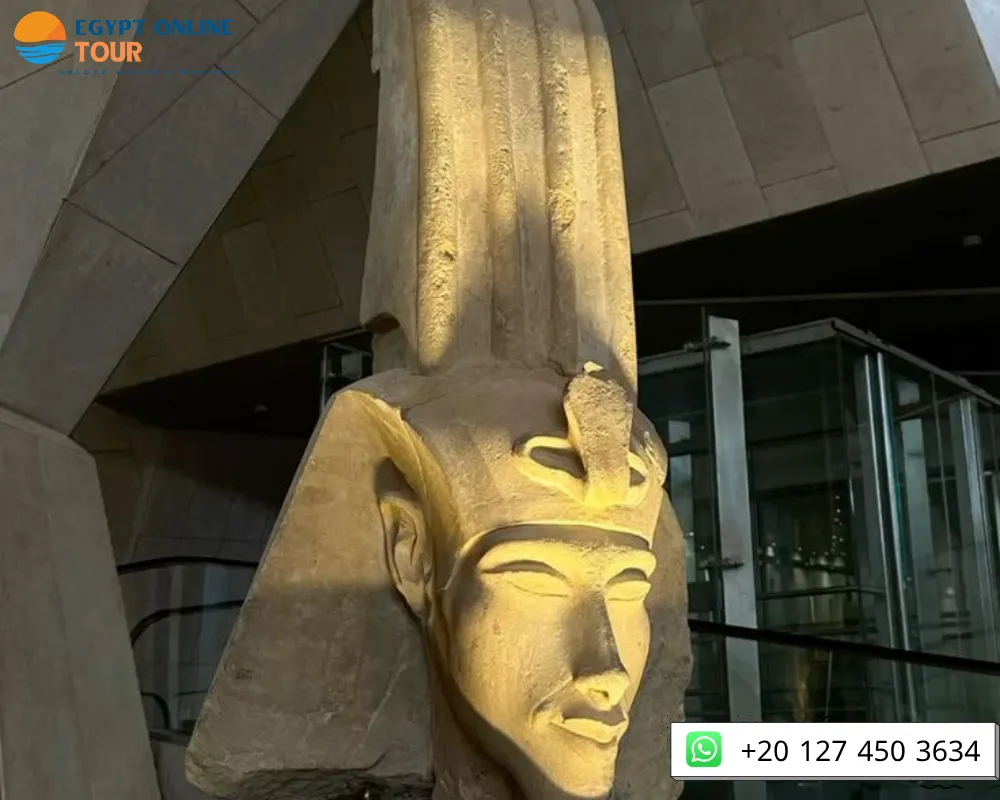
Akhenaten continues to captivate both historians and travelers because his reign represents one of the most dramatic breaks from tradition in ancient Egyptian history, as reflected in the following:
- He introduced a radical religious shift by elevating the worship of Aten above all other gods, challenging a deeply rooted religious system.
- His reign marked a complete transformation in art and culture, with the emergence of the distinctive Amarna style.
- He built an entirely new capital city, Akhetaten, dedicated to his religious vision rather than political or economic needs.
- His policies disrupted traditional power structures, especially the influence of powerful priesthoods.
- After his death, his legacy was deliberately erased, yet rediscovered centuries later through archaeological findings like the Amarna letters and city ruins.
Akhenaten’s story is only the beginning. To truly immerse yourself in this fascinating history, our 9-Day Luxury Cairo & Nile Tour offers an unforgettable journey. From the legendary Giza Pyramids to the breathtaking temples of Luxor and Aswan, you’ll discover Egypt’s wonders while enjoying a premium Nile cruise experience—don’t just read about history, live it.
In the end, the Facts About Pharaoh Akhenaten reveal a ruler who transformed ancient Egypt in an incredibly short time. Over the course of just 17 years, he introduced the worship of Aten as a single god, built a new capital at Akhetaten, and reshaped both art and religious traditions. His reign began when he was still very young, and despite his bold vision, his successors reversed his changes and tried to erase his memory. Yet, his story continues to stand as one of the most powerful and mysterious chapters in Egyptian history.