
Elephantine Island lies in the Nile directly opposite the Aswan Corniche, and its southern end holds the ruins of ancient Abu, Egypt's frontier town and gateway to Nubia for more than three thousand years. The archaeological site, with the temples of Khnum and Satet, the Nilometer and a small museum, is open daily from 8:00 to 16:00, and a ticket for a foreign adult costs EGP 200 (EGP 100 for students). The official page does not say whether the small museum annex is on the same ticket, so ask at the window. The northern half of the island holds two Nubian villages, Siou and Koti, which you can walk through freely.
You reach the island in a few minutes by public ferry or by felucca from the Corniche. Our guides usually spend two hours here, ideally late in the afternoon before a sunset felucca sail. We checked the price and hours on the Ministry of Tourism and Antiquities site on 4 November 2026.
Elephantine Island at a glance
| Item | Detail |
|---|---|
| Where | In the Nile opposite central Aswan, about 1.2 km long |
| Ancient name | Abu or Yebu, "elephant"; Greek Elephantine |
| Ticket (archaeological site) | Foreign adult EGP 200, foreign student EGP 100; Egyptian adult EGP 20, student EGP 10 |
| Hours | Daily 8:00 to 16:00 |
| Time needed | 1.5 to 2 hours for the ruins and museum; add an hour for a village walk |
| World Heritage | Part of the Nubian Monuments from Abu Simbel to Philae, inscribed by UNESCO in 1979 |
Where is Elephantine Island on the Nile?
Elephantine is the long, narrow island that faces the centre of Aswan, between the city Corniche on the east bank and the sand dunes and rock tombs of the west bank. It is about 1.2 km long, so the ruins at the southern end, the museum and the two Nubian villages are all within easy walking distance of each other. Kitchener's Island, with the Botanical Garden, lies just west of its northern half, and the granite rocks of the First Cataract begin at its southern tip, with Sehel Island and the old Aswan Dam further upstream.
From the Corniche the crossing is only a few hundred metres. On a map of Aswan the archaeological site is the southern end of the island, roughly opposite the Old Cataract hotel, while the villages of Siou and Koti fill the middle and north.
Why it is called Elephantine
The ancient Egyptian name Abu (Yebu) meant both "elephant" and "ivory", and the Greeks translated it as Elephantine. Two explanations are given, and both may be true: the island was the market where ivory from the south entered Egypt, and the smooth grey granite boulders in the river around it look like elephants bathing. For the ancient Egyptians it was also a sacred place, where the god Khnum was believed to release the Nile flood from caves under the cataract.
Why visit Elephantine Island?
- The oldest part of Aswan: people have lived on the island for about five thousand years, and you can see the layers, from a shrine of about 3000 BC to Roman buildings.
- Two sites in one: an excavated temple town and a living Nubian community, side by side.
- Quiet: it sees far fewer visitors than Philae or the High Dam, so you often have the temples almost to yourself.
- Easy: a short boat ride from the Corniche, a modest ticket, and it fits into an afternoon before a sunset sail.
What to see on Elephantine Island
The temple of Khnum
Khnum, the ram-headed god believed to create people on a potter's wheel and to release the Nile flood from caves beneath the cataract, was the chief god of the island. His temple was rebuilt many times; what stands today is mainly the platform and foundations of the late temple begun under Nectanebo II in the 4th century BC and completed under the Ptolemies and Romans. The large granite gateway of Alexander IV, son of Alexander the Great, still stands at its front.
The temple of Satet
Satet, goddess of the southern frontier and of the flood, had one of the oldest sanctuaries in Egypt here: a shrine between granite boulders that goes back to about 3000 BC. The German Archaeological Institute, which has excavated the island since 1969, reconstructed the temple of Hatshepsut and Thutmose III on the site, so you can walk through a New Kingdom temple and see beneath it the layers of earlier shrines.
The Nilometer
A stairway of about 90 steps runs down to the river along the island's eastern edge, with scales cut into the walls to measure the height of the flood. The level told the priests and officials how good the harvest would be and how much tax to expect. It was described by the Greek geographer Strabo and has markings in Greek, demotic and Arabic. A second, older Nilometer belongs to the Satet temple.
The museum
The small Aswan Museum, in a villa built for Sir William Willcocks, the engineer of the first Aswan dam, and its modern annex display finds from the German and Egyptian excavations: tools, pottery, statues, inscriptions and a mummified ram of Khnum in a gilded coffin. The annex is laid out by period and gives the best overview of the island's long history.
The ancient town and its streets
Between the temples, the excavated town shows houses, streets and granaries from many periods, with signs in English and Arabic. Near the southern tip there is also a small step pyramid of the 3rd Dynasty, one of a group of small pyramids built along the Nile, though it is often not on the visitor path.
The Nubian villages: Siou and Koti
The two villages on the island are home to Nubian families, with painted houses, narrow lanes and gardens. Walk through respectfully: ask before you photograph people, and accept that some lanes are private. Several houses welcome visitors for tea, and a guide or a felucca captain from the island can introduce you.
A short history of Elephantine
- Frontier town: the First Cataract, a stretch of granite rocks and rapids just south of the island, made it the natural border between Egypt and Nubia. From the early dynasties Abu was a fortress, a customs post and the capital of the first nome (province) of Upper Egypt.
- Trade: ivory, ebony, gold, incense and exotic animals came north from Africa through Elephantine, and the customs post on the island controlled that traffic.
- Expedition leaders: the governors of Elephantine led trading and military expeditions into Nubia in the Old Kingdom; their rock tombs are across the river at Qubbet el-Hawa, on the west bank.
- Persian period: in the 5th century BC a garrison of Jewish soldiers in Persian service lived here with their own temple to their god YHW. Their archive, the Elephantine Papyri, written mostly in Aramaic, records marriages, contracts and letters, including a petition after their temple was destroyed in about 410 BC.
- Later centuries: the temples were used and rebuilt under the Ptolemies and Romans, and the island remained inhabited ever since.
How to get to Elephantine Island
- Public ferry: small ferries cross from the Corniche to the Nubian villages and to the archaeological site in a few minutes. They are the cheapest option and run through the day; pay the fare on board in small Egyptian pounds. Check which landing the boat serves: the villages and the ruins have different landings.
- Water taxi: a private motorboat leaves when you are ready, so you do not wait for a ferry to fill. It costs more than the ferry and less than a long felucca hire; agree the fare first.
- Felucca or motorboat: agree the price before you board and say how long you want to stay on the island. Combining Elephantine with a felucca loop around Kitchener's Island (the Botanical Garden) is the classic Aswan afternoon.
- From a Nile cruise: most cruise ships moor on the Corniche a short walk from the ferry landings. Many cruises do not include Elephantine, so it is a good use of free time in Aswan.
- Hotel boat: the resort hotel at the north end of the island runs its own shuttle boat for guests.
Best time to visit
- Time of day: from 14:00 in winter, so you finish at the 16:00 closing and step straight onto a felucca for sunset. In summer, go at 8:00; the ruins have little shade.
- Season: October to April is the most comfortable, and December to February brings mild days that suit walking the ruins. From May to September Aswan often passes 40°C, with June to August the hottest; keep the visit to the morning and carry more water than you think you need.
- Sunrise: the site opens at 8:00, after sunrise, but the early light on the island is worth seeing from the Corniche or from a felucca, and the village lanes are quiet and cool in the first hours.
- Crowds: the island is rarely crowded. Cruise groups tend to come in the late morning or afternoon, so the first hour after opening is the calmest.
Suggested routes
Two hours: the essentials
- Ferry to the archaeological site landing.
- Museum annex for the overview (20 minutes).
- Temple of Satet and the Hatshepsut reconstruction.
- Temple of Khnum and the gateway of Alexander IV.
- The Nilometer at the river's edge.
Half a day
Add a walk north through Siou and Koti, tea in a Nubian house, then a felucca to the Botanical Garden on Kitchener's Island and a sunset sail past the Aga Khan Mausoleum and the tombs of Qubbet el-Hawa.
How to fit Elephantine into an Aswan or Nile cruise itinerary
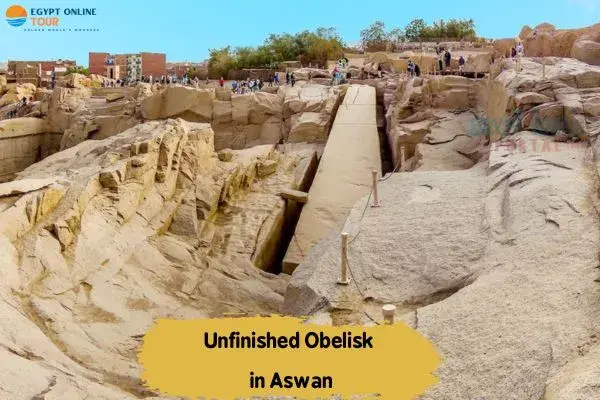
Most Aswan programmes cover the High Dam, the Unfinished Obelisk and Philae Temple, plus a felucca ride. Elephantine is usually left out, which is why it works so well in free time.
- One day in Aswan: Philae, the High Dam and the Unfinished Obelisk in the morning, lunch, then Elephantine from about 14:00 and a sunset felucca to the Botanical Garden.
- Two days: keep the second afternoon for Elephantine, the village walk and the river. If you take the early trip to Abu Simbel, you are back in Aswan in time for an afternoon on the island.
- On a Nile cruise: ships that start or end in Aswan usually spend one or two nights at the Corniche. Use the free afternoon for Elephantine; the ferry landings are a short walk from the moorings.
Guided or self-guided?
| Question | With a guide | On your own |
|---|---|---|
| Best for | First visits, archaeology lovers, families | Return visitors, photographers, slow travellers |
| What you gain | The layers explained, the inscriptions read, an introduction in the villages | Your own pace and time for photos |
| What you miss | Some freedom of schedule | Much of the story behind the foundations |
| Cost | Guide and boat on top of the ticket | Ticket and ferry only |
You can visit on your own: the ferry is simple, the ticket window is at the landing, and the site has English signs. But Elephantine is a layered site where temples of different ages sit on top of each other, and without explanation many visitors see only stones. A guide shows you the early shrine of Satet under the later temple, reads the inscriptions on the Alexander IV gateway, and explains the Nilometer scales. If you have a guide for the day in Aswan, add the island; if you travel independently, read the museum annex panels first.
Visiting the Nubian villages respectfully
- The villages are homes, not a museum. Walk quietly and keep to the main lanes unless you are invited in.
- Ask before photographing people, especially women and children.
- Dress modestly, with shoulders and knees covered.
- If a family invites you for tea or shows you their house, a small gift or a purchase of crafts is appreciated.
- Buying hand-made goods directly from village families keeps the money on the island.
Sunset and the view from the river
Elephantine is best seen twice: once on foot, and once from a felucca. The western side of the island faces the dunes and the tombs of Qubbet el-Hawa; at sunset the light turns the granite boulders gold and the felucca sails come back past the island. Ask your captain to sail round the southern tip, where the ruins and the Nilometer are seen from the water, before heading to the Botanical Garden.
Practical tips
What to wear and pack
- Light, loose clothes that cover shoulders and knees, which suit both the sun and the villages.
- Closed shoes with a good grip: the paths are sandy and the ruins have rough stone and steps.
- A hat, sunglasses, sunscreen and water. There is little shade among the ruins.
Cash and payment
- Carry a card for the ticket window and small Egyptian pounds for the ferry, the water taxi, tea in a village house and tips.
- Do not count on finding a cash machine on the island; take out money in town before you cross.
- Feluccas and boats are paid in cash, and the price of a private hire is agreed before you leave.
Quiet corners and access
- The southern tip of the archaeological site looks over the cataract boulders and the west bank; it is the best spot on foot for photos in the afternoon light.
- The small riverside spots at the edge of the villages are good for a quiet break away from the ruins.
- The site has uneven ground and steps down to the Nilometer; it is not suitable for wheelchairs.
For the rest of the city, see our guide to what to do in Aswan, the Aswan Botanical Gardens next door, and the wider story in the history of ancient Nubia.
Plan it with us
Our Nubian village day tour by boat sails past Elephantine and can stop on the island, and our Aswan day tours include private felucca and island visits with an Egyptologist. If you arrive on a cruise, the 4-day cruise from Aswan leaves time for an afternoon on the island.
Elephantine Island: quick answers
How much is the ticket for Elephantine Island?
The archaeological site costs EGP 200 for a foreign adult and EGP 100 for a foreign student (Ministry site, 4 November 2026). Walking in the Nubian villages is free.
What are the opening hours?
The archaeological site is open daily from 8:00 to 16:00.
How do you get to Elephantine Island?
By public ferry or felucca from the Aswan Corniche; the crossing takes a few minutes.
Is Elephantine Island worth visiting?
Yes, especially if you like archaeology or want to see a Nubian village. Two hours are enough for the ruins and museum, and it combines well with a sunset felucca.
Ahmed Samir writes and updates the Egypt travel guides of Egypt Online Tour, a licensed tour company based in Cairo (ETAA licence 1466). Our travel advisors review each guide before it is published.
All guides by Ahmed Samir