Planning an Egypt trip? Get a Black Friday quote for your dates.

Get My Quote
Private tours across Egypt, planned by a local team in Cairo

11 Days Historical Vacation in Egypt

11 days, 10 nights: Giza, Saqqara and Alexandria, a flight to Aswan for Philae and Abu Simbel, the first-class train to Luxor for 4 nights with Karnak, the Valley of the Kings, Dendera and Abydos, then a flight to Cairo. Includes hotels with breakfast, an Egyptologist and entrance fees.

Duration
11 days / 10 nights
Tour type
Private, your own group
10 nights
  1. Cairo3N
  2. Aswan2N
  3. Luxor4N
  4. Cairo1N
From$1,600 per person
Get a free quote

Overview

This private 11-day tour is built for travelers who care most about the history. It covers more ancient sites than almost any other route of this length, in the order of a journey through time and space: the Old Kingdom pyramids of Giza and Saqqara and the Grand Egyptian Museum, Graeco-Roman Alexandria on the Mediterranean, then south to Aswan, Philae and the temples of Ramses II at Abu Simbel. A first-class train takes you down the Nile to Luxor for four nights, enough to see both banks properly, including the Valley of the Queens, Medinet Habu and the workmen's village of Deir el-Medina, and to reach Dendera and Abydos, two of the best-preserved temples in Egypt. The last day back in Cairo covers the Egyptian Museum, Coptic Cairo, the royal mummies and medieval al-Muizz Street.

You stay in hotels throughout, with no cruise. A private Egyptologist guides every sightseeing day, transfers are in a private air-conditioned vehicle, and the two domestic flights (Cairo to Aswan, Luxor to Cairo) and the first-class train (Aswan to Luxor) are included, together with a dinner cruise on the Nile on the first evening.

Who this tour suits

  • History lovers who want the major sites and the lesser-known ones that most tours skip: Medinet Habu, Deir el-Medina, Dendera and Abydos.
  • Travelers who prefer hotels to a cruise ship, and four nights in one base in Luxor to moving every day.
  • Couples, friends and families with older children who are happy with full sightseeing days.

It is a weaker fit if you want time on the river or beach days, or a slow pace: almost every day is a full sightseeing day. Our Egypt classic tours include Nile cruises and Red Sea stays, and a tailor-made trip can add rest days.

Pace and travel days

The pace is full: most days have three or four sites, with lunch at a local restaurant. Expect walking on uneven ground, steps into the tombs and the catacombs, and three very long days (Alexandria, Abu Simbel, and Dendera with Abydos). The journeys are:

  • Day 3: Cairo to Alexandria and back, about 3 hours each way on the Desert Road.
  • Day 4: the flight from Cairo to Aswan, about 1 hour 20 minutes.
  • Day 5: Aswan to Abu Simbel and back, about 3 hours 30 minutes each way, with an early start.
  • Day 6: the first-class train from Aswan to Luxor, about 3 hours.
  • Day 9: Luxor to Dendera (about 1 hour 15 minutes), on to Abydos (about 2 hours), and back to Luxor (about 3 hours).
  • Day 10: the flight from Luxor to Cairo, about 1 hour.

What you will love

  • Giza, Saqqara and the GEMThe Pyramids and the Sphinx, the Step Pyramid of Djoser, and Tutankhamun's treasures in the Grand Egyptian Museum.
  • A day in AlexandriaFort Qaitbay on the site of the Lighthouse, the Bibliotheca Alexandrina, Pompey's Pillar and the Roman catacombs.
  • Abu SimbelThe temples of Ramses II and Nefertari, moved stone by stone above Lake Nasser in the 1960s.
  • By train down the NileFirst class from Aswan to Luxor, about three hours through the villages and fields of the valley.
  • Four nights in LuxorKarnak and Luxor Temple, the Valley of the Kings, the Valley of the Queens, Medinet Habu and Deir el-Medina.
  • Dendera and AbydosThe painted ceilings of the temple of Hathor and the reliefs and King List of the temple of Seti I.
  • Historic Cairo to finishThe Egyptian Museum, Coptic Cairo, the royal mummies at the NMEC, al-Muizz Street and Khan el-Khalili.
  • Flights and train includedCairo to Aswan and Luxor to Cairo by air, Aswan to Luxor by first-class train.

Day-by-day itinerary

Day1

Arrival in Cairo and a Nile dinner cruise

Cairo1 meal

Arrival

Our representative meets you at Cairo International Airport with a company sign, helps you through the airport formalities, and introduces you to your private guide, who goes with you in a private air-conditioned vehicle to your hotel, 30 to 60 minutes depending on traffic. After check-in, the afternoon is free to rest.

Evening: dinner cruise on the Nile

In the evening you board a dinner cruise on the Nile, with an open buffet as the boat sails past the lights of central Cairo, and a program of traditional music and dance. Afterwards you are driven back to your hotel, and your guide confirms the pick-up time for tomorrow.

StayOvernight: Cairo hotel
Meals
  • Breakfast
  • Lunch
  • Dinner
Day2

The Pyramids, the Sphinx, the Grand Egyptian Museum and Saqqara

Cairo2 meals

Morning: the Giza Plateau

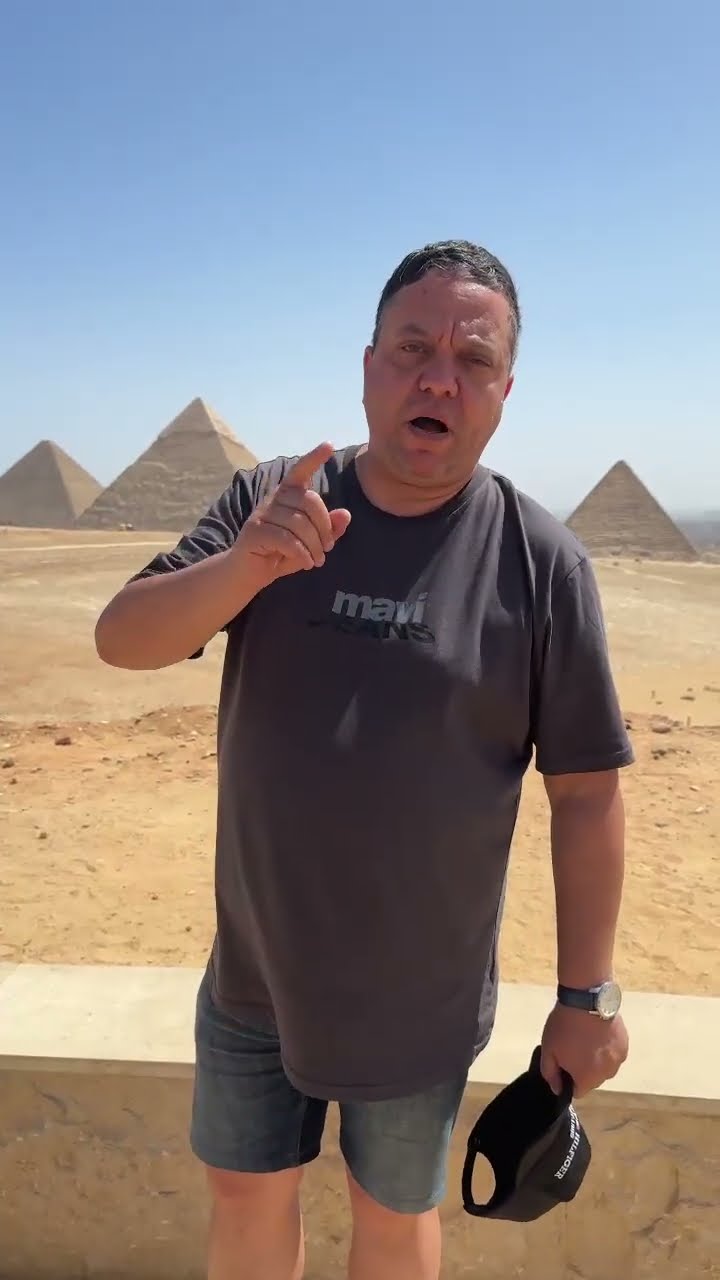
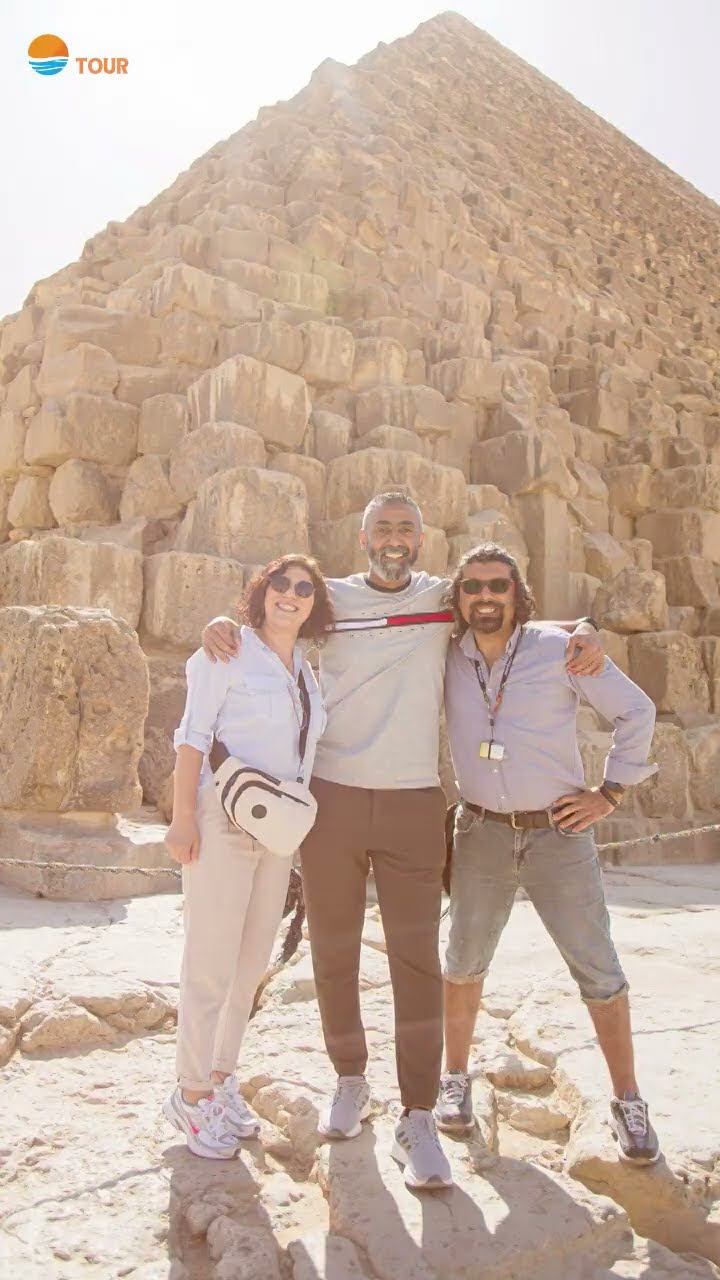
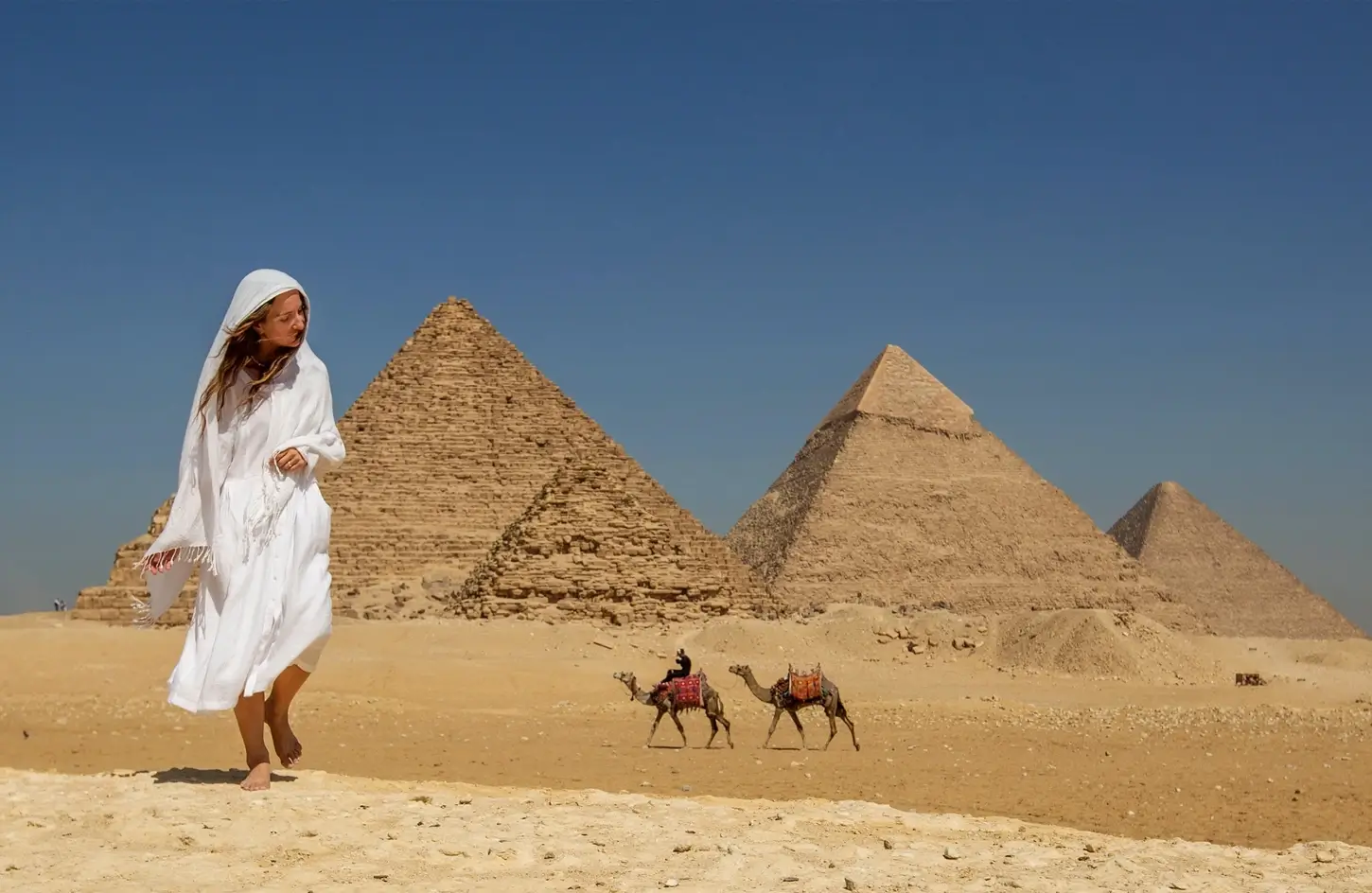
After breakfast your Egyptologist takes you to Giza. The Great Pyramid of Khufu, built around 2560 BC, stands about 138.5 metres high today and is the only one of the Seven Wonders of the Ancient World still standing; it continued the pyramid building of his father Sneferu, whose pyramids at Dahshur show the experiments that led to it. The Great Sphinx, with the body of a lion and a head usually identified as Khafre's, is carved from the bedrock beside the causeway of his pyramid, and the Valley Temple of Khafre next to it is built of huge granite-faced limestone blocks. Going inside the Great Pyramid needs a separate ticket.

Midday: the Grand Egyptian Museum

The Grand Egyptian Museum, about 2 km from the pyramids, holds the treasures of Tutankhamun, displayed together, together with the colossal Ramses II in the Grand Hall and the royal statues of the Grand Staircase. Your guide chooses a route through the key galleries in the time available. Lunch is at a local restaurant.

Afternoon: Saqqara

You drive south to Saqqara, about 45 minutes, the burial ground of Memphis. The Step Pyramid of Djoser, designed by Imhotep around 2650 BC, is the earliest large stone building in Egypt and the model the later pyramids grew from. You return to Cairo in the late afternoon.

StayOvernight: Cairo hotel
Meals
  • Breakfast
  • Lunch
  • Dinner
Day3

to Alexandria

Cairo2 meals

Morning: to the Mediterranean

After an early breakfast you drive north-west to Alexandria, about 3 hours on the Desert Road. Founded by Alexander the Great in 331 BC, it was the capital of the Ptolemies for nearly three centuries and the greatest city of the Greek world.

Fort Qaitbay and the Bibliotheca Alexandrina

Fort Qaitbay was built in the 15th century by the Mamluk sultan Qaitbay at the tip of the Eastern Harbour, on the site of the Pharos, the Lighthouse of Alexandria and one of the Seven Wonders of the Ancient World; stones of the fallen lighthouse were reused in its walls. You then visit the Bibliotheca Alexandrina, opened in 2002 near the site of the ancient library. Beyond the main reading room under its tilted disc of a roof, the complex holds specialised libraries, museums of antiquities and manuscripts, and exhibitions. Lunch is a seafood meal by the sea.

Afternoon: Pompey's Pillar and Kom el-Shoqafa

Pompey's Pillar, a granite column of about 27 metres, was raised for the Roman emperor Diocletian around AD 300 on the hill of the Serapeum, the great temple of Serapis. Nearby, the Catacombs of Kom el-Shoqafa, from the 2nd century AD, go down by a spiral staircase to a tomb that mixes Egyptian, Greek and Roman art: Anubis appears in the armour of a Roman soldier. You drive back to Cairo in the evening.

StayOvernight: Cairo hotel
Meals
  • Breakfast
  • Lunch
  • Dinner
Day4

Flight to Aswan: High Dam, Unfinished Obelisk and Philae

Aswan2 meals

Morning: flight to Aswan

After breakfast you check out and transfer to Cairo airport for the domestic flight to Aswan, about 1 hour 20 minutes. Your guide meets you on arrival.

The High Dam and the Unfinished Obelisk

The High Dam, completed in 1970, ended the yearly Nile flood, brought electricity and year-round irrigation to Egypt and created Lake Nasser, and its construction led to the UNESCO campaign to save the temples of Nubia. In the ancient granite quarries lies the Unfinished Obelisk, probably ordered under Hatshepsut in the 15th century BC: about 42 metres long and some 1,000 tonnes, it was abandoned when a crack appeared, and the tool marks still show how the ancient masons worked.

Afternoon: Philae

A short motorboat ride takes you to Agilkia Island and the temple of Isis at Philae, one of the last places where the old religion was practised; the last known hieroglyphic inscription, from AD 394, is carved here. The temple was moved stone by stone to this island in the 1970s. Lunch is at a local restaurant, and you check in to your hotel in Aswan for two nights.

FlightCairo to Aswan
StayOvernight: Aswan hotel
Meals
  • Breakfast
  • Lunch
  • Dinner
Day5

Abu Simbel

Aswan2 meals

Early morning: the road to Abu Simbel

You leave Aswan before dawn with a breakfast box, in your private vehicle, for the drive of about 280 km and 3 hours 30 minutes south through the desert. Your guide meets you there, or travels with you.

The temples of Ramses II and Nefertari

The two rock-cut temples of Abu Simbel were made for Ramses II in the 13th century BC. The Great Temple, dedicated to Amun-Ra, Ra-Horakhty, Ptah and the deified king himself, is guarded by four seated colossi about 20 metres high; inside, the reliefs show his campaigns, among them the Battle of Kadesh. The smaller temple is dedicated to Hathor and to Queen Nefertari. In the 1960s an international campaign led by UNESCO cut both temples into blocks and rebuilt them about 65 metres higher, to save them from Lake Nasser. Around 22 February and 22 October, the rising sun reaches deep into the Great Temple and lights the statues in its sanctuary. Read more in our facts about Abu Simbel and about the Abu Simbel Sun Festival.

Afternoon

You drive back to Aswan and have lunch at a local restaurant. The rest of the afternoon is free; a felucca sail around the islands at sunset is an optional extra.

StayOvernight: Aswan hotel
Meals
  • Breakfast
  • Lunch
  • Dinner
Day6

First-class train to Luxor: Karnak and Luxor Temple

Luxor2 meals

Morning: the train to Luxor

After breakfast you check out and transfer to Aswan station for the first-class train to Luxor, about 3 hours along the east bank of the Nile. Your Luxor guide meets you on arrival.

Karnak

Karnak, built and enlarged over some 2,000 years, was the religious heart of ancient Thebes, dedicated to the Theban triad of Amun, his wife Mut and their son Khonsu. You walk through its pylons into the Great Hypostyle Hall, a forest of 134 columns, and on to the obelisks and the Sacred Lake.

Afternoon: lunch, check-in and Luxor Temple

After lunch at a local restaurant you check in to your hotel for four nights and rest. In the late afternoon you visit Luxor Temple, built mainly under Amenhotep III and Ramses II and joined to Karnak by the Avenue of Sphinxes, about 2.7 km long; one obelisk of its entrance still stands, and the other has been in Paris since 1836. The Sound and Light show at Karnak is an optional evening extra.

StayOvernight: Luxor hotel
Meals
  • Breakfast
  • Lunch
  • Dinner
Day7

Luxor West Bank: Valley of the Kings, Hatshepsut and the Colossi of Memnon

Luxor2 meals

Morning: the Valley of the Kings

After breakfast you cross to the West Bank. The Valley of the Kings holds the tombs of the pharaohs of the New Kingdom's 18th, 19th and 20th Dynasties, from about 1550 to 1070 BC, cut into the hills and painted with the texts that guide the king through the underworld. The standard ticket opens three of the tombs open on the day; the tombs of Tutankhamun, Ramses VI and Seti I need separate tickets, bought at the site. Our guide to the best tombs in the Valley of the Kings helps you choose.

Late morning: Hatshepsut and the Colossi of Memnon

The mortuary temple of Hatshepsut at Deir el-Bahari rises in three terraces against the cliffs; she ruled as pharaoh for about two decades, and the reliefs record her expedition to the land of Punt. On the way back you stop at the Colossi of Memnon, two seated statues of Amenhotep III, each about 18 metres tall. Lunch is at a local restaurant, and the afternoon is free.

StayOvernight: Luxor hotel
Meals
  • Breakfast
  • Lunch
  • Dinner
Day8

Valley of the Queens, Medinet Habu and Deir el-Medina

Luxor2 meals

Morning: the Valley of the Queens

A second day on the West Bank takes you into the lives of the royal family and the people who built the tombs. The Valley of the Queens holds some 90 tombs of royal wives, princes and princesses of the 18th to 20th Dynasties. The standard ticket covers selected tombs, such as those of the sons of Ramses III, with bright colours; the tomb of Nefertari, wife of Ramses II and famous for the finest paintings in Egypt, needs a separate ticket with a limited daily number of visitors.

Late morning: Medinet Habu

Medinet Habu, the mortuary temple of Ramses III, is one of the best-preserved temples on the West Bank, entered through a gate built like a Syrian fortress. Its outer walls show his wars, including his battles against the Sea Peoples around 1175 BC, and the inner courts keep much of their colour. Lunch follows at a local restaurant.

Afternoon: Deir el-Medina

Deir el-Medina was the village of the craftsmen who cut and painted the royal tombs. You see the foundations of their houses, and their own small family tombs, painted for themselves with the skills they used for the kings. Thousands of their notes, letters and accounts found here make them some of the best-known ordinary people of the ancient world.

StayOvernight: Luxor hotel
Meals
  • Breakfast
  • Lunch
  • Dinner
Day9

Dendera and Abydos

Luxor2 meals

Morning: Dendera

After an early breakfast you drive north to Dendera, about 1 hour 15 minutes. The temple of Hathor, goddess of love, music and joy, was built in the last centuries BC and the first century AD and is one of the best-preserved temple complexes in Egypt; its ceilings have been cleaned to show their blue and gold again. The complex also has a small temple of Isis, a sacred lake, a sanatorium where pilgrims came for healing, and a Roman kiosk. On the roof is a cast of the Dendera Zodiac; the original is in the Louvre.

Midday: Abydos

You continue to Abydos, about 2 hours, the cult centre of Osiris, god of the afterlife, and a place of pilgrimage for over 2,000 years. The temple of Seti I, around 1290 BC, has some of the finest reliefs in Egypt, seven chapels for seven gods, and the Abydos King List, which names Seti's royal ancestors back to Menes. Behind it lies the Osireion, the symbolic tomb of Osiris. Our guide to the temple of Abydos has more background. Lunch is at a local restaurant.

Evening

You drive back to Luxor, about 3 hours, and reach your hotel in the evening.

StayOvernight: Luxor hotel
Meals
  • Breakfast
  • Lunch
  • Dinner
Day10

Flight to Cairo: the Egyptian Museum, Coptic Cairo, the NMEC and Khan el-Khalili

Cairo2 meals

Morning: flight to Cairo and the Egyptian Museum

After an early breakfast you check out and fly from Luxor to Cairo, about 1 hour. Your Egyptologist meets you and takes you to the Egyptian Museum on Tahrir Square, opened in 1902, with thousands of statues, coffins, jewellery and funerary objects, among them the Narmer Palette and the burial treasures of the kings of Tanis. Lunch follows at a local restaurant.

Afternoon: Coptic Cairo and the royal mummies

In Old Cairo you visit the Hanging Church, built over the southern gate of the Roman fortress of Babylon; the Mosque of Amr ibn al-As, the first mosque in Egypt, founded in AD 641 and rebuilt many times; and the Ben Ezra Synagogue, where the Cairo Geniza of medieval manuscripts was found. Close by, the National Museum of Egyptian Civilization holds the Royal Mummies Hall, where the mummies of kings and queens such as Ramses II and Hatshepsut are shown since their procession through Cairo in 2021.

Evening: al-Muizz Street and Khan el-Khalili

The day ends in medieval Cairo on al-Muizz Street, lined with Fatimid and Mamluk mosques, madrasas and fountains, and in the lanes of Khan el-Khalili, a market since the late 14th century. You return to your hotel for the last night. This is a long day; your guide may shorten one visit if the flight is late.

FlightLuxor to Cairo
StayOvernight: Cairo hotel
Meals
  • Breakfast
  • Lunch
  • Dinner
Day11

Departure from Cairo

1 meal

After breakfast you check out, and at the agreed time our representative drives you to Cairo International Airport and helps you with the departure formalities; airlines usually ask you to be at the airport three hours before departure. This is the end of the tour.

Meals
  • Breakfast
  • Lunch
  • Dinner

Prices and accommodation

Your choice

Standard

Standard hotels

Comfortable, well located

$2,700per person
  • Cairo 3 nightsJaz Pyramid Cairo or Novotel Cairo, or similar
  • Aswan 2 nightsISIS Island Aswan or Citymax Aswan, or similar
  • Luxor 4 nightsSonesta St. George Luxor or similar
  • Cairo 1 nightJaz Pyramid Cairo or Novotel Cairo, or similar
Your choice

Premium

Premium hotels

More space and better ships

$2,900per person
  • Cairo 3 nightsSteigenberger Pyramids or Steigenberger Hotel El Tahrir, or similar
  • Aswan 2 nightsBasma Hotel or similar
  • Luxor 4 nightsSteigenberger Nile Palace or similar
  • Cairo 1 nightSteigenberger Pyramids or Steigenberger Hotel El Tahrir, or similar
Your choice

Luxury

Top class

Our highest level

$3,250per person
  • Cairo 3 nightsHyatt Regency Cairo West or Sofitel Downtown Cairo, or similar
  • Aswan 2 nightsMövenpick Resort Aswan or Sofitel Legend Old Cataract Aswan, or similar
  • Luxor 4 nightsSofitel Winter Palace Luxor or similar
  • Cairo 1 nightHyatt Regency Cairo West or Sofitel Downtown Cairo, or similar

Children pay less, see the children policy below. Christmas, New Year and Easter dates add 25%. Prices are per person in US dollars.

What is included

Included9 items
  • Domestic flights: Cairo to Aswan and Luxor to Cairo.
  • First-class train: Aswan to Luxor.
  • Meet and assist by our representatives at the airports and the train stations.
  • 10 nights with daily breakfast: Cairo 3, Aswan 2, Luxor 4 and Cairo 1.
  • Private air-conditioned vehicle with a professional driver for your group only, for every transfer and day trip, including Alexandria, Abu Simbel, Dendera and Abydos.
  • A private Egyptologist guide on every sightseeing day.
  • Entrance fees to all the sites named in the itinerary.
  • Dinner cruise on the Nile in Cairo on Day 1.
  • Lunch at local restaurants on the sightseeing days, and a breakfast box for Abu Simbel.
Not included5 items
  • International flights to and from Egypt.
  • Egypt entry visa.
  • Drinks with meals.
  • Extra tickets: inside the Great Pyramid, and the tombs of Tutankhamun, Seti I, Ramses VI and Nefertari.
  • Optional activities, such as the Karnak Sound and Light show, a balloon flight or a felucca, and tips for guides and drivers.

Practical information for this route

Best time to travel

October to April is the most comfortable time. From December to February, days are around 18 to 22 °C in Cairo and Alexandria and 23 to 27 °C in Aswan, Abu Simbel and Luxor, with cold early mornings on the desert road to Abu Simbel; Alexandria can be rainy and windy in winter. From May to September, Upper Egypt often passes 40 °C, so the visits start at opening time and the afternoon is spent indoors. Around 22 February and 22 October the sun reaches the sanctuary at Abu Simbel, and those days are very crowded. Christmas, New Year and Easter are the busiest weeks.

What to pack and wear

  • Comfortable closed shoes with a good grip for the tombs, the catacombs and the quarries.
  • A sun hat, sunglasses and sunscreen, all year, and a refillable water bottle.
  • A warm layer for winter mornings, the dinner cruise and the Abu Simbel road; a light rain jacket for Alexandria in winter.
  • Clothes that cover shoulders and knees for the churches, the synagogue and the mosque of Amr ibn al-As; women need a scarf to cover their hair in the mosque.
  • A small bag for the train with your passport, medicine and chargers.

Visa and passport

Many nationalities can buy a tourist visa on arrival at Cairo airport or apply for an e-visa in advance on Egypt's official portal, visa2egypt.gov.eg. The rules and the fee depend on your passport, so check them before you book your flights. Your passport should be valid for at least six months from the day you arrive; you need it for the flights, the train and the checkpoints on the roads to Abu Simbel, Dendera and Abydos. The visa is not included in the tour price.

Money and tips

The currency is the Egyptian pound. Cards are accepted in most hotels and larger shops; keep small notes for toilets at some sites, the markets and personal extras, especially in Upper Egypt. Tips are not included in the price. The tipping guide in the travel policies below gives the usual amounts; how much you give is your choice.

Travel policy guide

Pricing policy

All prices are per person in US dollars. The price changes with the season (winter 1 October to 30 April, summer 1 May to 30 September), the accommodation level and the size of the group. Christmas, New Year and Easter dates add 25%. Your quote lists the final price and everything it covers. After the deposit, changes to your itinerary cost US$25 per request, plus any third-party fees.

Booking confirmation

A deposit of 30% of the total tour cost confirms your booking. We send you a secure payment link for the deposit; the balance is paid in cash or by card on arrival in Egypt, unless your written offer gives another date. We never ask for card details by email, chat or WhatsApp. We confirm every booking by email.

Cancellation and refund

  • 22 days or more before departure: 100% refund
  • 15 to 21 days: 70% refund
  • 8 to 14 days: 50% refund
  • 0 to 7 days: no refund

No-show travelers are charged 100%. During peak events in Egypt, hotels and Nile cruises do not refund deposits. Groups of more than 10 people may have different terms.

Children policy

  • Under 2: free, sharing the parents’ bed, meals not included
  • 2 to 5 years: 25% of the adult price
  • 6 to 11 years: 50% of the adult price
  • 12 and over: adult price

Add each child and their age in the enquiry form so the quote is exact.

Optional visits

Optional visits, such as a hot air balloon ride in Luxor, a Sound and Light show or a felucca ride, are not in the price. Tell us which ones you want and we add them to your quote with their cost.

Extra expenses

Not included in the price: International airfare; Entry visa to Egypt; Personal expenses; Drinks during meals; Optional activities not mentioned in the itinerary; Entrance fees to additional areas or tombs that require separate tickets; Tipping for guides, drivers, and other service staff; Any services not specifically mentioned under the inclusions.

Tipping guide

Tipping is customary in Egypt and is not included in the price. A usual amount for a private tour is US$8 to 10 per person per day for your guide, US$4 to 5 for your driver and US$5 to 8 per person per day for the crew on a Nile cruise. Your guide can advise you on the day.

Questions about this tour

Why hotels and the train instead of a Nile cruise?

A cruise ties you to the ship's schedule and leaves little time for sites away from the river. Staying four nights in Luxor makes room for the Valley of the Queens, Medinet Habu, Deir el-Medina and the day to Dendera and Abydos, which cruises rarely include. The first-class train from Aswan to Luxor takes about three hours. If you would like a cruise, it can replace the Aswan and Luxor hotel nights.

How early is the Abu Simbel day?

You usually leave Aswan between 4 and 5 am with a breakfast box, so as to reach the temples in the cooler morning. The drive is about 3 hours 30 minutes each way, and you are back in Aswan for lunch.

Which tombs are included in the Valley of the Kings and the Valley of the Queens?

The standard tickets, which give three royal tombs in the Valley of the Kings and selected tombs in the Valley of the Queens, among those open on the day. The tombs of Tutankhamun, Seti I, Ramses VI and Nefertari need separate tickets; Nefertari's is limited in number each day, so ask for it before you book.

Is this a group tour?

No, the tour is private for your own group: your guide and vehicle are not shared. Flights, the train, the dinner cruise and hotels are shared with other passengers and guests.

Can I add a rest day or the Red Sea?

Yes. Because the tour is private, a free day can be added in Luxor or Aswan, or a few days on the Red Sea at the end, and the price changes with them. Tell us your dates and what you would like.

What travelers say about Egypt Online Tour

Independent reviews on the platforms travelers already trust.

5.0
193 reviews
Ranked #121 of 2,706 tours and activities in Cairo
Read all reviews on Tripadvisor
5.0
Based on 6 Google reviews
60 Ahmed El Zomor, Cairo, Egypt
Open 24 hours on the Google listing
Christiane SMay 2026
Traveled with family

Amazing Egyptian vacation! We did an 11 day private tour of Cairo, cruise on the Nile between Aswan and Luxor and a 4 day stay in Hurghada. The guided tours were very interesting, with extremely knowledgeable guides, attentive and helpful.

Ehrhart MAugust 2024
Traveled as a couple

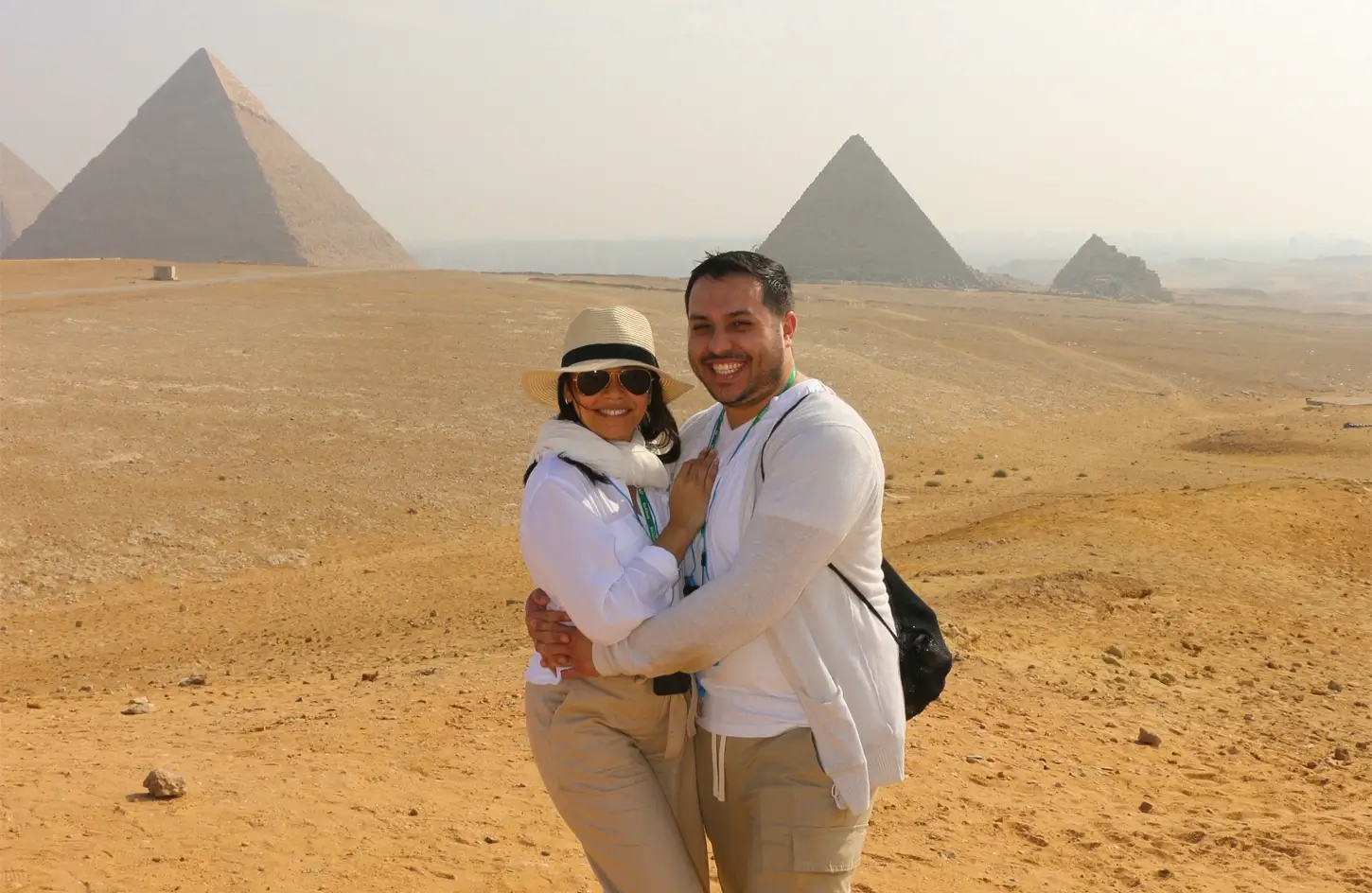
Egypt package to the Pyramids of Giza and Saqqara was a fascinating journey through Egypt's ancient past ,guide knowledge, the majesty of the pyramids, and the historical depth of Saqqara made this tour truly enriching!

Clayton Z973August 2024
Traveled in a group

our honeymoon to Egypt ,Giza and Saqqara was a magical escape into history The pyramids looming in the distance, the quiet serenity of the desert, and the ancient wonders of Saqqara created moments that will be with me forever!