Planning an Egypt trip? Get a Black Friday quote for your dates.

Get My Quote
Private tours across Egypt, planned by a local team in Cairo

Luxury package in Egypt From USA

20 days, 19 nights: Dahshur and Saqqara, Alexandria, 3 nights in Siwa Oasis, a flight to Luxor, 5 nights on a dahabiya from Esna to Aswan via Edfu and Kom Ombo, Abu Simbel by air and Giza. Includes hotels, an eco-lodge, dahabiya full board, flights and an Egyptologist.

Duration
20 days / 19 nights
Tour type
Private, your own group
19 nights
  1. Cairo3N
  2. Alexandria2N
  3. Siwa3N
  4. Cairo1N
  5. Luxor2N
  6. Dahabiya cruise5N
  7. Aswan1N
  8. Cairo2N
From$4,775 per person
Get a free quote

Overview

This private 20-day journey covers far more of Egypt than a classic tour. It starts in Cairo with the early pyramids of Dahshur and Saqqara and the city's museums and old quarters, then follows the Mediterranean to Alexandria and crosses the Western Desert to Siwa Oasis, near the Libyan border, for three nights among palm groves, salt lakes and dunes. A flight takes you to Luxor for the temples and royal tombs, and from Esna you sail south for five nights on a dahabiya, a traditional sailing boat with a handful of cabins, stopping where large cruise ships cannot. Aswan, Abu Simbel by air and two final nights in Cairo with the Pyramids of Giza and the Grand Egyptian Museum complete the trip.

A certified Egyptologist guides every sightseeing day, every transfer is in a private vehicle, and the domestic flights from Cairo to Luxor and from Aswan to Abu Simbel and back to Cairo are included.

Who this tour suits

  • Travelers with three weeks who want the main sites and the places most tours leave out, such as Siwa, El Kab and Gebel el-Silsila.
  • Couples and families who prefer a slow river journey on a small boat to a large cruise ship.
  • Anyone who wants one operator to handle every flight, drive, ticket and hotel across the country.

It is a weaker fit if you have less than three weeks or dislike long drives: the road days to and from Siwa are among the longest in Egypt. Our luxury Egypt tours include shorter routes, and dahabiya cruises can also be booked on their own.

Pace and travel days

The pace is relaxed on the dahabiya and in Siwa, and moderate in Cairo and Luxor, where sightseeing starts after breakfast and the Valley of the Kings day starts early. The longer travel days are:

  • Day 4: Cairo to Alexandria via Wadi el-Natrun, about 220 km and three hours of driving.
  • Day 6: Alexandria to Siwa via El Alamein and Marsa Matruh, about 600 km, eight to nine hours with stops.
  • Day 9: Siwa to Cairo, about 800 km, nine to ten hours with stops.
  • Day 10: the flight from Cairo to Luxor, about one hour.
  • Day 18: flights from Aswan to Abu Simbel and on to Cairo, with the visit in between.

What you will love

  • The pyramids before GizaThe Bent and Red Pyramids at Dahshur and the Step Pyramid at Saqqara, then Giza itself on your last full day.
  • Alexandria by the seaThe Citadel of Qaitbay on the site of the Pharos, the new Library, the Roman theatre and the catacombs of Kom el-Shoqafa.
  • Three nights in Siwa OasisSprings, salt lakes, the oracle temple of Amun and a 4x4 drive into the Great Sand Sea.
  • Luxor in depthKarnak, Luxor Temple, the Valley of the Kings and the Valley of the Queens over two full days.
  • Five nights on a dahabiyaA small sailing boat from Esna to Aswan, mooring at El Kab, Edfu, Gebel el-Silsila and Kom Ombo.
  • Sites most cruises pass byThe temple of Esna, the tombs of El Kab and the quarries and rock shrines of Gebel el-Silsila.
  • Abu Simbel by airA short flight from Aswan to the temples of Ramses II and Nefertari, then on to Cairo the same day.
  • Private from start to finishYour own Egyptologist and vehicle throughout, with every domestic flight included.

Day-by-day itinerary

Day1

Arrival in Cairo

Our representative meets you in the arrival hall of Cairo International Airport, helps you through the visa and passport formalities, and takes you to your private vehicle. The drive to your hotel takes 30 to 60 minutes, depending on traffic and where the hotel is.

At the hotel your tour leader goes through the three weeks ahead with you: the flights, the long drives to Siwa and back, and the days on the dahabiya. The evening is free; no meals are included today.

Day2

Dahshur and Saqqara: the oldest pyramids

Cairo2 meals

Morning: Dahshur

After breakfast you drive about 40 km south to Dahshur, on the edge of the desert. Both of its stone pyramids were built for King Sneferu, father of Khufu. The Bent Pyramid changes angle halfway up and keeps much of its smooth casing; the Red Pyramid is the first true smooth-sided pyramid, and you can walk down its long passage to the high corbelled chambers inside.

Afternoon: Saqqara

After lunch at a local restaurant you continue to Saqqara, the burial ground of Memphis. The Step Pyramid of Djoser, designed by Imhotep around 2650 BC, is the earliest large stone building in Egypt. Nearby, when open, the tomb of Wahtye, a royal priest of the Fifth Dynasty found in 2018, has painted walls and dozens of rock-cut statues of the owner and his family. Your guide chooses further tombs among those open on the day.

Evening

You are back at your hotel in the late afternoon. The evening is free.

StayOvernight: Cairo hotel
Meals
  • Breakfast
  • Lunch
  • Dinner
Day3

The Egyptian Museum, the Citadel and Khan el-Khalili

Cairo2 meals

Morning: the Egyptian Museum in Tahrir

The museum in Tahrir Square, opened in 1902, still holds one of the great collections of ancient Egypt: the statues of Khafre and of Rahotep and Nofret, the Narmer Palette, the art of the Amarna period and the treasures of Yuya and Tjuyu. Tutankhamun's collection has moved to the Grand Egyptian Museum, which you visit on Day 19.

Afternoon: the Citadel

After lunch you drive up to the Citadel of Salah el-Din, built from 1176 to defend Cairo. The Mosque of Muhammad Ali, with its domes and slender minarets, dominates the skyline, and the terrace looks over the whole city.

Late afternoon: Khan el-Khalili

The day ends in the lanes of Khan el-Khalili, a market since the late 14th century, for silver, lamps, spices and textiles. Your guide can point you to fixed-price workshops if you want to shop without bargaining.

StayOvernight: Cairo hotel
Meals
  • Breakfast
  • Lunch
  • Dinner
Day4

Wadi el-Natrun and the road to Alexandria

Cairo2 meals

Morning: the monasteries of Wadi el-Natrun

After breakfast you check out and drive about 100 km north-west to Wadi el-Natrun, one of the oldest centres of Christian monastic life, where monks have lived since the 4th century. You visit one or two of the four monasteries still in use, such as the Syrian Monastery, with its medieval wall paintings, or the Monastery of St Bishoy. Modest dress is needed, and opening times depend on the monks' calendar.

Afternoon: Alexandria

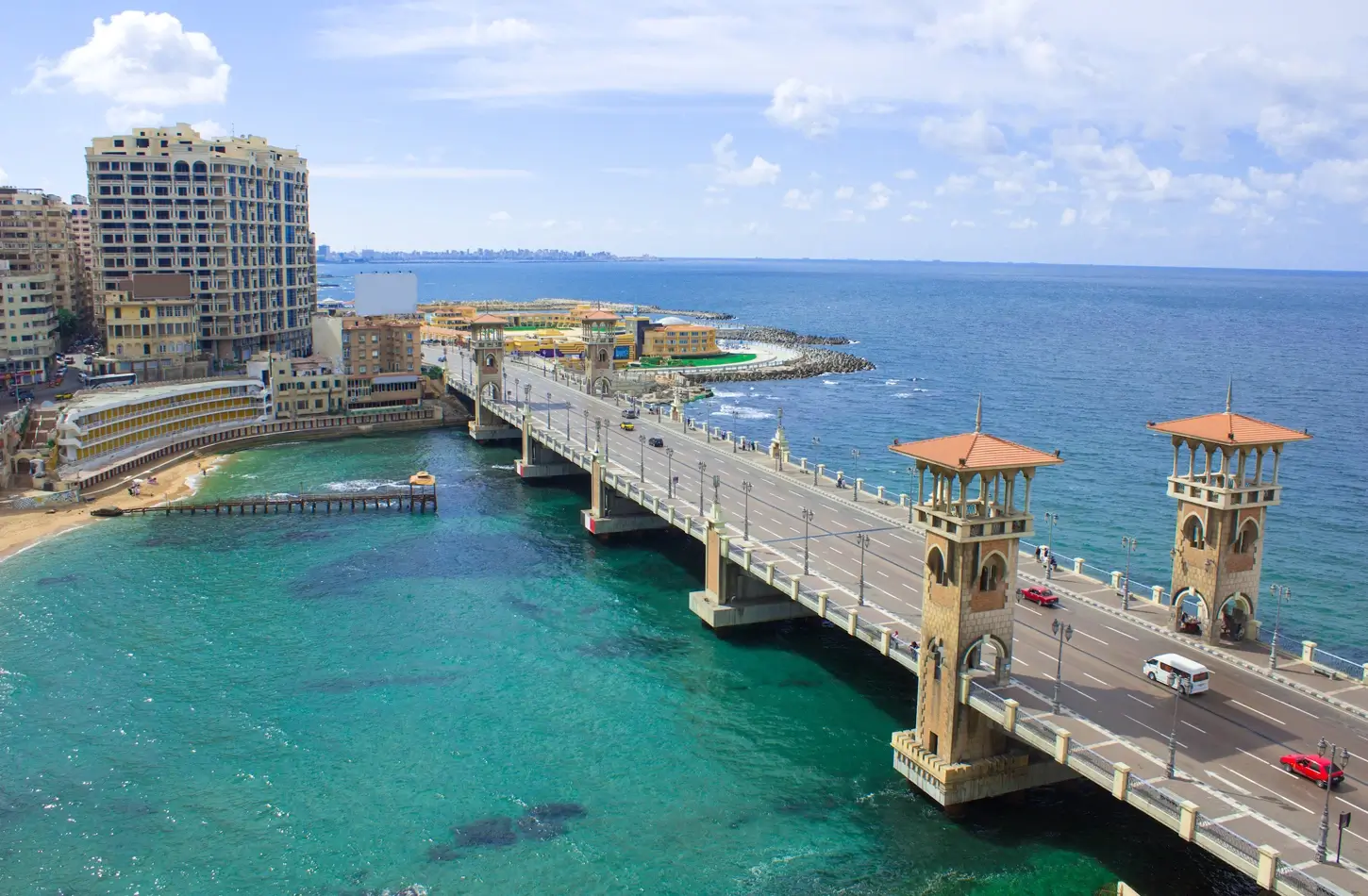
After lunch you continue about 120 km to Alexandria and check in to your hotel on the seafront. The evening is free for a walk along the Corniche.

StayOvernight: Cairo hotel
Meals
  • Breakfast
  • Lunch
  • Dinner
Day5

Alexandria: Qaitbay, the Library and the catacombs

Cairo2 meals

Morning: the Citadel of Qaitbay and the Library

The Citadel of Qaitbay was built in the 1470s on the site of the Pharos, the lighthouse that was one of the Seven Wonders of the Ancient World; some of its stones are thought to be reused from it. The Bibliotheca Alexandrina, opened in 2002 near the site of the ancient library, has a vast tilted reading room and small museums of manuscripts and antiquities.

Afternoon: the Roman city

After lunch you see the Roman theatre at Kom el-Dikka, the only one of its kind in Egypt, and the catacombs of Kom el-Shoqafa, a 2nd-century tomb complex on three levels where Egyptian gods appear in Roman dress. Before sunset there is time in the gardens of Montazah, the former royal summer palace by the sea.

StayOvernight: Cairo hotel
Meals
  • Breakfast
  • Lunch
  • Dinner
Day6

El Alamein and the desert road to Siwa

Cairo2 meals

Morning: El Alamein

You leave after an early breakfast and follow the coast west. About 110 km from Alexandria, El Alamein was the scene of the battles of 1942 that turned the North African campaign of the Second World War. You stop at the Commonwealth War Cemetery, with more than 7,000 graves, and, time allowing, the military museum.

Afternoon: across the Western Desert

Lunch is on the way, near Marsa Matruh. From there the road turns south through the desert, about 300 km to Siwa. The whole day is about 600 km, eight to nine hours with stops.

Evening

You reach Siwa in the late afternoon or early evening and check in to your eco-lodge, built of kershef, the local salt-and-mud stone.

StayOvernight: Cairo hotel
Meals
  • Breakfast
  • Lunch
  • Dinner
Day7

Siwa: the oracle of Amun, springs and the Great Sand Sea

2 meals

Morning: the oracle and Cleopatra's Spring

Siwa lies about 18 metres below sea level, among some 300,000 palm trees. On the hill of Aghurmi stands the Temple of the Oracle of Amun, which Alexander the Great consulted in 331 BC. Nearby, Cleopatra's Spring is a round stone pool of clear water where you can swim.

Afternoon: the Great Sand Sea

After lunch a 4x4 takes you into the dunes of the Great Sand Sea that begin at the edge of the oasis, with time for sandboarding and a swim in a warm spring in the dunes. You float in one of the salt lakes, where the water holds you up like the Dead Sea.

Late afternoon: the Mountain of the Dead

Gebel al-Mawta is a hill honeycombed with rock tombs of the late period; the tomb of Si-Amun has painted scenes in Egyptian and Greek styles. The day ends at sunset on Fatnas Island, among the palms beside a salt lake.

Meals
  • Breakfast
  • Lunch
  • Dinner
Day8

A slow day in Siwa

2 meals

Today has no fixed plan. In the morning your guide takes you to the old town of Shali, a fortress of kershef built in the 13th century and partly melted by rare heavy rain in 1926, with views over the oasis from the top. The rest of the day is yours. Options include:

  • Cycling through the palm gardens on the paths between the springs.
  • A visit to a craft centre for Siwan embroidery, silver and baskets, and a talk with your guide about the Amazigh culture and language of the oasis.
  • A sand bath or a soak in a hot spring.
  • Stargazing in the evening: with almost no light pollution, the sky over Siwa is very dark.

Breakfast and lunch are included.

Meals
  • Breakfast
  • Lunch
  • Dinner
Day9

Siwa to Cairo

Cairo2 meals

After an early breakfast you leave Siwa for the long drive back to Cairo, about 800 km by Marsa Matruh and the coast road, nine to ten hours with stops for lunch and rest. Your private vehicle and driver make the day as comfortable as such a day can be.

You reach your Cairo hotel in the evening for one night before the flight south.

StayOvernight: Cairo hotel
Meals
  • Breakfast
  • Lunch
  • Dinner
Day10

Flight to Luxor: Luxor Temple and Karnak

2 meals

Morning: the flight to Luxor

After breakfast you transfer to Cairo airport for the flight to Luxor, about one hour. Your guide meets you on arrival.

Afternoon: Karnak and Luxor Temple

Karnak, the temple of Amun, was built and enlarged over some 2,000 years; the Great Hypostyle Hall has 134 columns, and the obelisks of Thutmose I and Hatshepsut still stand at its heart. Luxor Temple, built mainly by Amenhotep III and Ramses II, stands in the centre of the town; the Avenue of Sphinxes, about 2.7 km long, joins the two temples. Seeing Luxor Temple in the late afternoon light is a good start.

Evening

You check in to your hotel on the Nile for two nights.

FlightCairo to Luxor
Meals
  • Breakfast
  • Lunch
  • Dinner
Day11

The Valley of the Kings and the Valley of the Queens

2 meals

Early morning: the Valley of the Kings

The day starts early on the West Bank. The Valley of the Kings holds more than 60 tombs cut for the pharaohs of the New Kingdom. The standard ticket opens three tombs among those open on the day; the tomb of Seti I, the longest and most richly decorated in the valley, and the tomb of Horemheb need separate tickets bought at the site, when they are open.

Late morning: the Valley of the Queens

The tomb of Queen Nefertari, wife of Ramses II, is often called the finest in Egypt for the colour of its paintings. It needs a separate ticket, and visits are limited to a short time inside. The other open tombs of the valley are on the standard ticket.

Afternoon

After lunch you stop at the temple of Hatshepsut at Deir el-Bahari and the Colossi of Memnon, two statues of Amenhotep III about 18 metres tall, before returning to the hotel.

Meals
  • Breakfast
  • Lunch
  • Dinner
Day12

Esna: the Temple of Khnum and boarding the dahabiya

2 meals

Morning: the drive to Esna

After breakfast you check out and drive about 55 km south to Esna, an hour by road.

Late morning: the Temple of Khnum

The hypostyle hall of the Temple of Khnum, the ram-headed creator god, stands about nine metres below the modern street. Recent cleaning has uncovered the original colours on its columns and astronomical ceiling, now among the brightest in Egypt.

Afternoon: on board

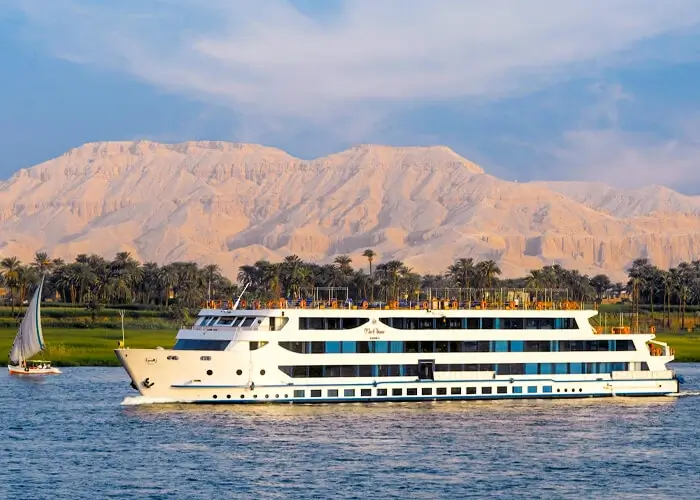
You board your dahabiya for lunch. These boats carry only a few cabins under two large sails, and they moor at night at islands and quiet banks. The crew sets sail south towards El Kab, and dinner is on board.

Meals
  • Breakfast
  • Lunch
  • Dinner
Day13

El Kab and Edfu

3 meals

Morning: El Kab

El Kab was the city of Nekhbet, the vulture goddess of Upper Egypt. In the cliffs above the old town, the rock tombs of local nobles of the early New Kingdom include that of Ahmose son of Ebana, whose inscription describes the war that drove the Hyksos out of Egypt, and the tomb of Paheri with scenes of farming and wine-making. Few visitors come here.

Afternoon: Edfu

The dahabiya sails on to Edfu. The Temple of Horus, built between 237 and 57 BC, is the most complete temple in Egypt; its walls tell the battle between Horus and Seth. Breakfast, lunch and dinner are on board.

Meals
  • Breakfast
  • Lunch
  • Dinner
Day14

Sailing to Gebel el-Silsila

3 meals

A day of sailing, with the wind deciding the pace. At Gebel el-Silsila the Nile narrows between sandstone cliffs. For centuries this was the main quarry for the temples of Upper Egypt, and the cliffs keep the marks of the stone-cutters, shrines and stelae left by officials of the New Kingdom.

In the afternoon you can walk among the quarries with your guide, or swim from the boat where the crew says it is safe. All meals are on board, and the boat moors near the cliffs for the night.

Meals
  • Breakfast
  • Lunch
  • Dinner
Day15

Gebel el-Silsila: the shrine of Horemheb

3 meals

In the morning you visit the Speos of Horemheb, a rock-cut chapel carved into the west bank for the last king of the Eighteenth Dynasty, with reliefs of the king and the gods of the region.

The rest of the day is free on board: on the sun deck, with a book, or swimming where the crew says it is safe. All meals are on board.

Meals
  • Breakfast
  • Lunch
  • Dinner
Day16

Kom Ombo

3 meals

The dahabiya sails on to Kom Ombo, where the double temple stands on a bend of the river. It has two entrances and two sanctuaries side by side, one for Sobek, the crocodile god, and one for Haroeris, Horus the Elder. Your guide shows you a relief often read as a set of medical instruments, and next door the Crocodile Museum displays mummified crocodiles from a nearby cemetery.

The last evening on board is often a farewell dinner on deck. All meals are included.

Meals
  • Breakfast
  • Lunch
  • Dinner
Day17

Aswan: Philae, the High Dam and the Nubian Museum

2 meals

Morning: arrival in Aswan

After breakfast you leave the dahabiya in Aswan. You visit the High Dam, completed in 1970, which created Lake Nasser, and the Unfinished Obelisk in the ancient granite quarries, which would have stood about 42 metres tall.

Midday: Philae

A motorboat takes you to Philae, the temple of Isis, moved stone by stone to Agilkia Island in the 1970s to save it from the rising water between the dams.

Afternoon: the Nubian Museum

After lunch the Nubian Museum tells the history of Nubia, the land flooded by Lake Nasser, from prehistory to today, with a garden of reconstructed houses. You then check in to your hotel on the Nile for the night.

Meals
  • Breakfast
  • Lunch
  • Dinner
Day18

Abu Simbel by air, then Cairo

2 meals

Morning: the flight to Abu Simbel

After an early breakfast you fly from Aswan to Abu Simbel, about 45 minutes, and a shuttle takes you to the temples.

The temples of Ramses II and Nefertari

The Great Temple is cut into the rock, with four seated statues of Ramses II, each about 20 metres tall, on the facade; inside, the reliefs show his battle at Kadesh. The smaller temple honours Queen Nefertari and the goddess Hathor. In the 1960s both temples were cut into blocks and rebuilt on higher ground to save them from Lake Nasser.

Afternoon: on to Cairo

You fly back via Aswan to Cairo, where our representative takes you to your hotel for the last two nights. Lunch is included.

FlightAswan to Abu Simbel, Abu Simbel to Aswan, Aswan to Cairo
Meals
  • Breakfast
  • Lunch
  • Dinner
Day19

The Pyramids of Giza and the Grand Egyptian Museum

2 meals

Morning: the Giza Plateau

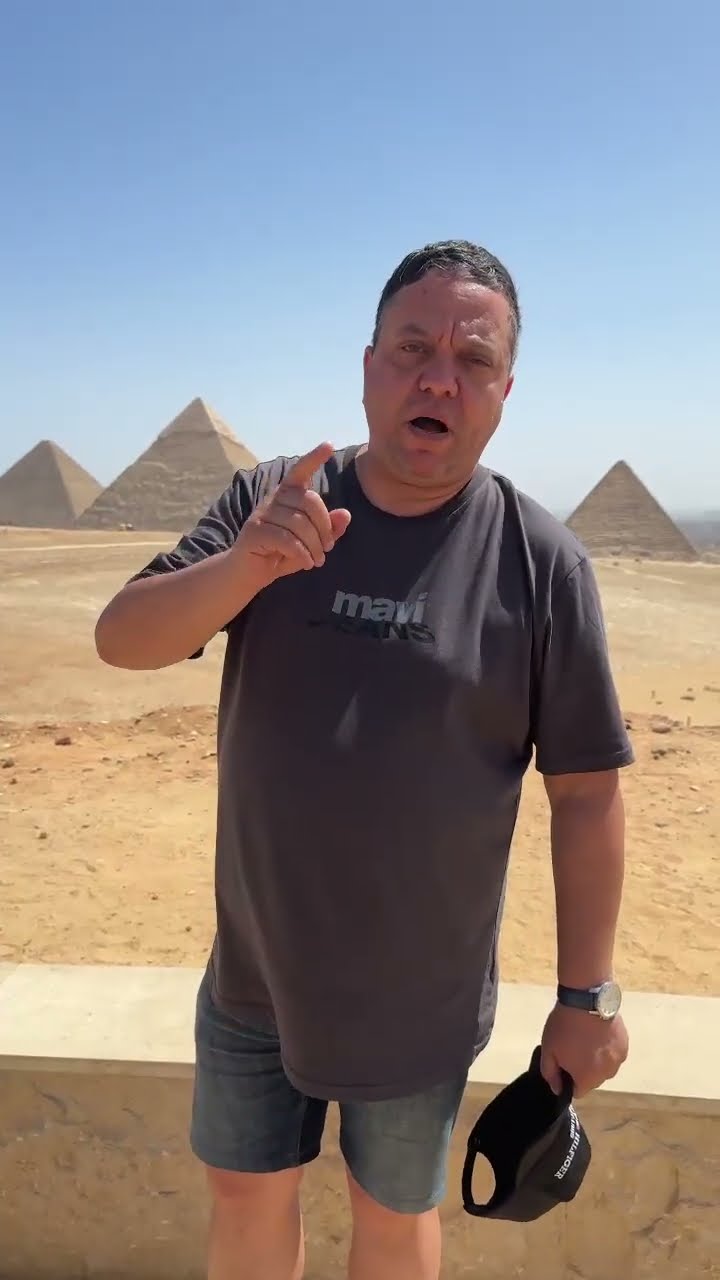
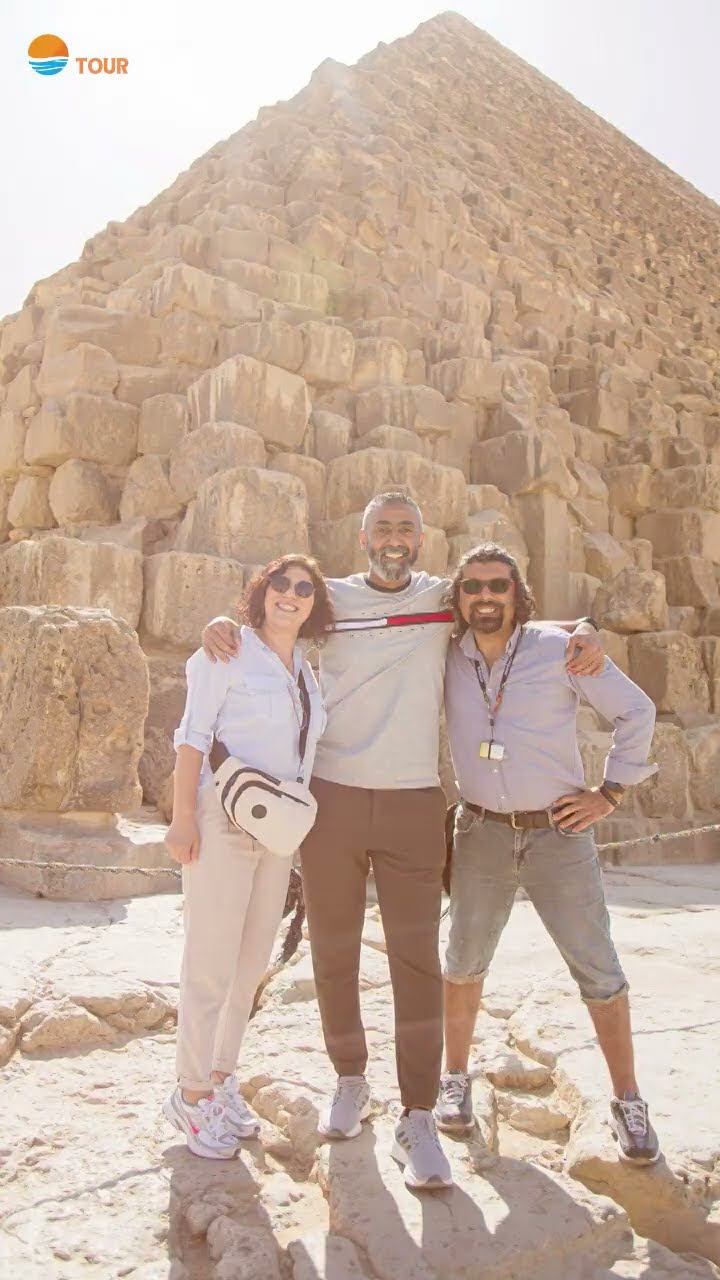
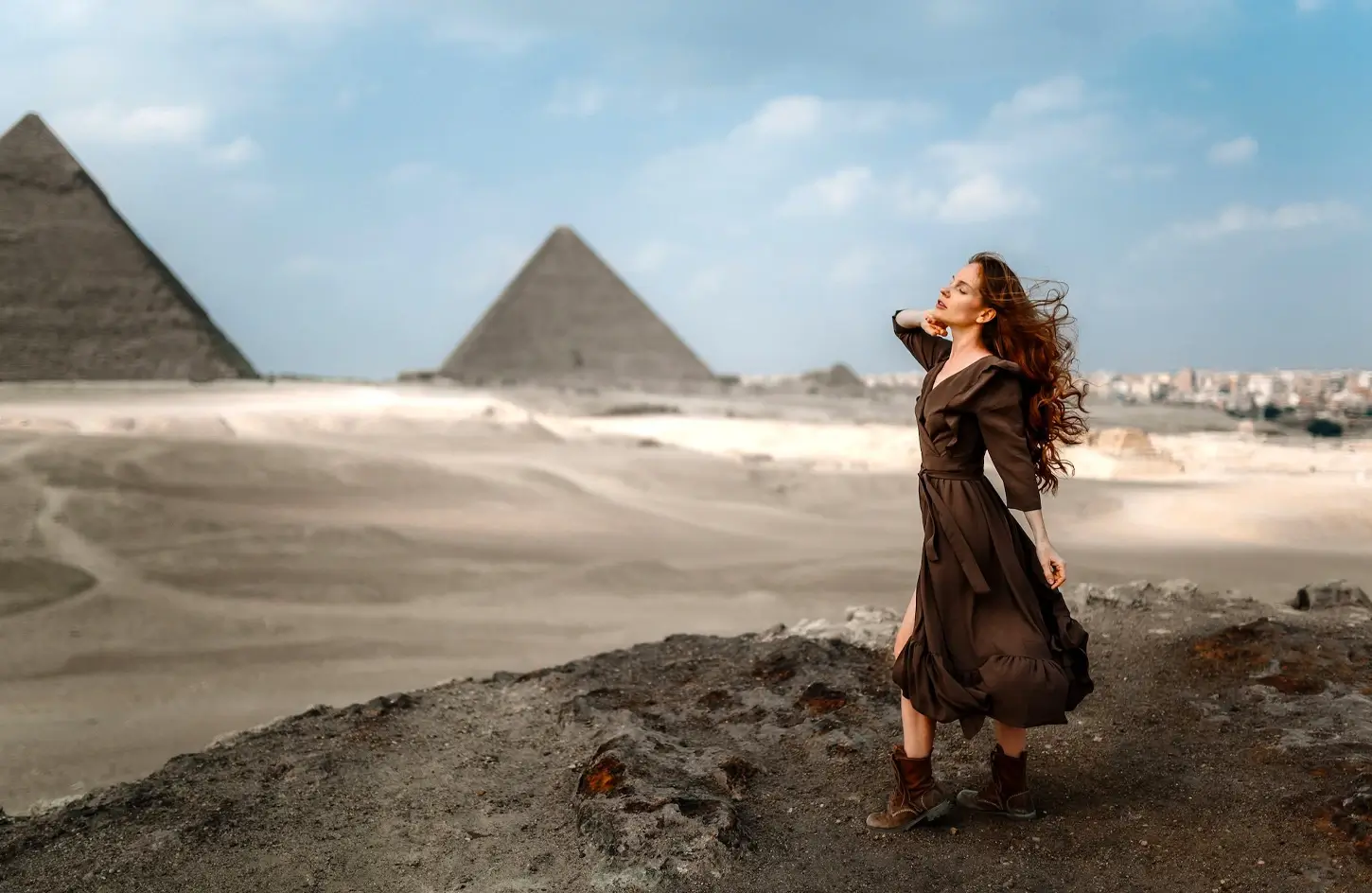
Your Egyptologist takes you to the Pyramids of Khufu, Khafre and Menkaure, the Great Sphinx and the Valley Temple. A ticket to go inside the Great Pyramid is included today. A short camel ride near the viewpoint is optional, and lunch is at a restaurant with a view of the pyramids.

Afternoon: the Grand Egyptian Museum

The Grand Egyptian Museum, about 2 km from the pyramids, displays the complete Tutankhamun collection together for the first time, after the Grand Staircase lined with royal statues and the colossal Ramses II in the Grand Hall.

Meals
  • Breakfast
  • Lunch
  • Dinner
Day20

Departure from Cairo

1 meal

After breakfast, our representative takes you to Cairo International Airport and assists you with check-in and the formalities. Airlines usually ask you to be there three hours before an international flight. This is the end of the tour.

Meals
  • Breakfast
  • Lunch
  • Dinner

Prices and accommodation

Your choice

Standard

Standard hotels

Comfortable, well located

$7,255per person
  • Cairo 3 nightsNovotel Cairo or Radisson Blu Cairo, or similar
  • Alexandria 2 nights
  • Siwa 3 nights
  • Cairo 1 nightNovotel Cairo or Radisson Blu Cairo, or similar
  • Luxor 2 nightsSonesta St. George Luxor or similar
  • Dahabiya cruise 5 nights
  • Aswan 1 nightISIS Island Aswan or Citymax Aswan, or similar
  • Cairo 2 nightsNovotel Cairo or Radisson Blu Cairo, or similar
Your choice

Premium

Premium hotels

More space and better ships

$8,375per person
  • Cairo 3 nightsSteigenberger Hotel El Tahrir or Ramses Hilton, or similar
  • Alexandria 2 nights
  • Siwa 3 nights
  • Cairo 1 nightSteigenberger Hotel El Tahrir or Ramses Hilton, or similar
  • Luxor 2 nightsSteigenberger Nile Palace or similar
  • Dahabiya cruise 5 nights
  • Aswan 1 nightBasma Hotel or similar
  • Cairo 2 nightsSteigenberger Hotel El Tahrir or Ramses Hilton, or similar
Your choice

Luxury

Top class

Our highest level

$11,920per person
  • Cairo 3 nightsFairmont Nile City or Sofitel Downtown Cairo, or similar
  • Alexandria 2 nights
  • Siwa 3 nights
  • Cairo 1 nightFairmont Nile City or Sofitel Downtown Cairo, or similar
  • Luxor 2 nightsSofitel Winter Palace Luxor or similar
  • Dahabiya cruise 5 nights
  • Aswan 1 nightSofitel Legend Old Cataract Aswan or similar
  • Cairo 2 nightsFairmont Nile City or Sofitel Downtown Cairo, or similar

Children pay less, see the children policy below. Christmas, New Year and Easter dates add 25%. Prices are per person in US dollars.

What is included

Included10 items
  • Accommodation as described: hotels in Cairo, Alexandria, Luxor and Aswan, an eco-lodge in Siwa and 5 nights on a dahabiya.
  • A certified Egyptologist guide on every sightseeing day.
  • Cairo: Dahshur, Saqqara, the Egyptian Museum, the Citadel, Khan el-Khalili, Giza with a ticket inside the Great Pyramid, and the Grand Egyptian Museum.
  • Alexandria: the Citadel of Qaitbay, the Bibliotheca Alexandrina, the Roman theatre, the catacombs of Kom el-Shoqafa and Montazah, with the monasteries of Wadi el-Natrun on the way.
  • Siwa: 3 nights, with the oracle temple of Amun, Cleopatra's Spring, the Mountain of the Dead, Shali, a 4x4 trip into the Great Sand Sea and El Alamein on the way.
  • Luxor: Karnak, Luxor Temple, the Valley of the Kings, the Valley of the Queens, the temple of Hatshepsut and the Colossi of Memnon.
  • Dahabiya: 5 nights from Esna to Aswan with full board, visiting Esna, El Kab, Edfu, Gebel el-Silsila and Kom Ombo.
  • Aswan: the High Dam, the Unfinished Obelisk, Philae and the Nubian Museum.
  • Abu Simbel by air from Aswan, with the shuttle to the temples.
  • Domestic flights: Cairo to Luxor, Aswan to Abu Simbel and back, and Aswan to Cairo; all transfers by private vehicle.
Not included7 items
  • International flights to and from Egypt.
  • Egypt entry visa.
  • Dinners during hotel stays (all meals are included on the dahabiya).
  • Tips for guides, drivers and the dahabiya crew.
  • Personal expenses and activities not listed in the itinerary.
  • Extra tickets at the sites: the tombs of Seti I, Horemheb, Nefertari and Tutankhamun.
  • Optional activities, such as a balloon flight in Luxor or a camel ride at Giza.

Practical information for this route

Best time to travel

October to April is the best time for this route, and most dahabiyas sail only in these months. Cairo and Alexandria are mild in winter, around 18 to 22 °C, with occasional rain on the Mediterranean coast from November to February. Siwa has warm days and cold nights in winter, often near 5 °C before dawn. Luxor and Aswan are around 23 to 26 °C from December to February. From May to September the desert and Upper Egypt pass 40 °C, which makes Siwa and the open sites hard work. Christmas, New Year and Easter are the busiest weeks, when dahabiyas and the best hotels fill first.

What to pack and wear

  • Comfortable closed shoes for the sites, and sandals for the boat and the springs of Siwa.
  • Warm layers for desert nights in Siwa and early mornings on the river; a windproof jacket helps on deck.
  • Swimwear for Cleopatra's Spring and the salt lakes, and for swimming stops from the dahabiya where the crew says it is safe.
  • A sun hat, sunglasses and sunscreen all year.
  • Clothes that cover shoulders and knees for the monasteries of Wadi el-Natrun, mosques and Siwa town, which is conservative.

Visa and passport

Many nationalities can buy a tourist visa on arrival at Cairo airport or apply for an e-visa in advance on Egypt's official portal, visa2egypt.gov.eg. The rules and the fee depend on your passport, so check them before you book your flights. Your passport should be valid for at least six months from the day you arrive. On the road to Siwa there are military and police checkpoints: keep your passport with you, as our team registers your details in advance.

Money and tips

The currency is the Egyptian pound. Cards work in the hotels of Cairo, Alexandria, Luxor and Aswan; in Siwa and on the dahabiya, bring cash in small notes for drinks, crafts and extras. Tips are not included in the price; the tipping guide in the travel policies below gives the usual amounts for guides, drivers and the dahabiya crew.

Travel policy guide

Pricing policy

All prices are per person in US dollars. The price changes with the season (winter 1 October to 30 April, summer 1 May to 30 September), the accommodation level and the size of the group. Christmas, New Year and Easter dates add 25%. Your quote lists the final price and everything it covers. After the deposit, changes to your itinerary cost US$25 per request, plus any third-party fees.

Booking confirmation

A deposit of 30% of the total tour cost confirms your booking. We send you a secure payment link for the deposit; the balance is paid in cash or by card on arrival in Egypt, unless your written offer gives another date. We never ask for card details by email, chat or WhatsApp. We confirm every booking by email.

Cancellation and refund

  • 22 days or more before departure: 100% refund
  • 15 to 21 days: 70% refund
  • 8 to 14 days: 50% refund
  • 0 to 7 days: no refund

No-show travelers are charged 100%. During peak events in Egypt, hotels and Nile cruises do not refund deposits. Groups of more than 10 people may have different terms.

Children policy

  • Under 2: free, sharing the parents’ bed, meals not included
  • 2 to 5 years: 25% of the adult price
  • 6 to 11 years: 50% of the adult price
  • 12 and over: adult price

Add each child and their age in the enquiry form so the quote is exact.

Optional visits

Optional visits, such as a hot air balloon ride in Luxor, a Sound and Light show or a felucca ride, are not in the price. Tell us which ones you want and we add them to your quote with their cost.

Extra expenses

Not included in the price: International flights to and from Egypt; Egypt entry visa; Dinners during hotel stays (all meals are included on the dahabiya); Tips for guides, drivers and the dahabiya crew; Personal expenses and activities not listed in the itinerary; Extra tickets at the sites: the tombs of Seti I, Horemheb, Nefertari and Tutankhamun; Optional activities, such as a balloon flight in Luxor or a camel ride at Giza.

Tipping guide

Tipping is customary in Egypt and is not included in the price. A usual amount for a private tour is US$8 to 10 per person per day for your guide, US$4 to 5 for your driver and US$5 to 8 per person per day for the crew on a Nile cruise. Your guide can advise you on the day.

Questions about this tour

What is a dahabiya, and how is it different from a Nile cruise ship?

A dahabiya is a traditional two-masted sailing boat with usually 6 to 12 cabins, against 50 to 80 on a cruise ship. It sails with the wind, with a tug for calm days, moors at quiet banks and islands, and stops at sites such as El Kab and Gebel el-Silsila that large ships pass. Our guide dahabiya vs Nile cruise compares the two.

Are the drives to and from Siwa very long?

Yes: about 600 km from Alexandria with the stop at El Alamein, and about 800 km back to Cairo, each a full day with stops. There are no scheduled flights to Siwa. If you prefer, the Siwa section can be removed or shortened; see our Siwa Oasis travel tips before you decide.

Which tombs need an extra ticket?

In Luxor, the tombs of Seti I, Horemheb and Tutankhamun in the Valley of the Kings, and the tomb of Nefertari in the Valley of the Queens, need separate tickets bought at the site, when they are open. Your guide advises which are open on your day.

When does the dahabiya sail?

Most dahabiyas sail from October to April, on fixed departure days. We plan the rest of the tour around the sailing date, so tell us your travel window early.

What travelers say about Egypt Online Tour

Independent reviews on the platforms travelers already trust.

5.0
193 reviews
Ranked #121 of 2,706 tours and activities in Cairo
Read all reviews on Tripadvisor
5.0
Based on 6 Google reviews
60 Ahmed El Zomor, Cairo, Egypt
Open 24 hours on the Google listing
Christiane SMay 2026
Traveled with family

Amazing Egyptian vacation! We did an 11 day private tour of Cairo, cruise on the Nile between Aswan and Luxor and a 4 day stay in Hurghada. The guided tours were very interesting, with extremely knowledgeable guides, attentive and helpful.

Ehrhart MAugust 2024
Traveled as a couple

Egypt package to the Pyramids of Giza and Saqqara was a fascinating journey through Egypt's ancient past ,guide knowledge, the majesty of the pyramids, and the historical depth of Saqqara made this tour truly enriching!

Clayton Z973August 2024
Traveled in a group

our honeymoon to Egypt ,Giza and Saqqara was a magical escape into history The pyramids looming in the distance, the quiet serenity of the desert, and the ancient wonders of Saqqara created moments that will be with me forever!