The Pyramid of Sahure in Abusir preserves the most detailed royal reliefs from Egypt’s Old Kingdom.
Travelers reach the site in under one hour from Cairo and explore rare temple carvings that reveal trade, ritual, and daily life around 2500 BCE.
This guide explains the history, architecture, ticket details, and best visit plan in clear steps built for modern travelers and researchers.
Quick Facts About the Pyramid of Sahure
Read about Strange Facts About The Pyramids
Pyramid of Sahure at Abusir: Royal Art, Reliefs, and Fifth Dynasty History
The Pyramid marks a clear turning point in Old Kingdom royal design and temple art.
It stands in the Abusir necropolis and reveals how kings began to focus on relief scenes, ritual space, and solar belief rather than massive stone size.
Because of this shift, the monument helps historians read political power, religion, and daily life in one place.
Key facts define the site with clarity:
- Location: Abusir plateau, just north of Saqqara and south of Giza.
- Pharaoh: Sahure, second ruler of the Fifth Dynasty.
- Main feature: Extensive carved wall reliefs of trade, ritual, and royal ceremony.
- Modern discovery: Excavated and documented by Ludwig Borchardt in the early twentieth century.
Read more: The History of Ancient Nubia
About the Pyramid of Sahure
The Pyramid of Sahure is a royal burial site that marked the start of a new architectural era in the Old Kingdom. While it is smaller than the Great Pyramids, its decorative art is far more advanced and detailed. Therefore, historians view it as a masterpiece of royal propaganda and religious devotion.
- It was the first pyramid built in the Abusir area.
- The design focuses more on the temples than the stone mass.
- Fine limestone originally covered the entire exterior.
- However, much of that stone was stolen over many centuries.
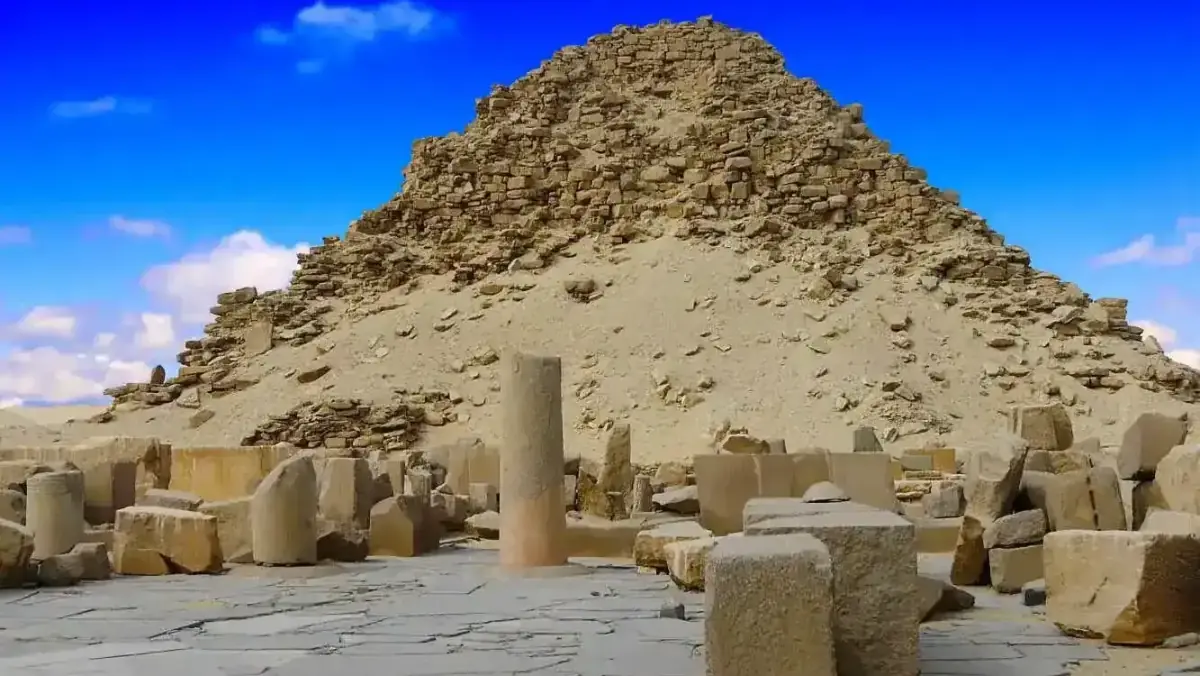
- So, the pyramid looks like a small hill today.
This structure proves that Fifth Dynasty kings valued beauty over sheer size. Also, it set the standard for all royal tombs that followed in that period. Because of its artistic wealth, it remains a top site for researchers studying the Abusir royal cemetery.
Why the Pyramid of Sahure Is Important
This site is vital because it contains some of the most detailed scenes of ancient life ever found. These carvings show everything from naval battles to exotic animals being brought to Egypt. Consequently, we know much more about early trade and military power because of this single monument.
- It shows the earliest known images of an Egyptian fleet.
- The reliefs depict trade with distant lands like Punt.
- It highlights the king’s role as a protector of the state.
- Furthermore, the complex layout reveals how royal cults worked.
Location of the Pyramid of Sahure
It stands on the Abusir plateau north of Saqqara, placing it at the heart of Fifth Dynasty royal burial planning.
This position links the monument to solar worship, desert geography, and the political center of Old Kingdom Memphis.
Because the site sits between Giza and Saqqara, it forms a clear bridge between early pyramid scale and later temple-focused design.
Key location facts strengthen historical clarity and search relevance:
- About 15 kilometers south of central Cairo, with short desert travel time.
- Set between the Giza and Saqqara necropolises, within the Abusir royal zone.
- Raised on solid limestone ground, which secured the heavy stone structure.
- Overlooking the ancient Memphis valley, once Egypt’s main capital.
This precise geography explains why scholars connect the complex to solar temples and royal ritual movement.
It also delivers the exact travel context modern visitors search for before planning a visit.
Abusir Necropolis
Abusir served as the primary royal cemetery of the Fifth Dynasty and shaped the cultural setting of the Pyramid.
Here, kings shifted focus from giant stone masses toward decorated temples and solar beliefs.
As a result, the area preserves sun temples, elite tombs, and ritual pathways that explain royal religion in daily practice.
Because the necropolis remains quieter than Giza, visitors experience clearer space, longer viewing time, and stronger historical focus.
Scholars value this calm setting since architectural layout and relief scenes remain easier to study.
How to Get There
Reaching the Pyramid of Sahure from Cairo is simple, direct, and practical for modern travel planning.
Most routes begin in Cairo or Giza, then continue south toward Saqqara before turning north into Abusir.
Travel usually takes 40 to 60 minutes by car, depending on traffic and entry control at archaeological zones.
- Private car or guided tour offers the fastest and most comfortable access.
- Combined visits with Saqqara monuments create an efficient half-day route.
- Early morning arrival provides cool weather, soft light, and fewer crowds.
Read about: How to Plan a Trip to Cairo Egypt
Who Was Pharaoh Sahure?
Pharaoh Sahure ruled early in the Fifth Dynasty and shaped the royal world that later defined the Pyramid of Sahure.
He governed Egypt for about twelve to fourteen years during the mid-twenty-fifth century BCE.
During this short reign, artistic skill grew, foreign trade widened, and royal temples gained new religious meaning.
Clear historical facts explain his lasting importance:
- His royal name means He who is close to Ra, linking kingship to the sun god.
- He sent expeditions to the Sinai turquoise mines and secured valuable desert resources.
- He launched sea journeys toward the Levant for cedar wood, which supported temple building.
- Court artists produced refined relief scenes, later preserved in the Pyramid of Sahure complex.
Because these achievements combined religion, economy, and art, scholars view his reign as a turning point in Old Kingdom policy.
Sahure and the Fifth Dynasty
The Fifth Dynasty placed solar worship and temple ritual at the center of royal power, and Sahure strengthened this shift.
Kings now invested more in decorated temples than in massive pyramid height.
As a result, royal monuments became religious landscapes rather than simple tombs.
History of the Pyramid of Sahure
The Pyramid was planned around 2480 BC as a clear break from earlier royal traditions. Instead of Saqqara, Sahure chose Abusir to mark a new chapter for Fifth Dynasty kings. This decision reshaped how royal landscapes developed west of the Nile.
- Construction began soon after Sahure became king
- Builders selected Abusir for its height and stable limestone base
- The move reduced crowding near earlier royal tombs
- As a result, Abusir became a new royal cemetery
This choice mattered. It shifted royal focus from size to meaning. It also set a pattern that future kings followed.
When the Pyramid Was Built
The pyramid rose during the mid-25th century BC, a high point of Old Kingdom culture. Although construction moved faster than earlier Fourth Dynasty projects, artistic work expanded instead of shrinking.
- Core masonry went up quickly
- Decorative programs took longer and received more care
- Most effort focused on temples and reliefs
So, while the stone mass stayed modest, the cultural value grew stronger.
Purpose of the Pyramid
The pyramid protected Sahure’s burial while supporting daily ritual worship carried out by priests
Look and read: When Was the Great Sphinx Built
Why Scholars See Sahure as the Turning Point of Pyramid Religion
Scholars view the Pyramid of Sahure as a clear shift from a massive stone display to a living ritual meaning. Earlier kings proved power through height and weight. Sahure instead shaped space for priests, processions, and daily sacred acts. This change reflects the growing role of the sun god Ra in royal belief and state identity. Later Fifth Dynasty rulers followed the same temple-centered model across Abusir. Because of this turning point, Sahure’s monument explains how pyramid religion moved from monument to ceremony.
Architecture of the Pyramid of Sahure
It shows a clear move from a giant stone mass toward a temple-centered royal design. Builders reduced pyramid size, yet they expanded ritual buildings, rich stone floors, and carved decoration. Because of this shift, later Fifth Dynasty pyramids followed the same balanced plan between monument and temple life.
Key architectural elements explain this transition:
- The core is built in five stepped layers of local limestone
- Exterior once covered with fine white Tura casing
- Granite columns shaped like palm leaves in temple courts
- Black basalt floors used for sacred processions
- Early copper drainage channels were added for protection
These choices reveal careful planning, not reduced ambition. The focus changed from height to ritual experience.
Main relief documentation was first recorded by German archaeologist Ludwig Borchardt and later expanded by Czech archaeological missions at Abusir.
Pyramid Structure
Workers formed the pyramid core with rough stone blocks set in step layers. Then they filled gaps using rubble and mortar to speed construction. This method lowered cost and time, yet it weakened long-term stability. As centuries passed, casing stones vanished, and the core eroded, leaving the mound visible today.
Even so, the structure still shows precise royal geometry and alignment.
Read about: Did Thoth Built The Pyramids
Size and Shape
The pyramid first reached about 47 meters in height with a base of about 78 meters per side. Its slope measured close to 50 degrees, creating a sharp but balanced profile. Although smaller than the Giza pyramids, the symmetry remained exact, which preserved royal authority through proportion rather than scale.
Internal Passages
A single descending corridor leads toward the burial chamber cut deep in bedrock. Massive limestone beams protected the chamber roof and helped the room survive long after outer damage. Today, safety concerns usually prevent interior entry, yet the preserved layout still confirms Old Kingdom engineering skill and ritual planning.
Sahure’s Mortuary Complex
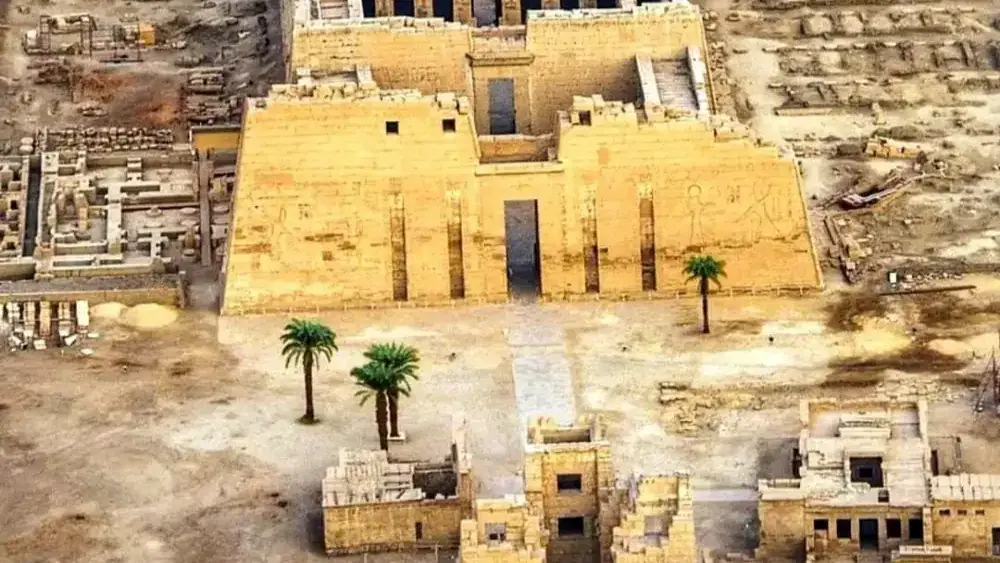
Sahure’s mortuary complex forms the true ceremonial heart of the royal site, and it explains the full meaning of the Pyramid of Sahure. While the pyramid marks burial space, the surrounding temples reveal daily ritual, royal memory, and sacred movement. Because these buildings stayed richly decorated, historians gain clearer insight into Fifth Dynasty belief and ceremony.
Main features define the complex layout:
- Valley Temple is placed near the ancient floodplain
- Covered causeway stretching more than 200 meters uphill
- The mortuary temple is arranged around an open stone courtyard
- Polished black basalt floors used for ritual processions
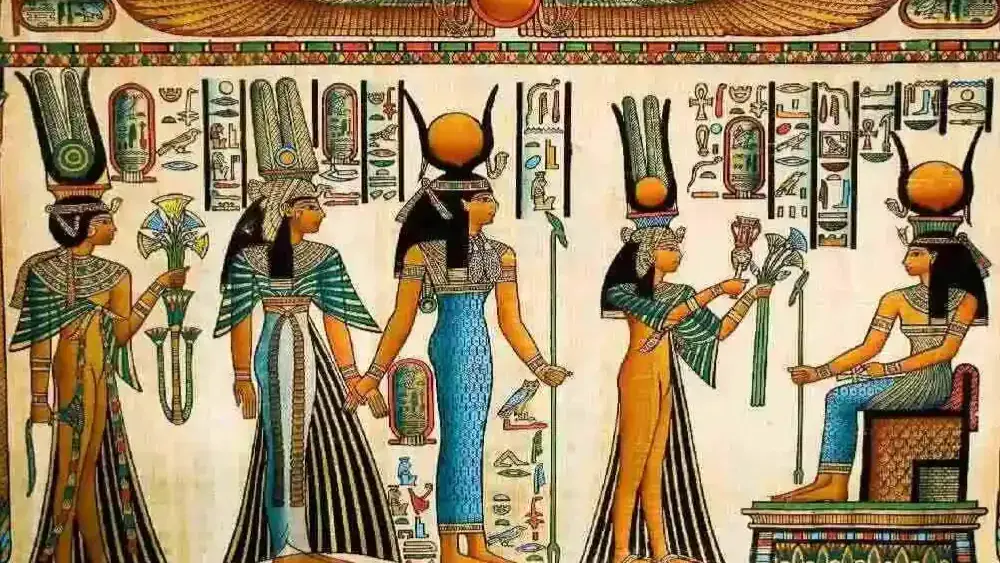
- Colorful relief carvings that once brightened the temple halls.
Mortuary Temple
The mortuary temple served as the living center of royal worship after Sahure’s death. Priests stored food, incense, and ritual tools in side chambers, so daily offerings could continue without pause. Carved wall scenes show hunting, tribute, and divine blessing, which present the king as eternally protected. Because of this imagery, the temple functioned like a spiritual palace rather than a simple shrine.
Read more about: Mortuary Temple of Hatshepsut
Causeway and Valley Temple
The causeway linked river life to desert eternity through a long, roofed ceremonial road. Relief carvings along its walls narrated royal victories, trade missions, and sacred rites, so visitors walked through the king’s story step by step. At the end point, the valley temple welcomed processions arriving by boat, which completed the ritual path toward the pyramid and eternal cult.
Reliefs and Decorations
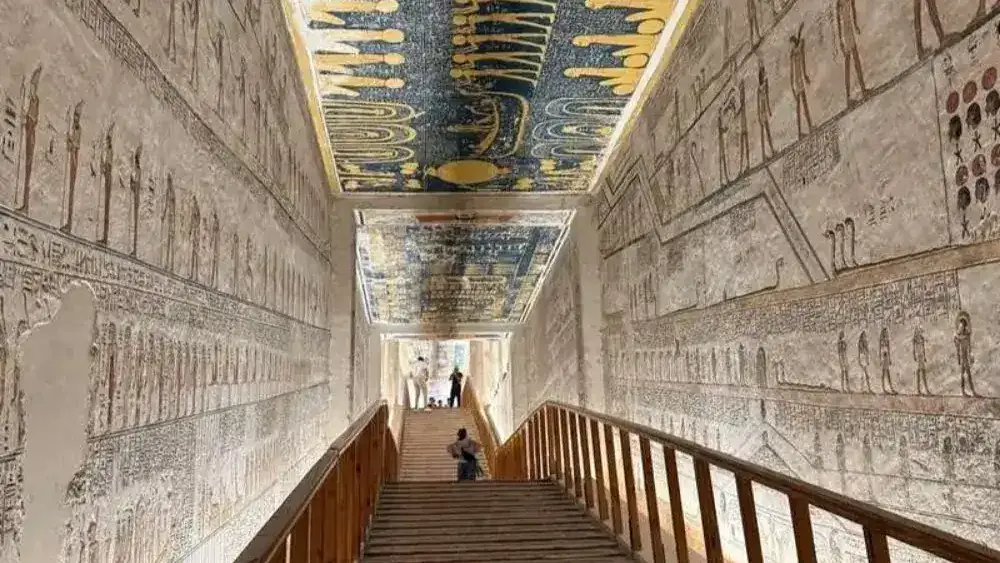
The reliefs at the Pyramid of Sahure preserve the clearest visual record of Fifth Dynasty life, power, and belief. Carvers turned temple walls into detailed history, so every scene carries political and religious meaning. Because of this precision, scholars treat the decoration as one of the richest sources from the Old Kingdom.
Key themes appear across the carved surfaces:
- Royal victories over foreign enemies
- Trade journeys bring rare animals and goods
- Large sea ships returning to Egypt
- Sharp hieroglyphs cut with careful control
- Processions of food, cattle, and tribute
Together, these scenes transform stone walls into a living historical archive.
Wall Reliefs and Scenes
Temple panels show the king as a sphinx crushing hostile tribes, which declares royal strength and divine protection. Nearby scenes display long offering lines filled with grain, animals, and gifts, so the king receives eternal support. Because artists used fine limestone and deep carving, many details remain clear after more than four millennia.
Archaeological Discoveries
Research at the Pyramid of Sahure continues to reveal new evidence about Fifth Dynasty ritual life, temple design, and royal administration. Excavations across more than a century show that the site stayed active long after the king’s burial. Because each season uncovers new details, historians now understand Abusir with far greater clarity than before.
Major milestones shaped modern knowledge of the complex:
- 1902 excavations by Ludwig Borchardt uncovered thousands of carved relief fragments and mapped the main temple layout.
- Late twentieth-century Czech missions identified nearby tombs, service areas, and an advanced stone drainage network.
- Architectural restoration work stabilized damaged walls, which protected fragile decoration for future study.
These discoveries confirm that ancient engineers planned the monument with careful technical skill and long-term ritual use in mind.
Recent Excavations
Archaeologists in 2023 revealed hidden storage chambers filled with jars, tools, and priestly equipment. This evidence proves that temple activity continued for generations after Sahure’s death, so the mortuary cult remained organized and well supplied.
Current archaeological analysis confirms that Sahure’s mortuary temple holds the earliest continuous narrative relief cycle yet found in a royal pyramid complex.
Researchers use these carvings to reconstruct Old Kingdom trade routes, priestly rituals, and royal ceremonies with unusual precision.
Because few pyramid sites preserve decoration at this scale, the monument remains a primary scholarly reference for Fifth Dynasty religion and state economy.
Visiting the Pyramid of Sahure
Visitors can explore the Pyramid of Sahure through its open temple courts and surrounding ruins, while the inner burial passages remain closed for safety. This access still gives a clear view of Fifth Dynasty ritual design, carved reliefs, and desert setting. As a result, the visit feels calm, focused, and deeply historical compared with crowded pyramid sites.
Key planning facts help you prepare with confidence:
- Opening hours: Most days from morning until sunset, depending on site control rules.
- Entry ticket: Standard Abusir or Saqqara area ticket usually covers the complex.
- Guided visit: A trained guide explains relief scenes, temple layout, and royal history with clarity.
- Weather needs: Carry water, sun protection, and light shoes for open desert walking.
Learn more about: How to Spend Summer Vacation in Egypt
Is the Pyramid Open to Visitors?
The temple complex and outer structures remain accessible, yet the internal burial chamber stays closed to protect fragile stone passages. Even so, the visible reliefs, courts, and causeway preserve the most important artistic and religious evidence. Therefore, the external visit still delivers full historical value without entering the core pyramid.
Best Time to Visit
The winter months from October to March offer the most comfortable climate for walking across Abusir. Early morning light improves the visibility of carved reliefs and reduces heat exposure. Calm seasonal weather, lower visitor numbers, and softer desert light together create the best overall viewing conditions.
Ticket Price, Opening Hours, Distance, and Best Time to Visit the Pyramid of Sahure
Visitors enter the Pyramid of Sahure area using a standard Saqqara ticket, making the visit easy to plan and low in cost.
Ticket Price
- The usual admission price for adults visiting Saqqara is approximately 300–450 EGP.
- Students may receive discounted tickets with a valid ID
- Some nearby tombs or special chambers require a small extra fee
- Guides and transport cost extra, depending on the service level
If you want to visit grand Egyption, you can learn more about the Grand Egyptian Museum Ticket Price
Opening Hours
- Open daily from 8:00 AM to 5:00 PM
- Last entry often allowed about one hour before closing
- Hours may shift slightly during holidays or extreme weather
Arriving early means cooler air and fewer visitors across the site.
You enjoy clearer views of the reliefs and more time to explore in comfort.
Distance From Cairo
- Located about 30 km south of central Cairo
- Reaching the site by car generally takes about 40–60 minutes.
- The route usually combines Saqqara and Abusir in one visit
The short travel distance makes the site easy to visit in a half-day trip.
Best Months for Weather
- October to April offers cooler air and clear walking conditions
- December to February gives the most comfortable daytime temperatures
- Summer visits remain possible but require sun protection and water
It also improves the overall travel experience and planning confidence.
Suggested Saqqara Combo Itinerary
A single route can cover the most important nearby monuments in one smooth visit:
- Step Pyramid of Djoser
- Tombs of Kagemni and Mereruka
- Pyramid of Unas with early Pyramid Texts
- The Pyramid of Sahure temple complex
This route follows the natural geography of Saqqara and reduces travel time between monuments.
It also helps visitors understand how pyramid design and royal belief changed across dynasties.
Pyramid of Sahure Compared to Other Pyramids
The Pyramid of Sahure stands apart because it values artistic reliefs and temple design more than sheer size. This shift marks a clear change in royal priorities during the Fifth Dynasty.
Earlier pyramids focused on height and mass. Sahure focused on story, ritual, and carved history. Therefore, the site offers deeper cultural insight even with a smaller structure.
Key comparison of major pyramids
Sahure vs Giza Pyramids
The Giza pyramids express royal strength through massive stone volume. Sahure expresses belief through carved reliefs and temple movement.
Khufu built upward to dominate the horizon. Sahure built outward to guide ritual processions. As a result, visitors learn more about daily life, trade, and religion at Abusir than at many larger monuments.
Learn about: Best Months to Visit Egypt
Why Book Egypt Pyramids Tour Packages with Us
Egypt Online Tour provides guided access, clear logistics, and expert storytelling that turn the Pyramid of Sahure into a meaningful historical experience. Professional planning removes travel stress. Licensed guides explain relief scenes with accuracy. Comfortable transport protects your time and energy.
What travelers receive
- Private air-conditioned transport across desert sites
- Pre-arranged permits and entrance coordination
- Quiet photo locations away from crowds
- Cold water and light comfort during exploration
Read about: How to Enjoy Egypt as a Solo Traveler
Expert Local Guides
Specialist Egyptologists interpret hieroglyphs, temple scenes, and royal history in simple language. Their knowledge connects architecture, religion, and daily life into one clear narrative. This depth transforms a visual visit into real historical understanding.
Custom Egypt Tours
Flexible planning allows more time at the Pyramid of Sahure or nearby Saqqara monuments. Each route adapts to traveler interest, schedule, and comfort level. Personal design creates a smoother journey and a stronger memory of ancient Egypt.
Conclusion
The Pyramid of Sahure offers the clearest window into royal life, ritual belief, and artistic mastery from Egypt’s Fifth Dynasty.
Visitors gain rare access to carved history, quiet desert space, and a site that scholars still study for evidence of early state power and religion.
Plan your visit with Egypt Online Tour and experience the Pyramid of Sahure through expert guidance, smooth travel, and clear historical insight that turns a short stop into a lasting memory.